
Spain · Restored
Cuéllar Castle
Castillo de Cuéllar
Cuéllar Castle (Castle of the Dukes of Alburquerque) crowns the highest hill of the town of Cuéllar in Segovia, Spain. Built and modified between the 13th and 18th centuries, it was transformed in the 16th century into the dukes' Renaissance palace while retaining military curtain walls and towers. The monument is conserved in good condition following 20th-century restoration and today stands as the town's emblematic fortress-palace.
Its prime
1560
Today
Restored
As it stood in 1560
What Cuéllar Castle looked like in its prime.
Perched on the town's highest point, the castle presents a long pale limestone curtain wall punctuated by round and square towers and crenellated battlements. A dominant, tall cylindrical keep with a machicolated crenel top rises above lower circular flanking towers. To one side the ducal palace block shows steep tiled roofs and rectangular windows set into ashlar masonry. The main approach is a broad stepped plaza leading up to a fortified gate set into the curtain, all in sound stonework.
Its story
The story of Cuéllar Castle.
Cuéllar's walled enclosure appears in documents from 1264, when Alfonso X the Wise let the town council spend the proceeds of fines on its repair; the first record of the castle itself dates from 1306, under Ferdinand IV. Built in styles from Gothic to Renaissance between the thirteenth and eighteenth centuries, it passed through the hands of Álvaro de Luna and Beltrán de la Cueva before becoming the seat of the successive Dukes of Alburquerque.
The sixteenth century turned the military building into the Dukes' Renaissance palace, with masters including Juan Guas, Hanequin of Brussels and Rodrigo Gil de Hontañón at work on it. Castilian monarchs stayed within its walls, Juan I's queen, Leonor of Aragón, died here, and María de Molina took refuge in the castle when her kingdom was rejecting her, and during the Peninsular War the Duke of Wellington set his garrison barracks in it.
When the Dukes moved to Madrid to be near the court the castle slid into abandonment and, by the late nineteenth century, robbery. In 1938 a political prison was created inside it, later a sanatorium for prisoners with tuberculosis, and it remained a prison until 1966. An intensive restoration in 1972 made it the home of a vocational education school, which continues to this day.
Step inside
8 places to explore in 1560.
The record describes 8 distinct spots at Cuéllar Castle, including 3 interiors: inner citadel courtyard, upper chamber and battlements of the keep, ducal residential quarters (exterior-facing rooms). Create your own photoreal reconstruction and explore every one, more scenes means more rooms, more angles, and more of the place to stand in.
Build Your Own Castle
Recreate Cuéllar Castle with AI to explore it.
The artist rebuilds it as it stood in 1560, a photoreal reconstruction that belongs to you alone. Pay with coins, no subscription needed.
Recreate this castle →Defend this castle →Whose castle
Clans who held Cuéllar Castle.
The families that held Cuéllar Castle for a decade or more across its history, follow a name to its clan.
de la Cueva
Held by Beltrán de la Cueva and the successive Dukes of Alburquerque, whose Renaissance palace it became in the 16th century.
From the archive
Cuéllar Castle on paper: the measured plan and period views.
The survey plan and photographs below are the ground truth this page's reconstructions are checked against, drawn and photographed while the castle was still a working garrison. Every image is public-domain or openly licensed, with its source named.
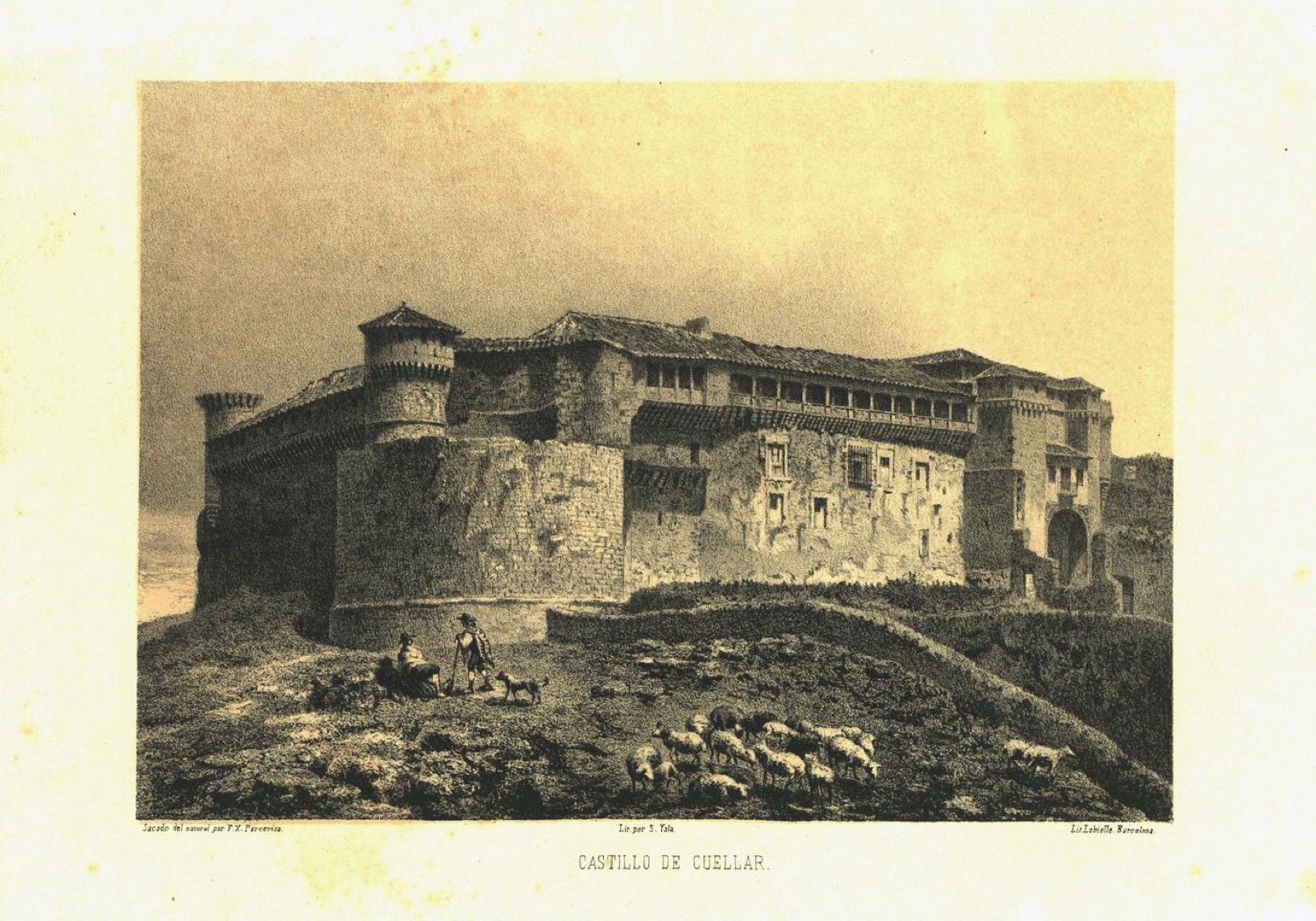
Castillo de Cuéllar
1865 · Digital Library of Castilla y León (via Europeana)
CC0 (no rights reserved)
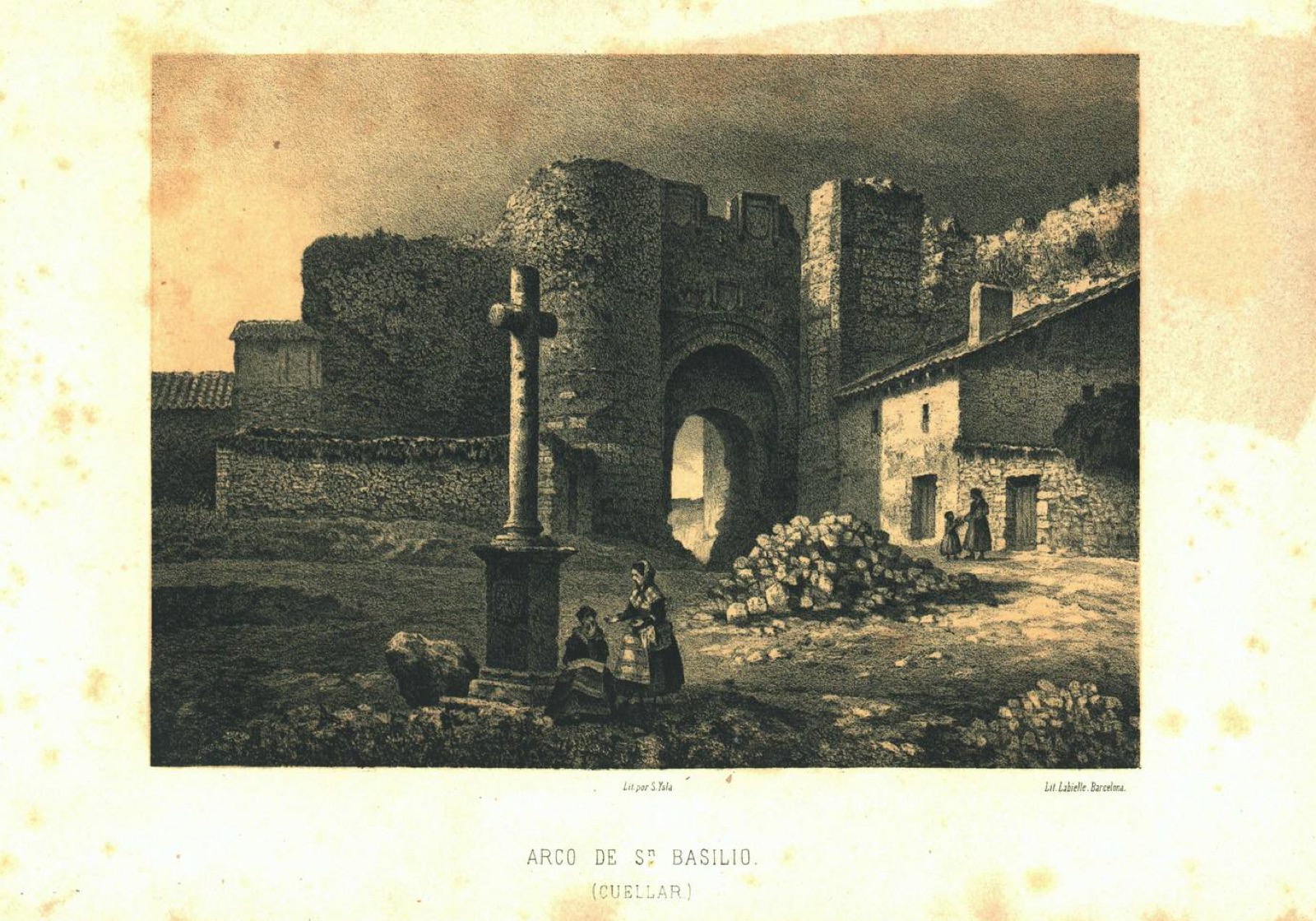
Arco de Sn. Basilio (Cuéllar)
1865 · Digital Library of Castilla y León (via Europeana)
CC0 (no rights reserved)


