
Sweden · Partial ruin
Bohus Fortress
Bohus fästning
Bohus Fortress is a medieval fortress on a 40 m cliff beside the Göta River in Kungälv, Bohuslän, Sweden, originally begun in 1308. It was a major Norwegian stronghold, later rebuilt and upgraded into a bastion-style fortress; much of the stonework survives and the site is a museum. The surviving complex includes substantial curtain walls, towers and internal buildings around a compact inner bailey.
First raised
1308
Its prime
1604
Today
Partial ruin
Ranked among Europe’s castles
As it stood in 1604
What Bohus Fortress looked like in its prime.
Perched on a 40 m cliff with the river forming a natural moat, the fortress is roughly rectangular (about 250 × 150 m) and enclosed by stout granite-and-brick curtain walls 3 m thick at the base and rising 8.5–13.5 m. At prime there are multiple towers including a prominent cylindrical northern tower with a conical roof, an eastern brick tower and a west-side gatehouse with drawbridge; earthen-backed bastions and an outer ring wall surround parts of the complex. Rooflines are a mix of stone towers and timber-roofed internal ranges; ramparts are grassy where covered.
Its story
The story of Bohus Fortress.
Håkon V's Border Stronghold, 1308–1450
Bohus was begun in 1308 under Håkon V Magnusson, king of Norway from 1299 to 1319, as part of the same defensive policy that started Akershus and Vardøhus. It stands on a cliff 40 metres above the point where the Göta river splits in two, the water forming a natural moat. Bohuslän was then Norwegian, and from 1308 to 1658 Bohus was the main Norwegian defence against Sweden. By 1310 records show it built, as was normal for the period, of granite and brick, perhaps under the guidance of Count Jacob of Halland.
By 1450 a continuous wall ran round it, three metres thick at the base and up to 13.5 metres high, with four corner towers and a gatehouse and drawbridge on the west side. Along the inside stood the King's hall, the castle commander's residence, the chapel, the guardroom, the barracks and the kitchen. The ground to be held measured only 250 by 150 metres, so no large garrison was needed; at that time it was reckoned Norway's strongest fortress.
The Northern Seven Years' War and the Bohus Bang, 1563–1566
Bohus was attacked or besieged at least fourteen times and never taken in battle. Six of them fell in the Northern Seven Years' War, the first five beaten off by the Danish commander Jens Holgersen Ulfstand. In the winter of 1564 Gustav Stenbock and Klas Horn brought guns up from Gamla Lödöse, including an oversized gun called Skiegge, cast to break the walls, which went through the river ice on the way and has never been found. The lighter guns could not pierce the masonry, and cold and typhus ended the siege within days.
In February 1565 Åke Bengtsson Färla renewed the siege; the Swedes stormed on the 26th and took one of the towers, only for Ulfstand to retake it at once, and a sortie threw back a second assault two days later. In March 1566 a fresh force under Nils Boije opened fire, and at the fourth attempt carried the core tower, the Red Tower, in the north-east. Two men of the garrison volunteered to fire its magazine; the explosion, remembered as the Bohus Bang, killed some 250 Swedish soldiers and broke the assault. As a reward the family of one of the volunteers received a piece of land still owned by his descendants.
Rebuilt as a Bastion Fortress, 1566–1645
The Norwegians rebuilt in stone and brick and reinforced the place substantially, the work directed by Hans Paaske from the Netherlands. On 1 January 1590 James VI of Scotland and his wife Anne of Denmark came to Bohus, giving Henrik Gyldenstierne, captain of the fortress, a ring and a gold chain worth 3,000 Danish dalers; he gave James a firearm and a sword.
Great bastion walls and ramparts were then raised outside the medieval ring wall, the work carried on to 1604 by the master-builders Hans van Paeschen and Hans van Steenwinckel the Elder. In August 1645, during the Torstenson War, a Swedish force under Lars Kagg bombarded the fortress.
Roskilde, Gyldenløve and the Ruin of 1678
Under the Treaty of Roskilde in 1658 Denmark–Norway ceded Bohuslän, and the fortress with it, to Sweden. An attempt to recapture it failed in 1676, and in June 1678 a Norwegian army under Ulrik Frederik Gyldenløve returned and besieged it again. Some 850 defenders faced 16,000 attackers, who fired tens of thousands of iron shot, hundreds of mortar rounds and grenades, and sprang mines under the outer walls. After six weeks of battering an approaching Swedish detachment saved it; 400 men were left alive inside, 300 dead and 120 wounded. The place was almost completely ruined, and repairs went on for fifty to seventy years on small funds. With the border moved, Sweden had little use for it, relying instead on New Älvsborg at Gothenburg and the new Carlsten at Marstrand.
Thomas Leopold's Cell and the Half-Finished Demolition
The fortress was used instead as a prison. Its best-known inmate was the radical pietist Thomas Leopold, who spent 42 years behind bars for his alleged heresies, 32 of them at Bohus; his stone-clad cell still exists. In the tower Fars Hatt the original dungeon is still visible from above, described in an 18th-century report as “a great depth, which has a floor of an iron net, upon which the delinquent has to walk and sleep”, its stench such that it soon made a prisoner confess whatever crime he had committed.
At the end of the 18th century the now unused fortress was condemned to demolition. The crews worked for two months, until the money ran out, and residents of Kungälv carried off the dressed stone to build their houses. Much of it stands even so, including the great northern tower, Fars Hatt. A listed building of the Swedish state since 25 January 1935, Bohus is run by Kungälv Municipality and open to visitors as a museum in summer.
Step inside
9 places to explore in 1604.
The record describes 9 distinct spots at Bohus Fortress, including 5 interiors: fars hatt dungeon shaft (view from the top), inner bailey facing the king's hall and commander's house, castle chapel interior and more. Create your own photoreal reconstruction and explore every one, more scenes means more rooms, more angles, and more of the place to stand in.
Build Your Own Castle
Recreate Bohus Fortress with AI to explore it.
The artist rebuilds it as it stood in 1604, a photoreal reconstruction that belongs to you alone. Pay with coins, no subscription needed.
Recreate this castle →Defend this castle →From the archive
Bohus Fortress on paper: the measured plan and period views.
The survey plan and photographs below are the ground truth this page's reconstructions are checked against, drawn and photographed while the castle was still a working garrison. Every image is public-domain or openly licensed, with its source named.
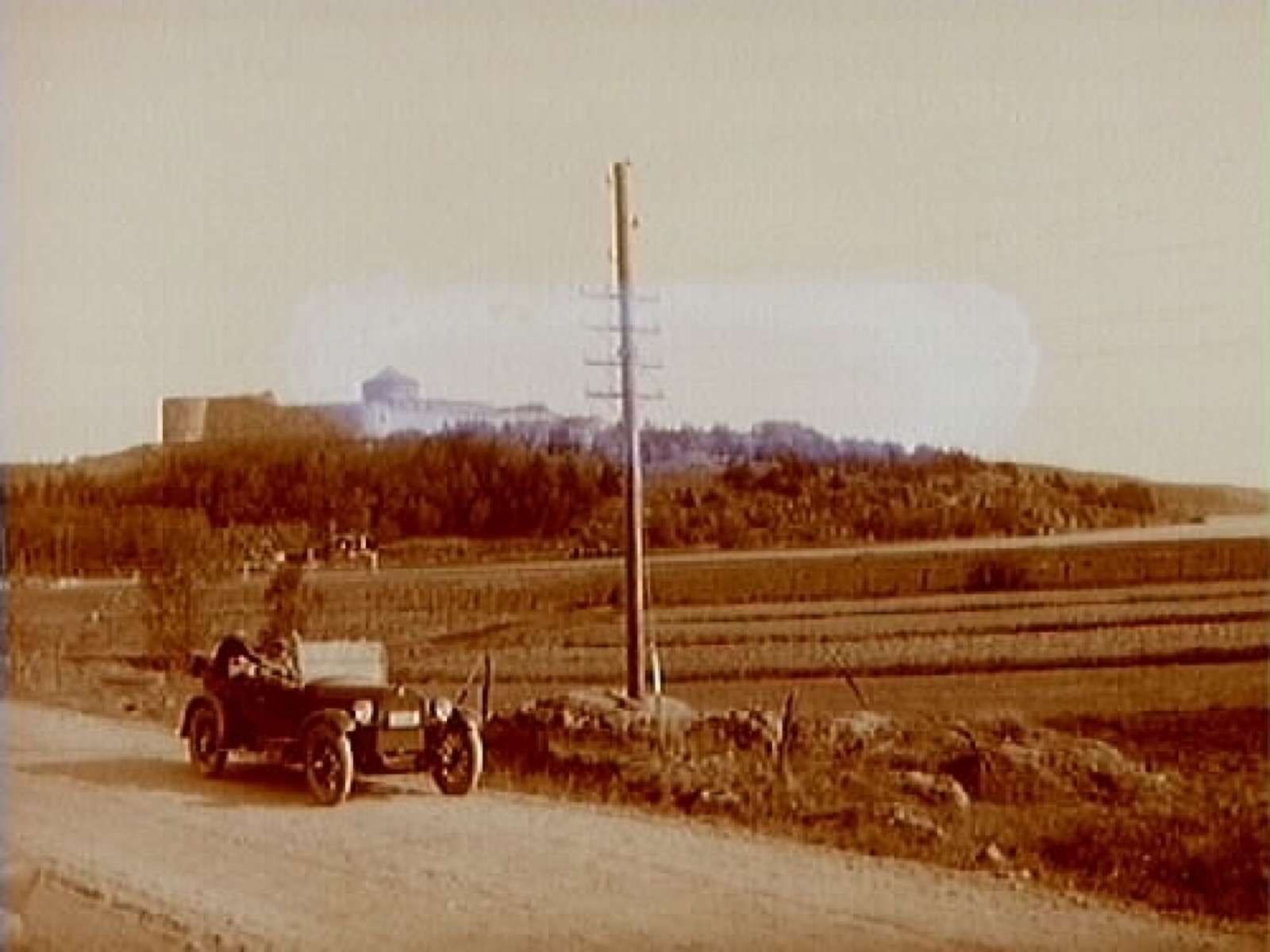
Bohus Fortress
· Örebro County Museum (via Europeana)
Public domain
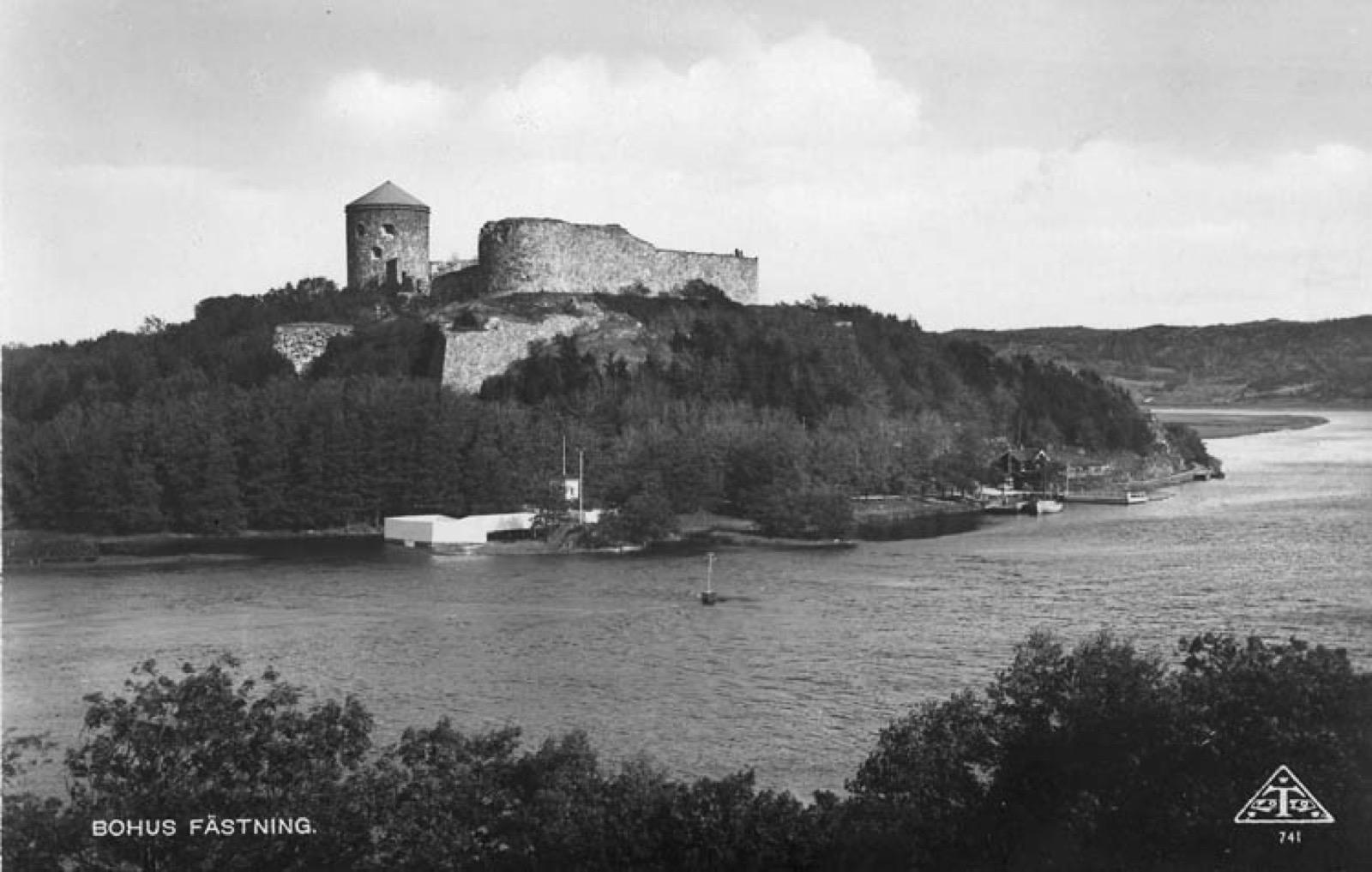
Bohus Fortress.
· Bohuslän Museum (via Europeana)
Public domain
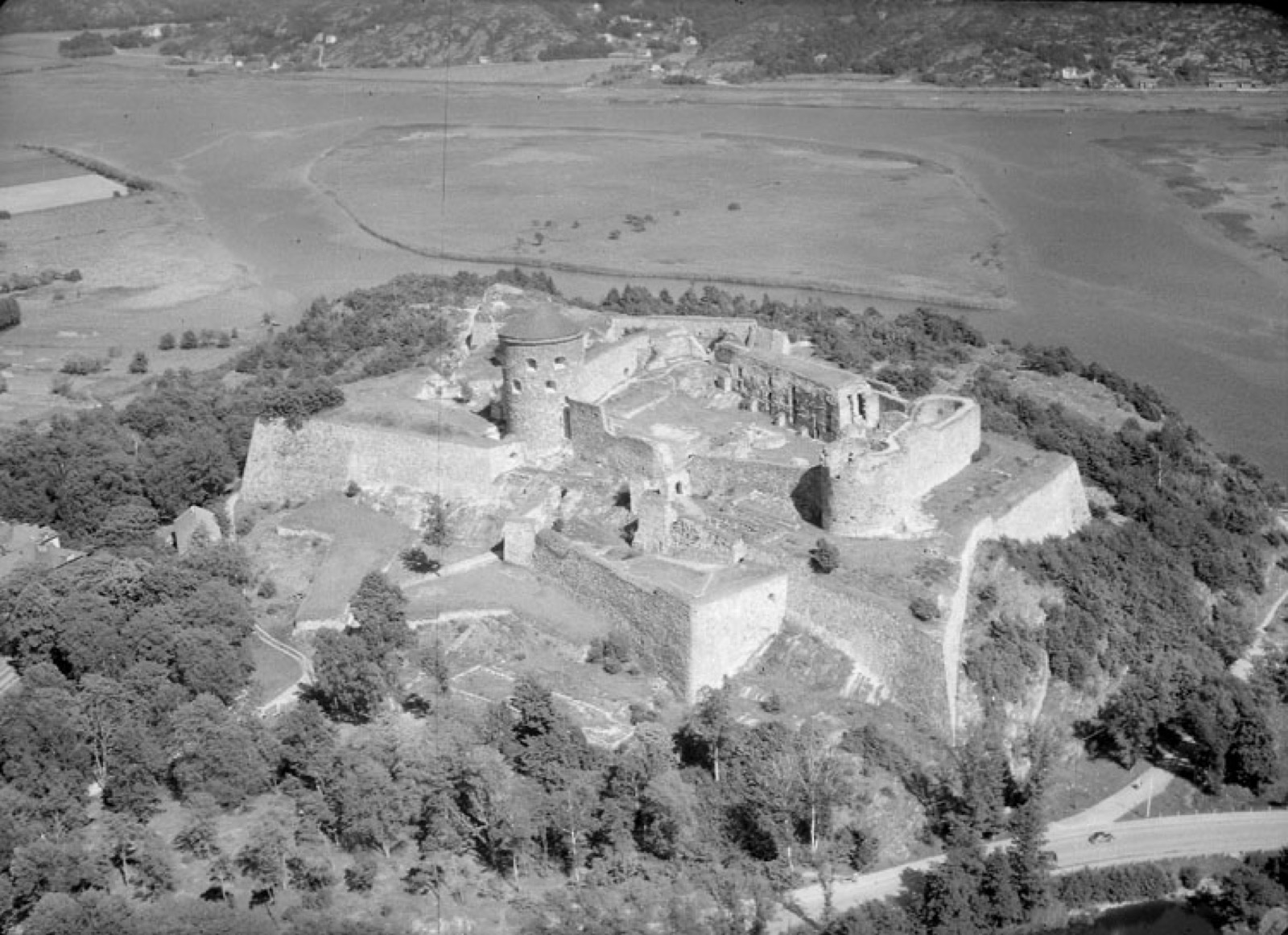
Bohus Fortress, Kungälv
· Bohuslän Museum (via Europeana)
Public domain


