
Sweden · Restored
Gripsholm Castle
Gripsholms slott
Gripsholm Castle is a 16th-century royal castle in Mariefred, Södermanland, Sweden, standing at the shore of Lake Mälaren. Built for Gustav I between 1537 and 1545, it served as a royal residence, occasional prison, and later housed the National Portrait Gallery; it is today a museum and crown palace.
First raised
1537
Its prime
1785
Today
Restored
As it stood in 1785
What Gripsholm Castle looked like in its prime.
A compact rectangular masonry castle set at the edge of Lake Mälaren, enclosed by a defensive stone wall and punctuated at its corners by circular, multi-storey towers; surviving sections of an older medieval façade are incorporated into the curtain. The towers rise above the main roofline and the complex sits immediately by the water, its walls meeting the shore. At its prime the fabric was complete and occupied as a royal residence with an external fortified silhouette.
Its story
The story of Gripsholm Castle.
Bo Jonsson Grip's Holm, 1370s–1526
Gripsholm began as the work of Bo Jonsson (Grip), Lord High Steward of Sweden, who bought up farms in Kärnbo parish between 1377 and 1380 and raised a fortress on an islet in Lake Mälaren. The name Gripsholm (an echo of the griffin's head on his family arms) first appears in a deed of purchase in May 1381, and in 1383 Bo Jonsson invited King Albrekt of Mecklenburg to the castle, where the King had to pledge to follow the advice of the council of the realm. After his death in 1386 his heirs sold the estate to Queen Margaret I in 1404.
In 1434, during the Engelbrekt rebellion, a Södermanland peasant army surrounded the castle; the bailiff Hartvig Flögh set it alight and fled to Stockholm with its valuables. In 1472 the Regent Sten Sture the Elder acquired Gripsholm by an exchange of lands, making it the hereditary property of his own family, and then gave it to the Carthusian order, whose monastery of Pax Mariae (Mariefred Charterhouse) held the estate for almost thirty years.
Gustav Vasa Builds in Brick, 1537–1545
In December 1525 King Gustav Vasa claimed the estate as heir of Sten Sture the Elder, and in 1526 Pax Mariae became the first monastery dissolved in the Swedish Reformation. The King tore down the monastic buildings and the old castle and from 1537 raised a fortified castle in brick under the master builders Henrik von Cöllen and Fredrik Nussdorffer; the core, with four round cannon-armed corner towers, stood largely complete by 1545.
As a defensive work it was outdated from the start, yet it was pressed into service during the Dacke War: in 1542 the King ordered his bailiff to strengthen it, orders for a palisade and breastwork followed the next year, and the royal children were housed there. The Vasa kings prized Gripsholm as private inheritance from the Regent Sten Sture (a reminder of their descent from earlier rulers), and used it frequently.
A Prison for Three Kings
From 1563 to 1567 King Eric XIV kept his brother John and John's consort Catherine Jagiellon imprisoned at Gripsholm; their son Sigismund, later King of Poland and Sweden, was born in the castle on 20 June 1566. After John deposed Eric, the fallen king was himself held at Gripsholm from 1571 until 13 June 1573, when Duke Karl had him moved. Tradition places Eric in the small cell of the Prison Tower, but he was in fact confined in a room on the first floor.
Between 1597 and 1610, during the struggle between Duke Karl and Sigismund, thirty-five state and war prisoners passed through Gripsholm, among them the magnates Gustav Banér and Klas Bielke; an inscription dated 3 April 1600 in the Grip Tower records two captives who "sat for our loyalty and suffered for our sins". After the coup of 1809 the deposed Gustav IV Adolf signed his abdication at Gripsholm and spent most of his final year in Sweden confined there.
Dowager Queens and Gustav III's Theatre
Maria Eleonora of Brandenburg, widow of Gustavus Adolphus, lived at Gripsholm from 1636 to 1640, and from 1654 to 1715 the castle formed part of the dower of Queen Hedvig Eleonora, who rebuilt and extended it, raising the Queen's Wing in 1691 and replacing the tiled roof with copper in 1708. After her death the court abandoned the castle for a time, and for a period in the eighteenth century it served as a prison.
Gustav III revived Gripsholm from 1773, renovating it for his consort Sophia Magdalena and spending long stretches there until 1785, mainly in autumn and often over Christmas. A simple theatre was fitted that year into the tower that had housed the castle chapel until 1738; in 1781–82 the architect Erik Palmstedt rebuilt it as a proper court theatre, opened in May 1782 for both the court's amateur theatricals and the King's French players.
The Restoration Quarrel, 1892–1899
The castle had housed the Swedish national portrait collection since the 1820s, and in January 1889 the Gripsholm Association was founded, with King Oscar II as patron, to restore the castle's exterior to its late-sixteenth-century character. Under the architect Fredrik Lilljekvist, work ran from July 1892 to 1899: the moat filled in under Gustav III was reopened with a new drawbridge, and an extra storey was raised towards the inner courtyard. The restoration set off a great debate in the Swedish cultural world: the author Verner von Heidenstam mocked it in deliberately archaic spelling, "in the year of our Lord 1893 this old house was made even older", declaring he would rather have a ruin. The castle was placed under state heritage protection in 1935 and remains a Crown palace at the disposal of the King, open to the public as a museum.
Step inside
5 places to explore in 1785.
The record describes 5 distinct spots at Gripsholm Castle, including 2 interiors: theatre inside one of the towers, prison cell / holding room. Create your own photoreal reconstruction and explore every one, more scenes means more rooms, more angles, and more of the place to stand in.
Build Your Own Castle
Recreate Gripsholm Castle with AI to explore it.
The artist rebuilds it as it stood in 1785, a photoreal reconstruction that belongs to you alone. Pay with coins, no subscription needed.
Recreate this castle →Defend this castle →Whose castle
Clans who held Gripsholm Castle.
The families that held Gripsholm Castle for a decade or more across its history, follow a name to its clan.
Sture
Acquired by the Regent Sten Sture the Elder in 1472 by exchange, as private hereditary land of his family.
Vasa
Dynastic seat of the royal Vasa family: Gustav I built the present castle in 1537–45, and it remained a royal residence into the 18th century.
From the archive
Gripsholm Castle on paper: the measured plan and period views.
The survey plan and photographs below are the ground truth this page's reconstructions are checked against, drawn and photographed while the castle was still a working garrison. Every image is public-domain or openly licensed, with its source named.
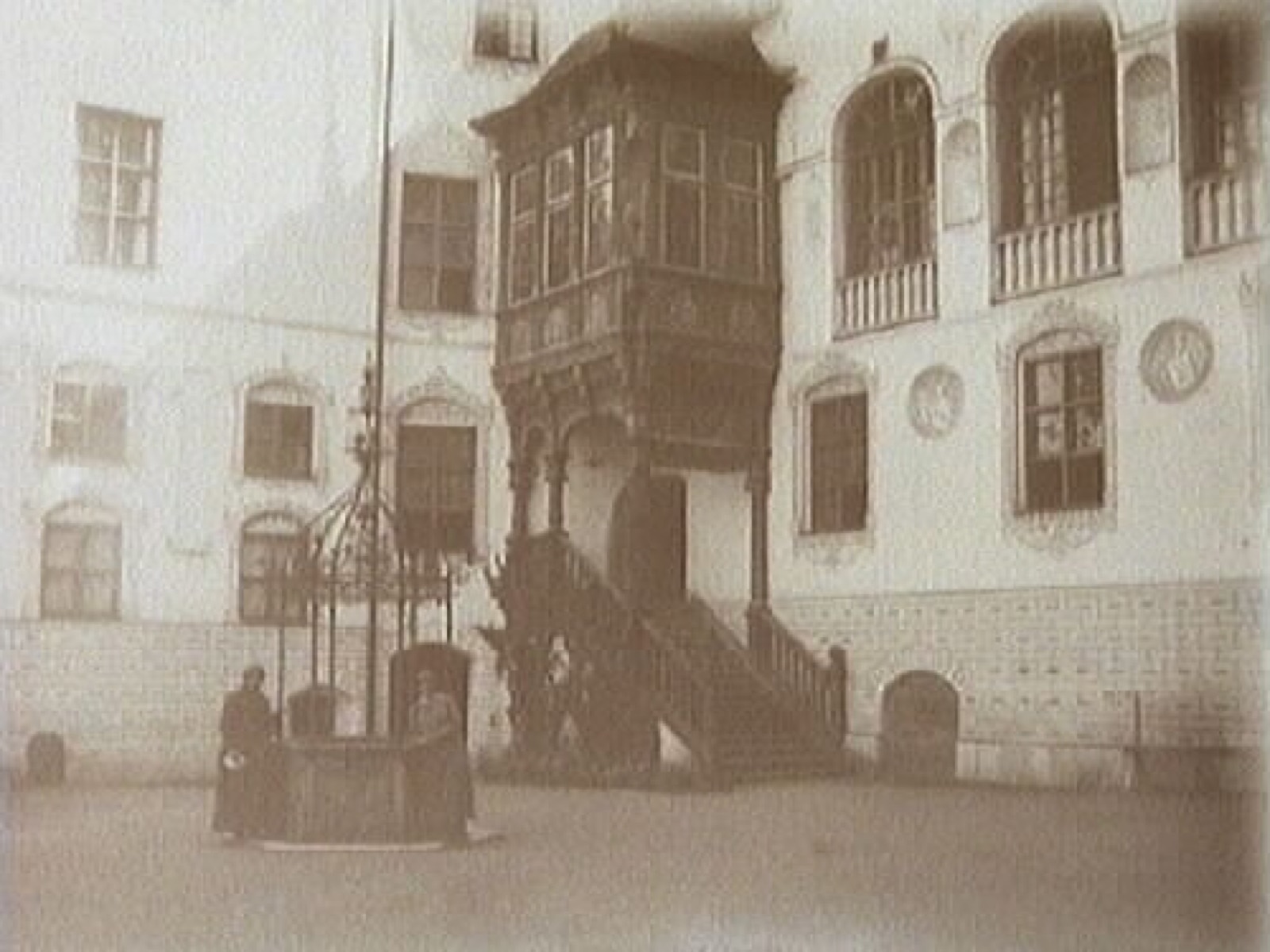
Gripsholm slott
· Örebro County Museum (via Europeana)
Public domain


