
Sweden · Restored
Läckö Castle
Läckö slott
Läckö Castle is a medieval castle on Kållandsö island in Lake Vänern, Sweden, founded as a fortified episcopal residence in 1298 and substantially enlarged in the 17th century. Major Baroque-era expansions and interior decoration were carried out under the De la Gardie family around the mid-1600s. Today it is a restored national monument managed and furnished to reflect its Baroque period appearance.
First raised
1298
Its prime
1654
Today
Restored
As it stood in 1654
What Läckö Castle looked like in its prime.
Perched on a promontory of Kållandsö, the castle is a compact rectangular main block of white‑washed stone with a hipped red tile roof and a distinct fourth storey added in the 17th century. Rounded corner and flanking towers rise from the curtain walls, each topped by steep, bulbous red cupolas; a pronounced fortified gate with a portal opens into an inner cobbled courtyard. The complex sits directly at the water’s edge of Lake Vänern with low outer walls and a walled garden terrace nearby.
Its story
The story of Läckö Castle.
The Bishops of Skara's Stronghold, 1298–1528
Bishop Brynolf Algotsson of the Diocese of Skara laid the foundations for a fortified castle at Läckö in 1298, though a letter he issued there in 1294 is the site's earliest documentary mention. The first structure was an open rampart enclosing two or three buildings. Fire destroyed it in the 1470s, and Bishop Brynolf Gerlachsson began rebuilding soon after, drawing labour and material from the church estates on Kållandsö; work continued into the early 1500s under Bishop Vincens Henningsson. The diocese held Läckö until the Reformation, when the Riksdag of Västerås stripped the church of the property in 1527 and King Gustav Vasa took possession the following year.
Crown Fief and the Nordic Seven Years' War, 1528–1600
Gustav Vasa granted Läckö as a fief to the royal councillor Ture Eriksson Bielke and visited the castle himself in 1532 and 1535; in 1535 prisoners, among them Markus Meyer, were sent there from Skåne for interrogation. By the early 1540s the castle was considered dilapidated, and Birger Nilsson Grip was ordered to rebuild it, drawing unlimited brick from St Olof's monastery in Skara. From 1543 the fief, together with the town of Lidköping, passed to Svante Sture, who held it until his death in 1567 and reinforced the castle from 1545.
During the Nordic Seven Years' War, troops sent by the Danish commander Daniel Rantzau burned the castle in 1566 while the Danish army lay at Lidköping; the damage was limited enough that Läckö still counted as a defensive installation in 1569, though a 1570 letter from King Johan III to the governor of Västergötland described it as largely ruined. Hogenskild Bielke received Läckö as a barony in 1571 and began restoring the castle, its granary and a new bathhouse from 1573, arming it with seven copper cannon that had belonged to Charles de Mornay. He and his wife, Anna Svantesdotter Sture, lived there through the 1590s; their son Nils Bielke died at four and was buried in the neighbouring parish church at Senäte. His hold on the barony was broken once already, between 1591 and 1593; in 1600 he lost it for a second time and was imprisoned, and the fief passed to Duke Johan of Östergötland.
The De la Gardie Rebuilding, 1615–1681
Field Marshal Jacob Pontusson De la Gardie was granted Läckö in 1615 and began an extensive building programme: he raised the keep's third floor and added the portal to the main courtyard along with the frescoes of figures and winding foliage found in its niches, stairwells and third-floor rooms. His son, Count Magnus Gabriel De la Gardie, took the work further from 1654, adding a fourth floor to the main building; the master builder Frans Stiemer raised the castle church and its tower, and painters and stuccoists including J. Hammer and B. Conrath decorated a castle that came to hold some 248 rooms.
The De la Gardie tenure ended in 1681, when the castle was reduced back to the crown in the Reduction.
Crown Grants and Decline, 1681–Early 1900s
Under the crown, the adjoining home farm was leased to private tenants until 1719 while crown officials administered the castle itself; Läckö became a royal castle in 1731. It was granted to Count Carl Gustaf Tessin in 1752 and, in 1810, to General Carl Johan Adlercreutz for fifty years as a national reward; Adlercreutz renamed the home farm "Siikajocki" after his victory at the Battle of Siikajoki, a name that never caught on locally but stayed in the land register until 1970. After his death the property passed to his son Fredrik and then to Carl Johan's brother, Gustaf Magnus Adlercreutz, and was later leased out, among others within the Rudenschöld family, who had married into the Adlercreutz line in 1826.
The Baroque interiors did not survive this period intact: the Knights' Hall's battle paintings were moved to Karlberg, its most valuable portraits went to Gripsholm Castle in 1830, and other furnishings were sold at auction that same year. Conservation began in the early twentieth century under Ärland Noreen, with the castle church restored and some furnishings recovered.
A Listed Governmental Building Complex Since 1935
Läckö has been a listed governmental building complex since 25 January 1935 and, since 1993, has been managed by the National Property Board of Sweden, working with the Foundation of Läckö Castle and the National Museum to maintain and furnish it in Baroque style. Its inner courtyard has hosted an annual summer opera production since 1997, including performances of La gazzetta.
Step inside
9 places to explore in 1654.
The record describes 9 distinct spots at Läckö Castle, including 2 interiors: third‑floor chamber with frescoes, stairwell with painted decorations. Create your own photoreal reconstruction and explore every one, more scenes means more rooms, more angles, and more of the place to stand in.
Build Your Own Castle
Recreate Läckö Castle with AI to explore it.
The artist rebuilds it as it stood in 1654, a photoreal reconstruction that belongs to you alone. Pay with coins, no subscription needed.
Recreate this castle →Defend this castle →Whose castle
Clans who held Läckö Castle.
The families that held Läckö Castle for a decade or more across its history, follow a name to its clan.
De la Gardie
Granted to Field Marshal Jacob Pontusson De la Gardie in 1615; Count Magnus Gabriel De la Gardie began major building works in 1654.
Tessin
Granted to Count Carl Gustaf Tessin in 1752.
From the archive
Läckö Castle on paper: the measured plan and period views.
The survey plan and photographs below are the ground truth this page's reconstructions are checked against, drawn and photographed while the castle was still a working garrison. Every image is public-domain or openly licensed, with its source named.
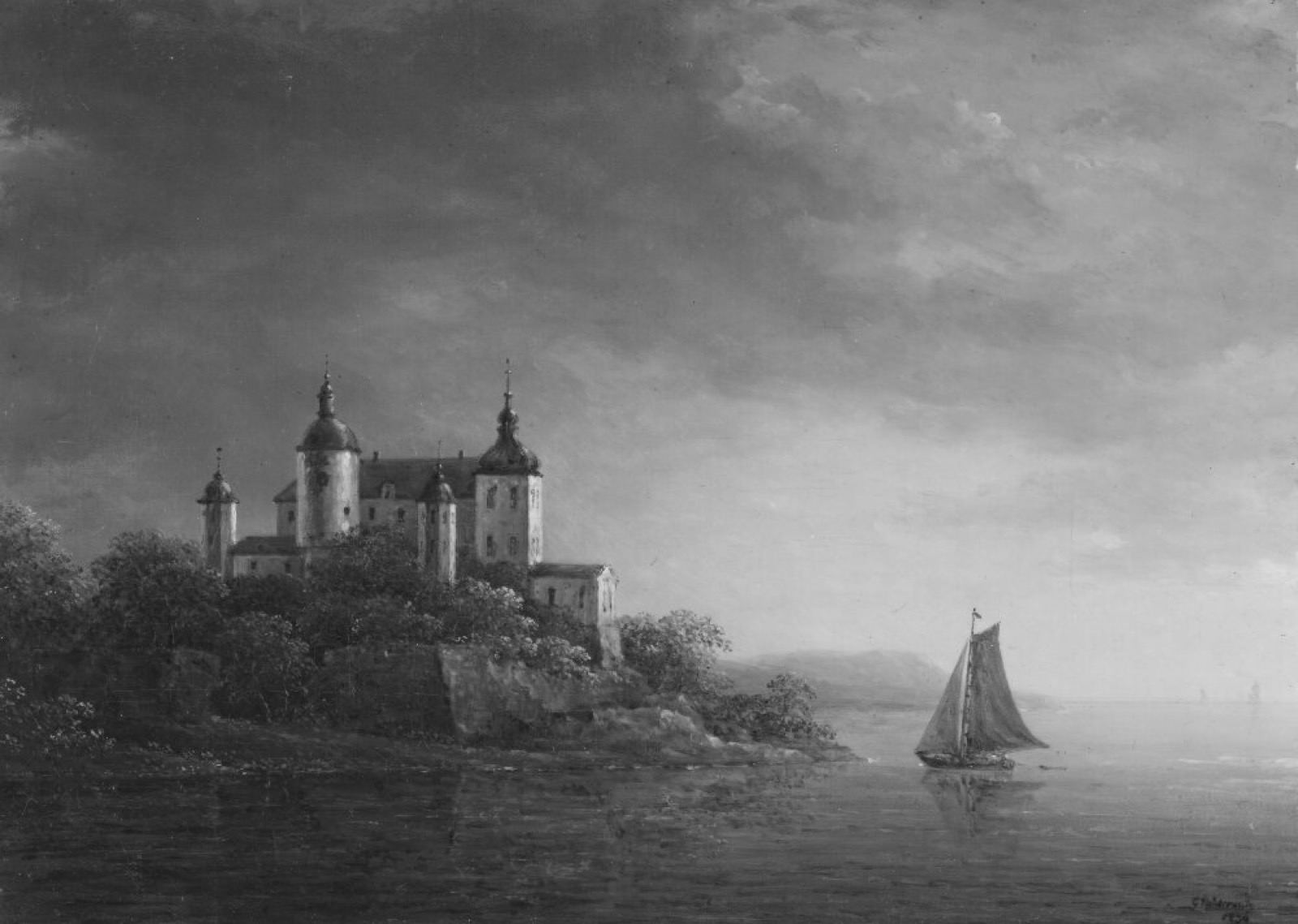
Läckö slott
1834 · Nationalmuseum Sweden (via Europeana)
Public domain
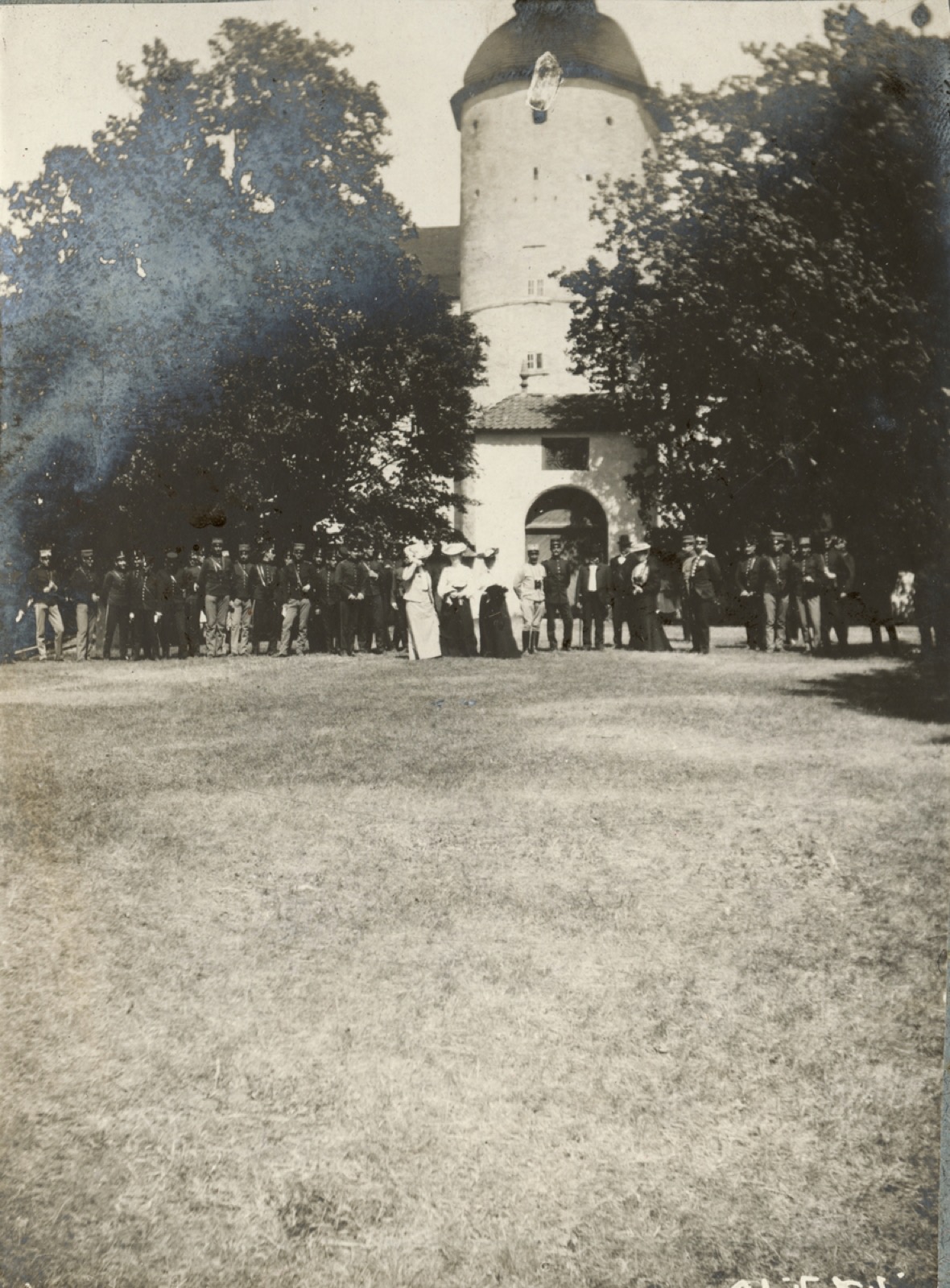
Outside Läckö Castle.
· Army Museum (via Europeana)
Public domain
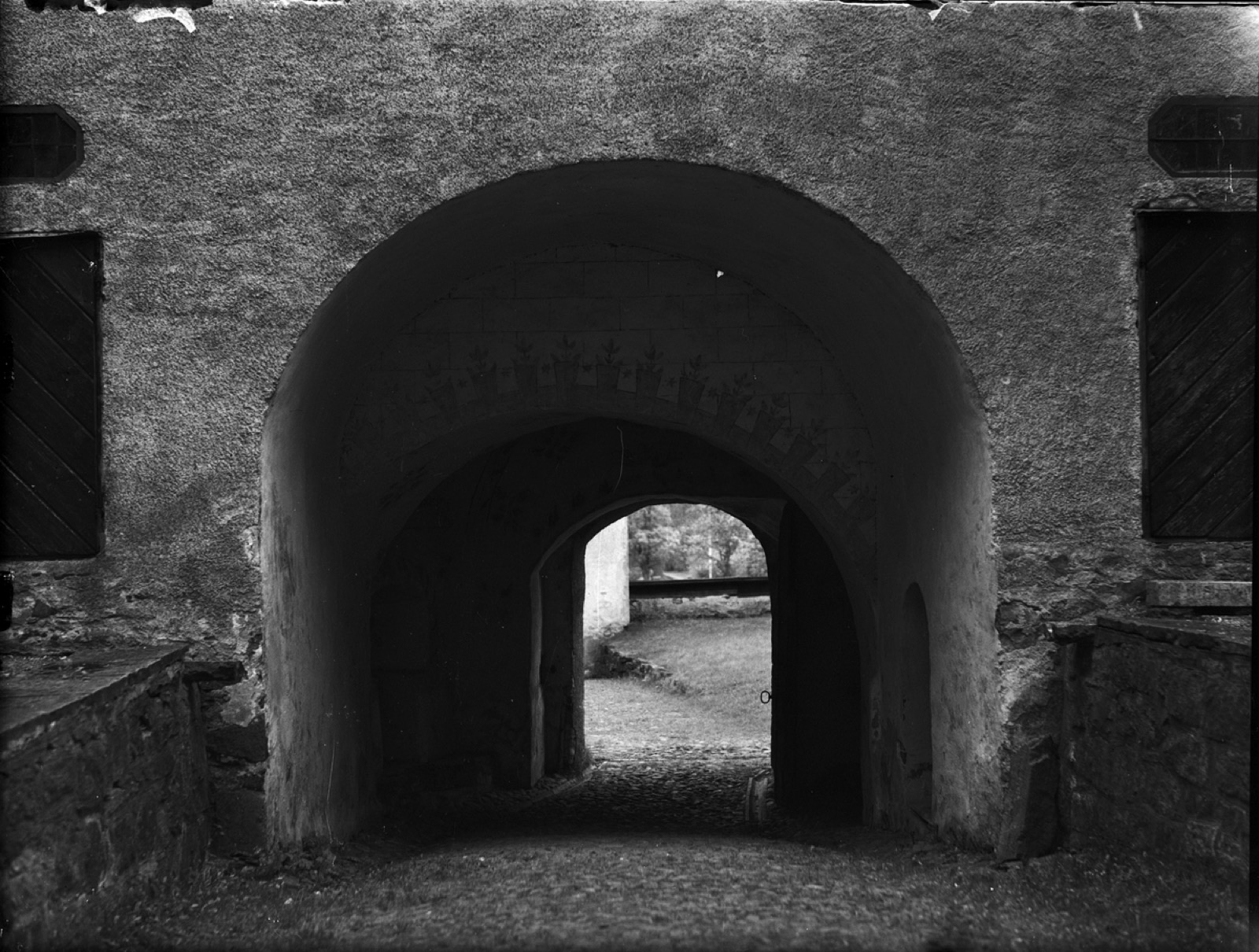
Läckö slott, Lidköping, Västergötland
· Upplands Museum (via Europeana)
CC0 (no rights reserved)


