Wales · Ruin
Conwy Castle
Castell Conwy
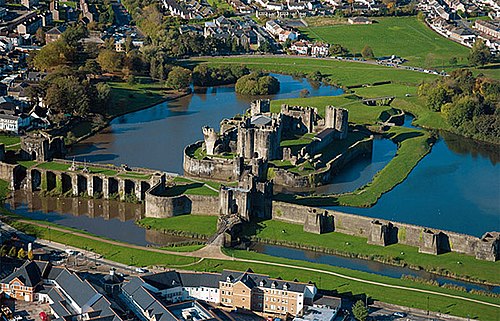
Conwy Castle is a late 13th-century Edwardian fortress in north Wales, constructed between 1283 and 1287 as part of a new walled town. The rectangular stone castle has eight large drum towers, two barbicans and inner and outer wards, and occupies a rocky coastal ridge overlooking the River Conwy. Today the ruin is managed by Cadw and is part of the Castles and Town Walls of King Edward in Gwynedd World Heritage Site.
First raised
1283
Its prime
1287
Today
Ruin
Ranked among Europe’s castles
As it stood in 1287
What Conwy Castle looked like in its prime.
Rectangular late 13th-century stone castle set on a rocky coastal ridge overlooking the River Conwy, built of local grey sandstone with dressings of imported sandstone. The fortress has eight large cylindrical drum towers and two detached barbicans, linked by high curtain walls with crenellated parapets and the earliest surviving stone machicolations in Britain. A main gate through twin round towers leads into outer and inner wards; a postern gate drops down the slope to the river. Roofs are timbered in the halls.
Its story
The story of Conwy Castle.
Edward I Takes the Abbey's Ground, 1283
The ground Edward I chose was already Welsh royal ground. Aberconwy Abbey, a Cistercian house favoured by the Welsh princes, stood on the site, and with it one of their llysoedd: the court of Llywelyn the Great and, after him, of his grandson Llywelyn ap Gruffydd. A wall and an apsidal tower of it survive, swallowed into the southern end of the town's east wall and marked out from the English masonry by their four window openings. The site also commanded the crossing of the River Conwy between coastal and inland North Wales, a passage Deganwy Castle had defended for many years. English kings and Welsh princes had contested the region since the 1070s, until in 1282 Edward intervened in North Wales for the second time in his reign.
He invaded with a huge army, pushing north from Carmarthen and westwards from Montgomery and Chester, and captured Aberconwy in March 1283. He decided the place would be the centre of a new county: the monks were moved eight miles up the valley to a new house at Maenan, ruined Deganwy was abandoned and never rebuilt, and an English castle and walled town rose on the abbey's former ground. The plan was a colonial enterprise, and setting the new town on a native site of that standing was in part a symbolic act, a demonstration of English power.
Cutting the ditch began within days of the decision. Sir John Bonvillars controlled the work and the master mason James of St George oversaw it: curtain walls and towers between 1283 and 1284, interior buildings between 1284 and 1286 while the town walls were started, and by 1287 the castle was complete. Edward's accountants never separated the cost of the town walls from that of the castle; together the two came to around £15,000, a huge sum for the period.
The King Besieged, Winter 1294–95
A royal charter of 1284 made the constable of the castle mayor of the new town as well (to this day the mayor of Conwy is ex officio its constable), and put under him a garrison of thirty men, fifteen of them crossbowmen, supported by a carpenter, a chaplain, a blacksmith, an engineer and a stonemason. The first constable was Sir William de Cicon, who had held the same post at Rhuddlan before it.
In 1294 Madog ap Llywelyn rebelled against English rule, and Edward found himself shut inside his own new castle. The Welsh besieged him there from December into January 1295, and he was supplied only by sea; a postern gate ran down to a small dock on the river, and the royal apartments of the inner ward had been built so that they could be sealed off from the rest of the castle and supplied from the eastern gate almost indefinitely. Relief did not arrive until February. The chronicler Walter of Guisborough suggested that conditions were austere enough that the king refused to drink his own private supply of wine and had it shared out among the garrison instead. In 1301 the castle hosted Edward's son, the future Edward II, come to receive the homage of the Welsh leaders.
Carpenters at the Gate: Richard II and the Tudur Brothers
The castle was badly kept in the early 14th century. A survey in 1321 reported it poorly equipped and short of stores, with leaking roofs and rotten timbers, and the problems ran on until Edward the Black Prince took over control in 1343 and his chamberlain Sir John Weston carried out repairs. At the end of the century Richard II used the castle as a refuge from Henry Bolingbroke: he came to Conwy on 12 August 1399, newly returned from Ireland, and met Bolingbroke's emissary Henry Percy, who swore in the chapel that he would do the king no harm. On 19 August Richard surrendered to Percy at Flint Castle, promising to abdicate if his life were spared; he was taken to London and died later in captivity at Pontefract.
Bolingbroke took the throne as Henry IV, and rebellion broke out in North Wales under Owain Glyndŵr. On Good Friday in April 1401 two of Glyndŵr's cousins, Rhys ap Tudur and his brother Gwilym, came to Conwy passing themselves off as carpenters sent to repair the castle. Once inside they killed the two watchmen on duty and took the fortress; Welsh rebels then attacked and captured the rest of the walled town. The brothers held out for about three months before negotiating a surrender that brought them a royal pardon from Henry. Conwy was reinforced during the Wars of the Roses but played little part in the fighting, and by the 1520s and 1530s, when Henry VIII paid for restoration work, it was serving as a prison, a depot and a possible residence for visitors.
Mytton's Siege and the Stripping of the Lead, 1642–1665
Charles I sold the decayed castle to Edward Conway in 1627 for £100, and Conway's son of the same name inherited the ruin in 1631. When war broke out in 1642, John Williams, Archbishop of York, took charge of Conwy for the king and repaired and garrisoned it at his own expense. In 1645 Sir John Owen was appointed governor over his head; the two men fell into bitter dispute and the archbishop defected to Parliament. The town fell in August 1646, and in November General Thomas Mytton took the castle itself after a substantial siege.
Colonel John Carter was appointed governor and fresh repairs were made, but in 1655 the Council of State ordered the castle slighted, put beyond military use; the Bakehouse tower was probably pulled part-way down then. The restoration of Charles II in 1660 returned Conwy to Edward Conway, Earl of Conway, and five years later the earl decided to strip out the remaining iron and lead and sell it. His overseer William Milward saw the work through against the opposition of the leading citizens of the town, and it left the castle a total ruin.
By the end of the 18th century the ruins were drawing visitors and artists, and Thomas Girtin, Moses Griffith, Paul Sandby and J. M. W. Turner were among those who painted the castle. In 1865 the castle passed from the Holland family, who had leased it from the descendants of the Conways, to the civic leadership of Conwy town, and restoration began, the damaged Bakehouse tower among the first work rebuilt. Arnold Taylor carried out wide-ranging repairs and extensive research after it was leased to the Ministry of Works in 1953, and in 1986 it was declared part of the World Heritage Site of the Castles and Town Walls of King Edward in Gwynedd. UNESCO counts Conwy among the finest examples of late 13th- and early 14th-century military architecture in Europe.
Step inside
10 places to explore in 1287.
The record describes 10 distinct spots at Conwy Castle, including 3 interiors: great hall interior, private royal chambers suite, chapel. Create your own photoreal reconstruction and explore every one, more scenes means more rooms, more angles, and more of the place to stand in.
Build Your Own Castle
Recreate Conwy Castle with AI to explore it.
The artist rebuilds it as it stood in 1287, a photoreal reconstruction that belongs to you alone. Pay with coins, no subscription needed.
Recreate this castle →Defend this castle →Whose castle
Clans who held Conwy Castle.
The families that held Conwy Castle for a decade or more across its history, follow a name to its clan.
Conway
Charles I sold the castle to Edward Conway in 1627; his son inherited it in 1631.
From the archive
Conwy Castle on paper: the measured plan and period views.
The survey plan and photographs below are the ground truth this page's reconstructions are checked against, drawn and photographed while the castle was still a working garrison. Every image is public-domain or openly licensed, with its source named.

(Castle and suspension bridge, Conway (i.e. Conwy), Wales) LOC 3752435594
ca. 1890-1900 · Photochrom Prints Collection (via Wikimedia Commons)
Public domain
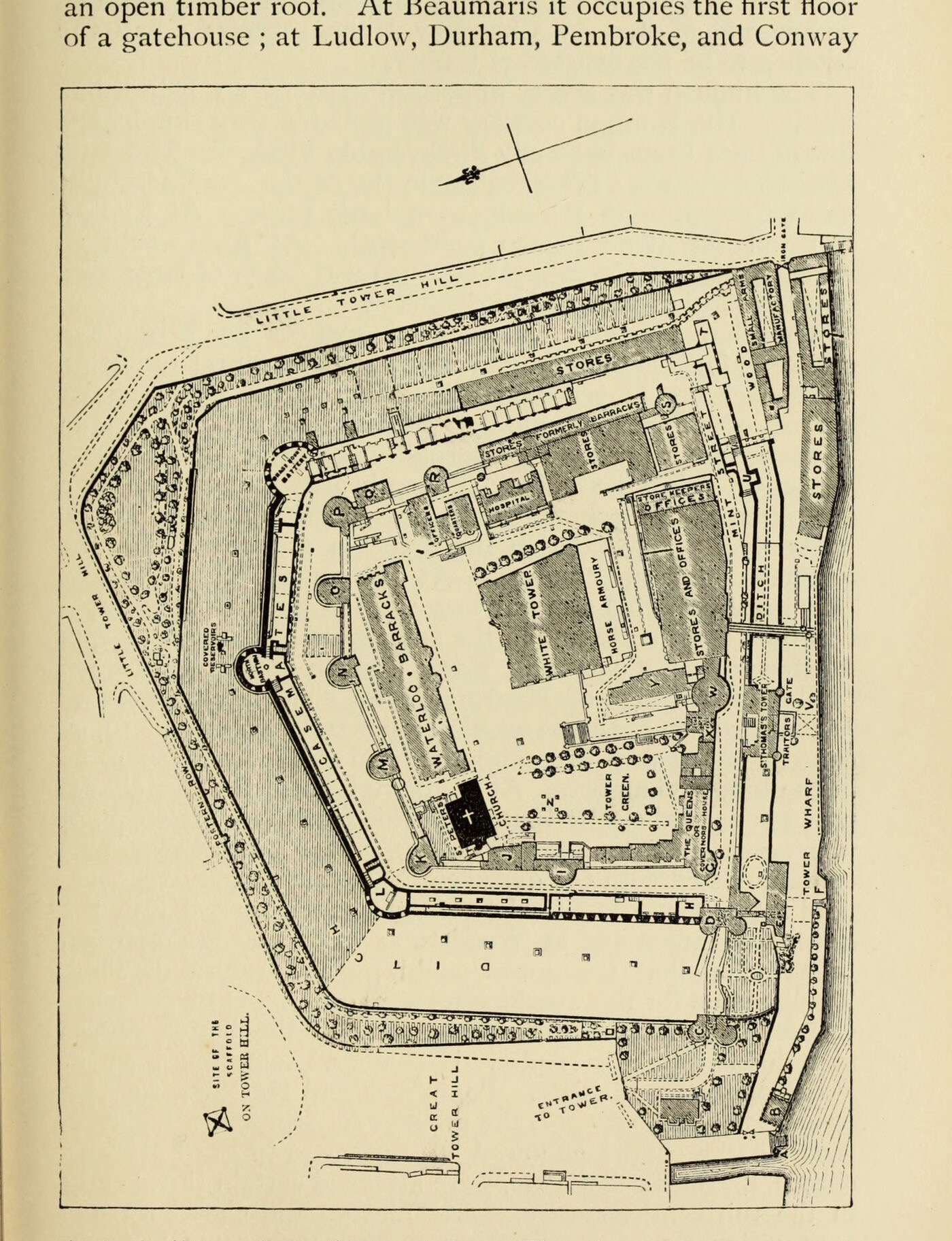
Ground plan
1884 · G. T. Clark, Mediaeval Military Architecture, vol. 1 (1884)
Public domain
Nearby