Wales · Partial ruin
Kidwelly Castle
Castell Cydweli
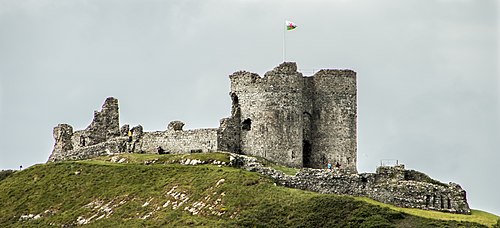
Kidwelly Castle is a Norman stone castle overlooking the River Gwendraeth and the town of Kidwelly in Carmarthenshire, Wales. The surviving plan centres on a square inner bailey with four round towers and a semi-circular outer curtain wall on the landward side, with a large gatehouse sited beside the river.
First raised
1106
Its prime
1200
Today
Partial ruin
Ranked among Europe’s castles
As it stood in 1200
What Kidwelly Castle looked like in its prime.
A compact Norman fortress comprising a square inner bailey defended at each corner by round towers, set behind a semi-circular outer curtain wall on the landward side. A massive multi-storey gatehouse stands beside the River Gwendraeth, and a projecting riverside tower guards the waterfront walls. The outer curtain has a stone stair built against it rising from the ward; the whole complex is stone-built and occupies a riverside edge above the town.
Its story
The story of Kidwelly Castle.
Roger of Salisbury's Lordship and the Lord Rhys, 1106–1159
Kidwelly Castle began with a decision, in the very first years of the twelfth century, to entrust Roger, bishop of Salisbury, with the lordship of Kidwelly. The castle and its adjoining town were built soon afterwards, raised as a defence against the Welsh, though the Welsh took the castle back more than once during that same century.
The unrest around the new lordship left its own legend: the countryside near the castle is reputedly haunted by the headless ghost of Gwenllian ferch Gruffydd, wife of the Welsh prince Gruffydd ap Rhys, who was beheaded in 1136. In 1159 the Welsh prince later known as the Lord Rhys captured Kidwelly Castle and was recognised by King Henry II of England as ruler of the region; on his death it reverted to the Anglo-Normans.
Llywelyn the Great and Owain Glyndŵr, 1231–1403
In 1231 Llywelyn the Great captured Kidwelly Castle and razed it. By August 1403 it was under siege again, this time from forces loyal to Owain Glyndŵr, reinforced by soldiers from France and Brittany, who succeeded in capturing the town of Kidwelly while the castle itself held out; a Norman army relieved it in September 1403.
A Gatehouse Beside the River
The castle's plan reflects a compromise forced by its site: a square inner bailey defended by four round towers stands within a semi-circular outer curtain wall on the landward side, with a large gatehouse set beside the river. The riverbank ruled out a full circuit, so a jutting tower was built instead to protect the walls along the water; the outer curtain also carries a stair rising from the level of the ward, a rare arrangement in English castles of the period. Kidwelly's builders put their weight into the strength of the walls and towers rather than into elaborate defensive tricks; its precautions were not as thorough as those found in other great Welsh castles of the time, but the resulting plan was a strong one.
Monty Python and Robin of Sherwood, 1975–1986
The castle's survival into the twentieth century made it a filming location for two very different English productions: it appears in the very first scene after the titles of Monty Python and the Holy Grail (1975), and stood in for Clun Castle in the 1986 Robin of Sherwood episode "Herne's Son".
Step inside
9 places to explore in 1200.
The record describes 9 distinct spots at Kidwelly Castle, including the full exterior approach. Create your own photoreal reconstruction and explore every one, more scenes means more rooms, more angles, and more of the place to stand in.
Build Your Own Castle
Recreate Kidwelly Castle with AI to explore it.
The artist rebuilds it as it stood in 1200, a photoreal reconstruction that belongs to you alone. Pay with coins, no subscription needed.
Recreate this castle →Defend this castle →From the archive
Kidwelly Castle on paper: the measured plan and period views.
The survey plan and photographs below are the ground truth this page's reconstructions are checked against, drawn and photographed while the castle was still a working garrison. Every image is public-domain or openly licensed, with its source named.
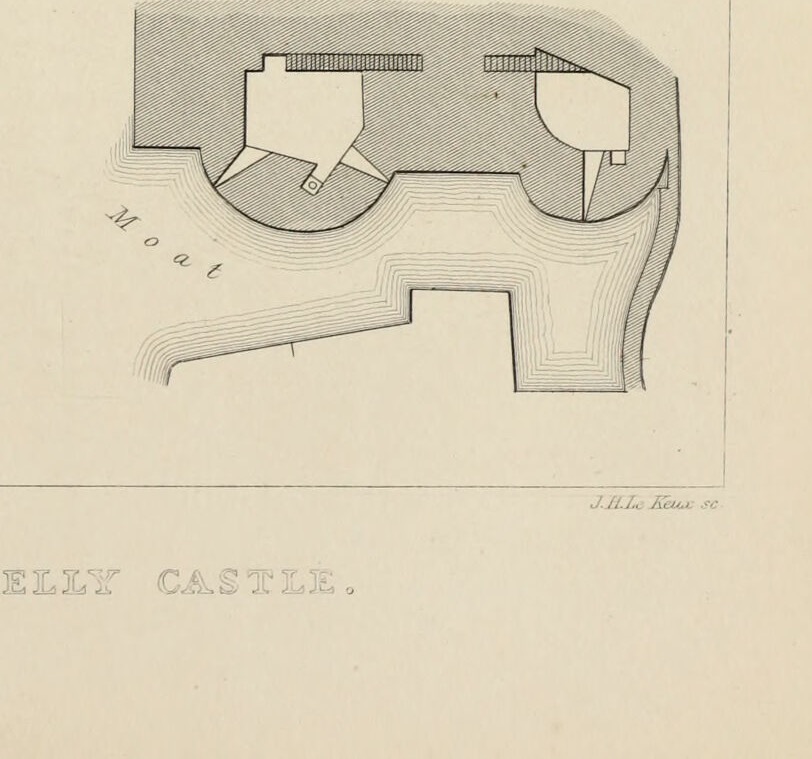
GENERAL SURVEY.
1884 · G. T. Clark, Mediaeval Military Architecture, vol. 2 (1884)
Public domain
Second Floor
1884 · G. T. Clark, Mediaeval Military Architecture, vol. 2 (1884)
Public domain
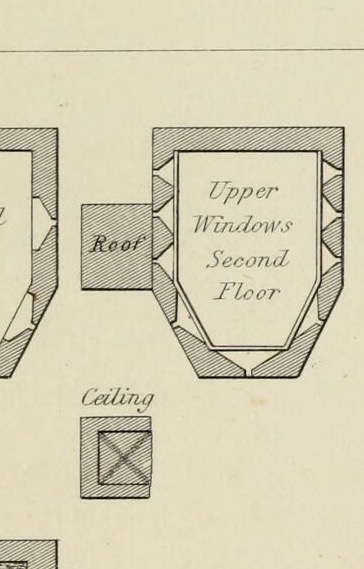
Upper Windows Second Floor
1884 · G. T. Clark, Mediaeval Military Architecture, vol. 2 (1884)
Public domain