Clan Rising
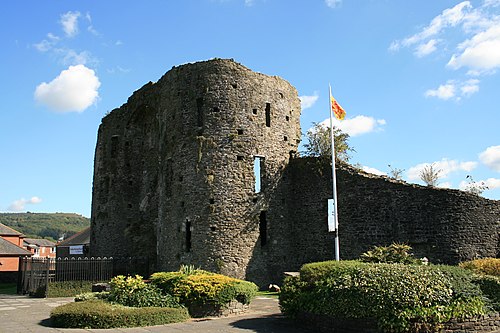
Wiston Castle today

Wales · Partial ruin

Wiston Castle

Castell Cas-wis

Wiston Castle is a Norman motte-and-bailey castle in the village of Wiston, Pembrokeshire, founded by the Flemish settler Wizo and later abandoned in the late 13th century. The site retains a prominent earthen motte topped by a polygonal stone shell-keep and a large oval bailey with surviving earthen banks; it is a Cadw-managed Grade I listed site open to the public.

Photograph via Wikimedia Commons

First raised

1050

Its prime

1225

Today

Partial ruin

As it stood in 1225

What Wiston Castle looked like in its prime.

Wiston Castle sits atop a grassy motte about 9 m high accessed by a straight flight of roughly fifty steps; the flat summit is ringed by a low polygonal rubble-stone shell-keep formed of about eighteen short external facets, some of which have subsided to the north. The shell-keep has a single arched entrance on the south side with draw-bar holes in the jambs and a circular interior. Below the motte lies a large oval bailey defined by a pronounced earthen bank amid pasture and scattered mature trees.

Its story

The story of Wiston Castle.

Wiston Castle and its village were founded by Wizo, a Flemish settler granted the land by Henry I of England after the king wrested control from Arnulf de Montgomery, then in revolt against him. The motte-and-bailey that resulted is one of the best examples of its type in Wales, its earthen mound crowned by a polygonal stone shell-keep above a large oval bailey.

The Welsh captured the castle on several occasions, and each time it was retaken. In 1193 Hywel the Saxon, son of Lord Rhys, attacked the Flemings, captured Wiston and took Wizo's son Philip captive along with his wife and sons. Llywelyn Fawr sacked the castle in 1220, after which William Marshall the younger, Marcher Earl of Pembroke, ordered its restoration.

The castle was abandoned during the thirteenth century, when its owner moved to nearby Picton Castle. The motte and the bailey's earthen banks survive opposite St Mary Magdalene Church, reached by around 50 steps; the site is in the care of Cadw, a Grade I listed building and a Scheduled Monument.

Step inside

8 places to explore in 1225.

The record describes 8 distinct spots at Wiston Castle, including 1 interior: interior of the shell-keep. Create your own photoreal reconstruction and explore every one, more scenes means more rooms, more angles, and more of the place to stand in.

Approach across the field to the motteHalfway up the motte stepsExterior of the shell-keep on the summitInterior of the shell-keepOval bailey interior and earthen bankSouth gateway and draw-bar holesEdge of the surrounding ditch at the motte baseView from St Mary Magdalene Church yard

Build Your Own Castle

Recreate Wiston Castle with AI to explore it.

The artist rebuilds it as it stood in 1225, a photoreal reconstruction that belongs to you alone. Pay with coins, no subscription needed.

Recreate this castle →Defend this castle →

Questions about Wiston Castle

What is the history of Wiston Castle?

Wiston Castle was founded in the 11th century by Wizo, a Flemish settler granted the land by Henry I of England. The Welsh captured it on several occasions, including Hywel the Saxon’s assault in 1193. Llywelyn Fawr sacked it in 1220, after which William Marshall the younger ordered its restoration. It was abandoned in the 13th century when its owner moved to nearby Picton Castle.

What is inside Wiston Castle?

Inside Wiston Castle, the summit contains the circular interior of the polygonal shell-keep. Its south side has a single arched entrance with draw-bar holes in the jambs. The large oval bailey lies below the motte and is defined by a pronounced earthen bank; the lord’s main residence would have stood inside the bailey, although the surviving description does not identify rooms.

Who owns Wiston Castle now?

Wiston Castle is owned by Cadw. Cadw also operates and maintains the site. It is designated a Grade I listed building, a Scheduled Monument and a National Monument of Wales.

Why was Wiston Castle built, and what was it used for?

Wiston Castle was built to control Wizo’s lands in Dungleddy. Wizo was a Flemish leader who built the castle, and a settlement grew around it. The motte-and-bailey served as a fortified centre, with the lord’s main residence inside the bailey. It was later abandoned when its owner moved to nearby Picton Castle.

Where is Wiston Castle?

Wiston Castle is in the village of Wiston in Pembrokeshire, in south-west Wales. It stands opposite St Mary Magdalene Church, on the summit of a hill. The castle is reached by approximately 50 steps leading up the motte.

When was Wiston Castle built?

Wiston Castle was first raised in 1050, placing its foundation in the 11th century. The surviving site developed as a motte-and-bailey castle, with a later stone shell-keep on the summit of the earthen motte. The castle was abandoned during the 13th century.

Was Wiston Castle ever attacked or besieged?

Wiston Castle was attacked and captured several times by the Welsh. Hywel the Saxon captured it in 1193, taking Philip, Wizo’s son, captive with his wife and sons. Llywelyn Fawr sacked the castle in 1220, after which William Marshall the younger ordered its restoration. Each Welsh capture was followed by the Flemings retaking the castle.

What did Wiston Castle look like in its prime?

At its height, Wiston Castle had an earthen motte about 9 metres high, topped by a low polygonal rubble-stone shell-keep. The keep had about eighteen short external facets, a circular interior and a single arched entrance on the south side. Below it was a large oval bailey with an earthen bank, pasture and scattered mature trees.

Is Wiston Castle still standing or is it a ruin?

Wiston Castle is a partial ruin, but its main earthworks and stone shell-keep survive. The prominent motte remains topped by the low polygonal keep, while the large oval bailey retains its earthen banks. Some shell-keep facets have subsided into the ditch on the north side, and the structures were left unfinished after the restoration ordered in 1220.

Can you visit Wiston Castle?

Wiston Castle can be visited because it is open to the public. It is in the care of Cadw and is maintained by Cadw. The site is a Grade I listed building and a Scheduled Monument, with access from the field and approximately 50 steps leading up the motte.
All castles of Wales · Castles of Europe · the best castles in Europe · explore the finished reconstructions.