Booth
From the herdsman's hut, the northern Norse-locative that gave the Salvation Army its founder.
- Origin
- Yorkshire & the Humber, England
- Famous bearer
- William Booth (1829-1912), founder of the Salvation Army; first General of the Salvation Army 1878-1912
- Register
- English family
The Booth arms and country

Coat of armsCoat of arms of the Booth FamilyFry1989 eh? · CC BY-SA 3.0

- Coat of arms: Granted to an individual and inherited down that one documented line. These are the arms of particular families of the name, not of everyone who shares the surname.
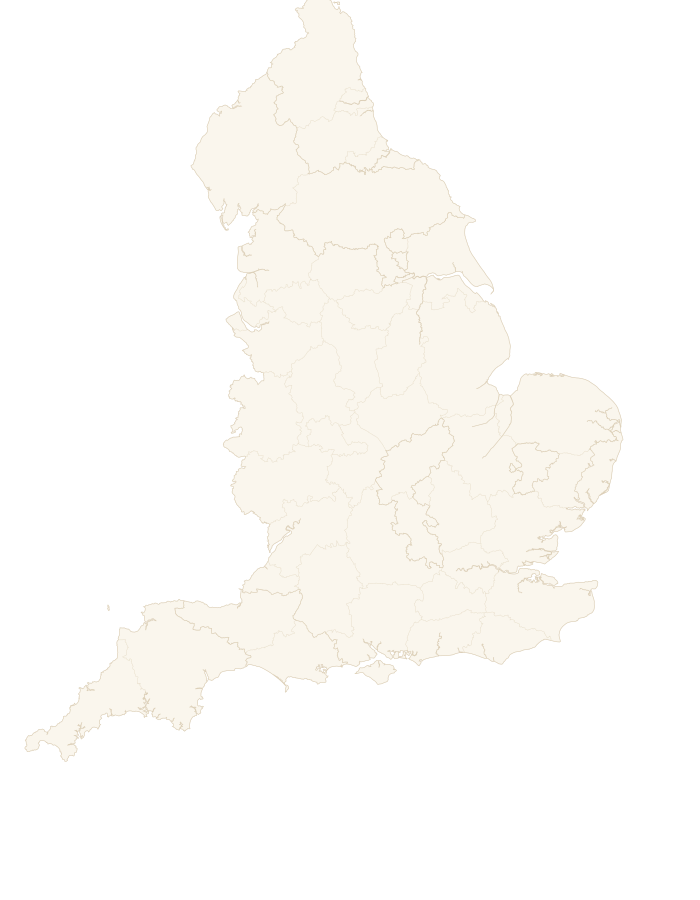
CoreHistoric reach
The seat of Booth
Seat vacantChief
No one leads the Booth community yet. When the movement opens, you can stand for its leadership, or help elect whoever does.
Current mission
No shared goal set yet. Once Booth has leadership, it sets the public focus: a restoration, a gathering, a real-world project that helps its own.
The Booth clan is being rebuilt. Join the waiting list for the movement today, and you help decide who leads it and what it does.
Help rebuild the Booth clan →What does the Booth name mean?
Locative, from the Old Norse búð, a herdsman's hut or cattle-shelter, brought into the northern English vernacular by the Scandinavian Danelaw-and-Norse-settlement of the ninth-to-eleventh-century period. The Booth surname is concentrated in the northern English counties (Yorkshire, Lancashire, Cheshire, Derbyshire) where the Norse-vernacular vocabulary survived the Norman-French overlay of the twelfth-century-and-onwards period. The Booth byname (the man who lived at the booth, the temporary cattle-shelter) crystallised into the hereditary surname across the fourteenth-and-fifteenth-century surname-fixation period.
The history of Booth
The herdsman's hut that hardened into a name
Booth begins as a shelter, not a settlement. The Old Norse búð, carried into the northern English vernacular by the Scandinavian settlement of the ninth to eleventh centuries, described a small barn or bothy, and above all a herdsman's dwelling on a summer pasture. The word travelled the same road as the practice it served. In the heartland of Swedish summer farming the hut was a bod or a bua, and it is from that stock that the English booth descends; Wales called the same building a hafod, Scotland a shieling, the German-speaking Alps an alp.
A man known as being at the booth was placed by where he lived rather than by who fathered him. Such bynames were not at first inherited: English surnames formed around a trade, a father, a birthplace or a feature of the body, and only slowly stuck. By 1400 most English families, and those of Lowland Scotland, had taken up hereditary surnames, and it was across that fourteenth and fifteenth century fixing that Booth stopped describing a man and started descending to his children. Officialdom had by then moved its documents from Old English to Latin and its ruling speech to Anglo-Norman; the Norse word survived underneath it, out in the grazing.
Booth country, and the pasture that made it
Transhumance was practised in England from at least medieval times, from Cornwall in the south-west through to the north. In the Lake District the hill breeds, Herdwick and Swaledale, were moved between moor and valley with the seasons, producing the system called hefting, in which a flock keeps to the farmer's allotted heaf of the commons. It is still worked that way. Herding of this kind belonged to rugged and mountainous ground: in pre-modern Europe it centred on the Pyrenees, the Carpathians, Greece, Scotland and Northern England, precisely the country where the booth stood.
The men in those huts were rarely the men who owned the stock. Shepherds were wage earners paid to watch another household's flock, often the younger sons of farming peasants who inherited no land, living in small cabins and sometimes sharing them with the sheep. The enclosure of common land in the eighteenth and nineteenth centuries turned many of them from independent herdsmen into employees of large estates, and the booth went out of use as a working building while the name stayed put. At the 1881 census Booth was densest in Cheshire, at 4.2 times the British average, then Derbyshire, Yorkshire, Lancashire, Nottinghamshire, Aberdeenshire, Lincolnshire, Staffordshire and Westmorland, and below average in every other county.
A Booth in the chancery and a Booth in the mayor's chair at Chester
The name reached the top of the fifteenth century English church and state in one man. Laurence Booth (c. 1420-1480) was Prince-Bishop of Durham, Lord Chancellor of England and Archbishop of York. For a surname that began as the word for a cattle shelter, holding the chancellorship is the sharpest possible marker of how far northern families had climbed within a century of the surname settling into heredity.
Two peerages then carried Booth into the seventeenth and eighteenth century aristocracy. George Booth, 1st Baron Delamer (1622-1684) was an English peer. Henry Booth, 1st Earl of Warrington (1651-1694) was a supporter of William of Orange, a Privy Councillor, an author, and Mayor of Chester, in the county that would show the surname at its densest at the 1881 census.
George Booth, 2nd Earl of Warrington (1675-1758) is remembered as a landowner and a collector of silver, the quieter and more acquisitive end of the same title, and the fourth holder of the Delamer barony was another Booth, Nathaniel Booth (1709-1770). The run from a fifteenth century prince-bishop to a Georgian silver collector is the whole arc of English landed advancement, held inside one surname.
Randal Booth buys the oakwood tower at Darver
Darver Castle stands at Readypenny near Dundalk in County Louth, and takes its name from the Gaelic Dairbhe, oakwood. After the second stage of the Norman invasion of Ireland in 1171, Henry II granted 500 acres here, land formerly held by the church, to Patrick Babe, and the Babe family kept Darver for close to six centuries. The surviving stone tower was added around 1432, set above a deep slope that falls away to two rivers.
In 1740 the Babes sold Darver to Randal Booth, and his descendants lived in the castle until 1980, a tenure of 240 years that planted the northern English surname firmly in County Louth. In 1997 the tower passed to the Carville family, who have renovated it as a hotel, restaurant and wedding venue.
The Mile End household and the children it sent abroad
William Booth's own father, Samuel Booth (1775-1842), left no monument but the son. What that son began in 1865 became a family enterprise in the most literal sense: the eight children of William and Catherine were raised into it and then sent out to run it. Kate Booth (1858-1955), the eldest daughter, worked as a Salvationist and evangelist; Emma Booth-Tucker (1860-1903), the fourth child, and Lucy Booth (1868-1953), the eighth child, both served as officers. Herbert Booth (1862-1926) was the third son, and Marie Booth (1864-1937) the third daughter.
Not all of them stayed. Ballington Booth (1857-1940) and his wife Maud Ballington Booth (1865-1948), born Maud Elizabeth Charlesworth, went out to America as Salvation Army officers and there co-founded the Volunteers of America, a second organisation grown from the first. The commitment ran a further generation: Catherine Bramwell-Booth (1883-1987), born Catherine Booth and a granddaughter of the Catherine who preached at Mile End, served as an officer and lived to 104.
The name carried into other Victorian reforming and missionary work as well. Charles Booth (1840-1916) was an English social reformer. Joseph Booth (1851-1932) took the missionary route as a British Baptist in Africa; Joseph Booth (1886-1965) became the 7th Archbishop of Melbourne, and Stanley Booth-Clibborn (1924-1996) served as a British Anglican bishop.
Barton Booth to Edwin Booth, two centuries on the stage
The theatre took the name early. Barton Booth (1681-1733) acted on the British stage of the early eighteenth century, and Hester Santlow (c. 1690-1773), an English dancer and actress, carried the name as Hester Booth by marriage. The line that made the surname famous on two continents, though, started with a lawyer's son in London.
Junius Brutus Booth (1796-1852) saw a production of Othello at Covent Garden and had settled on the theatre as a career by the age of seventeen. He played small houses around England, joined a tour of the Low Countries in 1814 and made his London debut the following year. In 1821 he crossed to the United States with Mary Ann Holmes, a London flower girl, settled on some 150 acres in Harford County near Baltimore, and raised ten children there, six of whom reached adulthood. He and his son Edwin toured California during the gold rush.
Edwin Thomas Booth (1833-1893) became the foremost American Shakespearean actor of his day. He bought an interest in the Winter Garden Theatre at 667 Broadway in New York with his brother-in-law John Sleeper Clarke, and he founded The Players, an actors' club in the city that is still going. His sister Asia Frigga Booth (1835-1888) married Clarke and the pair later emigrated to Britain, where he prospered as a theatre manager; their sons Creston and Wilfred Clarke acted in their turn. Edwin's daughter Edwina Booth Grossman (1861-1938) published his recollections and letters in 1894, and his grandson Edwin Booth Grossman painted.
The vacuum cleaner and the first assembly language
Booths turn up wherever nineteenth and twentieth century machinery was being argued into existence. Henry Booth (1788-1869) was a British businessman, engineer and railway proponent, at work while the railway was still a proposition rather than a network. Hubert Cecil Booth (1871-1955), an English engineer, invented the vacuum cleaner, which is a rarer achievement than a patent: a machine that changed the inside of every house that bought one.
The computing generation kept the pattern. Andrew Donald Booth (1918-2009) worked as a British electrical engineer, physicist and computer scientist. Kathleen Booth (1922-2022), a British computing pioneer, created the first assembly language, the layer that let programmers address a machine in something other than raw numbers. With that the surname sits at the foundation of how software is written.
Gin, grocers, timber and two Victoria Crosses
Felix Booth (1775-1850) distilled gin and promoted Arctic exploration, an unusually direct conversion of trade into discovery. Edwin Henry Booth (1828-1899) founded Booths supermarkets, and his great-great-grandson Edwin J. Booth (born 1955) chairs the firm today. Alfred Allen Booth (1872-1948) was a British shipowner. In Canada, John Rudolphus Booth (1827-1925) made himself a lumber king and a railroad baron.
The name is on two Victoria Crosses. Anthony Clarke Booth (1846-1899), an English sergeant, received one; Frederick Booth (1890-1960), a Rhodesian, received the other. Elsewhere the surname went sideways into culture: James Lawler Booth (1875-1921) and his son George Hoy Booth (1904-1961) took the stage as George Formby senior and junior, and Richard Booth (1938-2019) was the pioneering second-hand bookseller of Hay-on-Wye.
Historic Places, Rebuilt
Explore the streets and seats the Booth name knew, rebuilt with AI as they stood in history.
Castles the Booth held
Strongholds this name held for a decade or more, look one up, or rebuild it to explore.
- Darver Castle
Bought by Randal Booth in 1740; his descendants lived at Darver until 1980.
The castles of the homeland
The great strongholds of the homeland, look one up, see what it looked like in its prime, and recreate it to explore.
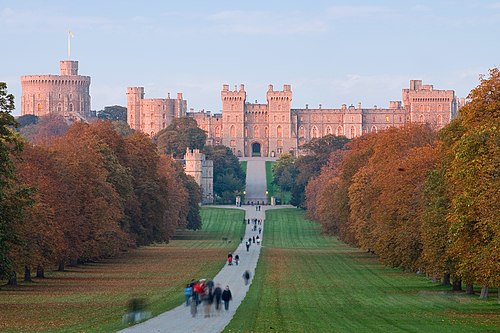 Windsor CastleRestored · prime 1820
 Tower of LondonRestored · prime 1285
 Bamburgh CastleRestored · prime 1904
All castles in England → · Strongest castles in England → · Castles of Europe
Play As Your Clan
Hold a real castle against whatever you choose to send at it, take a ship out in her own service years, or stand at the shoulder of someone the record remembers. The chronicler sets the scene; the deeds are yours.
Notable bearers of the Booth name
- William Booth (1829-1912), founder of the Salvation Army; first General of the Salvation Army 1878-1912
- Catherine Booth (1829-1890), co-founder of the Salvation Army; foundational female preacher of the movement
- Bramwell Booth (1856-1929), second General of the Salvation Army
- Evangeline Booth (1865-1950), fourth General of the Salvation Army