Newman
The new man, the village byname that named a Cardinal.
- Origin
- London, England
- Famous bearer
- Saint John Henry Newman (1801-1890), Anglican-then-Catholic theologian; Cardinal 1879; canonised 2019
- Register
- English family
The Newman arms and country

Coat of armsNewman ArmsIt's No Game · CC BY 2.0 
Coat of armsArms of Newman of Fifehead-MagdalenBorne by the Fifehead-Magdalen line, one branch of the name rather than all of it.Aergia · CC BY-SA 4.0


- Coat of arms: Granted to an individual and inherited down that one documented line. These are the arms of particular families of the name, not of everyone who shares the surname.
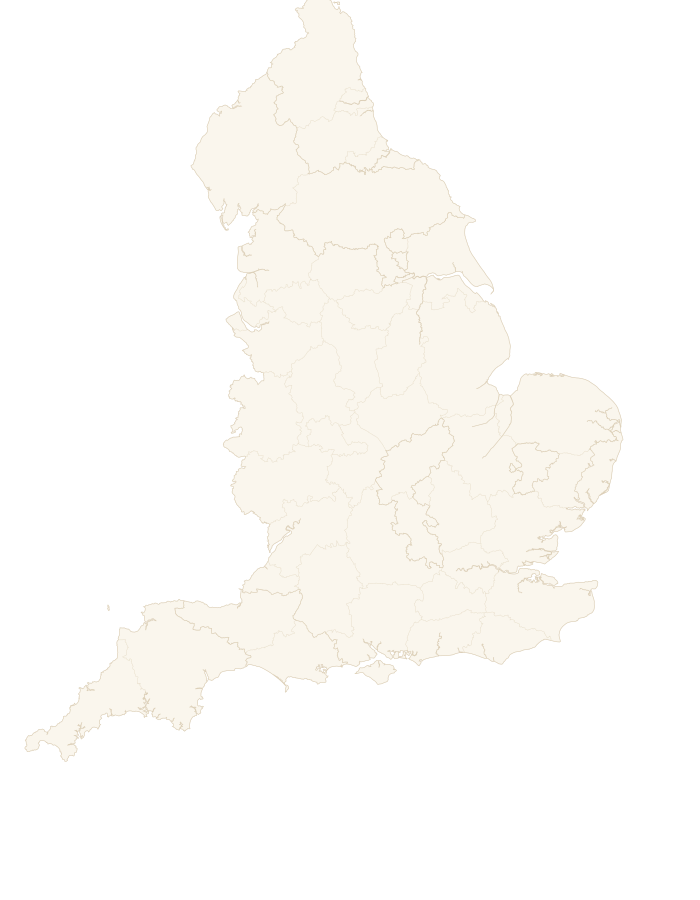
CoreHistoric reach
The seat of Newman
Seat vacantChief
No one leads the Newman community yet. When the movement opens, you can stand for its leadership, or help elect whoever does.
Current mission
No shared goal set yet. Once Newman has leadership, it sets the public focus: a restoration, a gathering, a real-world project that helps its own.
The Newman clan is being rebuilt. Join the waiting list for the movement today, and you help decide who leads it and what it does.
Help rebuild the Newman clan →What does the Newman name mean?
Descriptive, the new man, the Middle-English byname for an incomer or new arrival in a parish or settlement. The Newman byname (literally the man who is new to the village) crystallised into the hereditary surname across the fourteenth-and-fifteenth-century surname-fixation period. The Newman surname is distributed across the south-eastern English counties with a particular concentration in the Greater-London-and-Home-Counties medieval-and-early-modern migration-zones.
The history of Newman
The man who had not been there long enough to be from anywhere
Newman is built from two of the plainest words in the language, both pre-seventh-century Old English: neowe, new, and mann, man. Together they made a nickname for a recent arrival or settler, and the first bearer anyone recorded was Godwin Nieweman, in Oxfordshire in 1169. He is the whole idea of the name already: a man known to his neighbours by the single fact that he had not been there long. His given name, Godwin, is English, not one of the William and Robert and Richard set the Normans had lately made fashionable.
What the byname withholds matters as much as what it says. Many bynames given to incomers record where the man came from, fixing him as of London or of Lucca. Nieweman records no origin at all. It placed him purely against the village instead: not one of us, not yet. The name stayed roughly where it was coined, a southern and Home Counties surname at home in London, Kent and Surrey, with older weight in Essex, Hertfordshire, Bedfordshire, Berkshire and Oxfordshire.
What a village did with a stranger
The England that produced the byname was unusually interested in who belonged. The conquest had turned the country into a question of newcomers: historians put the Norman and other continental landholders at around eight thousand, a small incoming minority set over the native population, and all English land was now held from the king for military service. The Domesday survey of 1086 recorded the result, that only about five per cent of land south of the Tees was left in English hands, and it named for every holding who had held it before 1066.
Underneath the land settlement ran a quieter movement that mattered more to the name: through the Middle Ages people drifted from smaller communities towards the towns, and a new arrival needed a name that would define him where nobody knew his family.
The century the nickname stopped being true
A byname was a description, not an inheritance. Hereditary surnames appear among the English barons in the eleventh century, and Christopher Daniell points to 1140 for what may be the first recorded use of a surname inherited across generations. By 1400 most English families, and most in Lowland Scotland, had them. They were not always welcome: compulsory surnames were resisted in late medieval England because people associated them with taxation. Henry VIII, reigning from 1509 to 1547, ordered marital births recorded under the father's surname, and the registers did the rest.
That freeze, somewhere between the fourteenth century and the Tudor period, is what makes this name worth a page. A trade name stays roughly honest, because a Smith's son often stood at the same forge. Newman went false in one generation. The grandson of the man who arrived had been born in the parish, buried his parents in its churchyard and could name every field in it, and he was still, to the register, the new man.
Why two Newman families need not be kin
Nothing about the byname required a single founder. Any settlement that received an incomer could invent it on the spot, in the same obvious words, without reference to any other doing the same. Newmans are therefore routinely unrelated: two families of the name in neighbouring counties are likelier to descend from two different strangers than from one, and no shared arms, seat or ancestor stands behind the surname. A line traced back should end in a particular village and a particular arrival, not in a common stock.
The same coinage happened across the continent in the local words. Neumann is the German, Swiss and Austrian form, and its first recorded bearer is Herman Nyeman of Barth, in Germany, in 1325. Neuman, Naumann, Nauman, Neiman and Numan belong with them: not borrowings, but the same observation made independently in several languages. A four-year study led by the University of the West of England, concluded in 2016, set out the classes of British surname, among them the descriptive: names like Brown and Short, which describe the original bearer and nobody after him. Newman belongs in that class. Richard Coates, who led it, notes that Short may itself have begun as an ironic name for a tall man.
Taking a newcomer's name to places where it fitted again
In the seventeenth century the name went abroad and turned briefly accurate once more. Francis Newman, who died in 1660, is recorded as an English colonist, and Samuel Newman, 1602 to 1663, was a British clergyman of the same century. Nothing makes them kin, and given how the name was made it would be rash to assume it, but between them they put a surname meaning newcomer onto ships bound for places where its bearers genuinely were new.
In the following century Abram Newman (1736 to 1799) was a British grocer, and the name reached America from continental Europe as well, in Selig Newman, 1788 to 1871, the Polish-American Hebraist and editor. From there it spread across the English-speaking world without losing its southern English root: Sydney Newman, 1917 to 1997, worked as a Canadian-British film and television producer, and Alysha Newman, born 1994, competes as a Canadian pole vaulter.
Littlemore, Rome and a cardinal's hat
The most consequential bearer of the name spent his life on a crossing. John Henry Newman was born in London in 1801 and made his career as an Anglican priest and theologian at Oxford, where he stood at the centre of the Oxford Movement of the 1830s and 1840s and built a community at Littlemore. In 1845 he was received into the Roman Catholic Church, and the conversion became the defining religious and intellectual event of the Victorian century in England.
The Church he joined eventually set him at its summit. Pope Leo XIII created him a cardinal in 1879, in his seventy-ninth year; he died in 1890. On 13 October 2019 Pope Francis canonised him, which makes Saint John Henry Newman the cardinal-saint of the modern English Catholic tradition, and the reason a byname for a village incomer is now spoken in Rome. He was not the only Newman in Victorian intellectual life: Francis William Newman, 1805 to 1897, was an English scholar and philosopher.
The Newmanry, a surname that became a place at Bletchley Park
Max Newman was born in Chelsea in 1897 and became a mathematician. During the Second World War he ran a codebreaking section at Bletchley Park that everyone there called the Newmanry, after him: this surname turning back into a place rather than the other way round.
What he did afterwards outlasted the war. In 1948 the machine known as the Manchester Baby ran, the first stored-program computer, built under Newman's leadership. He was knighted, and he died in 1984. His generation carried the name into uniform more widely: Augustus Charles Newman, 1904 to 1972, was a British lieutenant colonel, and Beryl Newman, 1911 to 1998, an American soldier.
Screen, score and printed page
Paul Newman, 1925 to 2008, was born in Cleveland and became the leading American screen actor of the later twentieth century, and a racing driver besides. The films are the ones people still name: The Hustler in 1961, Cool Hand Luke in 1967, Butch Cassidy and the Sundance Kid in 1969, and The Color of Money in 1986, for which he took the Academy Award for Best Actor in 1987. The part of his life that has kept working is the company he founded in 1982, Newman's Own, a charitable food business that has given away more than 600 million dollars.
The name recurs through film music: Lionel Newman, 1916 to 1989, was an American film score composer, and Randy Newman (born 1943) and Thomas Newman (born 1955) are composers and songwriters. Elsewhere it belongs to Nanette Newman, born 1934, English actress and author; to Andrea Newman (1938 to 2019), British author, and Kim Newman (born 1959), British journalist and novelist; to Ernest Newman, 1868 to 1959, British music critic and musicologist; and to Charlie Newman, 1857 to 1922, a British rugby player. None of them needed to be related to any of the others, and that is the point of the name.
Historic Places, Rebuilt
Explore the streets and seats the Newman name knew, rebuilt with AI as they stood in history.
The castles of the homeland
The great strongholds of the homeland, look one up, see what it looked like in its prime, and recreate it to explore.
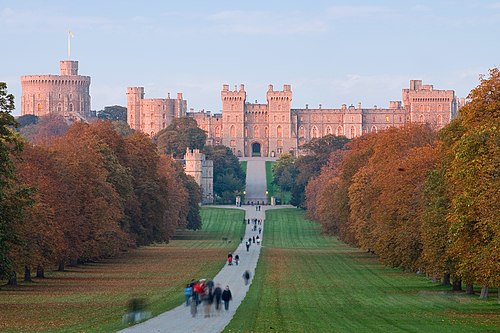 Windsor CastleRestored · prime 1820
 Tower of LondonRestored · prime 1285
 Bamburgh CastleRestored · prime 1904
All castles in England → · Strongest castles in England → · Castles of Europe
Play As Your Clan
Hold a real castle against whatever you choose to send at it, take a ship out in her own service years, or stand at the shoulder of someone the record remembers. The chronicler sets the scene; the deeds are yours.
Notable bearers of the Newman name
- Saint John Henry Newman (1801-1890), Anglican-then-Catholic theologian; Cardinal 1879; canonised 2019
- Paul Newman (1925-2008), American actor; founder of Newman's Own food-products charity
- Sir Max Newman (1897-1984), Chelsea-born mathematician; leader of the Newmanry codebreaking section at Bletchley Park; built the Manchester Baby (1948), the first stored-program computer