Wilkinson
Son of little William, the northern patronymic that bored Watt's cylinders.
- Origin
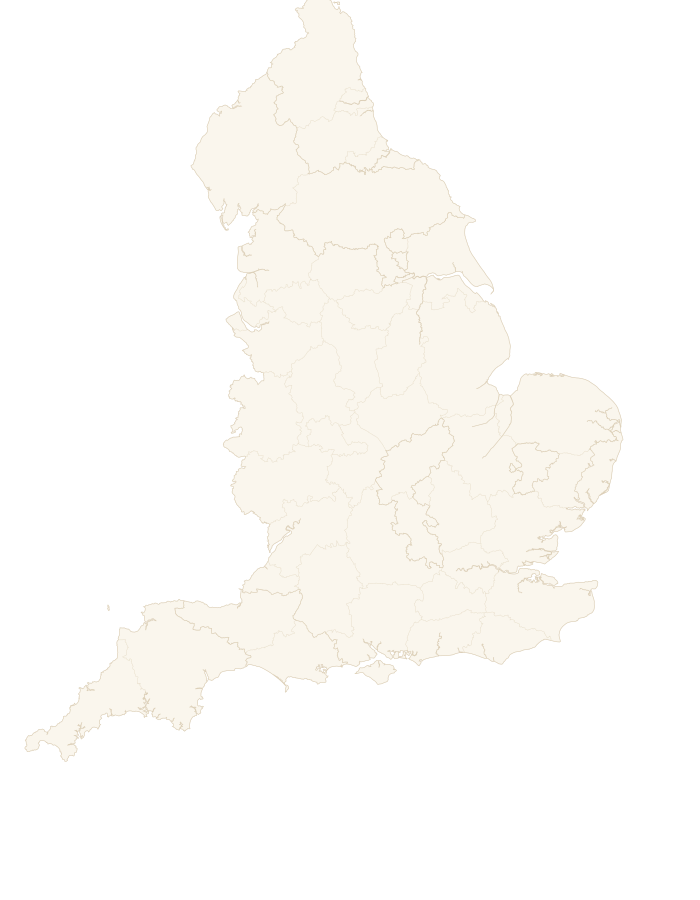
- Yorkshire & the Humber, England
- Famous bearer
- John 'Iron-Mad' Wilkinson (1728-1808), iron master, patentee of the cylinder boring machine
- Register
- English family
Where the Wilkinson name comes from
CoreHistoric reach
The seat of Wilkinson
Seat vacantChief
No one leads the Wilkinson community yet. When the movement opens, you can stand for its leadership, or help elect whoever does.
Current mission
No shared goal set yet. Once Wilkinson has leadership, it sets the public focus: a restoration, a gathering, a real-world project that helps its own.
The Wilkinson clan is being rebuilt. Join the waiting list for the movement today, and you help decide who leads it and what it does.
Help rebuild the Wilkinson clan →What does the Wilkinson name mean?
Son of Wilkin, a Middle English diminutive of William (William + the affectionate -kin suffix that also gave us Jenkin from John, Watkin from Walter, Hodgkin from Roger). The northern -son patronymic took the diminutive form rather than the bare first name (whence Wilson takes the bare William), giving Wilkinson its concentrated northern distribution from Yorkshire across to Cumbria and down the Pennine flank. The Wilkin/Wilkes/Wilcock family of diminutives belongs to the wave of affectionate name-shortening that swept English Christian-name usage in the thirteenth and fourteenth centuries, frozen into hereditary surnames by the fifteenth.
The history of Wilkinson
Wilkin, the little William, and the -son the north preferred
William arrived with the Conquest and settled in as the ordinary name of ordinary men. The English font-name stock stayed astonishingly narrow: of the boys born in London in 1510, 24.4 per cent were named John, 13.3 per cent Thomas and 11.7 per cent William, three names carrying nearly half the male population. A pool that shallow forces invention, and the thirteenth and fourteenth centuries answered with the affectionate -kin suffix. William became Wilkin, John became Jenkin, Walter became Watkin, Roger became Hodgkin. Wilkin was what a household called a man, not what a clerk wrote on a charter.
Then the north did something the south did not. Where the bare font-name took the patronymic ending and produced Wilson, the northern counties fixed -son to the pet form instead, and the result was Wilkinson: son of little William. Both are variants of Williamson, and the Wilkin element is reckoned Norman, brought to the Anglo-Scottish border after 1066. By 1400 most English families had hereditary surnames, and the fifteenth century froze Wilkinson in the shape it still has. What follows is not a name changing but a name spreading.
Westmorland at 4.3 times the British average
The 1881 census turns the name into a map. Wilkinson was densest of all in Westmorland, at 4.3 times the British average, and behind Westmorland came Yorkshire, County Durham, Lincolnshire, Cumberland, Northumberland, Lancashire, Cheshire and Nottinghamshire. Nine counties, every one of them northern or north-midland. Few surnames give a distribution that clean: the -son ending on a pet form is a northern habit, and the census caught the habit still holding its ground.
The hereditary form runs continuously in the West Riding parish registers from the late fourteenth century onward, and the modern spread still follows the same ground: all three Ridings and the city of York, the East Riding and Humber, Tyneside, Wearside and Durham, Tees Valley, Northumberland, Cumbria, Lancashire and Greater Manchester, then down the Pennine spine through Derbyshire into north Staffordshire. The southward reach into Shropshire, Staffordshire and the Black Country is later ground, and it is industrial ground, worked by the one Wilkinson everybody in the trade knew.
Bersham, New Willey, Bradley, Brymbo
John Wilkinson (1728-1808) was Cumbrian-born and known to his contemporaries as Iron-Mad Wilkinson. He founded four ironworks in thirty-one years: Bersham in Denbighshire in 1761, New Willey in Shropshire in 1763, Bradley in Staffordshire in 1767, and Brymbo back in Denbighshire in 1792. That is a working life laid out across the Welsh border and the English Midlands, and it put the family name into counties where the 1881 census would never have found it thick.
The nickname was earned by taking iron literally. Wilkinson was a partner in the Coalbrookdale Iron Bridge of 1779. In 1787 he built the Trial, the first iron barge, against the obvious objection that iron sinks. And he left instructions that he be buried in an iron coffin, in the iron chapel of his own foundry at Bradley, which was done. Few industrialists have been so consistent about the material that made them.
The cylinder that had to be true
James Watt's separate-condenser engine had a problem that was not a problem of theory. It needed a steam-tight piston running inside an iron cylinder, and no machine then in existence could bore an iron cylinder round enough and straight enough to hold the seal. The engine worked on paper and leaked in metal. In 1774 Wilkinson patented a precision cylinder boring machine that could hold the tolerance, and the first cylinder followed in 1775.
The consequence is larger than the machine. Without Wilkinson's boring tool Watt's engine would not have worked; without Watt's engine the second half of the Industrial Revolution would have run to a different chronology. It is one of the rare cases where a single piece of shop-floor precision sits directly under an entire era, and the name stamped on the patent is a northern patronymic meaning son of little William.
Dazzle, and the periscope that could not read it
Norman Wilkinson (1878-1971) was a Cambridge-born marine painter, which is to say a man who spent his career studying how a ship reads at sea. In 1917, at the height of the U-boat war, he invented dazzle camouflage: a disruptive geometric paint scheme applied to Royal Navy and merchant vessels. It did not try to hide the ship, which is impossible on open water. It attacked the range-finding optics of German submarine periscopes. By the end of the war over two thousand Allied ships carried his patterns.
The Todmorden chemist and the sandwich compound
Sir Geoffrey Wilkinson (1921-1996) was born at Todmorden. He shared the 1973 Nobel Prize in Chemistry for foundational work on organometallic sandwich compounds: metal atoms bound between flat aromatic rings, ferrocene and the family that came after it. That chemistry underpins large parts of modern industrial catalysis.
A silkwoman, a prizefighter and a suffragist
Joan Wilkinson, who died in 1556, was an English silkwoman and Protestant reformer. Elizabeth Wilkinson, recorded between 1722 and 1733, was an English boxer. Sarah Scudgell Wilkinson (1779-1831) was an English writer of children's books.
The nineteenth and twentieth centuries gave the name campaigners. Jeannette Wilkinson (1841-1886) was an English suffragist and trade unionist. Fanny Wilkinson (1855-1951) was a British gardener and landscape designer. Ellen Wilkinson (1891-1947) was a British Labour Party politician. Jemima Wilkinson (1752-1819) was an American charismatic preacher. Vicky Wilkinson (b.1983) is an English professional boxer.
Stages, decks and the drop-goal of 2003
Tate Wilkinson (1739-1803) was an English actor and manager. Louis Wilkinson (1881-1966) was a British novelist. Stephen Wilkinson (1919-2021) was a British choral conductor and composer, and Kevin Wilkinson (1958-1999) an English drummer. Colm Wilkinson (b.1944) is an Irish actor, the name having crossed the Irish Sea as readily as it crossed the Atlantic.
In sport the name is best known for one kick. Jonny Wilkinson (b.1979), the England rugby union fly-half, struck the drop-goal that won the 2003 Rugby World Cup. Howard Wilkinson (b.1943) is an English footballer and manager. Len Wilkinson (1916-2002) and Joan Wilkinson (1919-2002) were English cricketers, and Wilkie Wilkinson (1903-2001) was a British mechanic and founder member of the British Racing Mechanics Club. Iron-Mad's boring machine, a Nobel medal, two thousand dazzled hulls and a drop-goal: not bad for son of little William.
The castles of the homeland
The great strongholds of the homeland, look one up, see what it looked like in its prime, and recreate it to explore.
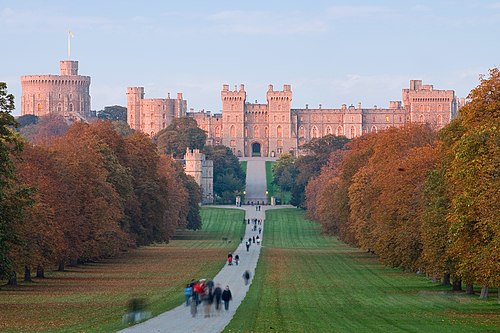 Windsor CastleRestored · prime 1820
 Tower of LondonRestored · prime 1285
 Bamburgh CastleRestored · prime 1904
All castles in England → · Strongest castles in England → · Castles of Europe
Play As Your Clan
Hold a real castle against whatever you choose to send at it, take a ship out in her own service years, or stand at the shoulder of someone the record remembers. The chronicler sets the scene; the deeds are yours.
Notable bearers of the Wilkinson name
- John 'Iron-Mad' Wilkinson (1728-1808), iron master, patentee of the cylinder boring machine
- Sir Geoffrey Wilkinson (1921-1996), Nobel Laureate in Chemistry 1973
- Norman Wilkinson (1878-1971), marine painter, inventor of dazzle camouflage
- Jonny Wilkinson (b.1979), England rugby union fly-half, 2003 Rugby World Cup winning drop-goal