Landmark · England · Legendary
Avalon
Avalon is the legendary Isle of Avalon from Arthurian tradition, described as an island of apple trees and magical abundance where King Arthur's sword Excalibur was forged and where the wounded Arthur was taken to be healed. The island is associated with the enchantress Morgan and with a ring of sisters who rule there, and has long been identified in later tradition with Glastonbury Tor in southwest England.
Its prime
1150
Today
Legendary
As it stood in 1150
What Avalon looked like in its prime.
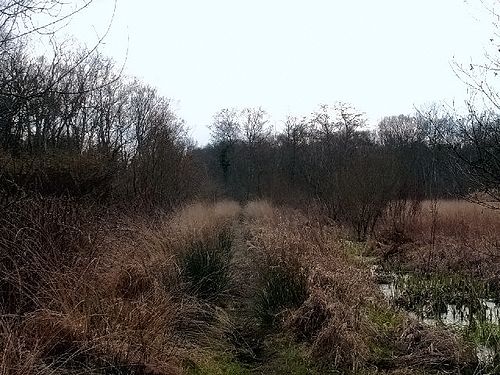
A low, mist-touched island of orchards and meadows: woods of apple trees, close-clipped grassy fields that appear to bear grain and grapevines without ploughing, sheltered coves with small boats at the waterline, and a gentle tor or hill rising above surrounding marshland. Light is often pale and diffuse, with blossoms and wildflowers thick on the grass; any human dwellings are low and tucked into the tree line, while a central clearing or hall serves as a focal point for ritual and healing.
Its story
The story of Avalon.
Naming the Isle of Apples: Geoffrey, Malmesbury and Gerald, 12th Century
Avalon is an island of the Arthurian legend, not a place on any map. It first appears in Geoffrey of Monmouth's Historia Regum Britanniae of about 1136, as Insula Avallonis: the place where Arthur's sword Caliburn was forged, and where the gravely wounded king was carried after the Battle of Camlann in the hope that he could be healed. In the later Vita Merlini, of about 1150, Geoffrey called it Insula Pomorum, the Isle of Fruit Trees, and gave it nine ruling sisters headed by the enchantress Morgen. His description leans heavily on Isidore of Seville's chapter on the Fortunate Isles: a land needing no ploughs, where grain, grapes and apples grow of their own accord and people live a hundred years or more.
The name has been long debated. It is generally traced to the Welsh afallen, apple or fruit tree, though a Cornish or Breton origin is also possible. Medieval writers preferred a founder: William of Malmesbury claimed it came from a man called Avalloc who lived on the isle with his daughters, and Gerald of Wales from a former ruler, Avallo.
Morgan's Black Boat and the Vale of the Grail
The romances that followed Geoffrey made Avalon Morgan's domain; in Chretien de Troyes's Erec and Enide, Guingomar is named as her lover and Lord of the Isle of Avalon. In many versions, Thomas Malory's Le Morte d'Arthur among them, Morgan and several other magical queens arrive after Camlann to carry the dying Arthur away in a black boat, the Lady of the Lake sometimes among them.
What happens to Arthur there is told differently from text to text. In the Stanzaic Morte Arthur the Archbishop of Canterbury receives the body from Morgan and buries it at Glastonbury; in the Alliterative Morte Arthure physicians from Salerno, not Morgan, try and fail to save him; the Gesta Regum Britanniae states in the present tense that Morgan "keeps his healed body for her very own and they now live together". Robert de Boron's Joseph d'Arimathie speaks instead of a vale of Avalon in western Britain, to which Joseph of Arimathea's fellowship brought the Grail.
The Grave at Glastonbury Abbey, 1190-1539
Glastonbury, some 15 miles from the sea, was ringed by marsh before the Somerset Levels were drained, and its earliest Welsh name was the Isle of Glass. At the end of the 12th century Gerald of Wales wrote in De principis instructione that "what is now known as Glastonbury was, in ancient times, called the Isle of Avalon", explaining the Welsh Ynys Afallach as the Island of Apples and naming Morgan as the noblewoman who carried Arthur there.
Around 1190 the monks of Glastonbury Abbey claimed to have found the bones of Arthur and Guinevere, in a search commissioned by the new abbot Henry de Sully. At a depth of five metres they were said to have uncovered an unmarked tomb with a treetrunk coffin and a lead cross. Accounts of its inscription vary; the earliest is Gerald's, of about 1193, who said he had traced the lettering himself and read it as "Here lies buried the famous Arthurus with Wenneveria his second wife in the isle of Avalon". The chronicle of Margam Abbey reported three bodies, the third being Mordred.
Historians generally dismiss the find as pseudoarchaeology, attributing it to a publicity stunt to raise funds for rebuilding the abbey after the fire of 1184. The remains were reburied with great ceremony in 1278 before the high altar, with Edward I and Eleanor of Castile present, and moved again in 1368 when the choir was extended. The grave drew pilgrims until the abbey was dissolved in 1539.
Etna, Burgundy and the Somerset Levels: Avalon Relocated
Medieval writers put Avalon in many places. Italian romances and folklore tied Morgan's undying realm, and sometimes Arthur's, to Mount Etna and the Strait of Messina, where the Fata Morgana mirage takes her name; Lope García de Salazar's summary of the Post-Vulgate cycle conflated Avalon with the Island of Brasil, west of Ireland. Later claimants have included the Roman fort of Aballava in Cumbria, Bardsey Island off Gwynedd, and the town of Avallon in Burgundy, championed by Geoffrey Ashe as part of a theory connecting Arthur with the Romano-British leader Riothamus.
The claimed grave ensured the identification held: later romances and the histories built on them took it up, and that stretch of the Somerset Levels is now popularly called the Vale of Avalon. That reputation has made the town a tourist destination and one of the major New Age communities in Europe, of religious significance to neo-Pagans and modern Druids as well as to some Christians; the same identification within hippie subculture helped inspire the annual Glastonbury Festival.
Step inside
7 places to explore in 1150.
The record describes 7 distinct spots at Avalon, including 1 interior: morgan's healing hall (central chamber). Create your own photoreal reconstruction and explore every one, more scenes means more photos, more angles and more of the immersive experience.
Build Your Own Castle
Recreate Avalon with AI to explore it.
The artist rebuilds it as it stood in 1150, a photoreal reconstruction that belongs to you alone. Pay with coins, no subscription needed.
Recreate Landmark to Explore →Nearby