
Croatia · Restored
Medvedgrad
Medvedgrad is a medieval fortified town and hilltop castle on the south slopes of Medvednica mountain above Zagreb. Built in the mid-13th century, it stands on a narrow spur with concentric curtain walls and a prominent round tower. The site was ruined by earthquakes and later partly restored and today offers panoramic views over the surrounding forested slopes.
First raised
1300
Its prime
1262
Today
Restored
As it stood in 1262
What Medvedgrad looked like in its prime.
Perched on a narrow rocky spur of Medvednica, the castle presents irregular pale limestone curtain walls enclosing a rectangular inner bailey. A dominant cylindrical stone tower with narrow slit windows and a steep conical shingled roof rises near the ridge; lower towers and wall-walks connect around the courtyard. A wide arched gateway pierces the inner wall, and the courtyard is paved with irregular stone slabs, all set against densely forested mountain slopes dropping away to the south.
Its story
The story of Medvedgrad.
Disputed Origins After the Mongol Invasion, 1242–1262
Zagreb was destroyed and burned when the Mongols invaded in 1242, and tradition holds that Philip Türje, bishop of Zagreb, encouraged by Pope Innocent IV, built Medvedgrad on Medvednica between 1249 and 1254 to shelter the cathedral's treasures against a renewed attack. Modern historians dispute this account: some argue the fortress predates the Mongol invasion and was first raised as a ducal residence rather than a stronghold, while others credit King Béla IV himself, rather than the bishop, with its construction. The question of who built Medvedgrad, and when, remains unresolved. Most of the building work was finished by 1262, when Béla IV took the fortress over; it later passed to the bans of Slavonia.
Owners by the Score: Kings, Bans and a Poet's Death, 1262–1562
Over the following three centuries Medvedgrad changed hands roughly 150 times. Its owners included kings Sigismund of Luxembourg and Matthias Corvinus, the Babonić, Zrinski and Erdődy families, and the counts of Celje, who became lords of the castle in 1436, along with numerous other nobles and bishops.
Two notable men died within its walls: the Hungarian and Croatian poet and diplomat Janus Pannonius, Ban of Slavonia, on 27 March 1472, and Ivan Karlović, Ban of Croatia, in 1531. The Gregorijanec family took possession in 1562 and were the castle's last noble inhabitants.
The Black Queen: The Legend of Barbara of Celje
Medvedgrad's best-known story attaches to Barbara of Celje, daughter of Count Herman II of Celje and wife of King Sigismund of Luxembourg, remembered locally as the "Black Queen." Legend says she sold her soul to the devil and hid a great treasure, guarded by a snake, in tunnels said to run between Medvedgrad, Kaptol and Grič. Other tellings hold that she did not end up at Medvedgrad but was buried alive at Veliki Tabor in Hrvatski Zagorje, where her cries are said to still be heard.
Earthquakes and the End of Private Ownership, 1574–1945
The walls were reinforced in 1574, but the 1590 earthquake left the tower, halls and chapel so damaged that the owner, Stjepko Gregorijanec, was forced to abandon the castle for Šestine. Medvedgrad was reduced further to ruins, together with the Veliki Kalnik fortress at Križevci, by an earthquake in 1699. Its last owners, the Kulmer family, held Medvedgrad until ownership was taken from them after the Second World War.
Restoration and the Altar of the Homeland, 1970s–1994
Croatia's Institute for Restoration began work on the ruined fortress in the late 1970s, uncovering a Bronze Age axe, Gothic seal-stamps, and fragments of pottery, glass and weapons; the castle chapel was uncovered in 1981 and fully restored. Below the main tower, the sculptor Kuzma Kovačić's Oltar Domovine (Altar of the Homeland), dedicated to Croatian soldiers killed in the Croatian War of Independence, was opened by President Franjo Tuđman on 30 May 1994.
The ruins are registered as protected cultural property in Croatia, and the partly restored fortress now looks out over Zagreb from an elevation of more than 500 metres.
Step inside
6 places to explore in 1262.
The record describes 6 distinct spots at Medvedgrad, including 1 interior: inner courtyard (bailey). Create your own photoreal reconstruction and explore every one, more scenes means more rooms, more angles, and more of the place to stand in.
Build Your Own Castle
Recreate Medvedgrad with AI to explore it.
The artist rebuilds it as it stood in 1262, a photoreal reconstruction that belongs to you alone. Pay with coins, no subscription needed.
Recreate this castle →Defend this castle →Whose castle
Clans who held Medvedgrad.
The families that held Medvedgrad for a decade or more across its history, follow a name to its clan.
Gregorijanec
In possession from 1562, the castle's last noble inhabitants.
Kulmer
The last owners of Medvedgrad.
From the archive
Medvedgrad on paper: the measured plan and period views.
The survey plan and photographs below are the ground truth this page's reconstructions are checked against, drawn and photographed while the castle was still a working garrison. Every image is public-domain or openly licensed, with its source named.
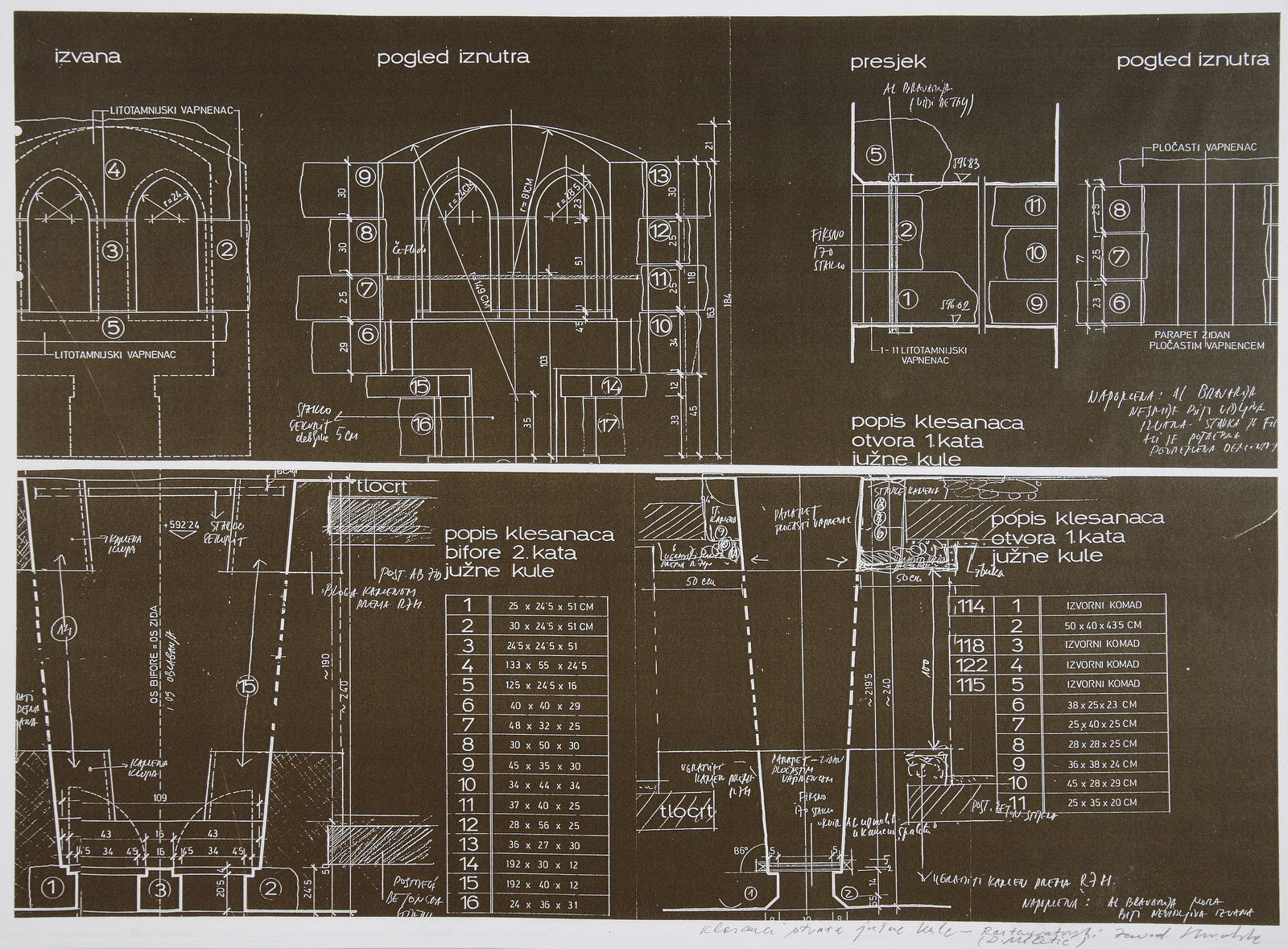
Medvedgrad - South tower
1994 · https://uri.hr/indigo/org:muo (via Europeana)
CC BY-SA
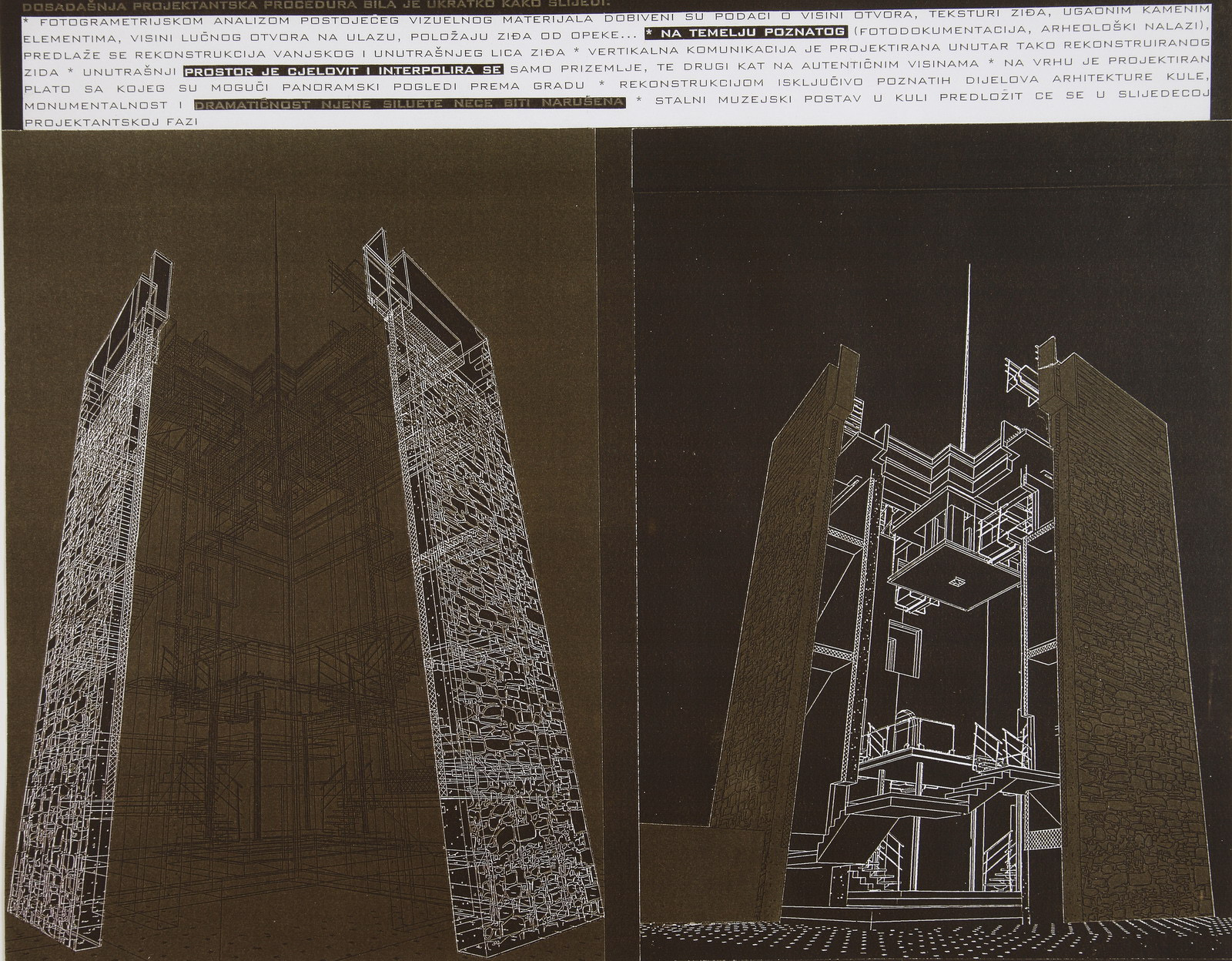
Medvedgrad - South tower
1994 · https://uri.hr/indigo/org:muo (via Europeana)
CC BY-SA
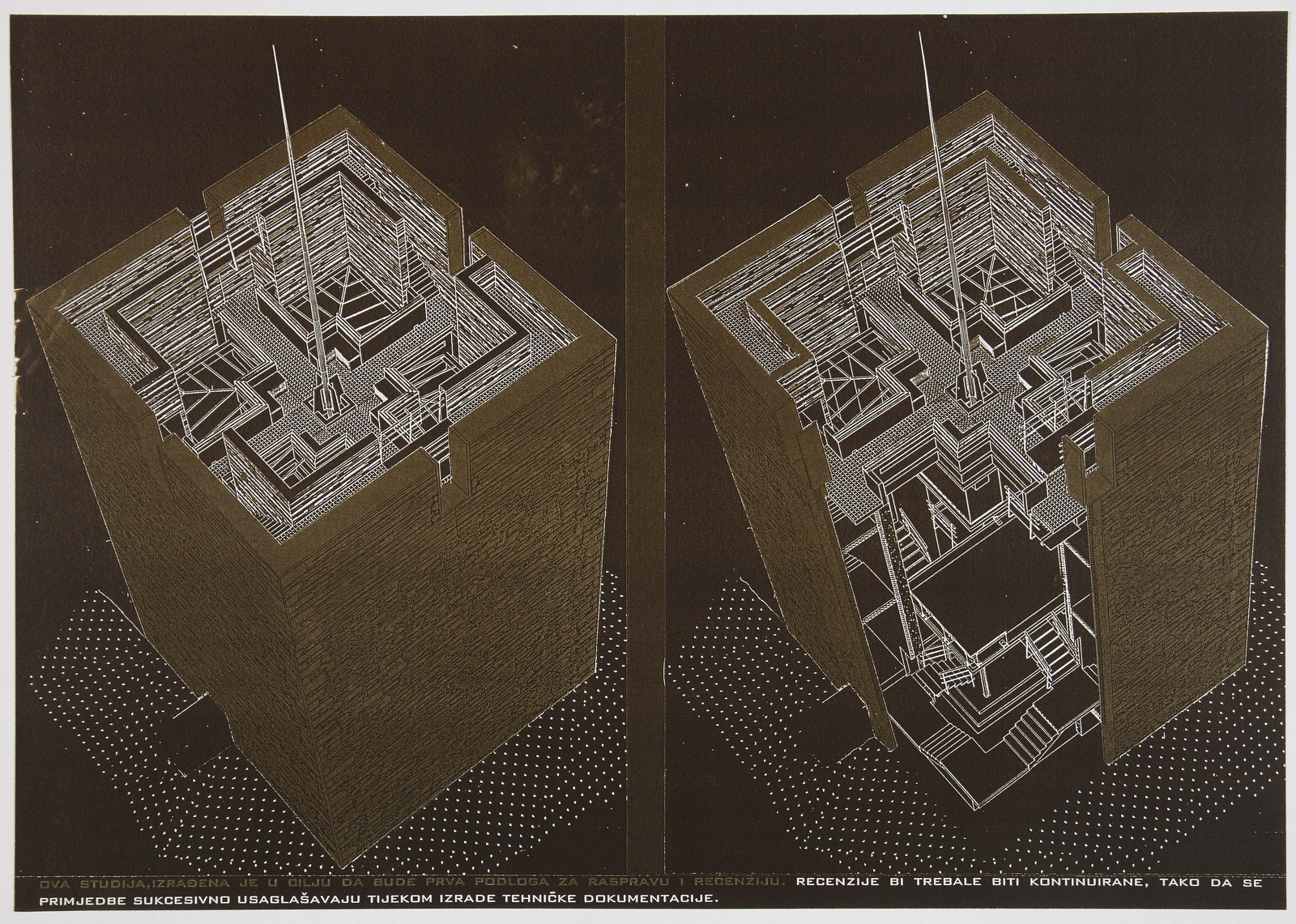
Medvedgrad - South tower
1994 · https://uri.hr/indigo/org:muo (via Europeana)
CC BY-SA


