
Croatia · Ruin
Udbina Castle
Tvrđava Udbina
Udbina Castle is a medieval fortified structure on a hill at the northern end of the town of Udbina, overlooking the Krbava field. It was an important regional stronghold that passed from Croatian noble owners into Ottoman hands in the early 16th century and was retaken in 1689; thereafter it declined and by the 19th century fell into ruin. Today only fragmentary masonry remains on the hilltop.
First raised
1500
Its prime
1600
Today
Ruin
As it stood in 1600
What Udbina Castle looked like in its prime.
Perched on a rounded hilltop above the Krbava field, the castle centers on a tall, round bergfried (donjon) of roughly carved cut stone with an inner diameter near 7 m and wall thickness about 2–2.4 m (total diameter just over 11 m). Around the tower are three thick concentric defensive stone walls exhibiting a bastionic, earthen-embanked profile; remaining outer curtain walls are thinner and follow the hill slope, all built of local cut stone with raw, irregular masonry.
Its story
The story of Udbina Castle.
Udbina Castle stands on a hill at the northern end of Udbina, overlooking the Krbava field where the fierce and bloody Battle of Krbava between the army of the Kingdom of Croatia and the Ottoman Empire was fought in 1493. Built of cut stone, it was an important stronghold of Croatian troops during the wars of Ottoman expansion in the 15th century.
The castle belonged to the powerful Kurjaković noble family. Shortly before the battle Karlo Kurjaković, who possessed a large part of Lika including Udbina, suddenly died, leaving in the castle his wife Dorotea née Frankopan and his small son Ivan, later ban of Croatia and the last male of the line. Despite the Croatian defeat of 1493, Udbina fell to the Ottomans only in 1527, becoming their stronghold in the region.
A Habsburg-Croatian army retook it in 1689, but by the end of the 19th century the uncared-for castle had slipped into ruin. Excavation revealed a spacious round bergfried over 11 metres in total diameter with walls up to 2.4 metres thick, ringed by three thick walls built bastion-fashion against firearms, along with ceramics, burnt wooden beams and two stone cannonballs.
Step inside
6 places to explore in 1600.
The record describes 6 distinct spots at Udbina Castle, including 1 interior: inner chamber of the bergfried. Create your own photoreal reconstruction and explore every one, more scenes means more rooms, more angles, and more of the place to stand in.
Build Your Own Castle
Recreate Udbina Castle with AI to explore it.
The artist rebuilds it as it stood in 1600, a photoreal reconstruction that belongs to you alone. Pay with coins, no subscription needed.
Recreate this castle →Defend this castle →Whose castle
Clans who held Udbina Castle.
The families that held Udbina Castle for a decade or more across its history, follow a name to its clan.
Kurjaković
Seat of the Kurjaković noble family until the Ottoman capture of 1527.
From the archive
Udbina Castle on paper: the measured plan and period views.
The survey plan and photographs below are the ground truth this page's reconstructions are checked against, drawn and photographed while the castle was still a working garrison. Every image is public-domain or openly licensed, with its source named.
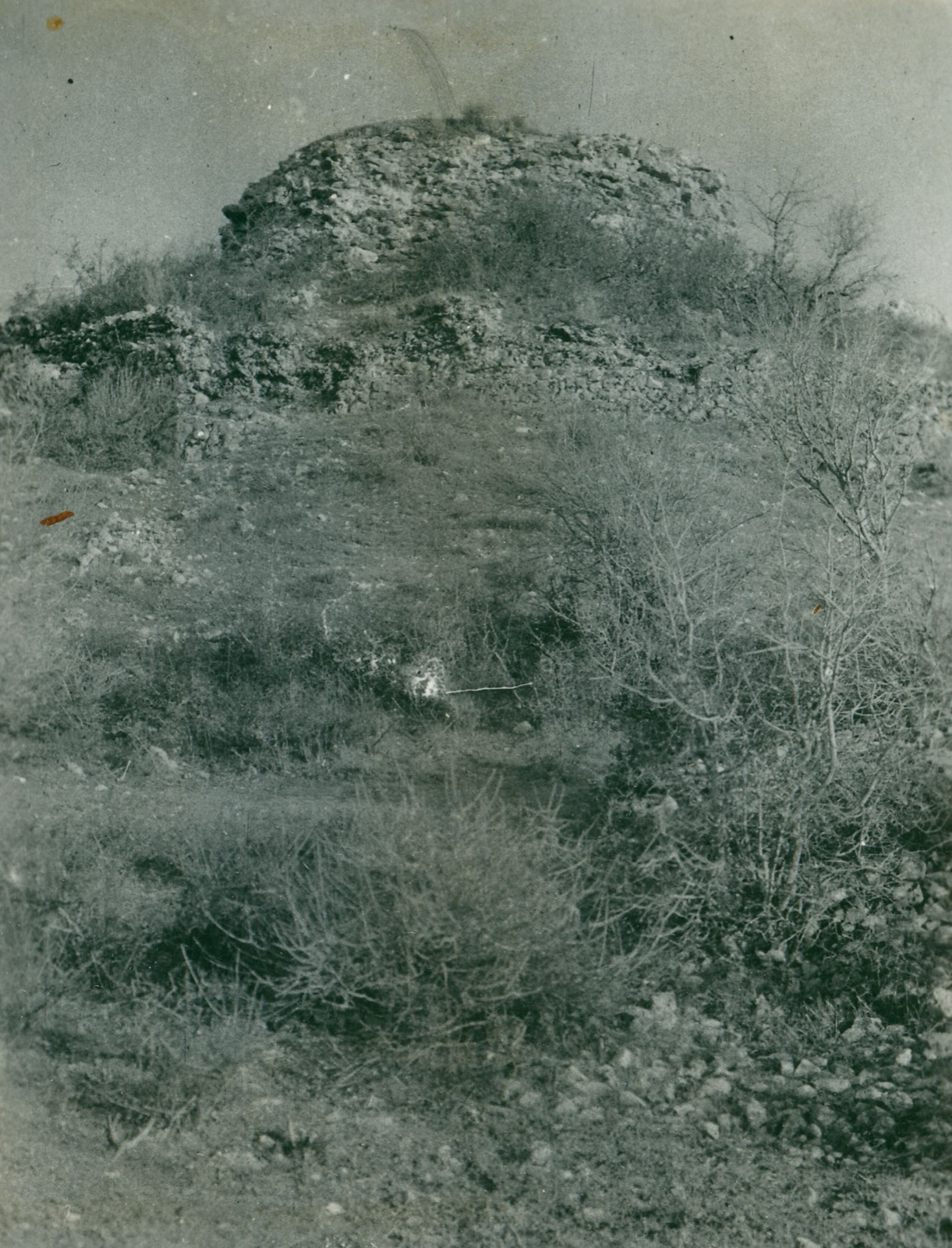
Udbina - Grad srednjovjekovni, ostaci zidova
1933 · Ministry of Culture and Media of the Republic of Croatia (via Europeana)
Public domain
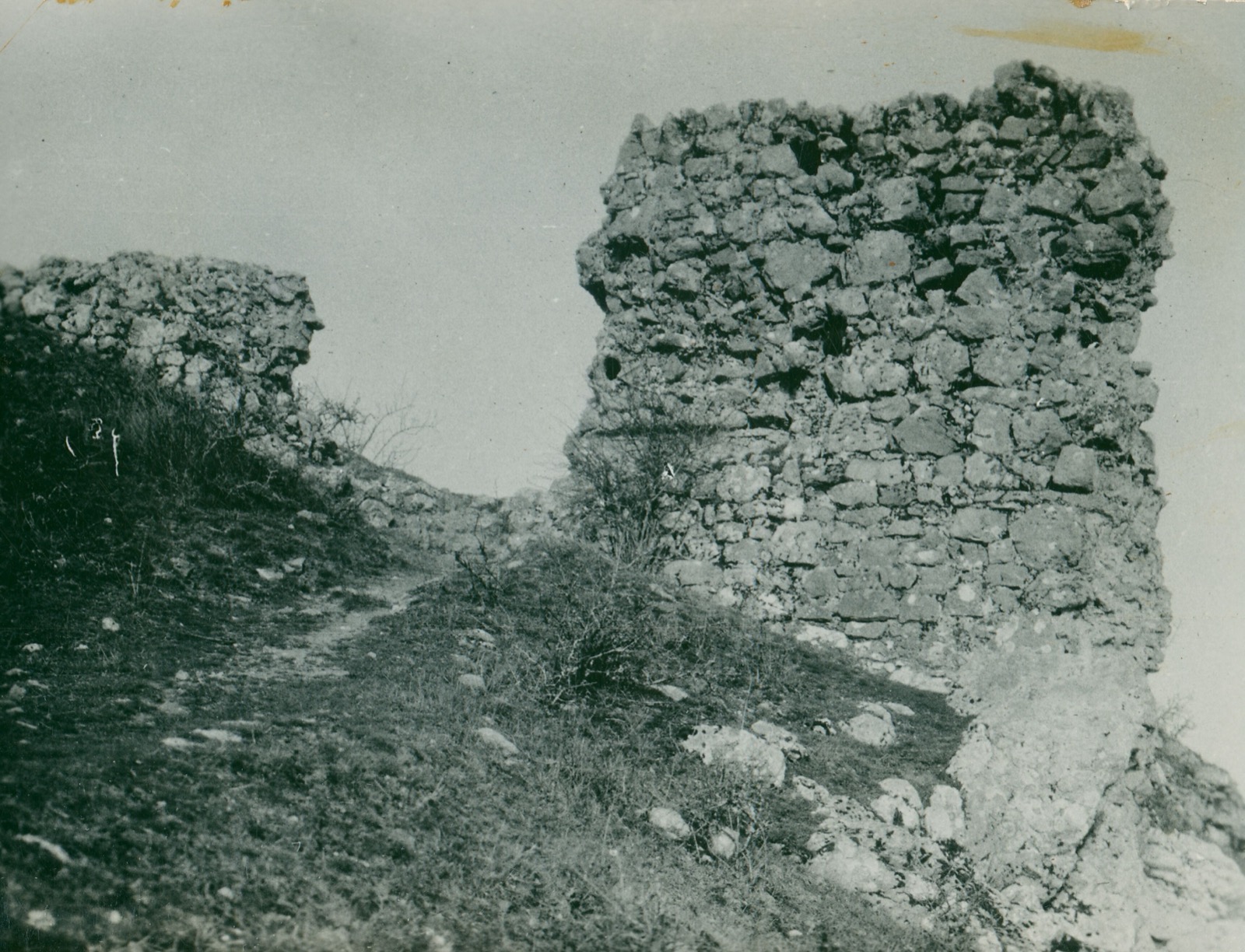
Udbina - Grad srednjovjekovni, ostaci zida
1933 · Ministry of Culture and Media of the Republic of Croatia (via Europeana)
Public domain


