England · Partial ruin
British Camp
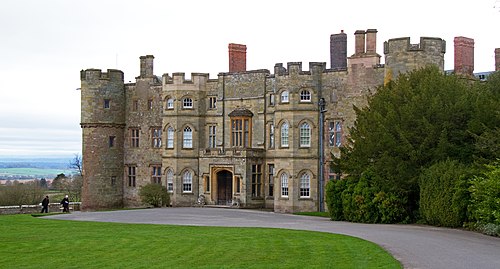
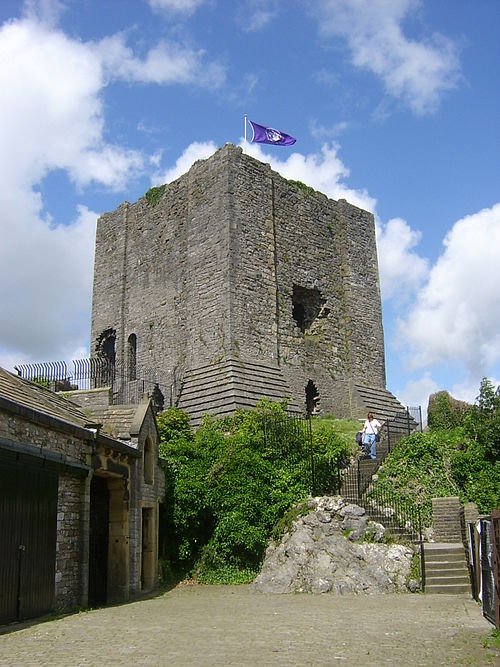
British Camp is an Iron Age hill fort on the Herefordshire Beacon in the Malvern Hills which later contained a Norman ringwork and bailey known as Colwall Castle. The site comprises extensive concentric earth ramparts and ditches across three linked hills and is a Scheduled Ancient Monument. The medieval fortress was destroyed in the 12th century and today only the earthworks remain visible at the summit.
Its prime
1150
Today
Partial ruin
As it stood in 1150
What British Camp looked like in its prime.
On the crest of the Herefordshire Beacon the site is defined by broad, grass-covered concentric earth ramparts and deep surrounding ditches forming several stepped terraces; the layers present a rounded, terraced summit. The flattened top (the citadel) is enclosed by a pronounced ringwork and inner bailey running along the ridge over three linked hills. Surfaces are turf and packed earth, with visible gaps in the banks marking original east, west and north‑east approaches.
Its story
The story of British Camp.
At Least Four Prehistoric Phases on the Herefordshire Beacon
The hill fort is thought to have been first raised in the 2nd century BC, and its builders kept returning to it: at least four prehistoric phases of construction have so far been identified. The earliest earthworks ringed the base of the central hill, the citadel, and the ditch and counterscarp bank eventually spread across three hills, running a perimeter of 6,800 feet and enclosing some 44 acres. Gates appear to have opened to east, west and north-east. Round hut platforms inside the ramparts may well suggest permanent occupation, though it is unusual to find two major forts so close together, Midsummer Hill lying only a mile to the south. The earthworks have been compared to a giant wedding cake, and John Evelyn thought the view from the 1,109-foot summit "one of the godliest vistas in England".
Along the ridge to north and south runs the Shire Ditch, or Red Earl's Dyke, cut in 1287 by Gilbert de Clare, Earl of Gloucester, after a boundary dispute with Thomas de Cantilupe, Bishop of Hereford. Recent research suggests the earthwork may be a great deal older than that quarrel, possibly beginning as a prehistoric trackway running from Midsummer Hill to the Worcestershire Beacon, the highest hill in the range, more than three miles north of the camp.
Caratacus, Tacitus and the Destruction of the Nearby Forts, AD 48
A popular legend puts the last stand of the British chieftain Caratacus here, the story continuing that after his capture he was taken to Rome and given a villa and a pension by the Emperor Claudius. Tacitus makes the location unlikely. He describes a battlefield of steep mountains all around, with rocks strewn in front "in the manner of a rampart" and a stream with an unsure ford before it, companies of armed men posted along the defences. The Severn is visible from British Camp but lies about five miles off, and other sites have been proposed instead, near Brampton Bryan or at Church Stretton, whose Iron Age fort crowns Caer Caradoc Hill.
Whether the coming of the Romans ended prehistoric use of the camp is not known. Excavation at Midsummer Hill, Bredon Hill and Croft Ambrey has found evidence of violent destruction around AD 48, which may mean British Camp was abandoned or destroyed in the same years.
Colwall Castle Inside the Iron Age Ramparts
Medieval builders sometimes set castles inside far older defences, reusing the earthworks of Iron Age forts, and British Camp is one such case. A ringwork and bailey castle, known as Colwall Castle and also as The Herefordshire Beacon, was built within the ramparts, probably in the ten years immediately before 1066. The builder was quite possibly Earl Harold Godwinson, the future King Harold II, who is recorded raising another fortress in the county at Longtown.
The Beaumont Brothers and Henry II's Demolition, 1148-1155
The castle appears to have been refortified during the Anarchy of King Stephen's reign. Before 1148 it was held by Waleran de Beaumont, 1st Earl of Worcester, and it seems to have changed hands when royalists attacked in 1151 and again in 1153; on those occasions it was defended by the men of Waleran's brother, Robert de Beaumont, 2nd Earl of Leicester. King Henry II destroyed it in 1155. Its name outlived it by more than two centuries, surfacing in a passing mention by William Langland before 1386.
Step inside
9 places to explore in 1150.
The record describes 9 distinct spots at British Camp, including the full exterior approach. Create your own photoreal reconstruction and explore every one, more scenes means more rooms, more angles, and more of the place to stand in.
Build Your Own Castle
Recreate British Camp with AI to explore it.
The artist rebuilds it as it stood in 1150, a photoreal reconstruction that belongs to you alone. Pay with coins, no subscription needed.
Recreate this castle →Defend this castle →Nearby