England · Ruin
Knaresborough Castle
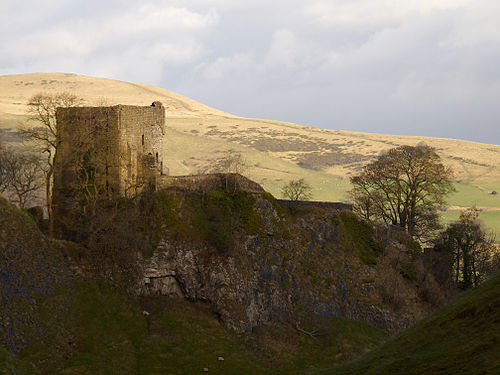
Knaresborough Castle is a medieval fortress sited on a cliff above the River Nidd in North Yorkshire. Originally founded c.1100, it was rebuilt in the early 14th century and later largely slighted in the 17th century; its ruined walls, keep and associated buildings survive as a public site and museum.
First raised
1100
Its prime
1312
Today
Ruin
As it stood in 1312
What Knaresborough Castle looked like in its prime.
Perched on a limestone cliff above the River Nidd, the castle at its prime presents two concentric baileys with continuous curtain walls pierced by solid, regularly spaced towers; a twin-towered gatehouse marks the town-side outer bailey. On the north side a tall, five-sided stone keep rises above the inner bailey with at least three storeys and a vaulted basement. The masonry is pale, weathered stone with coursed blocks and rubble infill; roofs and timber ranges fill the baileys when complete.
Its story
The story of Knaresborough Castle.
A Norman Cliff-Top Fortress and Becket's Assassins
Knaresborough Castle was first built by a Norman baron around 1100, on a cliff above the River Nidd. Documentary evidence from 1130 records works carried out at the castle by Henry I. In the 1170s the fortress acquired a dark notoriety: Hugh de Moreville and his followers took refuge there after assassinating Thomas Becket.
Kept Back by King John, 1205
William de Stuteville was appointed governor of the castle at Easter 1173. When he died in 1203, King John gave custody of all his lands and castles to Hubert Walter, Archbishop of Canterbury, together with the wardship of his son and heir Robert, but Robert died in 1205, and William's brother Nicholas became the heir instead. A charter dated at Lambeth on 5 August 1205 confirmed that Nicholas had paid a fine of 10,000 marks for his inheritance, with one telling exception: the castles of Knaresborough and Boroughbridge, which the King retained for himself. John regarded Knaresborough as an important northern fortress and spent £1,290 on improvements to it.
Two Edwards, a Royal Birth and the Queen's Summers
In August 1304 Elizabeth of Rhuddlan, a daughter of Edward I, travelled from Linlithgow Palace to Knaresborough Castle, where she gave birth to her son Humphrey in September, assisted by a holy relic, the girdle of the Virgin, brought especially from Westminster Abbey. Between 1307 and 1312 the castle was rebuilt at a cost of £2,174, a work begun by Edward I and completed by Edward II that included the great keep. Edward II gave the castle to Piers Gaveston, and stayed there himself while the unpopular nobleman was besieged at Scarborough Castle.
Philippa of Hainault took possession in 1331, and the castle became a royal residence where the queen often spent summers with her family. Her son John of Gaunt acquired it in 1372, adding it to the vast holdings of the Duchy of Lancaster; Katherine Swynford, Gaunt's third wife, obtained the castle upon his death.
Taken in 1644, Dismantled by Order in 1648
A detailed survey of the state of the castle buildings was made in 1561; the building was used by estate auditors, and law courts were held in the hall. Parliamentarian troops took the castle in 1644 during the Civil War, and it was largely destroyed in 1648, not as a result of the fighting, but under an order from Parliament to dismantle all Royalist castles. Many buildings in the town centre are built of 'castle stone'.
The keep (a tall five-sided tower at the junction of the castle's two walled baileys, which served as the lord's residence throughout the castle's history) has had its eastern parts pulled down. By 1789 the historian Ely Hargrove could write that the castle contained "only three rooms on a floor, and measures, in front, only fifty-four feet." The property still belongs to the monarch as part of the Duchy of Lancaster, administered by North Yorkshire Council, and the former courthouse in the grounds (built in the 14th century, probably as a House of Records) is now a museum.
Step inside
9 places to explore in 1312.
The record describes 9 distinct spots at Knaresborough Castle, including 4 interiors: outer bailey courtyard and residential ranges, vaulted basement of the keep, principal upper chamber of the keep and more. Create your own photoreal reconstruction and explore every one, more scenes means more rooms, more angles, and more of the place to stand in.
Build Your Own Castle
Recreate Knaresborough Castle with AI to explore it.
The artist rebuilds it as it stood in 1312, a photoreal reconstruction that belongs to you alone. Pay with coins, no subscription needed.
Recreate this castle →Defend this castle →From the archive
Knaresborough Castle on paper: the measured plan and period views.
The survey plan and photographs below are the ground truth this page's reconstructions are checked against, drawn and photographed while the castle was still a working garrison. Every image is public-domain or openly licensed, with its source named.
Knaresborough Castle
1897 · J. D. Mackenzie, The Castles of England, vol. 2 (1897)
Public domain
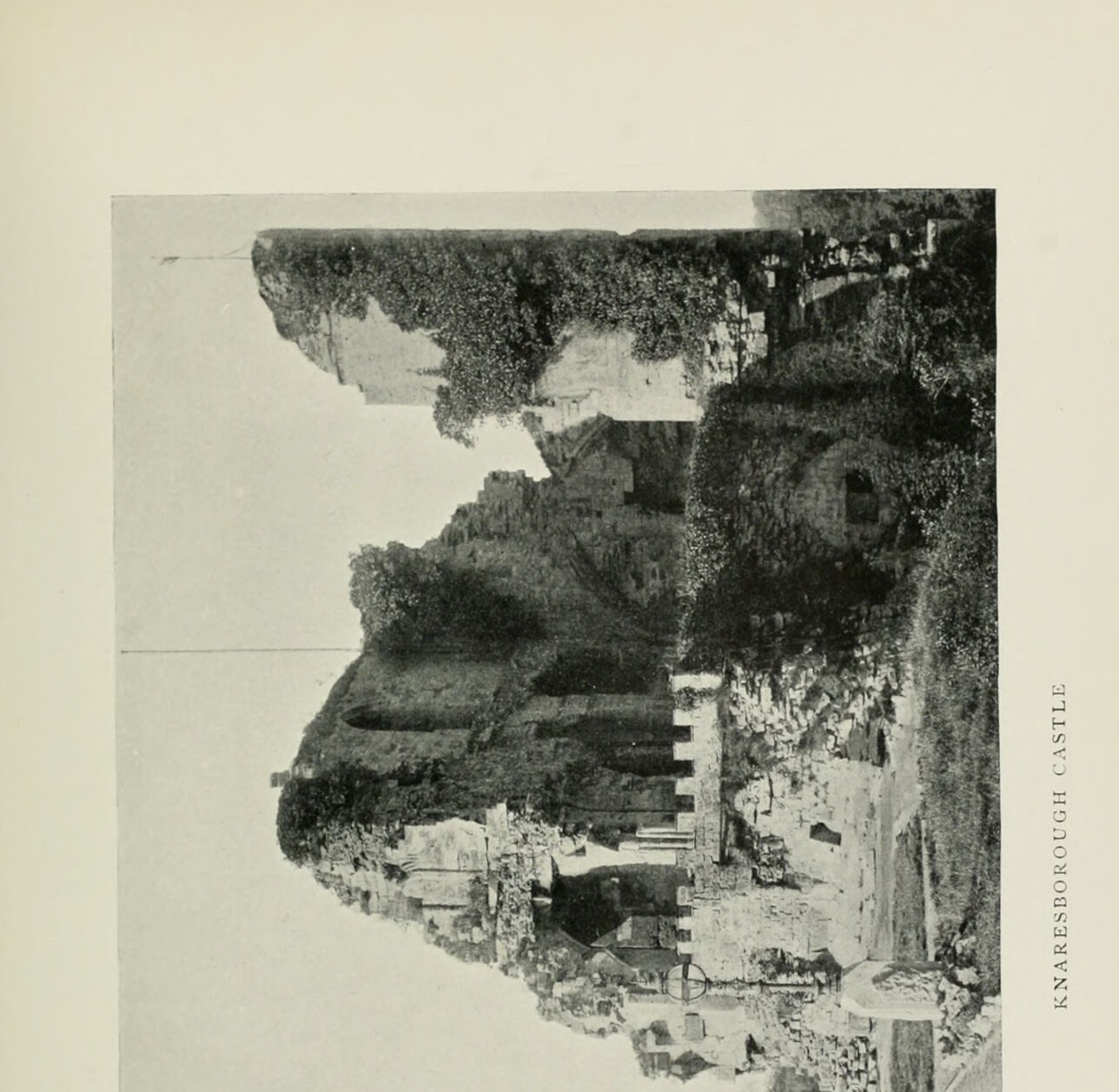
KNARESBOROUGH CASTLE
1897 · J. D. Mackenzie, The Castles of England, vol. 2 (1897)
Public domain
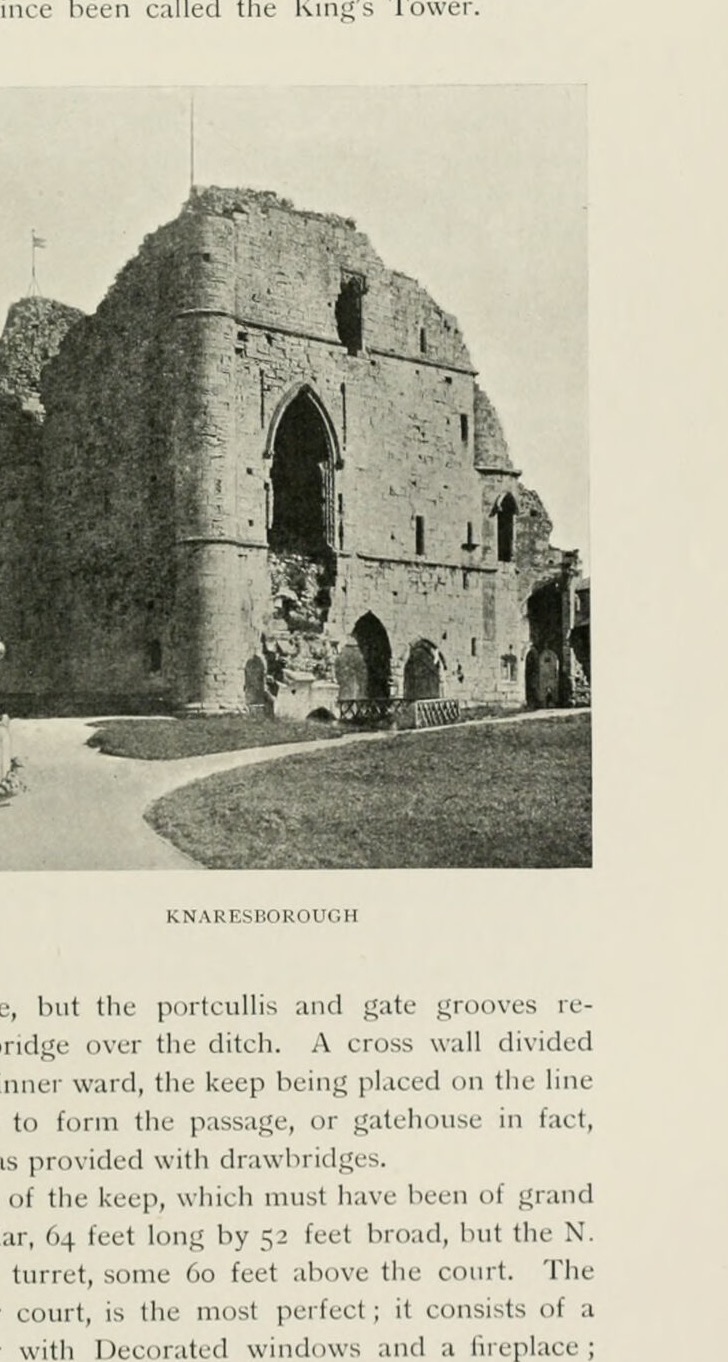
KNARESBOROUGH
1897 · J. D. Mackenzie, The Castles of England, vol. 2 (1897)
Public domain
Nearby