
England · Partial ruin
Winchester Castle
Winchester Castle was a major Norman and medieval royal residence in Winchester, Hampshire, founded by William the Conqueror in 1067. Most of the medieval complex was lost after the 17th century, but the 13th-century Great Hall and the Westgate survive and the Great Hall houses the famous Round Table and related medieval hangings.
First raised
1067
Its prime
1235
Today
Partial ruin
As it stood in 1235
What Winchester Castle looked like in its prime.
A long rectangular Great Hall built of dark flint with pale stone dressings and a steep tiled roof sits along a cobbled forecourt; its elevation is pierced by tall pointed two-light windows with early plate tracery and by a large recessed arched doorway with multiple stone orders. Adjoining ranges of similar flint-and-dressings masonry rise two storeys with gabled dormers and mullioned windows; behind the hall is space for gardens and ancillary towers including a surviving round tower.
Its story
The story of Winchester Castle.
William's Castle on the Roman Rampart, 1067
Around AD 70 the Romans threw up an earth rampart 800 ft long and 200 ft wide at Winchester and set a fort on top of it to protect the city of Venta Belgarum. William the Conqueror chose that ground for one of the first Norman castles in England, built in 1067, and for over a hundred years the castle was the seat of government of the Norman kings. In 1141, during the Anarchy, the forces of the Empress Matilda were besieged there by those of King Stephen in the Rout of Winchester. Henry II built a stone keep to house the royal treasury and the Domesday Book.
Henry III's Great Hall, 1222–1235
Henry III was born at Winchester Castle, and between 1222 and 1235 he added the Great Hall to it. The hall was built to a "double cube" plan, 110 ft long by 55 ft wide and 55 ft high, of flint with stone dressings; its walls were originally lower and its roof carried dormer windows, later replaced by the tall two-light windows with early plate tracery. It is a Grade I listed building, and the remains of a 13th-century round tower with sally ports are still visible. Edward II added further extensions.
The castle also held prisoners. In 1287 Asher, son of Licoricia of Winchester, wrote a Hebrew inscription on the ruins of the Jews' Tower, part of the castle, during the imprisonment of the whole community on 2 May that year, ahead of a huge tax on the Jews levied by Edward I and their expulsion in 1290.
The Round Table Repainted for Henry VIII
The large wooden tabletop hung in the Great Hall was made in the 13th century and only later attached to the Arthurian legend in popular tradition. It was repainted in its present form for Henry VIII, with the names of King Arthur's knights set around the rim and a portrait of Arthur that is recognisably a depiction of the young Henry himself. The Winchester Panels hung there too, a series of pictorial epigrams illuminated in medieval monastic style, thought to show the twenty-five knights of the Round Table and the challenges of a character maturing around the great "Wheel of Life".
Fire, Treason and the End of the Royal Residence
In 1302 Edward I and his second wife, Margaret of France, narrowly escaped death when fire destroyed the royal apartments. On 19 March 1330 Edmund of Woodstock, 1st Earl of Kent, was beheaded outside the castle walls in the Despenser plot against Edward III, and the place remained an important residence: Margaret of York, daughter of Edward IV, was born there on 10 April 1472. After Elizabeth I came to the throne in 1558 the castle ceased to be a royal residence and was handed to Winchester's city authorities. The nun Elizabeth Sander was imprisoned here with other Catholics in 1580; she escaped, then returned to show that Catholics were law-abiding. On 17 November 1603 Sir Walter Raleigh was tried for treason in the converted Great Hall for his supposed part in the Main Plot.
Royalist Garrison, Demolition and the Bloody Assizes
The Royalists used the castle in the Civil War. It fell to Parliamentarian forces in 1646 and was demolished on Oliver Cromwell's orders in 1649. Later in the century Charles II planned the King's House on the adjoining site and commissioned Christopher Wren to design a royal palace to rival Versailles, but James II abandoned the project.
The Great Hall outlived the castle around it. On 27 August 1685, in the aftermath of the Monmouth Rebellion, Judge Jeffreys held the Bloody Assizes there; among the accused at Winchester was Alice Lisle, condemned to death for harbouring fugitives. It went on serving as the home of the Winchester Assizes into the 20th century (six members of the Provisional IRA were tried and convicted there in 1973 for the Old Bailey bombing), and ceased to host criminal trials only when the Winchester Law Courts were built just to its east in 1974. Much of the castle has been lost, but two notable structures survive: the Great Hall, regarded as one of the finest surviving medieval halls in England, and the Westgate, once its principal defensive gateway.
Step inside
10 places to explore in 1235.
The record describes 10 distinct spots at Winchester Castle, including 4 interiors: great hall interior (double-cube), round table display, winchester panels (medieval hangings) and more. Create your own photoreal reconstruction and explore every one, more scenes means more rooms, more angles, and more of the place to stand in.
Build Your Own Castle
Recreate Winchester Castle with AI to explore it.
The artist rebuilds it as it stood in 1235, a photoreal reconstruction that belongs to you alone. Pay with coins, no subscription needed.
Recreate this castle →Defend this castle →From the archive
Winchester Castle on paper: the measured plan and period views.
The survey plan and photographs below are the ground truth this page's reconstructions are checked against, drawn and photographed while the castle was still a working garrison. Every image is public-domain or openly licensed, with its source named.
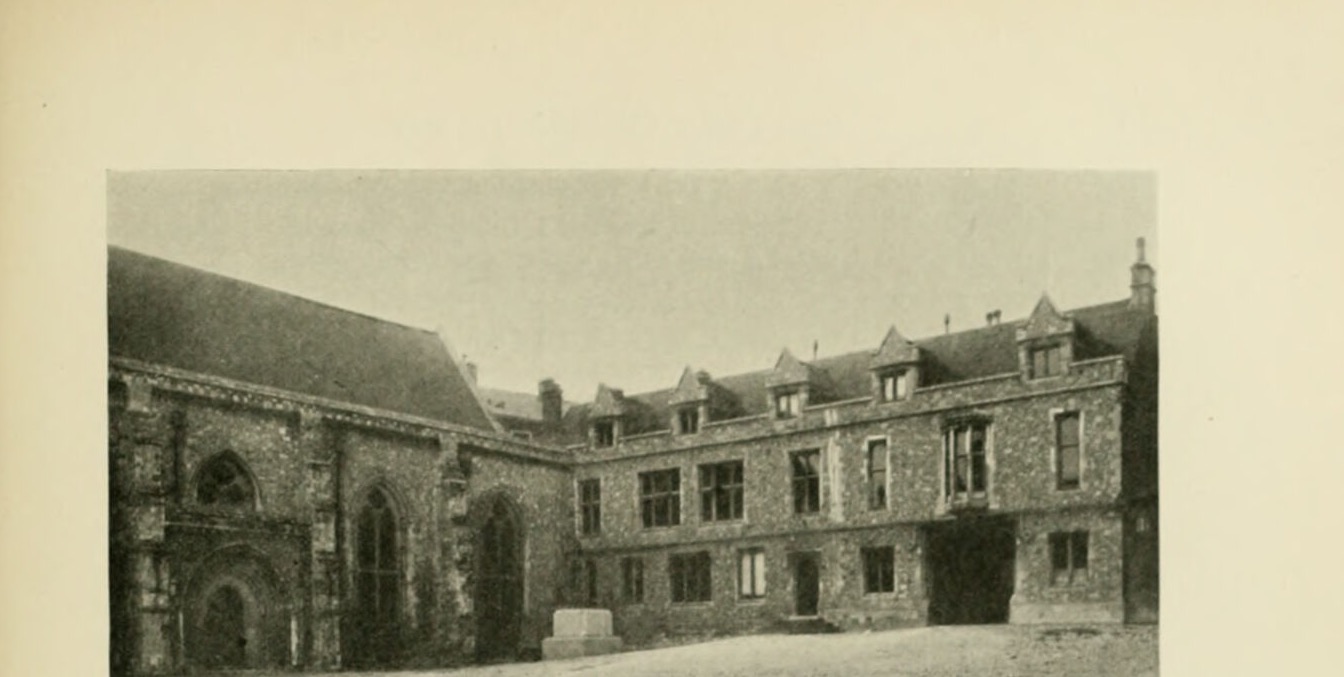
THE OLD HALL, WINCHESTER
1897 · J. D. Mackenzie, The Castles of England, vol. 1 (1897)
Public domain
Nearby
Landmarks within reach of Winchester Castle.


Questions about Winchester Castle
What is the history of Winchester Castle?
When was Winchester Castle built?
Why was Winchester Castle built, and what was it used for?
Where is Winchester Castle?
What is inside Winchester Castle?
Was Winchester Castle ever attacked or besieged?
What did Winchester Castle look like in its prime?
Is Winchester Castle still standing, or is it a ruin?
More castles of England

Explore the city


