
Germany · Restored
Altenburg
A medieval hilltop castle in Germany, dominated by a tall cylindrical stone keep and a cluster of red‑tiled residential buildings and towers. It occupies a wooded promontory and presents a compact inner ward with curtain walls and stepped gables. The site reads as a fortified residence rather than a sprawling military fortress.
First raised
1109
Its prime
1475
Today
Restored
As it stood in 1475
What Altenburg looked like in its prime.
A tall, cylindrical stone keep rises from the centre, capped by a small observation lantern and thin conical roof, surrounded by lower curtain walls and a mix of rectangular residential ranges with steep red‑tiled roofs. A stepped gable faces the viewer and a small round turret with a conical roof punctuates the roofline. Wall stone is grey‑beige masonry; roofs are orange‑red clay tile. The castle sits on a wooded hilltop with trees along the slope and a compact inner courtyard enclosed by the walls.
Its story
The story of Altenburg.
Church Property Above Bamberg, 1109–1305
The Altenburg first appears in 1109, in the charter by which Bishop Otto of Bamberg made the castle over to the collegiate chapter of St James. Its name, old castle, suggests it was already reckoned old by then, and its origins may predate the year 1000. As church property it carried little military weight. A chapel was consecrated here in 1124 by Bishop Otto I to Walburga, Philip and James, though where it stood is not known, and a charter of 1251 placed the castle in the custody of Bishop Heinrich I of Bilversheim for four months only, the chapter remaining its owner. Effective control by the prince-bishops began in the first decade of the 14th century.
Second Residence of the Prince-Bishops, 1305–1556
From then until 1553 the Altenburg served as the prince-bishops' second residence, though only from the late 14th century did they develop it into a fortified residence above the town, and it reached its present extent in the early 15th century. The round keep, in the barrel shape that makes it recognisable in every old view of Bamberg, has a core of about 1400–1414, raised under Prince-Bishop Albrecht von Wertheim. In the Peasants' War of 1524–25 the castle was besieged but neither taken nor, so far as the record goes, seriously damaged.
The Second Margrave War ended that. In 1553 the Altenburg was not stormed: it was handed over to the army of Albert Alcibiades, Margrave of Brandenburg-Kulmbach, and given up to destruction, the residential buildings burning along with the chapels that had succeeded that of 1124. The keep, the curtain walls and the core of the gatehouse survived, and the gatehouse was rebuilt in 1554–1556 under Bishop Weigand von Redwitz.
Prison, Landslip and the Sale of 1801, 1586–1818
The bishops moved to Geyerswörth Palace in 1586, and the ruined castle then served for a time as a state prison. The hill is sandstone on landslide-prone clay, and slippage repeatedly took walls with it: much of the eastern curtain was lost in 1750, and a slide at the north-eastern corner around 1778–80 brought down parts of the north and east walls. In 1743 Prince-Bishop Friedrich Karl von Schönborn had an upper storey set on the keep by Johann Jakob Michael Küchel.
In 1801 the prince-bishopric sold the castle, apart from its fortifications, to the Bamberg physician Adalbert Friedrich Marcus, who paid 400 gulden for the decaying complex and made the surviving gatehouse habitable as a summer retreat, saving the complex from demolition. His friend E. T. A. Hoffmann, in Bamberg from 1808 to 1813, took his recreation in one of the wall towers, and covered the inside walls of the cell that bears his name with caricatures of Bamberg people. After Marcus died the property fell into a bankruptcy estate; in 1818 the royal postmaster Anton von Grafenstein initiated a society for the castle's preservation, the first monument-preservation society in Bavaria, and Bamberg citizens bought it for 4,800 gulden.
The Altenburgverein Rebuilds, 1834–1902
An existing room under a late-Gothic vault of about 1450 was fitted out as a chapel in 1834–35 to designs by Bernhard Solger and consecrated in 1836; grave monuments from Bamberg's secularised churches were brought into it, among them that of Martin von Redwitz, who died in 1505, probably made in Tilman Riemenschneider's workshop. The present Palas, which holds the Knights' Hall, was put up in 1901–02 on the medieval cellars of the original residential block to a design by the Bamberg architect Gustav Haeberle, paid for largely by the shoe manufacturer Heinrich Manz; Haeberle added the keep's onion dome in 1902.
The Marcus Grave, the Last Castle Bear and the Castle Today, 1902–2025
Marcus had wished to be buried near the castle, and his grave was covered by a memorial slab carved by the sculptor Joseph Daniel Ohlmüller. The memorial was destroyed in 1938 because of Marcus's Jewish descent; the grave itself was left intact. Those responsible were convicted around 1950, and in 1962 the site was made good with four sandstone blocks carrying a bronze plaque of his name and dates.
A brown bear, Hassan, was kept at the castle from 1902 to 1916, and from 1952 until the end of 1982 a bear named Poldi (after Luitpold Weegmann, the Bamberg mayor who sponsored him) lived in an enclosure there as the last castle bear at the Altenburg. The enclosure survives, and Poldi's head is shown at Bamberg's natural history museum. The eastern wall was rebuilt in exposed concrete in 2002. Listed as an architectural monument in Bavaria, the castle is open for public tours, and since 2025 it has again housed a restaurant, Altenburg 1, whose keepers also run the Knights' Hall for weddings and other celebrations.
Step inside
8 places to explore in 1475.
The record describes 8 distinct spots at Altenburg, including 2 interiors: top of the keep / observation room, stepped‑gabled residential wing (palas). Create your own photoreal reconstruction and explore every one, more scenes means more rooms, more angles, and more of the place to stand in.
Build Your Own Castle
Recreate Altenburg with AI to explore it.
The artist rebuilds it as it stood in 1475, a photoreal reconstruction that belongs to you alone. Pay with coins, no subscription needed.
Recreate this castle →Defend this castle →From the archive
Altenburg on paper: the measured plan and period views.
The survey plan and photographs below are the ground truth this page's reconstructions are checked against, drawn and photographed while the castle was still a working garrison. Every image is public-domain or openly licensed, with its source named.
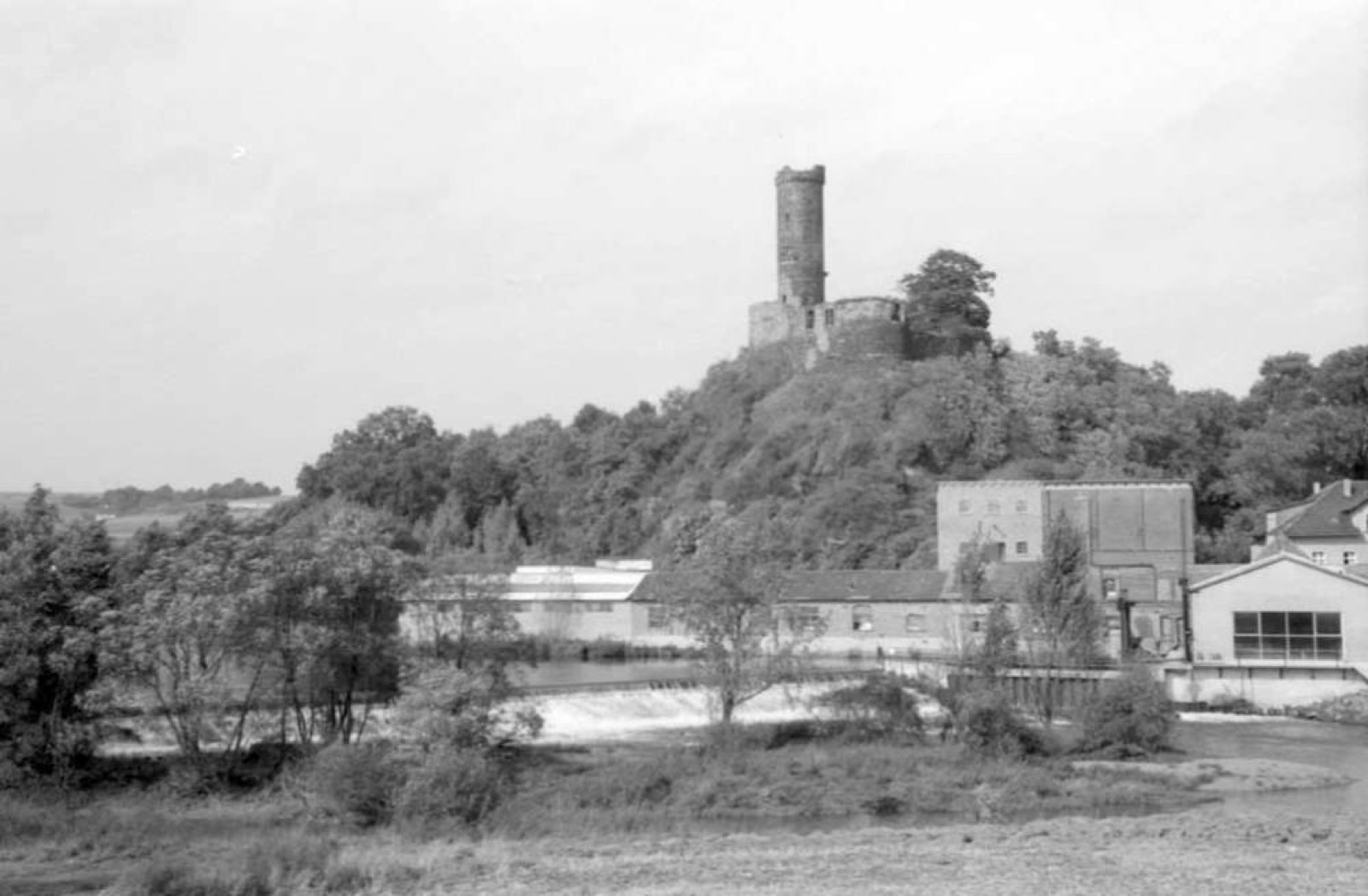
Altenburg: Burgruine Altenburg
· State Archives of Baden-Württemberg (via Europeana)
CC BY
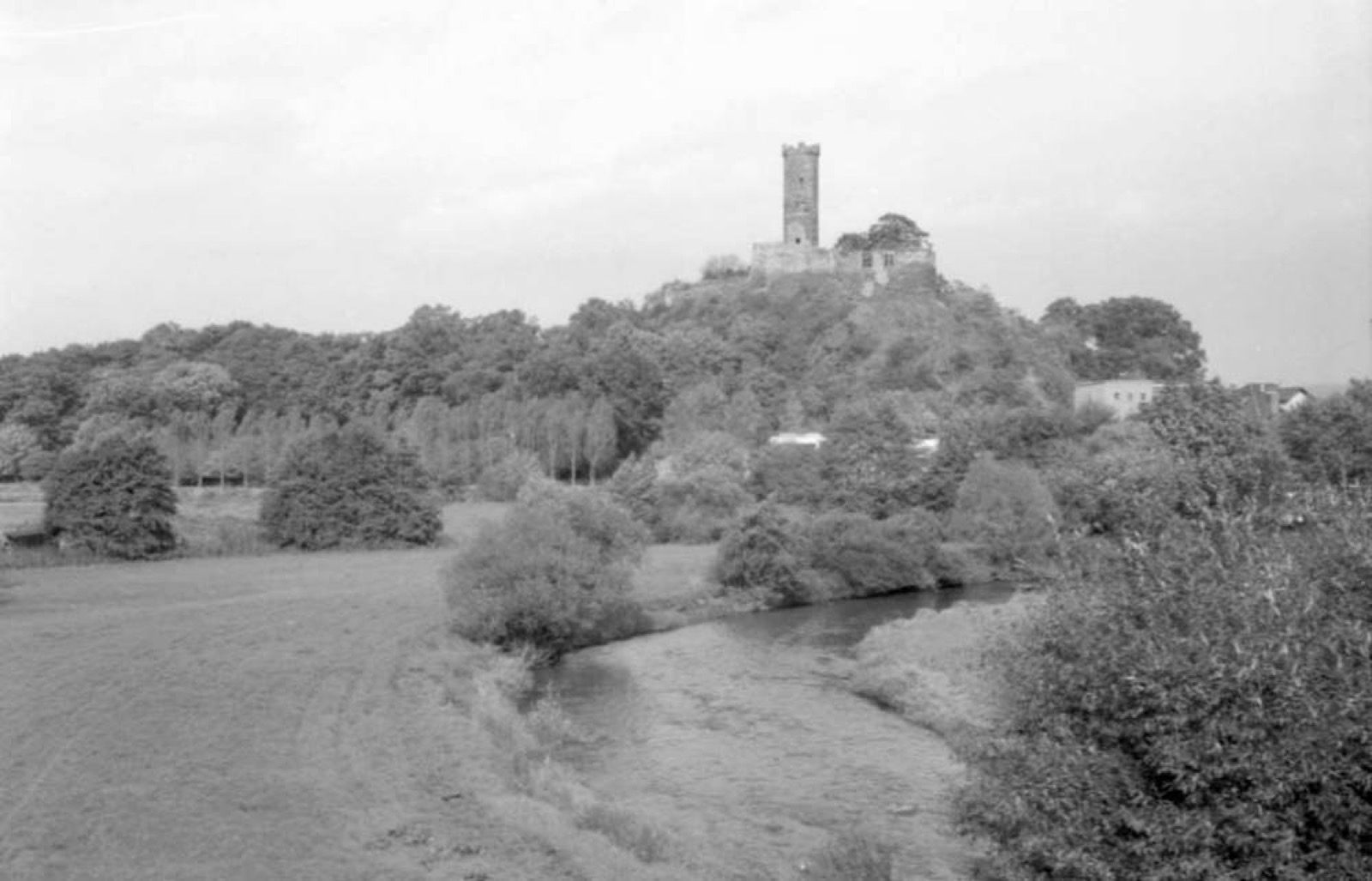
Altenburg: Burgruine Altenburg
· State Archives of Baden-Württemberg (via Europeana)
CC BY


