
Germany · Restored
Katz Castle
Burg Katz
Katz Castle (Burg Katz) is a medieval fortress perched on a rocky ledge above Sankt Goarshausen in Rhineland-Palatinate, Germany. Built in the late 14th century, it features a compact layout dominated by a great hall and a massive cylindrical bergfried; it was damaged in 1806 and rebuilt in the late 19th century, and is now privately owned.
First raised
1301
Its prime
1435
Today
Restored
As it stood in 1435
What Katz Castle looked like in its prime.
Perched on a steep, wooded riverside ledge, the castle presents a compact stone block with a crenellated curtain wall facing downstream, three conical-roofed round towers on the riverward façade, and a very large cylindrical bergfried set on the uphill side. Warm-brown ashlar masonry contrasts with grey slate roofs and white-framed windows. Terraced retaining walls and a small lower round tower step down the slope; at prime the walls, towers and bergfried are complete and defensive.
Its story
The story of Katz Castle.
Built to Watch Burg Maus, c. 1360–1371
Count William II of Katzenelnbogen built Katz Castle between about 1360 and 1371, most likely because the Trier-held Burg Maus, going up on the facing spur since 1356, stood so close to it. Together with Burg Rheinfels across the Rhine, the new castle formed a toll barrier and strengthened the network of fortresses the Katzenelnbogen counts controlled across south-west Germany. Its official name was Burg Neukatzenelnbogen, after the family's older castle, but it was soon shortened in everyday use to "die Katz", "the Cat", and paired in popular memory with its neighbour "die Maus", built as close as possible to its military counterpart.
In 1435 the counts became the first to plant Riesling grapes in their vineyard here.
A Bone of Contention Between Hesse-Kassel and Hesse-Darmstadt, 1479–1763
The male line of Katzenelnbogen died out in 1479, and the county (Katz Castle with it) passed to the Landgraves of Hesse, after Landgrave Heinrich III of Hesse-Marburg married the last count's daughter. The castle then became a repeated bone of contention in inheritance disputes between the Hesse-Kassel and Hesse-Darmstadt lines, alongside Burg Rheinfels; it was besieged and partly destroyed in both 1626 and 1647, and in the course of the dispute was also repeatedly strengthened with new fortifications and gun positions. In 1692, during the War of the Palatinate Succession, it was damaged again when Louis XIV's armies besieged Rheinfels nearby. During the Seven Years' War the French captured it in 1758 and gave it back in 1763.
Napoleon's Demolition and Ferdinand Berg's Rebuilding, 1806–1898
In 1806 Napoleon had the castle, until then undamaged, blown up, just as he did Burg Gutenfels above Kaub. The ruin passed in 1816 to the Duchy of Nassau, changed private hands repeatedly through the nineteenth century, and was finally bought in 1896 by Ferdinand Berg, then district administrator of Kreis St. Goarshausen.
Berg had it rebuilt as a residence to designs by the Cologne architects Schreiterer & Below, completed in 1896–98, echoing the medieval building but taking little care over what medieval fabric survived: the range facing the Rhine only distantly recalls the old great hall. Genuine medieval masonry remains only in the ruined bergfried and parts of the hillside shield wall and outer bailey.
Labour Camp, Boarding School, and a Hotel That Never Opened, 1928–2002
The castle was auctioned in 1928. In 1936 it passed to the Reich Labour Service, which set up a training camp there. After the Second World War the Federal Republic of Germany, as legal successor to the German Reich, became the owner, and the castle served first as a makeshift school building for the Institut Hofmann boarding school, opened in 1948, after wartime damage had left the institute's own building in St Goarshausen unusable; pupils were taught in barracks put up on the castle grounds for the purpose. After the town building was renovated in 1950–51 it resumed as the ordinary secondary school, though boarders continued to use the castle barracks for study.
Boarders remained housed at the castle until 1966, when they moved into the newly built, by-then state-run Wilhelm-Hofmann-Gymnasium in St Goarshausen. Until the end of 1987 Katz Castle was a recreation home run by the German federal finance administration's welfare service; it closed for want of a fire escape, and the castle was put up for sale. In 1989 the Japanese business consultant Satoshi Kosugi bought it for 4.3 million Deutschmarks, intending to convert it into a hotel for Japanese visitors, a conversion that was never carried out. The castle remains in private Japanese ownership and closed to the public; since 2002 it has formed part of the Upper Middle Rhine Valley UNESCO World Heritage Site.
Step inside
7 places to explore in 1435.
The record describes 7 distinct spots at Katz Castle, including 1 interior: great hall interior. Create your own photoreal reconstruction and explore every one, more scenes means more rooms, more angles, and more of the place to stand in.
Build Your Own Castle
Recreate Katz Castle with AI to explore it.
The artist rebuilds it as it stood in 1435, a photoreal reconstruction that belongs to you alone. Pay with coins, no subscription needed.
Recreate this castle →Defend this castle →Whose castle
Clans who held Katz Castle.
The families that held Katz Castle for a decade or more across its history, follow a name to its clan.
Katzenelnbogen
Built c. 1371 by Count William II of Katzenelnbogen; in 1435 the counts planted the first Riesling vines in their vineyard.
From the archive
Katz Castle on paper: the measured plan and period views.
The survey plan and photographs below are the ground truth this page's reconstructions are checked against, drawn and photographed while the castle was still a working garrison. Every image is public-domain or openly licensed, with its source named.
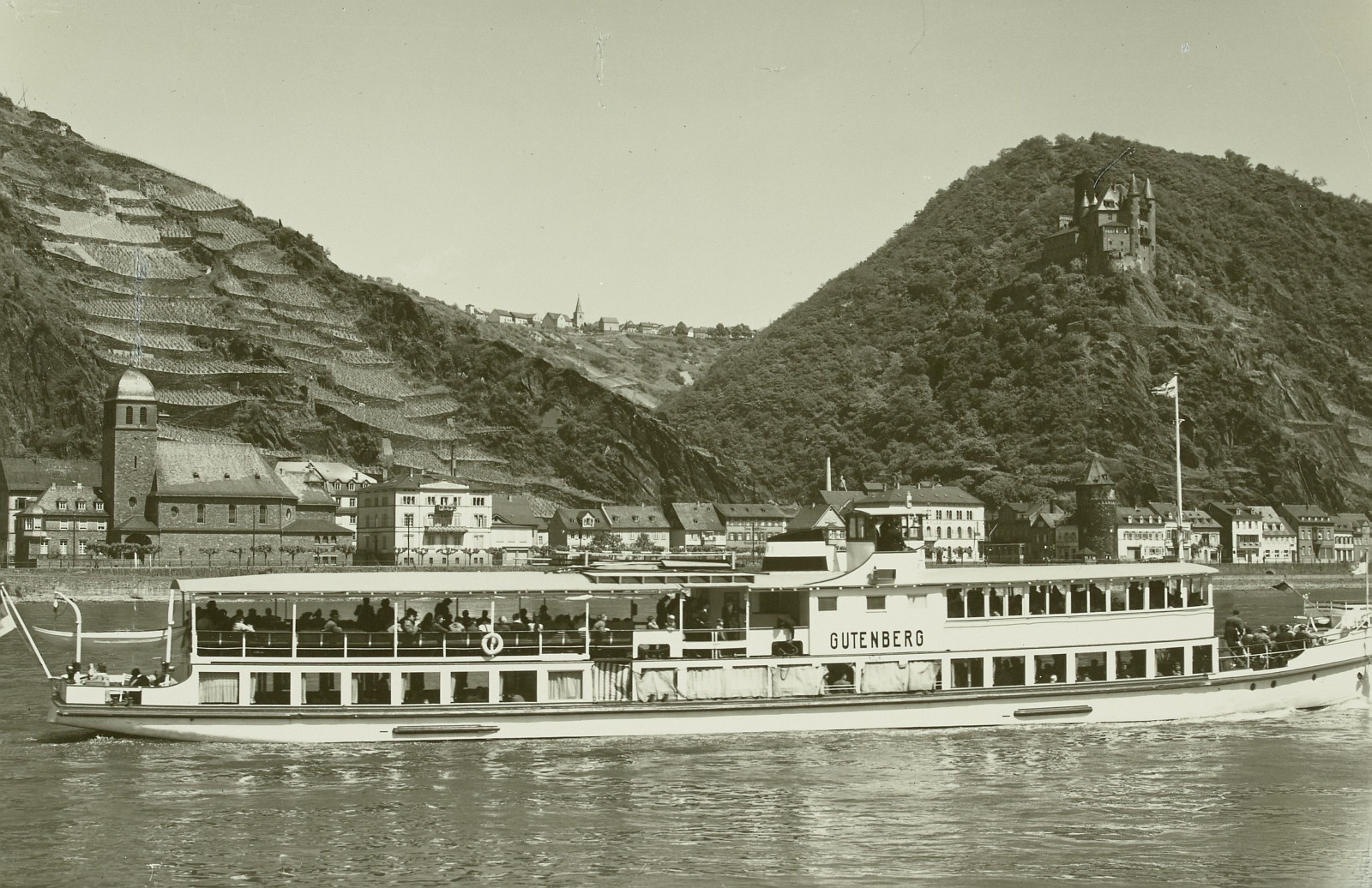
Saint Goarshausen, Katz Castle and Petersberg with Rhine steamer
· Deutsche Fotothek (via Europeana)
CC BY-SA
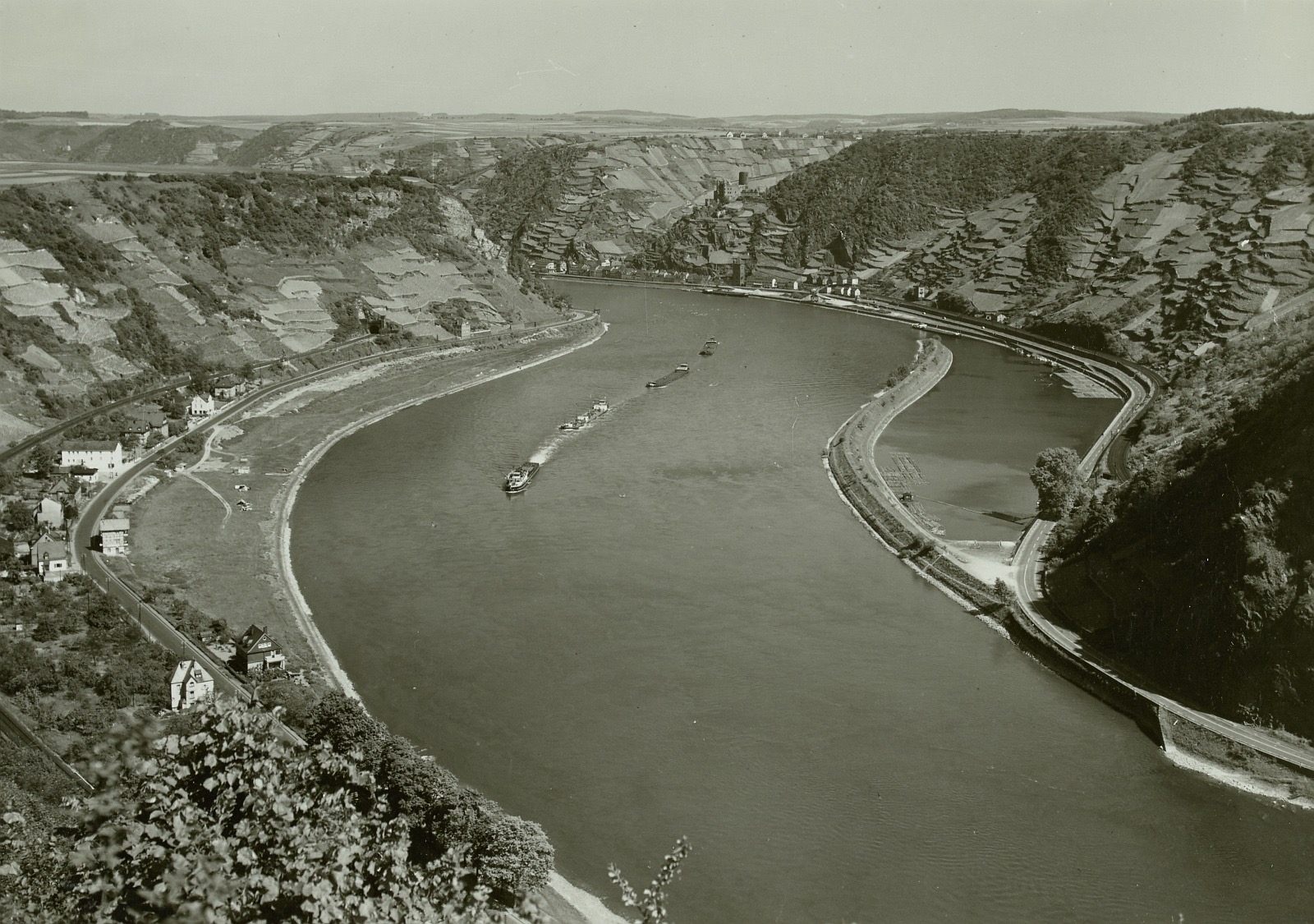
St. Goarshausen, view of Maria - Ruh near Urbar on Sankt Goarshausen with Katz Castle
· Deutsche Fotothek (via Europeana)
CC BY-SA
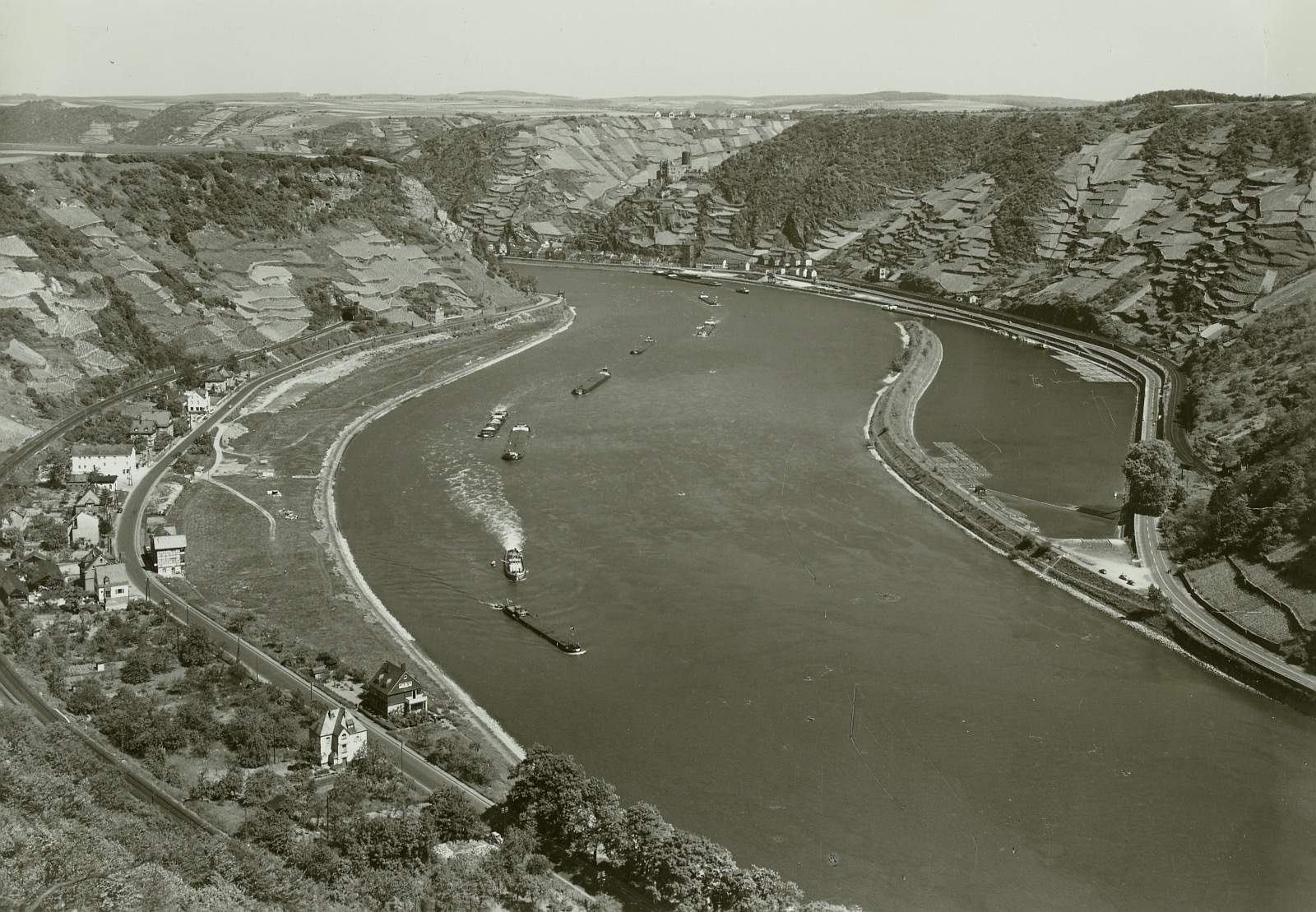
St. Goarshausen, Blick von Maria - Ruh bei Urbar auf Sankt Goarshausen mit Burg Katz
· Deutsche Fotothek (via Europeana)
CC BY-SA


