Germany · Restored
Schönburg
Schönburg is a medieval hilltop castle above the town of Oberwesel in the Upper Middle Rhine Valley in Rhineland-Palatinate, Germany. It is a compact castle complex of curtain walls, a tall rectangular keep, two prominent round towers (one with a conical roof) and attached residential buildings now used as a hotel and restaurant.
First raised
1100
Its prime
1688
Today
Restored
As it stood in 1688
What Schönburg looked like in its prime.
Perched on a wooded rocky spur, the castle presents a compact cluster of brownish-grey sandstone buildings: a tall rectangular bergfried/keep, two massive round towers (one topped by a steep conical slate roof), crenellated curtain walls enclosing an inner courtyard, and several steeply pitched slate roofs on the residential ranges. A lower square outwork tower and flagpole guard the outer approach; paths and terraces step down the hillside toward the Rhine valley. At prime the walls and roofs are complete and intact.
Its story
The story of Schönburg.
First Building and the Murder of Otto von Rheineck, 12th Century
Building began in the first half of the 12th century, though whether the castle was raised by the Archbishop of Magdeburg or as an imperial stronghold is not established. It first appears in the sources in 1149, held as a fief by Hermann von Stahleck, who had his rival for the Rhenish Palatinate, Otto II of Rheineck, murdered here. From the 12th century the Lords of Schönburg ruled the town of Oberwesel from the castle and held the right to levy tolls on Rhine river traffic.
A Ganerbenburg of the Schönburg Line, 13th–14th Centuries
From the mid-13th century the Schönburg family had split into several branches who lived together at the castle as joint heirs, passing shared ownership on through the generations; by the 14th century the site had grown into a Ganerbenburg with three separate residential quarters and three keeps, a division still traceable in the buildings today despite later rebuilding. A list of 1340 names ninety-five co-owners of the castle, though far from all of them lived there. The building programme closed with the Hohe Mantel, a shield wall probably raised under Balduin of Trier in the first half of the 14th century and first documented in 1357.
War, Marshal Schomberg and the End of the Line, 1689–1719
The most notable of the Lords of Schönburg was Friedrich von Schönburg, a much-feared soldier known as "Marshal Schomberg," who served as a colonel and later a general under the King of France in campaigns in France and Portugal, then for Prussia, and finally for William, Prince of Orange, in England. The castle was burned down in 1689 by French troops during the War of the Grand Alliance. The Schönburg line ended with the death of Friedrich's son, the family's last heir, in 1719, and the ruin then passed to the Electorate of Trier.
From Ruin to Hotel: the Rhinelander Restoration, 1840–2011
The castle lay in ruins for roughly two centuries; visiting in 1840, Victor Hugo described Oberwesel's ruined castle as one of the most admirable heaps of ruins in Europe. The German-American T. J. Oakley Rhinelander, whose family had emigrated from the Rhineland in the late 18th century and made a fortune in East Coast American real estate (among their holdings was the land where Wall Street now stands) bought the castle from the town and carried out a partial rebuilding between 1885 and 1901. Rhinelander died in 1947, and in 1950 the town of Oberwesel bought the castle back from his heir. Its northern wing was rebuilt as a Kolping youth hostel between 1951 and 1953, and its southern wing has been run since 1957 as a hotel and restaurant by the Hüttl family under a long-term lease from the town, restored in coordination with the state historic preservation office; since April 2011 the 25-metre gatehouse tower has held a museum on castle-building, heritage conservation and castles in wartime. The Schönburg is protected today as a listed Kulturdenkmal.
Step inside
8 places to explore in 1688.
The record describes 8 distinct spots at Schönburg, including 1 interior: hotel and restaurant interior (interior). Create your own photoreal reconstruction and explore every one, more scenes means more rooms, more angles, and more of the place to stand in.
Build Your Own Castle
Recreate Schönburg with AI to explore it.
The artist rebuilds it as it stood in 1688, a photoreal reconstruction that belongs to you alone. Pay with coins, no subscription needed.
Recreate this castle →Defend this castle →Whose castle
Clans who held Schönburg.
The families that held Schönburg for a decade or more across its history, follow a name to its clan.
Schönburg
Seat of the Lords of Schönburg, who ruled Oberwesel and levied Rhine customs from the 12th century.
Rhinelander
Bought and restored by the German-American Rhinelander family in the late 19th century; sold back to Oberwesel in 1950.
From the archive
Schönburg on paper: the measured plan and period views.
The survey plan and photographs below are the ground truth this page's reconstructions are checked against, drawn and photographed while the castle was still a working garrison. Every image is public-domain or openly licensed, with its source named.
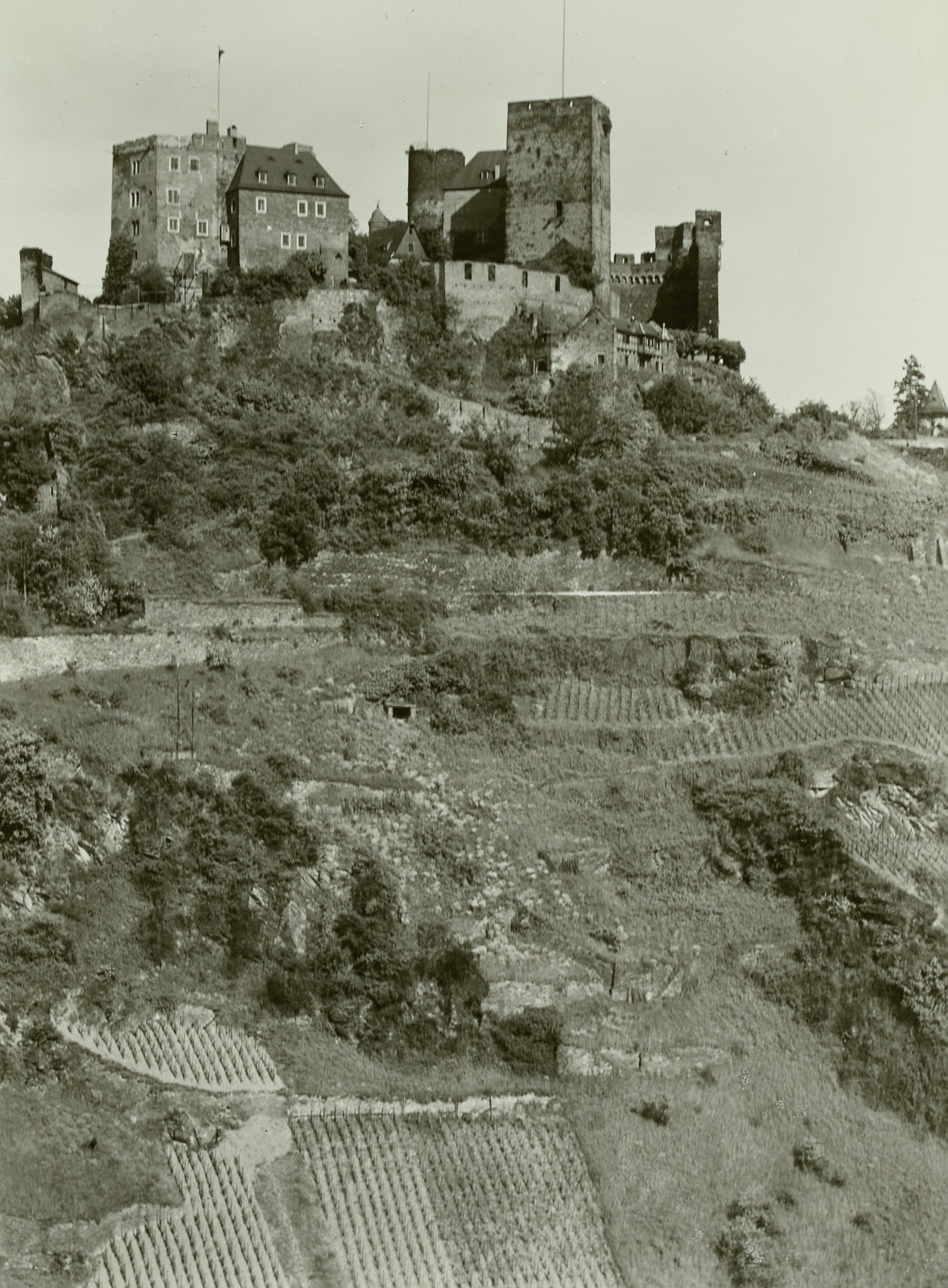
Schönburg
· Deutsche Fotothek (via Europeana)
CC BY-SA
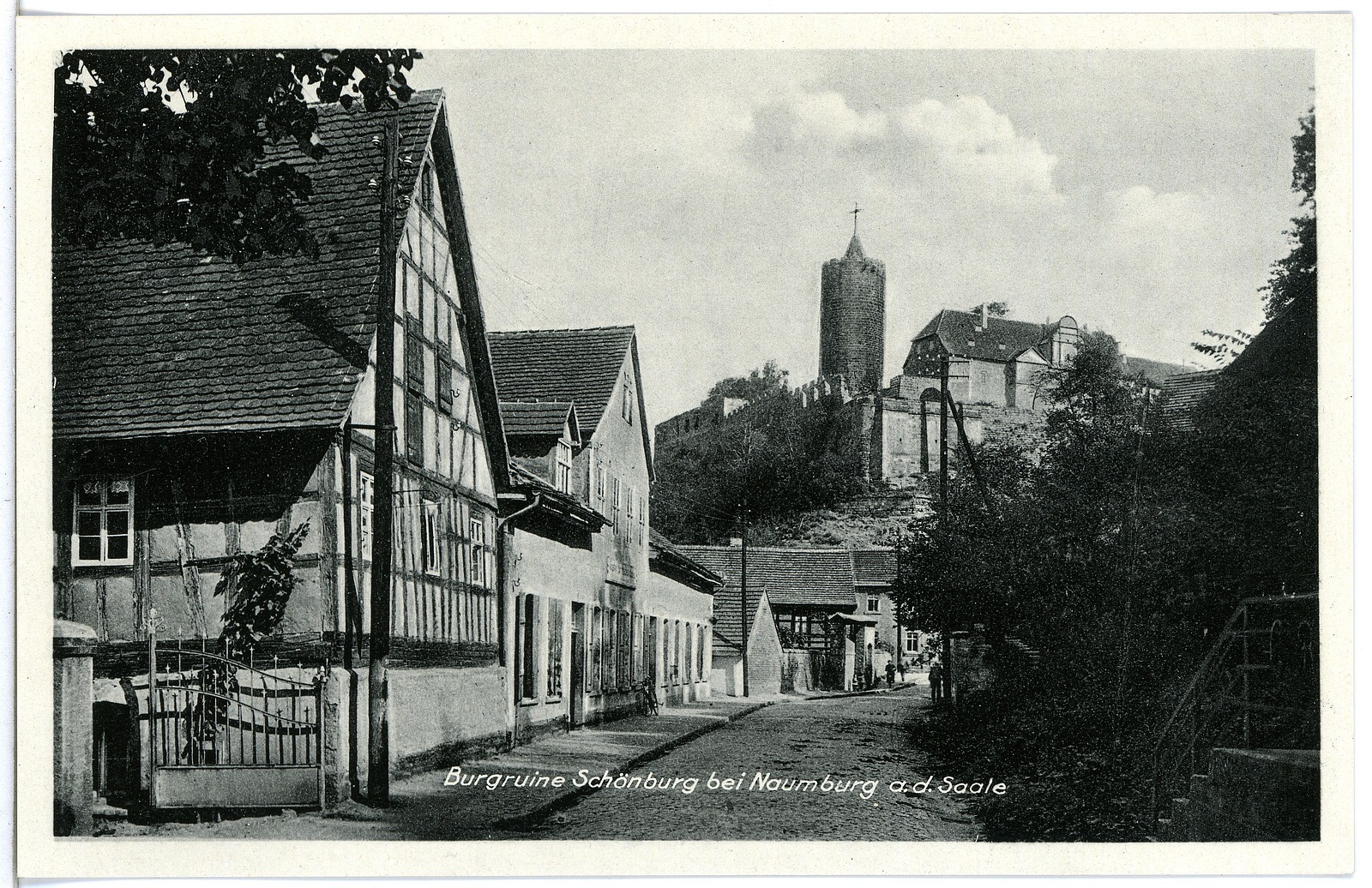
Schönburg. Burgruine Schönburg
· Deutsche Fotothek (via Europeana)
CC BY-SA
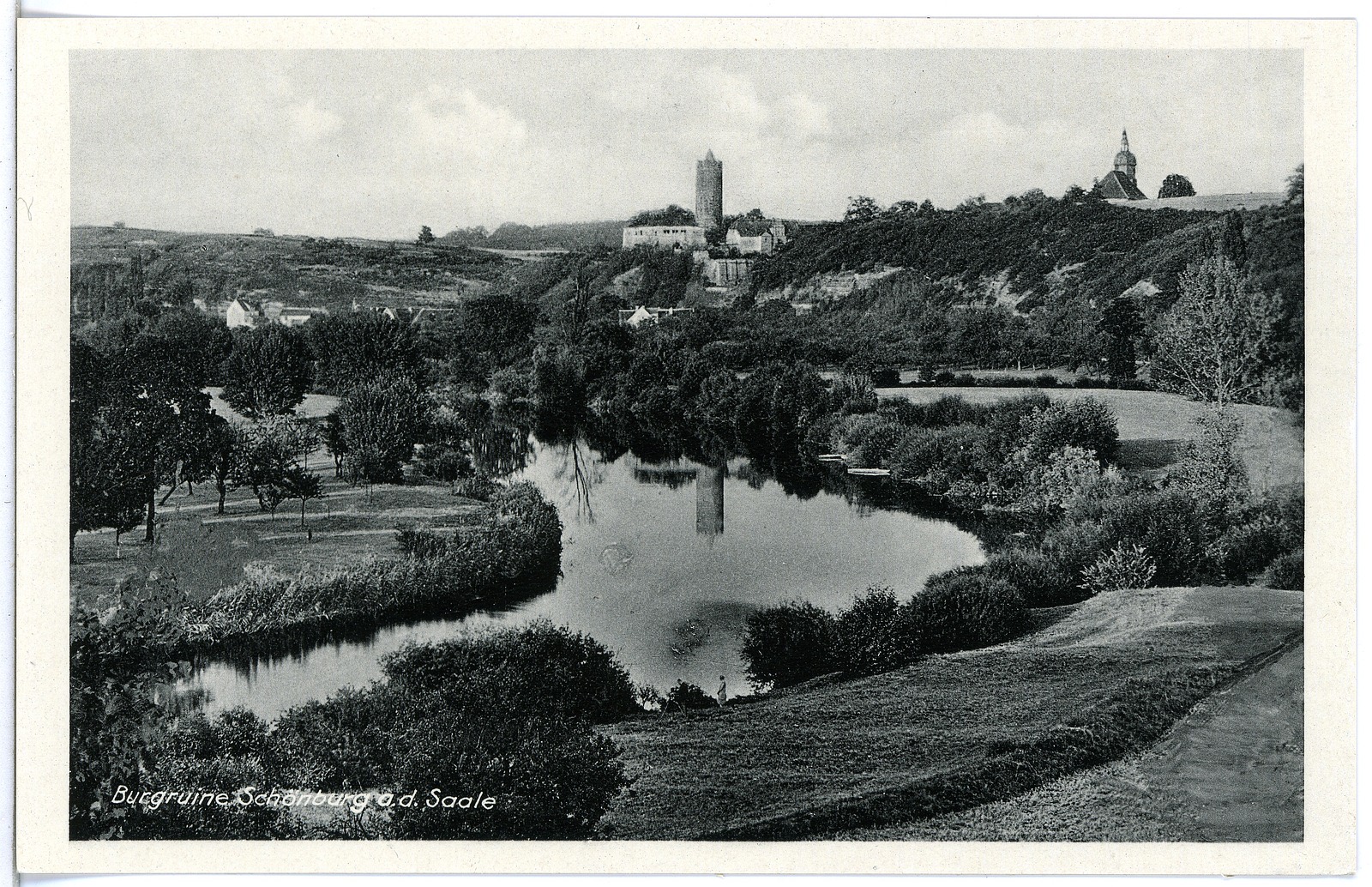
Schönburg. Burgruine Schönburg
· Deutsche Fotothek (via Europeana)
CC BY-SA