
Italy · Restored
Castello della Manta
Castello della Manta is a medieval castle near Saluzzo in Piedmont, Italy, later transformed into a noble residence by the Saluzzo della Manta family. The interior includes the early-15th-century Baronial Hall with a celebrated fresco cycle and a later Mannerist Sala delle Grottesche; the complex also includes a church with an apsidal fresco cycle.
First raised
1420
Its prime
1560
Today
Restored
As it stood in 1560
What Castello della Manta looked like in its prime.
Low, rectangular stone residence of pale, roughly coursed masonry with a broad two-storey façade pierced by three tall rectangular windows and a small balustraded balcony; a central arched ground-floor doorway is partly enveloped by dense climbing ivy. Red terracotta hip roofs step up behind the façade and reveal a cylindrical stone tower rising above the roofs, its upper stage pierced by paired arched openings and a decorative zigzag masonry band. The building faces a gravel forecourt sheltered by large evergreen trees.
Its story
The story of Castello della Manta.
The original building at Manta, near Saluzzo in Piedmont, dates from the 12th century; it was later enlarged and transformed into a noble residence by the Saluzzo della Manta family, margraves of Saluzzo.
Its Baronial Hall holds a rare masterpiece of Late Gothic painting in northern Italy: a fresco cycle completed soon after 1420, attributed to the anonymous Master of Castello della Manta, portraying the Nine Worthies and their Nine Female Heroines in precious contemporary dress, the artist may have modelled the figures on members of the house of the margraves of Saluzzo. Alongside them is the Fountain of Youth, a scene inspired by Le Chevalier Errant, the poem of Marquess Thomas III of Saluzzo.
Around 1560 Count Michele Antonio della Manta commissioned the Sala delle Grottesche, decorated in the Mannerist style with a finely painted ceiling of stuccoes, grotesques and ancient ruins. Annexed to the castle is a church whose apse carries frescoes on the life of Christ from the same period as the Baronial Hall.
Step inside
5 places to explore in 1560.
The record describes 5 distinct spots at Castello della Manta, including 4 interiors: baronial hall (salone baronale), frescoed walls, sala delle grottesche, painted stucco ceiling, church apse with christ-cycle frescoes and more. Create your own photoreal reconstruction and explore every one, more scenes means more rooms, more angles, and more of the place to stand in.
Build Your Own Castle
Recreate Castello della Manta with AI to explore it.
The artist rebuilds it as it stood in 1560, a photoreal reconstruction that belongs to you alone. Pay with coins, no subscription needed.
Recreate this castle →Defend this castle →Whose castle
Clans who held Castello della Manta.
The families that held Castello della Manta for a decade or more across its history, follow a name to its clan.
Saluzzo della Manta
Enlarged and transformed into a noble residence by the Saluzzo della Manta family, margraves of Saluzzo, from the medieval period into the 16th century.
From the archive
Castello della Manta on paper: the measured plan and period views.
The survey plan and photographs below are the ground truth this page's reconstructions are checked against, drawn and photographed while the castle was still a working garrison. Every image is public-domain or openly licensed, with its source named.
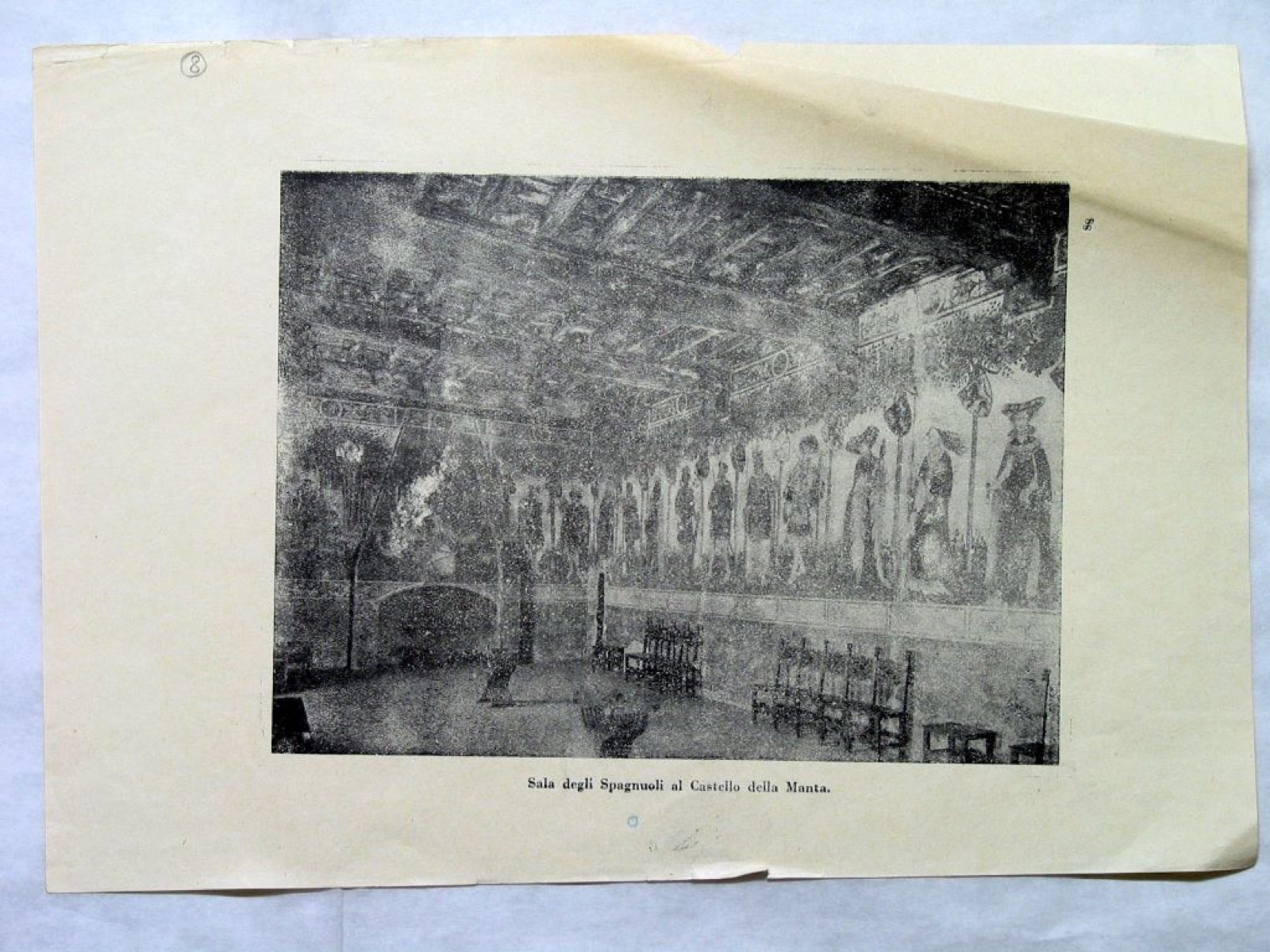
Castello della Manta - Sala degli Spagnoli
· Turin Gallery for Modern and Contemporary Art (via Europeana)
CC BY
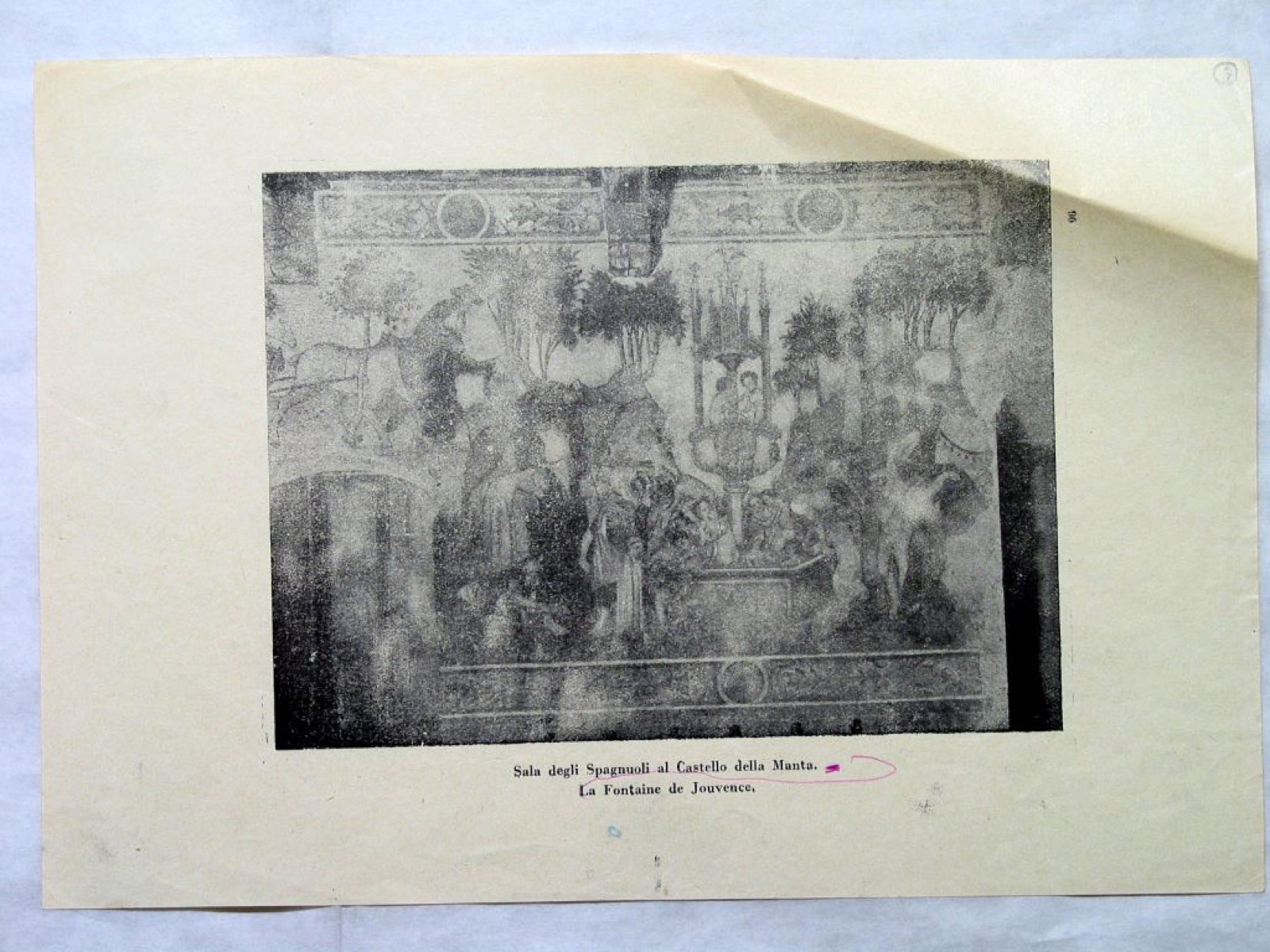
Castello della Manta - Sala degli Spagnoli (particolare degli affreschi)
· Turin Gallery for Modern and Contemporary Art (via Europeana)
CC BY


