Clan Rising
Castello di Montalto today

Italy · Restored

Castello di Montalto

Castello di Montalto in Chianti

Castello di Montalto is a medieval hilltop castle in the Berardenga area east of Siena, Italy, with substantial medieval fabric and later Renaissance and 19th-century restorations. The complex includes a tall rectangular watchtower, curtain walls, a courtyard, a small church (San Martino), a loggia, and a great hall known as the Sala d’Armi. Today the estate is restored and used for organic farming and agriturismo.

Photograph via Wikimedia Commons

Its prime

1572

Today

Restored

As it stood in 1572

What Castello di Montalto looked like in its prime.

Perched on a low Tuscan hill above cultivated fields, Montalto is composed of mixed grey-brown stone and brick curtain walls encircling clustered buildings with red terracotta roofs. A tall rectangular crenellated watchtower with narrow loophole windows punctuates the silhouette; lower ramparts and merlons run between the tower and farm-structures. A loggia of arches opens onto an inner courtyard with a central well, while cypress trees and a hedged drive lead up the slope toward the gate.

Its story

The story of Castello di Montalto.

The tower at Montalto appears to have been raised by the Longobards in the 6th or 7th century, but the main castle was the work of the descendants of Winigis, first count of Siena under the Franks in the 9th century. It is from his son Berard that the surrounding Berardenga takes its name. The earliest surviving documents, from the 11th century, already show a well-established community.

Sitting right on the border between the territories of Siena and Florence, Montalto carried real strategic weight through the 13th, 14th and 15th centuries, the watchtower's loop-holes and ramparts, and walls attesting to repeated war damage and reconstruction, still show it. As the Berardeschi declined, selling and donating land between 1104 and 1212, the castle passed under the direct control of Siena.

The estate later became the country home of the Palmieri family, whose primary residence was in Siena; a demographic study commissioned in 1676 by Grand Duke Cosimo III de' Medici counted 50 people at Montalto. In 1970 the last Palmieris ceded the castle to Giovanni Coda Nunziante, and the restored complex, with its church of San Martino and frescoed Sala d'Armi, is now used for organic farming and agriturismo.

Step inside

10 places to explore in 1572.

The record describes 10 distinct spots at Castello di Montalto, including 6 interiors: courtyard with well, portico facing the courtyard, church of san martino (interior) and more. Create your own photoreal reconstruction and explore every one, more scenes means more rooms, more angles, and more of the place to stand in.

Approach from country roadEntry archway and turret (exterior)Courtyard with wellPortico facing the courtyardChurch of San Martino (interior)Entry tower interior passageLoggia with four archesSala d'Armi (Hall of Arms)Watchtower battlements and rampartsInner side of curtain wall

Build Your Own Castle

Recreate Castello di Montalto with AI to explore it.

The artist rebuilds it as it stood in 1572, a photoreal reconstruction that belongs to you alone. Pay with coins, no subscription needed.

Recreate this castle →Defend this castle →

Whose castle

Clans who held Castello di Montalto.

The families that held Castello di Montalto for a decade or more across its history, follow a name to its clan.

  • Berardeschi

    The Berardeschi, descendants of Berard son of Winigis, first count of Siena, held Montalto from the first millennium until their decline in the 13th century.

  • Palmieri

    Country home of the Palmieri family of Siena until 1970, when the last of the family ceded the castle.

From the archive

Castello di Montalto on paper: the measured plan and period views.

The survey plan and photographs below are the ground truth this page's reconstructions are checked against, drawn and photographed while the castle was still a working garrison. Every image is public-domain or openly licensed, with its source named.
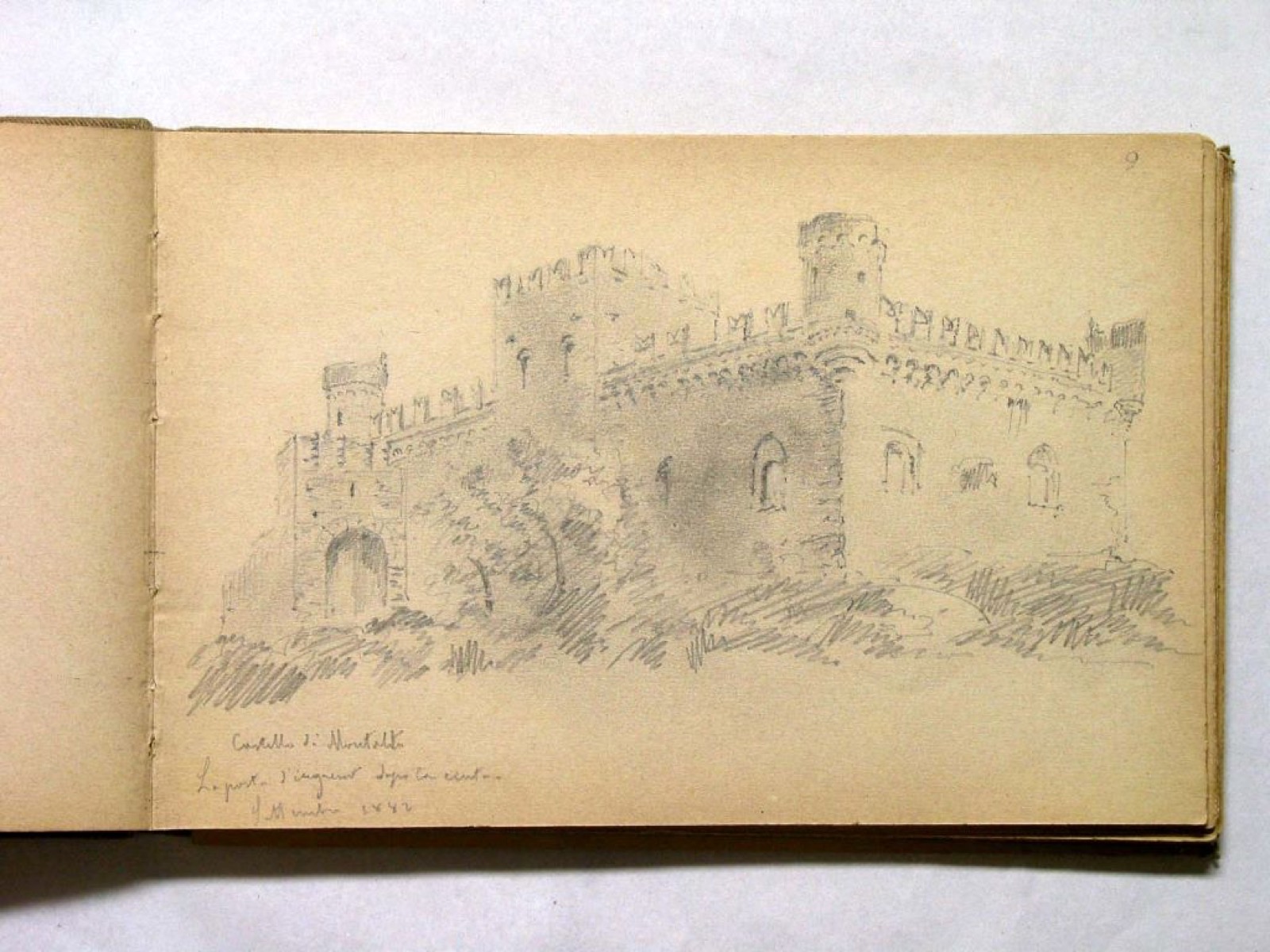
Castello di Montalto, Castello di Montalto

Castello di Montalto

1882 · Turin Gallery for Modern and Contemporary Art (via Europeana)

CC BY
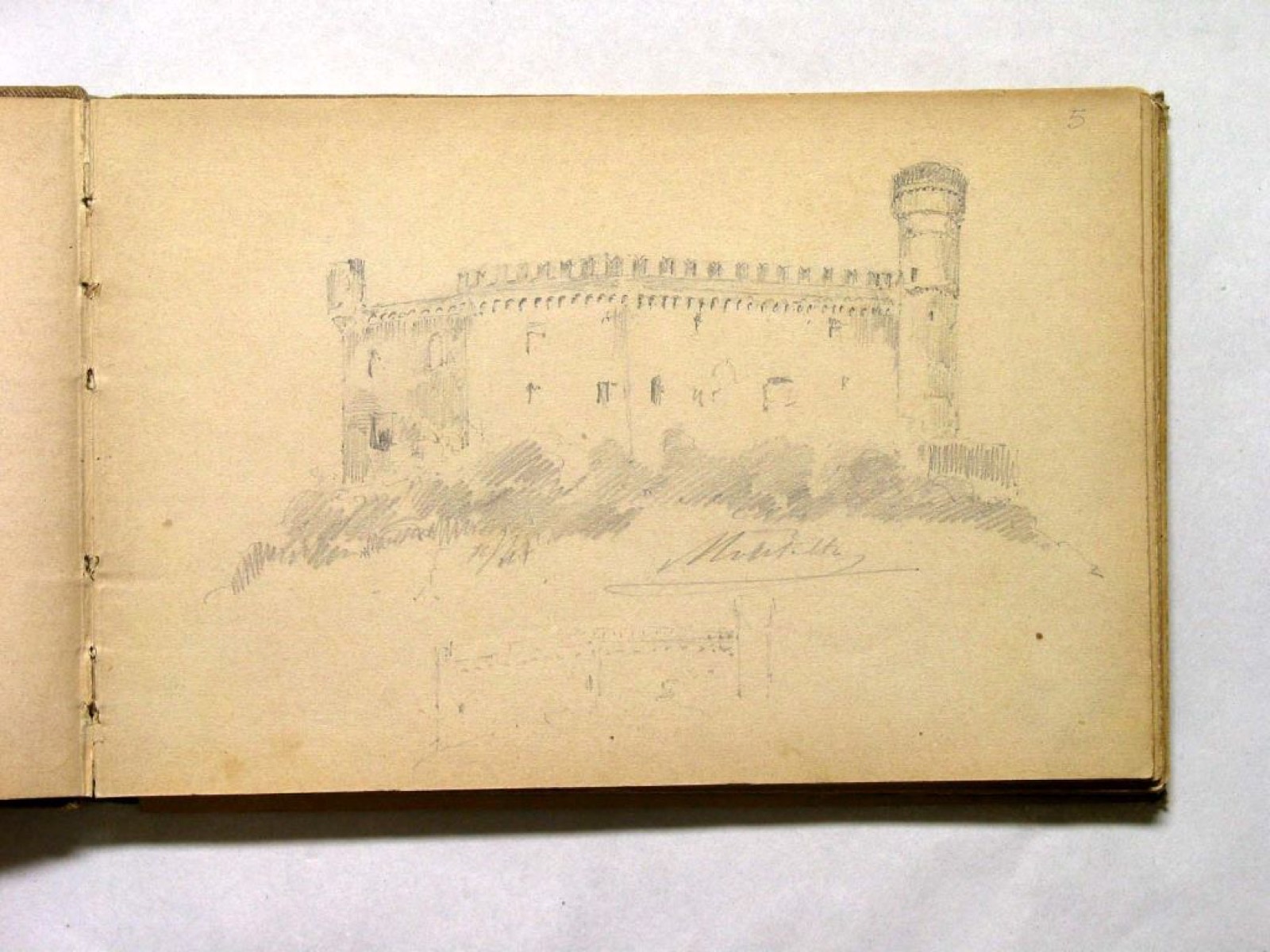
Castello di Montalto, Castello di Montalto

Castello di Montalto

1882 · Turin Gallery for Modern and Contemporary Art (via Europeana)

CC BY
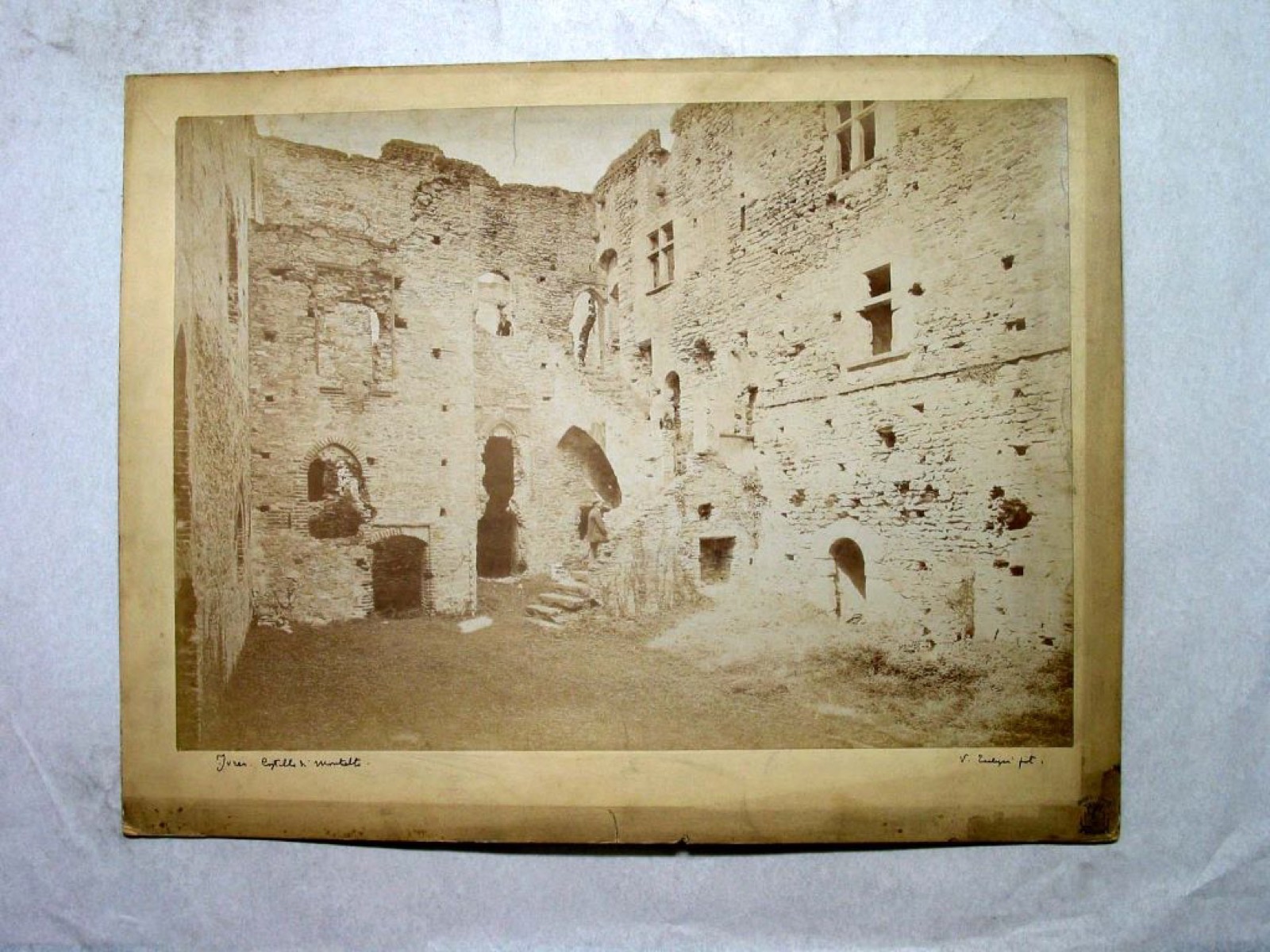
Ivrea - Castello di Montalto, Castello di Montalto

Ivrea - Castello di Montalto

· Turin Gallery for Modern and Contemporary Art (via Europeana)

CC BY

Nearby

Landmarks within reach of Castello di Montalto.

Questions about Castello di Montalto

What is the history of Castello di Montalto?

Castello di Montalto began as a Longobard tower in the 6th or 7th century, while the main castle was built during the first millennium by descendants of Winigis and his son Berard. The earliest surviving documents, from the 11th century, show an established community. After repeated conflicts between Siena and Florence, the Palmieri family restored the castle in the 16th century and again in the 19th century.

What is inside Castello di Montalto?

Inside Castello di Montalto are a courtyard with a central well, the church of San Martino, an entry-tower passage, and a four-arched loggia. The Sala d’Armi contains a large fireplace, weapons, armour and lances dating from the 14th century onwards. Its walls and ceiling areas have frescoes showing coats of arms, estate farmhouses and everyday rural activities.

Why was Castello di Montalto built, and what was it used for?

Castello di Montalto was built as a fortified stronghold on the contested border between Siena and Florence. Its watchtower, loopholes, ramparts and enclosing walls served a defensive and strategic purpose, while its position also overlooked an important medieval road. After hostilities ended, it became the Palmieri family’s country home and is now used for organic farming and agriturismo.

Does anyone live in Castello di Montalto now?

Yes, Castello di Montalto is lived in by its owners throughout the year. More than 40 holiday guests stay there in summer, while restored farm buildings and part of the castle are used for agriturismo. The estate is also used for organic farming.

Where is Castello di Montalto?

Castello di Montalto is in the Berardenga area east of Siena, in the municipality of Castelnuovo Berardenga. It stands on a hill above the upper Ambra river, in the Chianti territory of Tuscany. Siena is the nearest recognised city named in the descriptions.

When was Castello di Montalto built?

Castello di Montalto was built in stages from the 6th or 7th century onwards. The tower appears to date from the Longobard period, while the main castle was erected during the first millennium, with surviving documents from the 11th century. Later restoration took place in the 16th and 19th centuries.

Was Castello di Montalto ever attacked or besieged?

Yes, Castello di Montalto was repeatedly attacked and besieged. In June 1208, Florence attacked the castle and almost entirely destroyed it; Florence also occupied and burned it in 1553. Montalto resisted a siege in 1479, but it was occupied by the enemy in 1526 and held a Siena garrison in 1529.

Which family or clan held Castello di Montalto?

The Berardeschi held Castello di Montalto from the first millennium until their decline in the 13th century. The castle then passed under the direct control of Siena. The Palmieri family later held it as their country home until 1970, when the last members of the family ceded it.

What did Castello di Montalto look like in its prime?

In its restored appearance, Castello di Montalto has mixed grey-brown stone and brick walls, red terracotta roofs and a tall rectangular crenellated watchtower. Narrow loopholes punctuate the tower, while lower ramparts and merlons connect it to the surrounding buildings. A four-arched loggia faces the courtyard, which has a central well, with cypress trees lining the approach.

Is Castello di Montalto still standing or is it a ruin?

Castello di Montalto is still standing and has been restored, rather than surviving as a ruin. It retains substantial medieval fabric, including its curtain walls and watchtower, although the walls and buildings also contain Renaissance and 19th-century restorations. The 19th-century work rebuilt the defensive walls and restored the watchtower to something like its original height.

Can you visit Castello di Montalto?

Yes, Castello di Montalto can be visited as an agriturismo, with restored buildings used as holiday homes and part of the castle available to tourists. The estate is not described as a general public museum; its current use combines accommodation with organic farming. The church of San Martino is also in use for weddings.
All castles of Italy · Castles of Europe · the best castles in Europe · explore the finished reconstructions.