
Luxembourg · Partial ruin
Beaufort Castle
Beaufort Castle in eastern Luxembourg is a compound of a ruined medieval fortress and an adjacent 17th-century residence standing on a rocky promontory above a valley. The site preserves a large cylindrical keep, curtain walls and a gatehouse, with later domestic building work incorporated into the medieval fabric. The estate is open to visitors today.
First raised
1192
Its prime
1649
Today
Partial ruin
As it stood in 1649
What Beaufort Castle looked like in its prime.
Massive pale grey-beige stonework rises from a rocky outcrop: a dominant cylindrical keep with tall vertical window openings near its top, adjoining irregular lengths of curtain wall pierced by rectangular and arched window openings, and an arched gatehouse set into a lower wall. A later residential wing with cross-framed windows sits atop older masonry. The group is set on a wooded hillside above a small valley path and bridge; many openings are without glass and surfaces show dressed ashlar and rubble masonry.
Its story
The story of Beaufort Castle.
Wauthier de Wiltz and the Rock Above the Valley
The castle began as a small square fortress set on a large rock above the valley floor, ringed by a moat and a second wall. Its beginnings are dated to the 11th century by some accounts; others put the core building in the late 12th century, because the earliest document naming a lord of Beaufort is a reference of 1192 to Wauthier de Wiltz et Beaufort. A keep was added during the first half of the 12th century, when the gate was also moved and enlarged.
The rock cone carried the original work about 23 metres above the valley bottom, and the buildings were extended down the slope over time. Both a Romanesque and a Gothic building phase leave clear traces in the inner courtyard.
Orley, Boppard and Velbrück, 1348-1539
The lords of Beaufort died out in the male line during the 14th century, and in 1348 the property passed to the House of Orley when Adelaide of Beaufort married William of Orley. The Orleys built substantial extensions overlooking the valley.
Their descendant Johann von Orley-Beaufort was charged with a breach of faith towards his liege lord, and in 1477 Maximilian of Austria confiscated castle and lordship and granted them in fief to Johann Beyer von Boppard. In 1539 Bernard von Velbrück became lord of Beaufort through marriage and raised the large wing with cross-framed windows on top of the medieval walls.
The Execution of Gaspard de Heu and the Beck Residence, 1593-1649
Beaufort next came to Gaspard de Heu, who had married Velbrück's granddaughter. In the Dutch struggle against Spain de Heu took the side of the House of Orange and of Maurice of Orange, was captured by the Spaniards, accused of heresy and treason, found guilty, and publicly executed in Luxembourg's fish market in 1593. Philip II of Spain confiscated the property and entrusted it to Peter Ernst Graf von Mansfeld, the governor of Luxembourg.
Marriage carried the castle on to Henri de Chalon and then to Gaspard du Bost-Moulin, who was ruined by the Thirty Years' War and had to sell; by the late 1630s the lordship was so heavily indebted that a sale could not be avoided. On 27 November 1639 Johann Baron von Beck, governor of Luxembourg, bought most of the estate on behalf of the Spanish king, with all its "hauteurs, juridictions, noms droits et actions" and every appurtenance and dependency of the lordship. Beck began a new residence in 1643, set some 15 metres above the medieval castle, but died of injuries from the Battle of Lens in 1648; his son Georg completed the building in 1649.
Quarry, National Monument and State Ownership, 1774-2021
Ownership changed repeatedly in the 18th century, passing to Pierre de Coumont in 1774 and to Jean Théodore Baron de Tornaco-Vervoy in 1781. The medieval castle was no longer lived in, was abandoned and fell into disrepair, and at the beginning of the 19th century it was worked as a quarry. The State listed it as a national monument in 1850.
In 1893 the new owner Henri Even restored the later residence, and from 1928 Edmond Linckels cleared the rubble out of the medieval castle and opened it to visitors for the first time. The State acquired the property in 1981, and the estate, pairing the medieval ruin with the 17th-century residence, is open to visitors. On 30-31 July 2021 a large part of the retaining wall below the ruin collapsed; no one was hurt.
Step inside
8 places to explore in 1649.
The record describes 8 distinct spots at Beaufort Castle, including 2 interiors: gatehouse arch and entrance passage, upper chamber of the keep by its tall windows. Create your own photoreal reconstruction and explore every one, more scenes means more rooms, more angles, and more of the place to stand in.
Build Your Own Castle
Recreate Beaufort Castle with AI to explore it.
The artist rebuilds it as it stood in 1649, a photoreal reconstruction that belongs to you alone. Pay with coins, no subscription needed.
Recreate this castle →Defend this castle →Whose castle
Clans who held Beaufort Castle.
The families that held Beaufort Castle for a decade or more across its history, follow a name to its clan.
Orley
The House of Orley held Beaufort from 1348, when Adelaide of Beaufort married William of Orley, until 1477, when Maximilian of Austria transferred it away after a breach of trust.
From the archive
Beaufort Castle on paper: the measured plan and period views.
The survey plan and photographs below are the ground truth this page's reconstructions are checked against, drawn and photographed while the castle was still a working garrison. Every image is public-domain or openly licensed, with its source named.
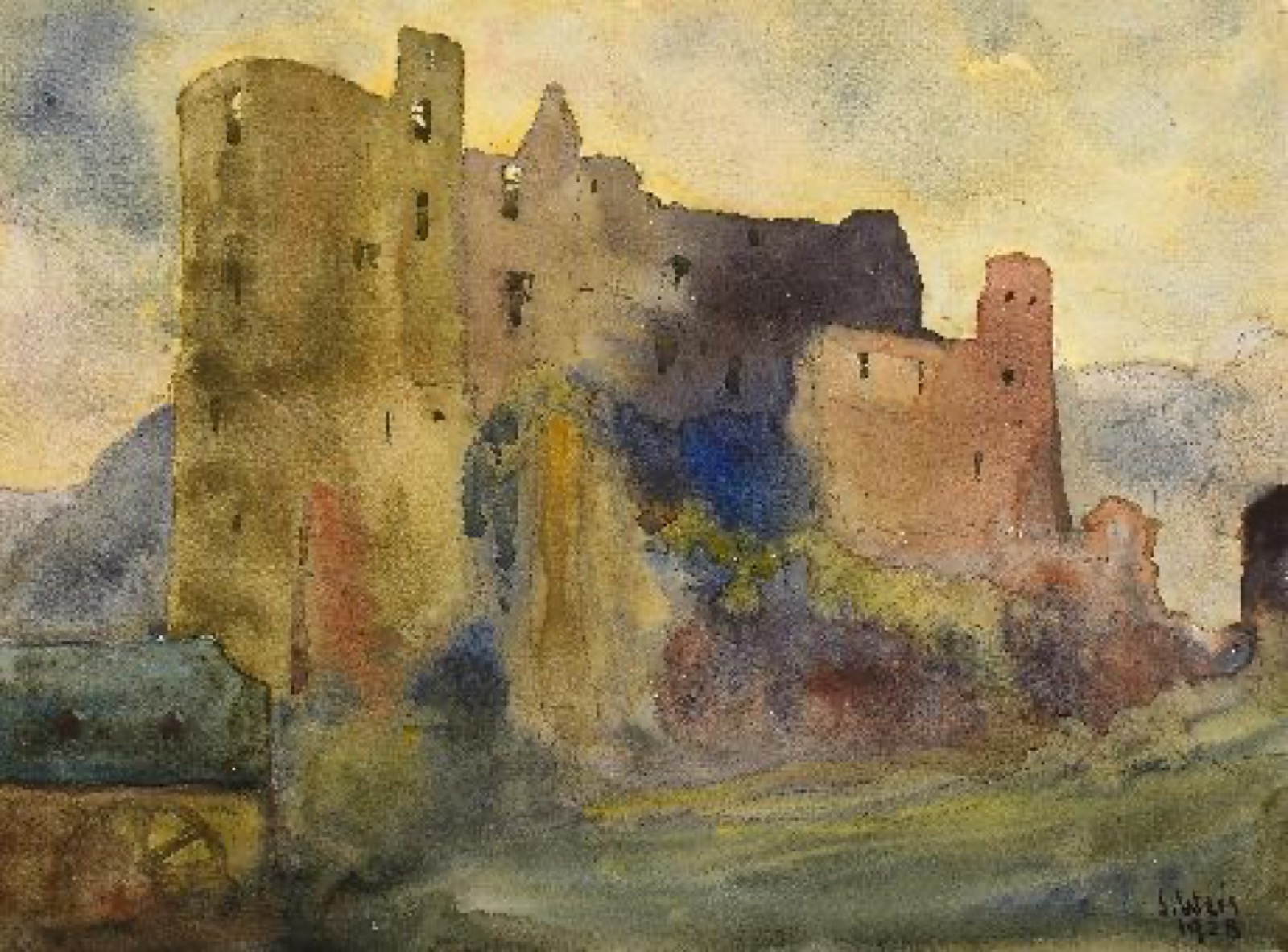
Château de Beaufort
· National Museum of Archaeology, History and Art (via Europeana)
Public domain
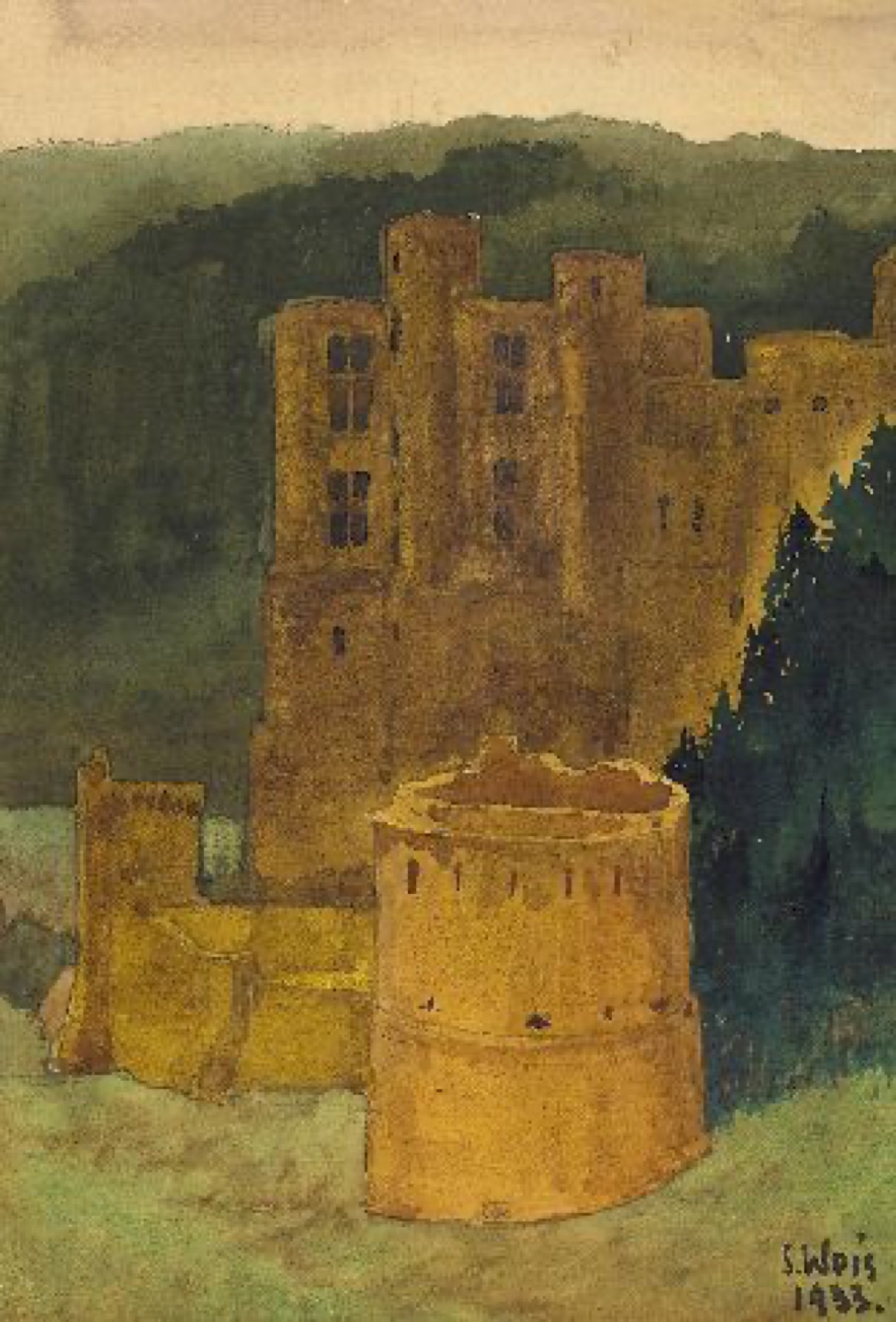
Château de Beaufort
· National Museum of Archaeology, History and Art (via Europeana)
Public domain
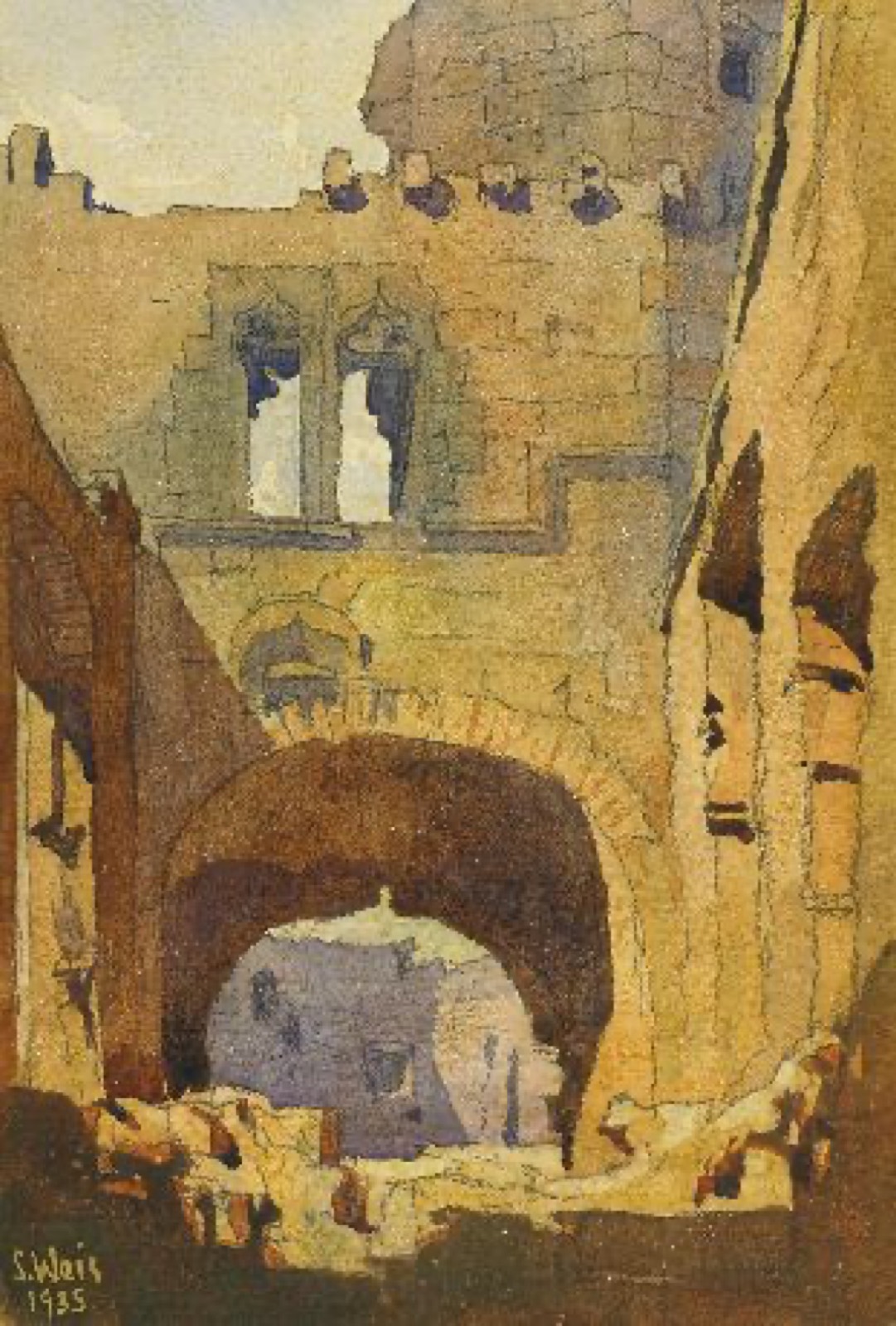
Château de Beaufort
· National Museum of Archaeology, History and Art (via Europeana)
Public domain
Nearby


