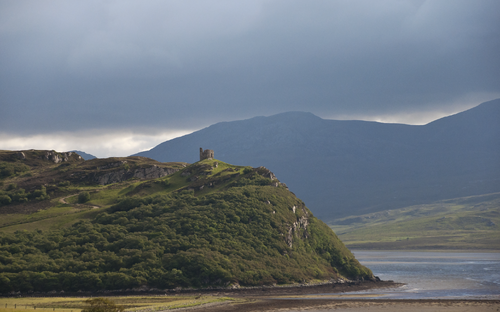
Scotland · Restored
Airlie Castle
Airlie Castle is a former Ogilvy stronghold near the confluence of the Rivers Isla and Melgund in Angus, Scotland. Founded around 1432, the medieval castle was burned in 1640; parts of its stone curtain wall and gateway survive and a late-18th-century mansion was later built incorporating those ruins. The site and associated stables are occupied and protected as listed buildings.
First raised
1432
Its prime
1639
Today
Restored
As it stood in 1639
What Airlie Castle looked like in its prime.
Perched on a raised promontory above the meeting of two rivers, the castle forms a rectangular courtyard enclosed by very thick stone curtain walls (about three metres thick). The surviving east curtain wall runs roughly 36 metres and reaches about 9 metres high; an entrance gateway stands at its north end and now carries a later square tower. A cylindrical tower rises above the wallline; the approach from the east was protected by a moat. In prime condition the stone walls are continuous and intact.
Its story
The story of Airlie Castle.
Walter Ogilvy's Stronghold Above the Isla, 1432–1564
King James I of Scotland granted lands to Walter Ogilvy of Lintrathen, Lord High Treasurer of Scotland, in 1432, and Ogilvy built his castle at the confluence of the River Isla and the Melgam Water, nine kilometres west of Kirriemuir. It sat on a raised position with a steep 400-foot drop to the rivers below, and a moat further protected the eastern approach.
The castle took the form of a rectangular courtyard with walls three metres thick. The east wall of that courtyard still stands, some 36 metres long and nine metres tall, with an entrance gateway at its north end; the square tower now sitting on the gateway was built later than the courtyard itself. Airlie became a stronghold and chief residence of the Ogilvies, and James Ogilvy, 5th Lord Ogilvy of Airlie, planned to rebuild it in 1564.
Argyll Burns Airlie, 1640
Charles I created James Ogilvy the 1st Earl of Airlie at York in 1639. The Earl refused to sign the National Covenant, and through the Wars of the Three Kingdoms the Ogilvies held to Charles I and the Royalist cause. In 1640 Parliamentarian troops under Archibald Campbell, 8th Earl of Argyll, destroyed the castle; Campbell burnt the Ogilvy castles at Craig and Forter as well. The ballad "The Bonnie Hoose o' Airlie" describes the incident. The Ogilvies did not rebuild.
Attainder, Exile and the Ogilvy Mansion
James Ogilvy, grandson of the first Earl, took part in the Jacobite rising of 1715 and was attainted; consequently, when his father died in 1717 he was not allowed to succeed to the earldom, though he was pardoned in 1725 and lived until 1731. George II confiscated the castle. David Ogilvy received his own pardon in 1778 and returned to Scotland from exile at Versailles, and between 1792 and 1793 he had a new mansion built that incorporated the parts of the castle still standing.
That house is occupied today. It and the stables have been Category B listed buildings since June 1971, and the grounds are included in the Inventory of Gardens and Designed Landscapes in Scotland.
Step inside
7 places to explore in 1639.
The record describes 7 distinct spots at Airlie Castle, including 1 interior: interior of the rectangular courtyard. Create your own photoreal reconstruction and explore every one, more scenes means more rooms, more angles, and more of the place to stand in.
Build Your Own Castle
Recreate Airlie Castle with AI to explore it.
The artist rebuilds it as it stood in 1639, a photoreal reconstruction that belongs to you alone. Pay with coins, no subscription needed.
Recreate this castle →Defend this castle →Whose castle
Clans who held Airlie Castle.
The families that held Airlie Castle for a decade or more across its history, follow a name to its clan.
Ogilvy
Held by the Ogilvies from a 1432 royal grant to Walter Ogilvy of Lintrathen; stronghold and chief residence of the Earls of Airlie.
From the archive
Airlie Castle on paper: the measured plan and period views.
The survey plan and photographs below are the ground truth this page's reconstructions are checked against, drawn and photographed while the castle was still a working garrison. Every image is public-domain or openly licensed, with its source named.
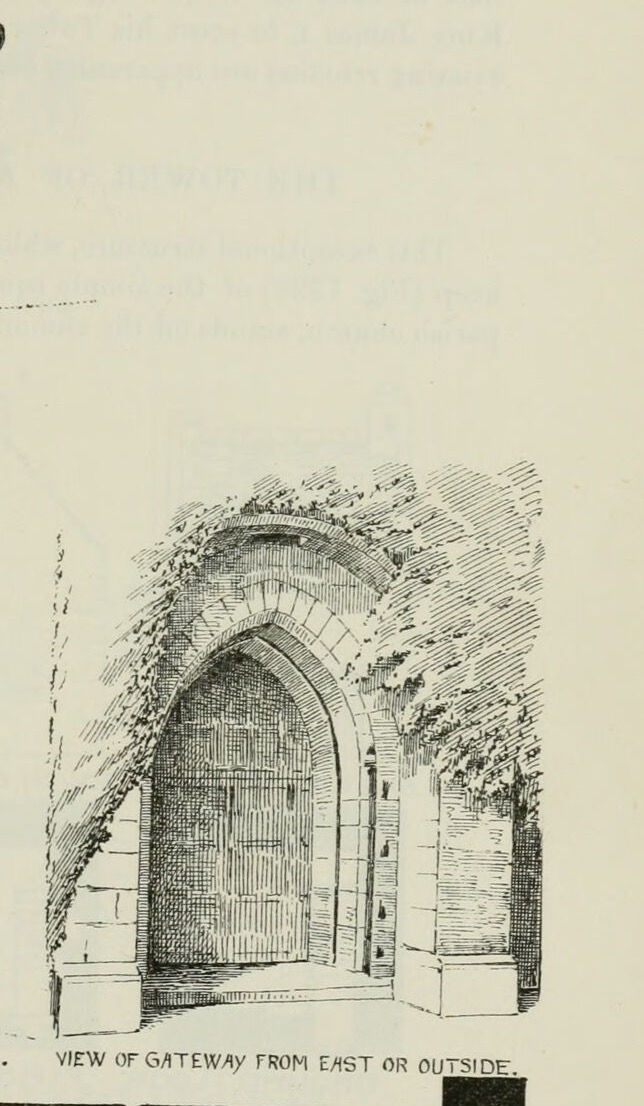
VIEW OF GATEWAY FROM WEST OR INSIDE.
1892 · MacGibbon & Ross, vol. 5 (1892)
Public domain
VIEW OF GATEWAY FROM EAST OR OUTSIDE.
1892 · MacGibbon & Ross, vol. 5 (1892)
Public domain
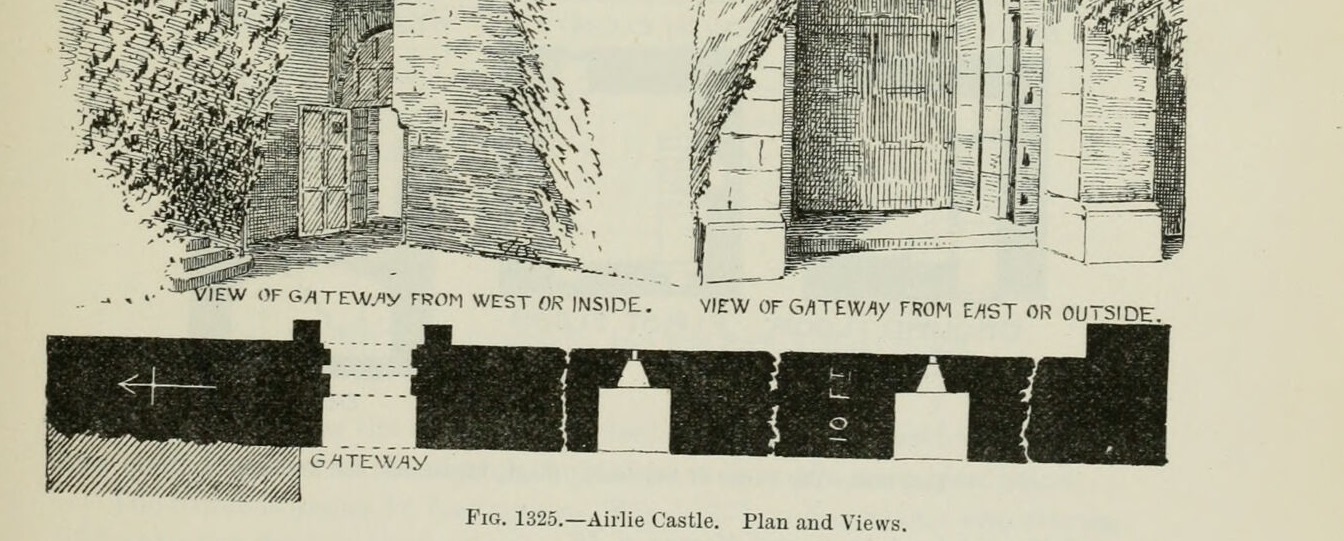
Fig. 1325. Airlie Castle. Plan and Views.
1892 · MacGibbon & Ross, vol. 5 (1892)
Public domain