Scotland · Still standing
Balhousie Castle
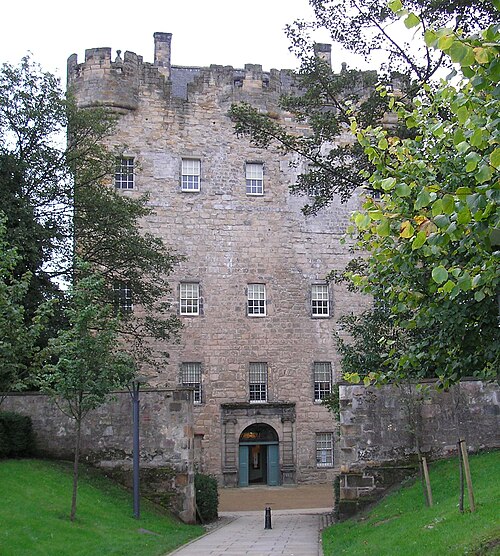
Balhousie Castle is a 17th-century Scottish Baronial house in Perth, Scotland, rebuilt and enlarged in 1862–1864. Originally the seat of the Earls of Kinnoull, the building stands on a raised terrace overlooking the North Inch and now houses the Regimental Headquarters and Museum of The Black Watch. Only parts of the original east rubble wall survive following 19th-century remodelling.
First raised
2009
Its prime
1864
Today
Still standing
As it stood in 1864
What Balhousie Castle looked like in its prime.
A compact multi-storey castle of warm red sandstone with two prominent cylindrical corner turrets capped by conical slate roofs and metal finials, steep crow-stepped gables breaking the roofline, and a central gabled dormer with a flagpole flying the Saltire. Facade punctured by regular sash windows and simple ashlar dressings; building set on a raised terrace in an urban Perth setting, appearing complete and enlarged after the mid-19th‑century remodelling.
Its story
The story of Balhousie Castle.
The Earls of Kinnoull and the 1862–1864 Rebuilding
Balhousie Castle was built in 1631, though its origins are believed to reach back a further three hundred years. It served as the seat of the Earls of Kinnoull, standing within a walled enclosure of subsidiary buildings and orchards on a terrace above the North Inch, a few hundred metres north of medieval Perth.
The castle fell into neglect during the early 19th century; by 1858–59, when a wall of "the picturesque old ruin" featured in John Everett Millais's painting The Love of James the First, of Scotland, it stood decaying rather than defended. It was then rebuilt, in effect virtually reconstructed, and extensively remodelled between 1862 and 1864 in the Scottish Baronial style by the architect David Smart; no original features survive beyond parts of the rubble wall on the east side.
The Black Watch Regimental Museum, 1977–2009
The Regimental Trustees of the Black Watch bought Balhousie Castle in January 2009, and it became the regiment's headquarters and museum, its displays covering the regiment's history from 1739 to the present. A Heritage Appeal launched that September raised more than £3.2 million to develop the castle as a permanent home for the museum and archive. Among the exhibits is No Surrender, a painting by Frank Feller (1848–1908) showing the aftermath of the Battle of Magersfontein of 11 December 1899, in the Second Boer War. The castle has been a category B listed building since 1977.
Step inside
8 places to explore in 1864.
The record describes 8 distinct spots at Balhousie Castle, including 2 interiors: museum entrance hall (interior), regimental gallery with 'no surrender' painting. Create your own photoreal reconstruction and explore every one, more scenes means more rooms, more angles, and more of the place to stand in.
Build Your Own Castle
Recreate Balhousie Castle with AI to explore it.
The artist rebuilds it as it stood in 1864, a photoreal reconstruction that belongs to you alone. Pay with coins, no subscription needed.
Recreate this castle →Defend this castle →From the archive
Balhousie Castle on paper: the measured plan and period views.
The survey plan and photographs below are the ground truth this page's reconstructions are checked against, drawn and photographed while the castle was still a working garrison. Every image is public-domain or openly licensed, with its source named.
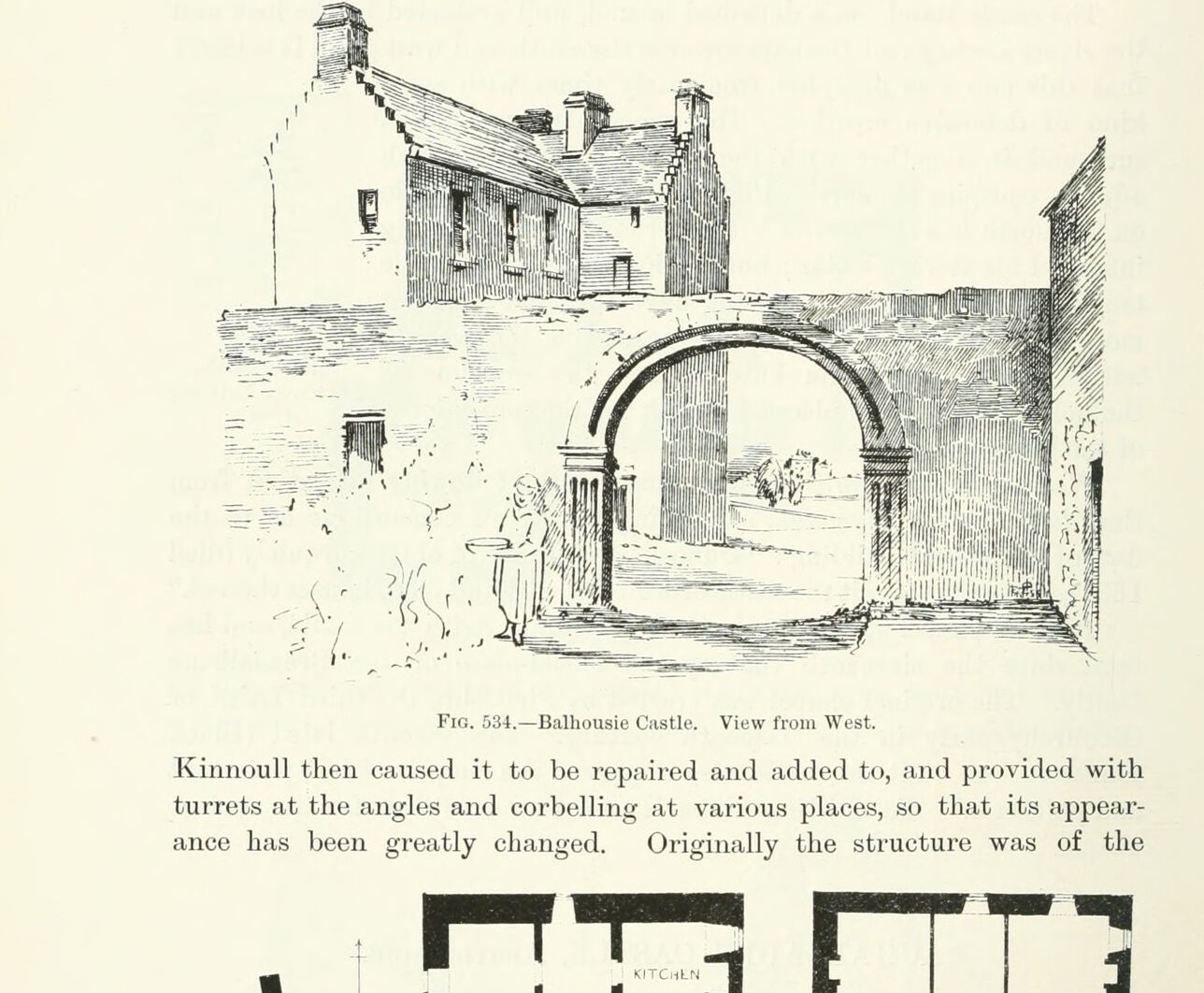
Fig. 534. Balhousie Castle. View from West.
1889 · MacGibbon & Ross, vol. 3 (1889)
Public domain
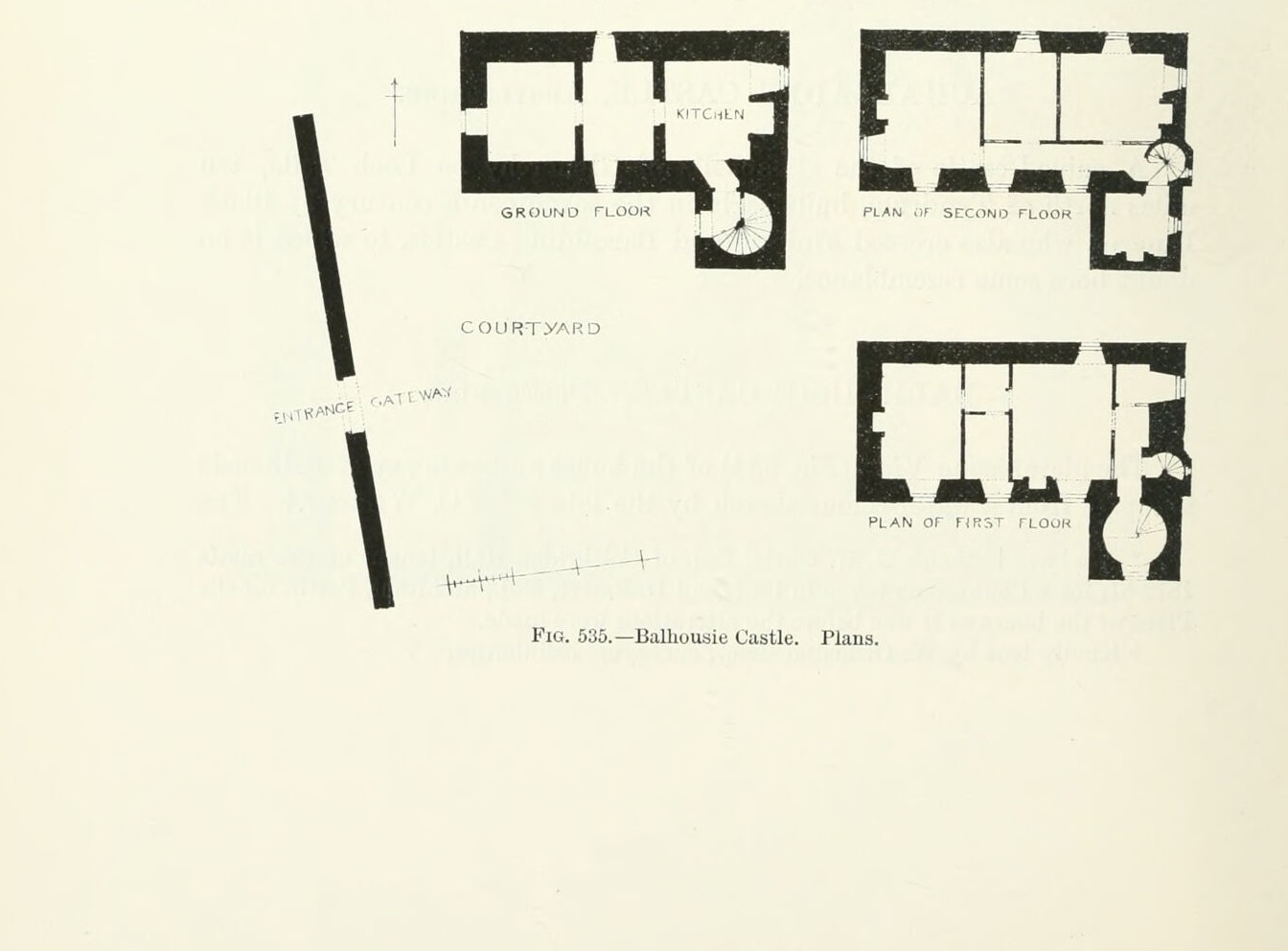
Fig. 535. Balhousie Castle. Plans.
1889 · MacGibbon & Ross, vol. 3 (1889)
Public domain
Nearby