Scotland · Partial ruin
Bishop's Palace
The Bishop's Palace, Kirkwall is a 12th‑century episcopal palace beside St Magnus Cathedral in central Kirkwall, Orkney, built as the bishop's residence and administrative complex. Largely ruined but partly standing, its round tower (the Moosie Toor) and attached ranges survive as a compact stone group administered as a scheduled monument.
Its prime
1550
Today
Partial ruin
As it stood in 1550
What Bishop's Palace looked like in its prime.
A compact medieval palace cluster dominated by a stout circular stone drum tower (the Moosie Toor) of coursed local rubble with a corbelled eaves band; the tower wall is punctured by small, vertically narrow slit windows set in contrasting red-dressed stone and a recessed statue niche. The round tower rises immediately behind low attached ranges with pitched slate roofs and stands within the cathedral close of Kirkwall; the tower's upper masonry is partly broken away.
Its story
The story of Bishop's Palace.
A Norwegian Bishop's Palace, 1100s–1320
The Bishop's Palace in Kirkwall was built in the 12th century, raised alongside St Magnus Cathedral to house the cathedral's first bishop, William the Old of the Norwegian Catholic Church, who took his authority from the Archbishop of Nidaros in Trondheim. It is thought to have resembled a typical Royal Norwegian palace, with a large rectangular hall standing above store rooms and a tower house serving as the bishop's private residence. King Haakon IV of Norway died here in 1263 while overwintering after the Battle of Largs, an event marking the end of Norse rule over the Outer Hebrides. Neglected afterwards, the palace had fallen into ruins by 1320.
Pledged to Scotland and Garrisoned by James V, 1468–1540
In 1468 Orkney and Shetland were pledged by Christian I of Denmark and Norway against the unpaid dowry of his daughter Margaret, betrothed to James III of Scotland; the debt was never settled, and the islands' connection to the Scottish crown became permanent. In 1526 the palace came briefly into the possession of William, Lord Sinclair, before he was ordered to return it to the Bishop of Orkney. When James V of Scotland visited Kirkwall in 1540 he garrisoned his troops in the palace and in Kirkwall Castle.
Bishop Reid's Rebuilding and the English Raid, 1540s–1557
Soon after James V's visit, Bishop Robert Reid (the last of Orkney's medieval bishops and founder of the University of Edinburgh) began an extensive restoration of the palace, adding the round tower still known as the Moosie Toor.
In 1557 Mary I of England sent a fleet to Scotland under William Woodhouse and John Clere. Clere's troops attacked St Magnus Cathedral on 12 August and were overpowered the next day while attempting to capture the Bishop's Palace; many of the retreating English, including Clere himself, drowned trying to reach their ships.
The Stewart Earls and the Siege of 1614
Ownership passed in 1568 to Robert Stewart, 1st Earl of Orkney, whose 1593 will listed eight pieces of old tapestry that probably furnished the palace. His son Patrick Stewart, 2nd Earl of Orkney, planned to incorporate the building into his own Earl's Palace next door, but debts forced him to return it to Bishop James Law. In 1614 Earl Patrick's son Robert seized both palaces and a siege followed, though it is not known whether it damaged the structures. Both remain ruins today, the Bishop's Palace resembling a small castle with its round tower.
Scheduled Monument, 1921 to the 2024 Masonry Survey
The Bishop's Palace has been a scheduled monument since 1921 and is a category A listed building, held and administered by Historic Environment Scotland. It is open to the public, though both it and the neighbouring Earl's Palace were closed from October 2023 to March 2024 while high-level masonry inspections were carried out as part of the building's conservation.
Step inside
7 places to explore in 1550.
The record describes 7 distinct spots at Bishop's Palace, including 3 interiors: upper rectangular hall (principal hall), private chamber in the tower house, lower store rooms. Create your own photoreal reconstruction and explore every one, more scenes means more rooms, more angles, and more of the place to stand in.
Build Your Own Castle
Recreate Bishop's Palace with AI to explore it.
The artist rebuilds it as it stood in 1550, a photoreal reconstruction that belongs to you alone. Pay with coins, no subscription needed.
Recreate this castle →Defend this castle →Whose castle
Clans who held Bishop's Palace.
The families that held Bishop's Palace for a decade or more across its history, follow a name to its clan.
Held by the Stewart Earls of Orkney from 1568, when it passed to Robert Stewart, 1st Earl, until debts forced Earl Patrick to return it to Bishop James Law.
From the archive
Bishop's Palace on paper: the measured plan and period views.
The survey plan and photographs below are the ground truth this page's reconstructions are checked against, drawn and photographed while the castle was still a working garrison. Every image is public-domain or openly licensed, with its source named.
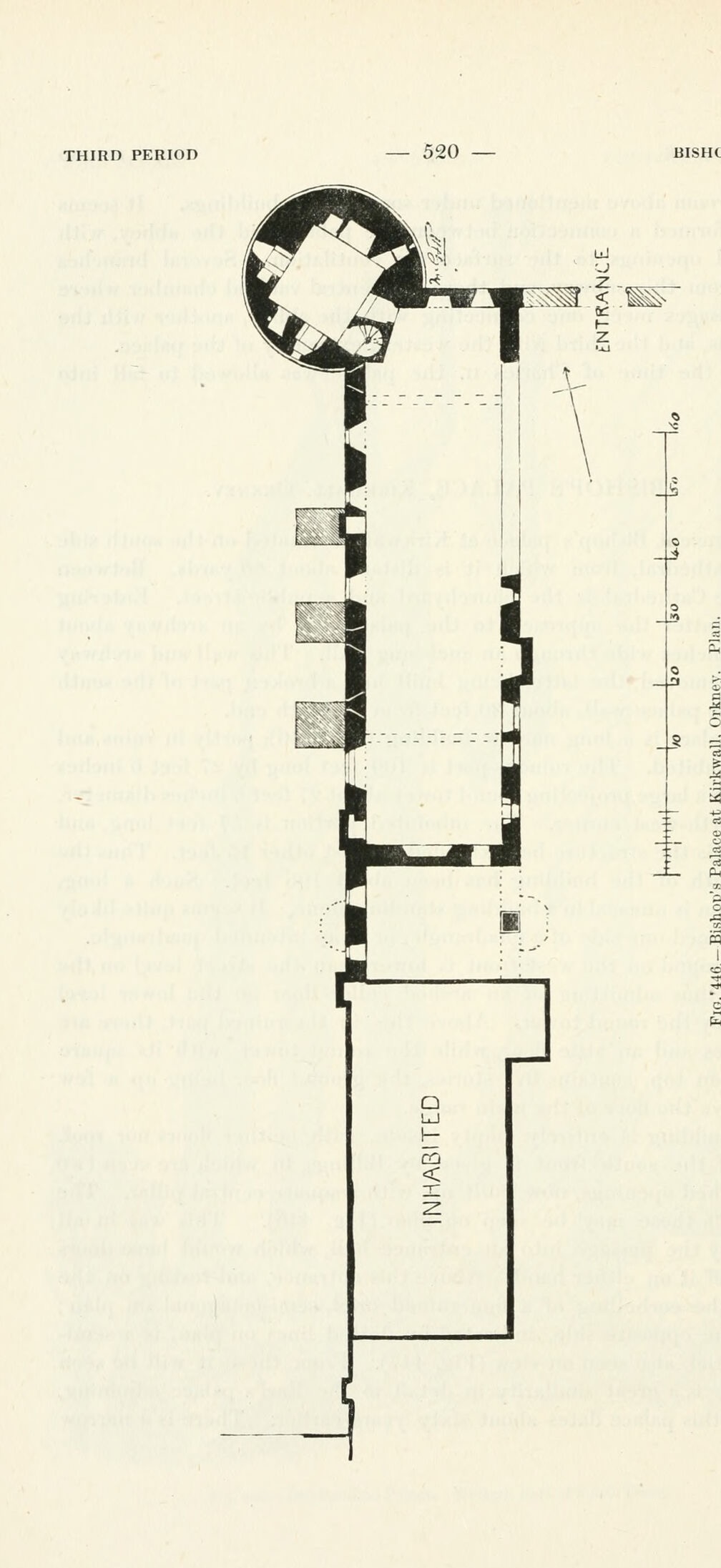
Fig. 446. Bishop's Palace at Kirkwall, Orkney. Plan.
1887 · MacGibbon & Ross, Castellated and Domestic Architecture of Scotland, vol. 1 (1887)
Public domain
Nearby