
Scotland · Partial ruin
Caerlaverock Castle
Caerlaverock Castle is a moated triangular castle on the floodplain of the River Nith in southwest Scotland. Built in red sandstone with a distinctive triangular plan, it comprises a northern gatehouse of twin drum towers, further drum towers at the south corners, and internal ranges including a late Renaissance lodging. The site is a scheduled monument in the care of Historic Environment Scotland.
First raised
1300
Its prime
1634
Today
Partial ruin
Ranked among Europe’s castles
As it stood in 1634
What Caerlaverock Castle looked like in its prime.
A low-lying triangular stone castle set within a broad moat and earthwork ramparts, built of red sandstone. The north gatehouse is flanked by two massive ashlar-faced circular (drum) towers with machicolated tops; smaller round towers occupy the south-west and south-east corners. Curtain walls of varying height link the towers; within them are four ranges including a Renaissance façade (Nithsdale Lodging) decorated with carved pediments and rows of large windows. Chimneys and tall rectangular window openings punctuate the roofline.
Its story
The story of Caerlaverock Castle.
Two castles for the Maxwells, 1220–1270s
Fortification here is far older than the Maxwells. A Roman fort stood on Ward Law Hill and a British hill fort was in use around 950. The 12th-century Annales Cambriae record that King Gwenddoleu ap Ceidio died at the Battle of Arthuret in 573 in a fight over Caer-Laverock, a death that sent his bard Myrddin Wyllt mad into the woods and gave later writers the Merlin of Arthurian legend.
The lands of Caerlaverock first appear on record around 1160, granted to the monks of Holm Cultram Abbey. Around 1220 Alexander II gave them to Sir John Maxwell, making him Warden of the West March; Sir John, who served as Chamberlain of Scotland from 1231 to 1233, began a square stone castle here, moated, with a bridge facing north. It may never have been finished. His brother Sir Aymer Maxwell, himself Chamberlain in 1258–1260 and Justiciar of Galloway in 1264, abandoned it for a rock outcrop some 200 metres north and began the present triangular castle, completed in the 1270s and occupied by John's nephew Herbert Maxwell. Its gatehouse sits on natural rock, but the rest was raised on a clay platform made for the purpose, in red sandstone quarried at nearby Bankend.
Edward I's siege of 1300 and the herald's poem
In 1299 the Caerlaverock garrison attacked English-held Lochmaben Castle, and in July 1300 Edward I answered, marching north with an army that included eighty-seven of the Barons of England and knights of Brittany and Lorraine: among them the Earls of Lincoln, Hereford, Warwick and Lancaster, Antony Bek, Bishop of Durham, and Prince Edward, the future Edward II. Under their chief Sir Eustace Maxwell the defenders held out for two days before surrendering, and the English found the garrison had numbered sixty men.
During the siege the English heralds composed a roll of arms in Old French verse, the Siege of Caerlaverock, naming each noble and knight present, describing his feats of valour and giving a poetic blazon of his armorial bearings.
Eustace Maxwell pulls down his own castle
Restored to possession, Sir Eustace first backed John Balliol, and in 1312 drew an allowance of £20 from Edward II for the castle's more secure keeping. He then went over to Robert Bruce, and Caerlaverock endured a second English siege, this one unsuccessful. Fearing the stronghold might yet fall to the enemy and anchor their hold on the district, Sir Eustace dismantled his own fortress, a sacrifice for which Bruce rewarded him liberally.
By 1337 the castle was inhabited again and Eustace had changed sides once more, for Edward Balliol. Around 1355 Sir Roger Kirkpatrick of Closeburn captured Caerlaverock for David II of Scotland and partly dismantled it again.
Rebuilt for Mary's cause, blown up in 1570
By the end of the Wars of Independence the Maxwells had regained Caerlaverock, and Sir Robert Maxwell rebuilt much of it between 1373 and 1410. Robert, 2nd Lord Maxwell, carried on in the mid-15th century, probably reconstructing the gatehouse; a new west range went up within the walls around 1500.
The Catholic Maxwells took up the cause of Mary, Queen of Scots, after her forced abdication in 1567, and paid for it: in 1570 an English Protestant force under the Earl of Sussex besieged the castle and partly demolished it, destroying the gatehouse with gunpowder. By 1593 John, 8th Lord Maxwell, was building the gatehouse up again for defence against the Johnstones of Annandale, with whom the family was feuding, a feud that killed him in a fight at Dryfe Sands, and saw the 9th Lord executed in 1613 for the revenge murder of Sir James Johnstone.
The Nithsdale Lodging and the thirteen-week siege of 1640
In 1619 Robert, 10th Lord Maxwell, married Elizabeth Beaumont, cousin of the Duke of Buckingham, and was made Earl of Nithsdale and a Privy Councillor. To match his new rank he built the south and east ranges within the walls; the Nithsdale Lodging, finished around 1634 and described as among "the most ambitious early classical domestic architecture in Scotland". In August 1637 he was in residence, writing to Sir Richard Graham for hunting dogs.
In 1640 the Protestant Covenanter army besieged Caerlaverock for thirteen weeks before forcing its surrender. By Sir Henry Vane's account the Earl and Countess of Nithsdale and their page were allowed to leave, but forty defenders called Maxwell were put to the sword. The south wall and tower were demolished, and the castle was never repaired or reoccupied.
In the mid-19th century Caerlaverock belonged to William Constable-Maxwell, 10th Lord Herries of Terregles, heir of the 5th Earl of Nithsdale. It was excavated between 1955 and 1966, and the site (its curtain-wall bases still those of the late-13th-century build, the only triangular castle in the UK) is protected as a scheduled monument in the care of Historic Environment Scotland.
Step inside
10 places to explore in 1634.
The record describes 10 distinct spots at Caerlaverock Castle, including 4 interiors: gatehouse entrance passage, nithsdale lodging interior room, west range accommodation and more. Create your own photoreal reconstruction and explore every one, more scenes means more rooms, more angles, and more of the place to stand in.
Build Your Own Castle
Recreate Caerlaverock Castle with AI to explore it.
The artist rebuilds it as it stood in 1634, a photoreal reconstruction that belongs to you alone. Pay with coins, no subscription needed.
Recreate this castle →Defend this castle →Whose castle
Clans who held Caerlaverock Castle.
The families that held Caerlaverock Castle for a decade or more across its history, follow a name to its clan.
Maxwell stronghold from the 13th century until the siege of 1640.
From the archive
Caerlaverock Castle on paper: the measured plan and period views.
The survey plan and photographs below are the ground truth this page's reconstructions are checked against, drawn and photographed while the castle was still a working garrison. Every image is public-domain or openly licensed, with its source named.

Caerlaverock Castle, Dumfries, Scotland-LCCN2001705977
ca. 1890-1900 · Photochrom Prints Collection (via Wikimedia Commons)
Public domain
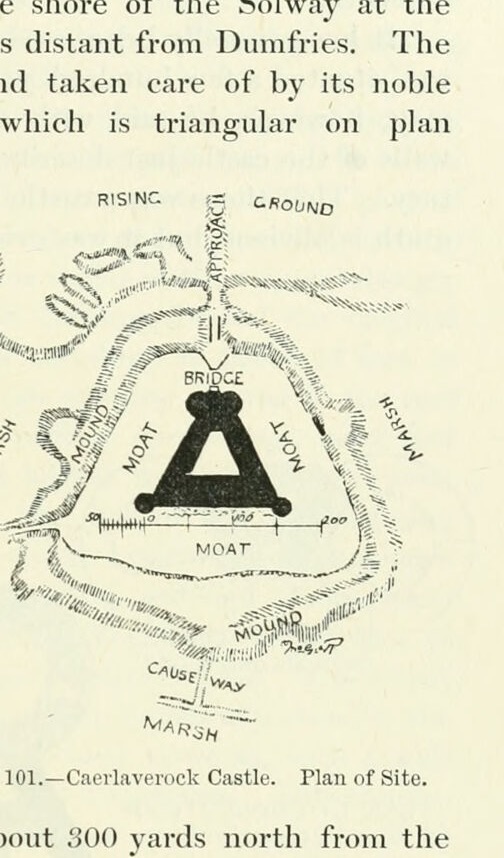
Fig. 101. Caerlaverock Castle. Plan of Site.
1887 · MacGibbon & Ross, Castellated and Domestic Architecture of Scotland, vol. 1 (1887)
Public domain
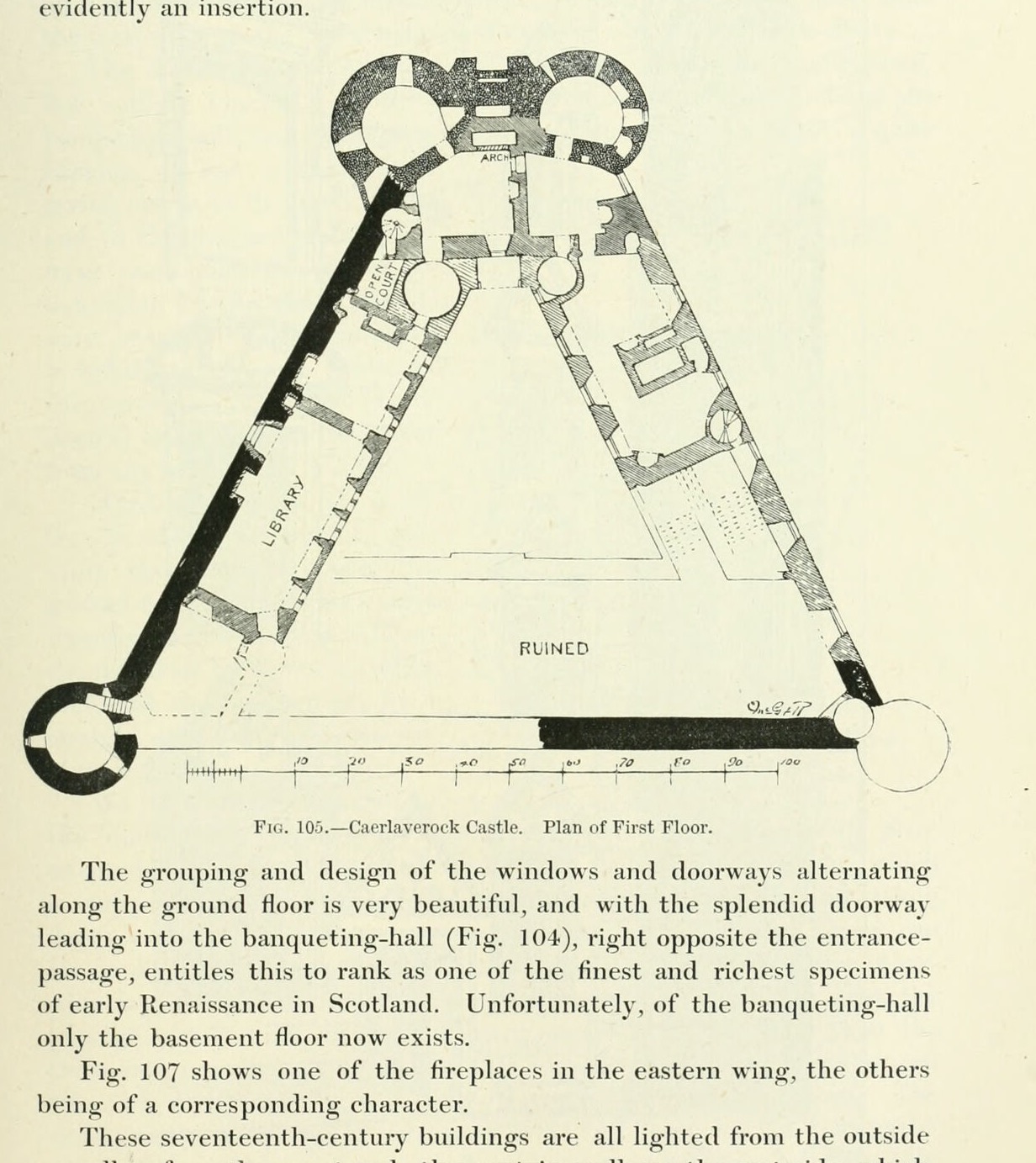
Fig. 105. Caerlaverock Castle. Plan of First Floor.
1887 · MacGibbon & Ross, Castellated and Domestic Architecture of Scotland, vol. 1 (1887)
Public domain


