
Scotland · Restored
Carberry Tower
Carberry Tower is a historic country house in East Lothian, Scotland, originating as a simple square tower house and later extended into a larger residence. The estate includes formal gardens and an arboretum and is associated with nearby Carberry Hill and the Queen's Mount monument.
Its prime
1915
Today
Restored
As it stood in 1915
What Carberry Tower looked like in its prime.
A central, originally simple square stone tower remains visible as the oldest core, incorporated into a larger multi-phase country house formed by successive stone extensions built 'piece by piece' in an anti-clockwise sequence. The roofline is a composite of adjoining ranges and chimneys. The house stands within parkland planted with specimen trees and an arboretum, with a laid-out formal garden and terraced lawns facing the principal façade; the building and grounds are complete and in active use.
Its story
The story of Carberry Tower.
Dunfermline's Lands and Hugh Rigg's Advice, to 1547
King David I granted the lands under the name "Caerbairin" to the monks of Dunfermline Abbey, and the first landowner or lessee recorded there was John de Crebarrie. The Johnstone family were the first owners of Carberry Tower itself, a simple square tower house built more for strength than ornament. In 1541 Hugh Rigg, the King's Advocate, leased the lands from the abbey, apparently on an agreement with the Abbot of Dunfermline running to 1585.
Both John Knox and George Buchanan recorded an unflattering story about Rigg's part in the Battle of Pinkie in 1547, fought close by: that he advised Regent Arran to change the position of the Scottish army. Buchanan noted that Rigg was known for his corpulence rather than his military skill, and Knox suggested the manoeuvre was meant to keep the English away from Carberry.
Mary, Queen of Scots on Carberry Hill, June 1567
In June 1567, on Carberry Hill within the Carberry estate, Mary, Queen of Scots faced an army assembled by a confederation of her lords. She quickly surrendered herself to them, and was then imprisoned. A monument nearby, the Queen's Mount, commemorates the encounter.
Crown Annexation to the Fullerton Alterations, 1587-1760
In 1587, after the Scottish Reformation, the lands and tower of Carberry were annexed by the Crown and the Maitlands of Lauderdale appointed as new superiors; the Rigg family were re-installed. The Riggs owned ships as well as land. In 1599 Mungo Rigg of Carberry and James Rigg went to law over the purchase of a ship called the Angel and its cargo of Norwegian timber from Harry Watson, a Scotsman based in Bergen, and on 1 April 1600 they received a charter for their lands at 'Carberrie' from Anne of Denmark, wife of James VI.
The estate passed in 1659 to Sir Adam Blair of Lochwood, whose family lived there only thirty years before transferring it to Sir Robert Dickson of Inveresk. Dickson's son, also Robert, was Chief Baillie of Musselburgh in 1745, when the rebel Jacobite troops passed between Carberry and Musselburgh on their way to the Battle of Prestonpans on 21 September. In 1760 John Fullerton moved into the tower and began its alteration and enlargement, the extensions going up piece by piece in what looked like an anti-clockwise progression.
The Elphinstones, 1801-1961
Fullerton's niece Elizabeth married the Hon. William Elphinstone in 1774, and the house passed into the Elphinstone family in 1801. Further alterations to the old tower began in 1830. William Elphinstone, 15th Lord Elphinstone, succeeded to the estate in 1861 and was largely responsible for its complete redesign; the arboretum was started during his tenure.
His son Sydney Herbert, 16th Lord Elphinstone, married Lady Mary Bowes-Lyon, sister of Queen Elizabeth the Queen Mother, and the young Elizabeth visited her sister and helped at a Red Cross bazaar held at Carberry Tower in 1915. The couple laid out the formal garden in 1911 and planted specimen trees and other varieties through the park; the modern laundry facilities were featured in Country Life in 1913. Sydney died in 1955 and Lady Mary in 1961, bequeathing the tower to the Church of Scotland.
Conference Centre, Festival and Sale, 1961-2015
The Church of Scotland used the tower as a conference centre, building an annexe and a chapel in the park. Much of the estate was sold in small parcels, though most of it is in the ownership of the Buccleuch Estate. From 1986 the resident wardens Jock and Margaret Stein ran the Carberry Festival, a Christian arts festival that reached its peak in the 1990s and ran for 22 years until 2008, with concerts in the small chapel by artists including Fischy Music and the Riding Lights Theatre Company.
The tower was sold in 2004 to the Gartmore House charitable trust, and it underwent major refurbishment in 2008. In April 2011 Clarenco LLP acquired the property, refurbished it again and traded it as a wedding and events venue and hotel. It was put up for sale in June 2015 at £3 million and sold to Kingsland Estate Ltd. The house has been protected as a Category B listed building since January 1971.
Step inside
8 places to explore in 1915.
The record describes 8 distinct spots at Carberry Tower, including 2 interiors: service laundry, main reception room during the 1915 bazaar. Create your own photoreal reconstruction and explore every one, more scenes means more rooms, more angles, and more of the place to stand in.
Build Your Own Castle
Recreate Carberry Tower with AI to explore it.
The artist rebuilds it as it stood in 1915, a photoreal reconstruction that belongs to you alone. Pay with coins, no subscription needed.
Recreate this castle →Defend this castle →Whose castle
Clans who held Carberry Tower.
The families that held Carberry Tower for a decade or more across its history, follow a name to its clan.
The Johnstone family were the first owners of Carberry Tower.
Rigg
Held by the Rigg family; Mungo Rigg of Carberry is recorded in 1599.
Blair
Held by Sir Adam Blair of Lochwood and his family from 1659 for some thirty years.
Transferred to Sir Robert Dickson of Inveresk around 1689; his son was Chief Baillie of Musselburgh in 1745.
Elphinstone
In the Elphinstone family from 1801; the 15th Lord Elphinstone redesigned the estate after 1861.
From the archive
Carberry Tower on paper: the measured plan and period views.
The survey plan and photographs below are the ground truth this page's reconstructions are checked against, drawn and photographed while the castle was still a working garrison. Every image is public-domain or openly licensed, with its source named.
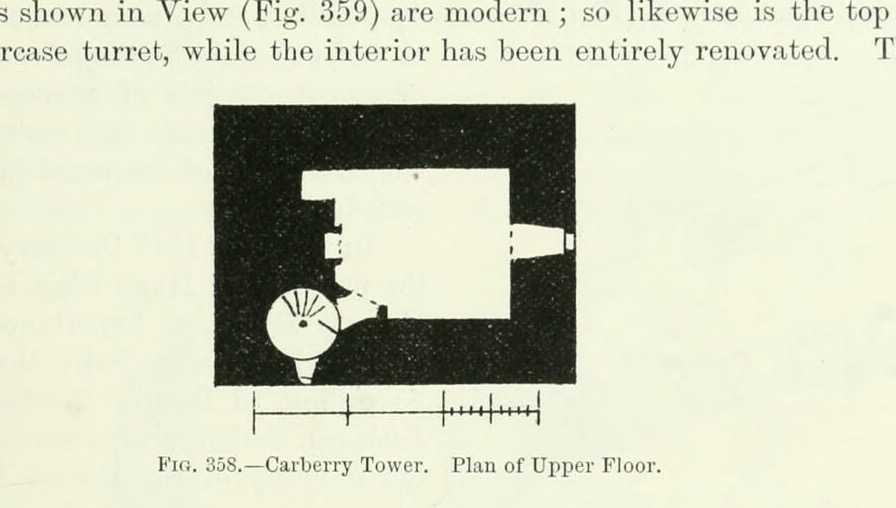
Fig. 358. Carberry Tower. Plan of Upper Floor.
1889 · MacGibbon & Ross, vol. 3 (1889)
Public domain
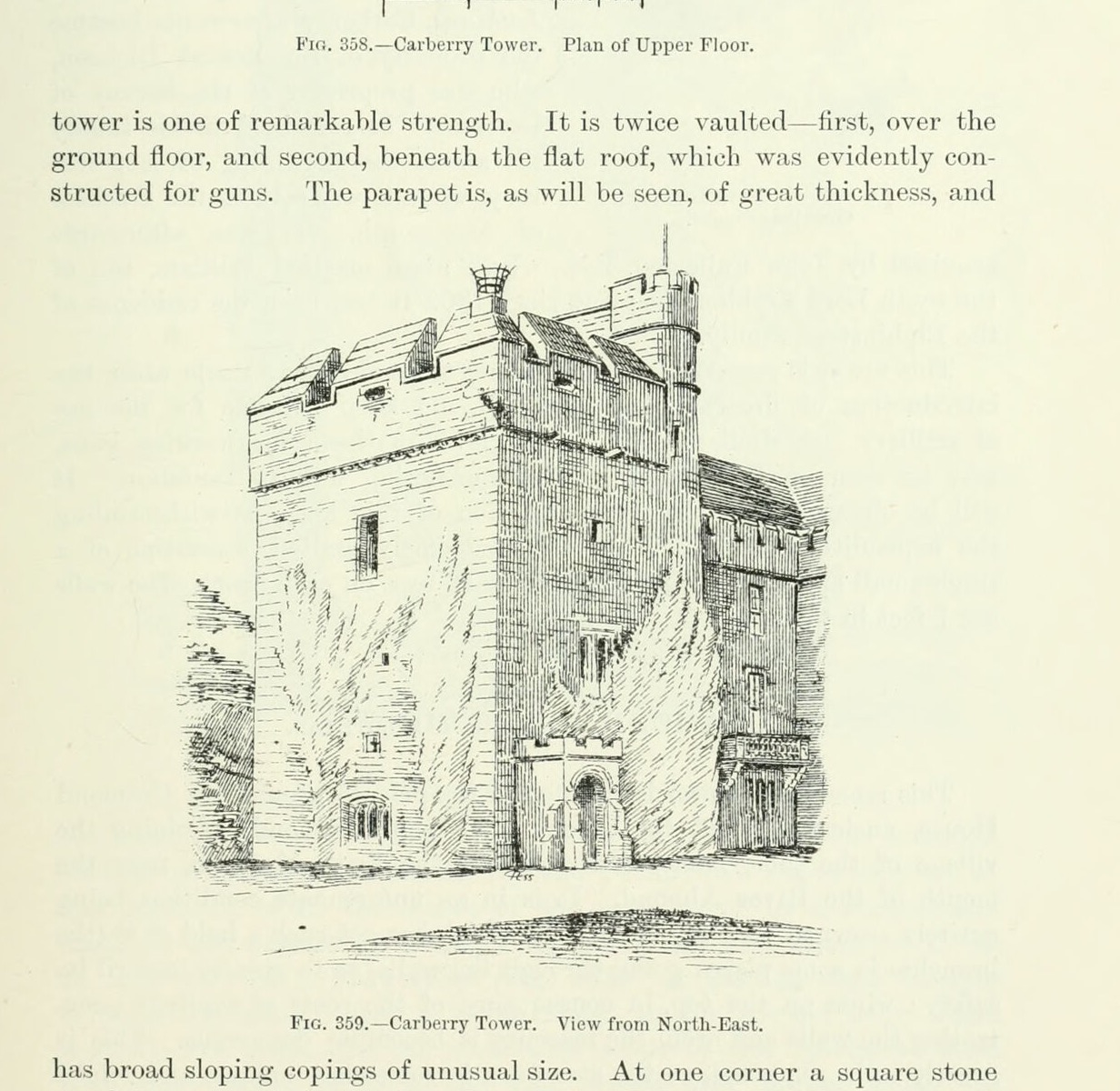
Fig. 359. Carberry Tower. View from North-East.
1889 · MacGibbon & Ross, vol. 3 (1889)
Public domain
Nearby
Landmarks within reach of Carberry Tower.


Questions about Carberry Tower
What is the history of Carberry Tower?
Why was Carberry Tower built, and what was it used for?
Where is Carberry Tower?
When was Carberry Tower built?
Which family or clan held Carberry Tower?
What did Carberry Tower look like in its prime?
Is Carberry Tower still standing or is it a ruin?
Can you visit Carberry Tower?
More castles of Scotland


Explore the city


