Clan Rising
Carrick Castle today

Scotland · Partial ruin

Carrick Castle

Carrick Castle is a 14th-century rectangular tower house on a rocky promontory on the west shore of Loch Goil in Argyll and Bute, Scotland. Built by the Campbells, it consists of a tall stone keep with a later 17th-century wing and was an occasional royal hunting lodge and residence before partial destruction in the 17th century; it is a scheduled monument and Category A listed building.

Photograph via Wikimedia Commons

Its prime

1563

Today

Partial ruin

As it stood in 1563

What Carrick Castle looked like in its prime.

A tall rectangular stone tower house standing on a low rocky peninsula into Loch Goil, roughly 66 by 38 feet in plan and about 64 feet high, with thick 7-foot masonry walls. The main block rises two floors above a central great hall and is joined on one side by a smaller 17th-century appendage. The stone is dark grey-brown coursed masonry; windows are few and narrow, and a small chimney is set into one window recess. The peninsula meets the water with a small shore and pier.

Its story

The story of Carrick Castle.

The Campbells of Loch Goil, Late 1300s–1563

Carrick Castle was probably built by the Campbells in the last decades of the fourteenth century, when the family was dominant on this stretch of Argyll. The rectangular tower house occupies a rocky peninsula on the west shore of Loch Goil, once defended to landward by a ditch and drawbridge; its walls run seven feet thick and rise to 64 feet, with two floors set above a central great hall and a small chimney built, curiously, into a window recess.

James IV used the castle as a hunting lodge, and Mary, Queen of Scots stayed there on 20 and 21 June 1563.

Argyll's Rising, 1685

During Argyll's Rising in 1685, when Archibald Campbell, 9th Earl of Argyll, attempted to overthrow King James VII, Captain Thomas Hamilton of HMS Kingfisher reported that the castle had been burnt and its walls reduced sufficiently to make it useless to the Campbell forces. Legend holds that the Kingfisher bombarded the castle, badly damaging the keep and stripping its roof.

Decline, Sale to the Murrays of Dunmore, and Restoration

Carrick was occupied only intermittently afterwards before it was sold to the Murrays, Earls of Dunmore. A smaller seventeenth-century wing stands alongside the original tower. The keep was a ruin for many years before it passed into private ownership and restoration began. Historic Environment Scotland has scheduled it as a monument since 1966 and listed it Category A since 1971.

Step inside

8 places to explore in 1563.

The record describes 8 distinct spots at Carrick Castle, including 4 interiors: central great hall, upper living chambers above the great hall, interior of 17th-century appendage and more. Create your own photoreal reconstruction and explore every one, more scenes means more rooms, more angles, and more of the place to stand in.

Exterior approach from across Loch GoilLandward approach with former ditch and drawbridgeForeshore at the foot of the keepClose exterior elevation of tower base and windowsCentral great hallUpper living chambers above the great hallInterior of 17th-century appendageWindow recess with built-in chimney

Build Your Own Castle

Recreate Carrick Castle with AI to explore it.

The artist rebuilds it as it stood in 1563, a photoreal reconstruction that belongs to you alone. Pay with coins, no subscription needed.

Recreate this castle →Defend this castle →

Whose castle

Clans who held Carrick Castle.

The families that held Carrick Castle for a decade or more across its history, follow a name to its clan.

  • Campbell

    Probably built by the Campbells in the late 14th century; held until burnt in Argyll's Rising of 1685 and later sold.

  • Murray

    Sold to the Murrays, Earls of Dunmore.

From the archive

Carrick Castle on paper: the measured plan and period views.

The survey plan and photographs below are the ground truth this page's reconstructions are checked against, drawn and photographed while the castle was still a working garrison. Every image is public-domain or openly licensed, with its source named.

Carrick Castle, Lochgoil (i.e. Loch Goil), Scotland-LCCN2002695018, Carrick Castle

Carrick Castle, Lochgoil (i.e. Loch Goil), Scotland-LCCN2002695018

ca. 1890-1900 · Photochrom Prints Collection (via Wikimedia Commons)

Public domain
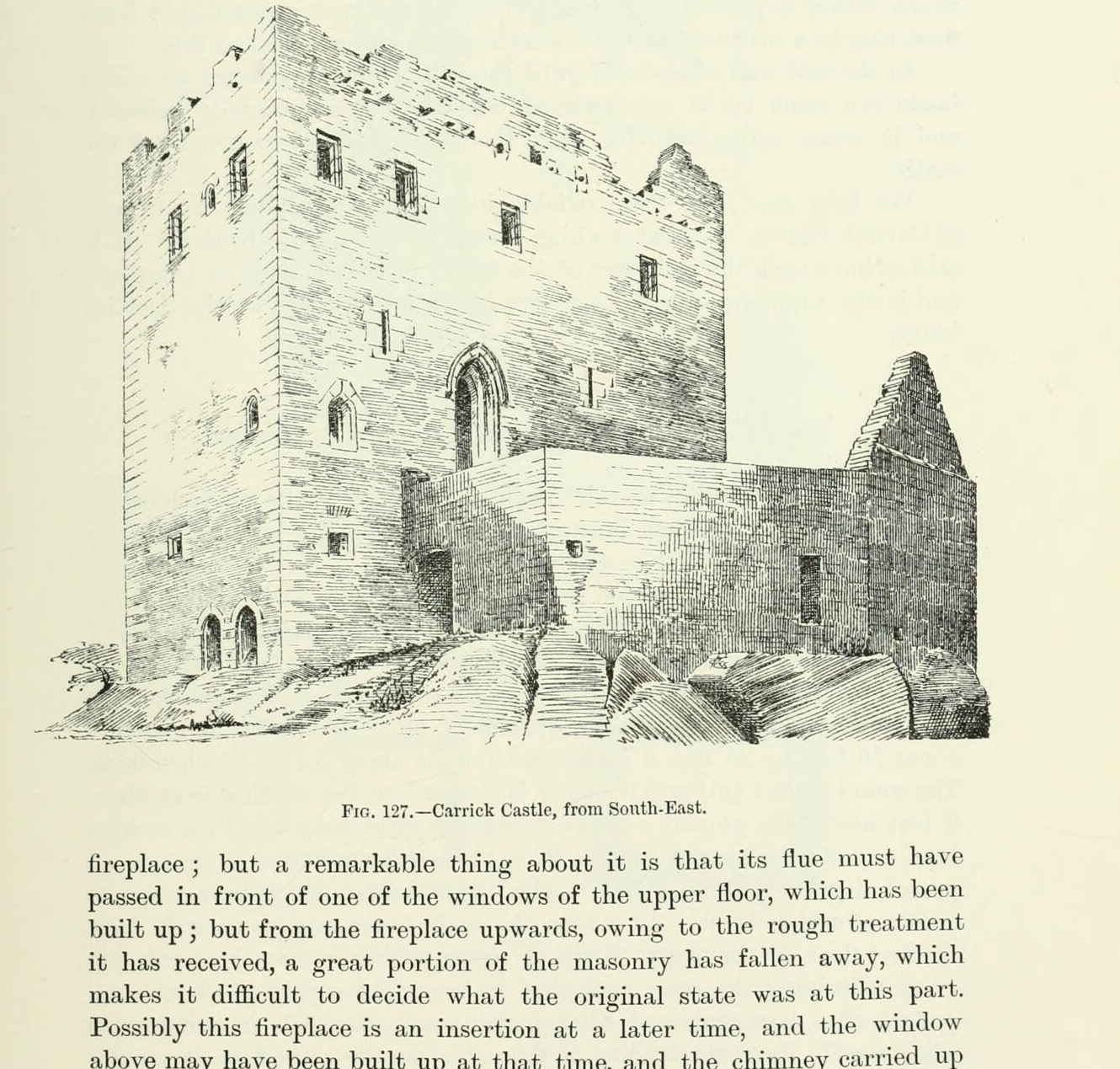
Fig. 127.—Carrick Castle, from South-East., Carrick Castle

Fig. 127.—Carrick Castle, from South-East.

1889 · MacGibbon & Ross, vol. 3 (1889)

Public domain

Nearby

Landmarks within reach of Carrick Castle.

Questions about Carrick Castle

What is the history of Carrick Castle?

Carrick Castle was probably built by the Campbells in the last decades of the fourteenth century. It later served as a hunting lodge for James IV, and Mary, Queen of Scots stayed there in 1563. During Argyll’s Rising in 1685, it was burnt and damaged, after which it was intermittently occupied before being sold to the Murrays, Earls of Dunmore.

What is inside Carrick Castle?

Inside Carrick Castle are a central great hall, upper living chambers above the hall and the interior of the smaller 17th-century appendage. A small chimney is built into a window recess, an unusual feature of the building. The keep’s main block has two floors above the central great hall.

Why was Carrick Castle built, and what was it used for?

Carrick Castle was built as a Campbell tower house and later used as a royal hunting lodge and residence. Its position on a rocky peninsula, with a former landward ditch and drawbridge, provided defence. James IV used it as a hunting lodge, and it also accommodated Mary, Queen of Scots in 1563.

Where is Carrick Castle?

Carrick Castle stands on the west shore of Loch Goil in Argyll and Bute, on the Cowal Peninsula. It is between Cuilmuich and Carrick, about 4 miles south of Lochgoilhead. The building occupies a rocky peninsula extending into the loch.

When was Carrick Castle built?

Carrick Castle was built in the fourteenth century, probably in its last decades. The first-raised year is not recorded, while the surviving building also includes a smaller 17th-century appendage. Mary, Queen of Scots stayed at the castle in 1563.

Was Carrick Castle ever attacked or besieged?

Carrick Castle was attacked and burnt during Argyll’s Rising in 1685. Captain Thomas Hamilton of HMS Kingfisher reported that its walls had been reduced enough to make it useless to the Campbell forces. A tradition says that the ship bombarded the castle, badly damaging the keep and causing it to lose its roof.

Which family or clan held Carrick Castle?

Carrick Castle was probably built and held by the Campbells until it was burnt during Argyll’s Rising in 1685. It was later sold to the Murrays, Earls of Dunmore. These are the two families identified with its ownership and possession.

What did Carrick Castle look like in its prime?

Carrick Castle was a tall rectangular stone tower house, about 66 by 38 feet and up to 64 feet high. Its dark grey-brown coursed masonry formed walls about seven feet thick, with few narrow windows and a small 17th-century wing. It stood on a low rocky peninsula with a small shore and pier.

Is Carrick Castle still standing or is it a ruin?

Carrick Castle is still standing but survives as a partial ruin. The keep was a ruin for many years after the damage of 1685, when it lost its roof according to legend. It is now in private ownership and undergoing restoration, while its smaller 17th-century wing remains part of the structure.
All castles of Scotland · Castles of Europe · the best castles in Europe · explore the finished reconstructions.