Scotland · Restored
Castle Leod
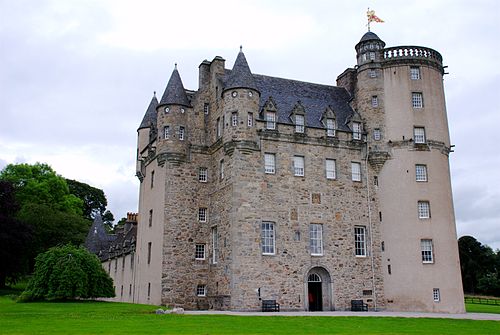
Castle Leod is a red sandstone L-plan tower house near Strathpeffer in Ross-shire, long the seat of Clan Mackenzie and the Earls of Cromartie. The building combines an early tower-house core with later additions and 19th-century renovations and remains a private residence open to the public on limited days.
Its prime
1851
Today
Restored
As it stood in 1851
What Castle Leod looked like in its prime.
A compact, mostly square red-sandstone tower house composed of an early L-plan core with a rounded corner turret capped by a conical slate roof, steep pitched slate rooflines and tall chimneys. The façade shows regularly spaced rectangular windows, thick masonry walls and a low parapet where an addition was built into the original front. The castle sits on a raised bank within wooded grounds of tall conifers and formal lawns approached by stone steps.
Its story
The story of Castle Leod.
After Flodden: John of Killin, 1513
Castle Leod was granted to John of Killin, 10th Chief of Clan MacKenzie, after he fought at the Battle of Flodden in 1513. The site is believed to be far older: a very ancient Pictish fort is thought to have stood here before the 12th century, and the compact red sandstone L-plan tower that forms the earliest part of the castle may itself rest on a 15th-century building. Two Spanish chestnuts in the grounds are said to have been planted by John in 1556 to mark Mary Queen of Scots' confirmation of his acquisition of Castle Leod.
Rorie Mackenzie and the MacLeod Fortune, 1605–1616
The castle passed to John's great-grandson Kenneth Mackenzie, 1st Lord Mackenzie of Kintail, who granted it in 1608 to his brother Sir Roderick "Rorie" Mackenzie. Roderick had married well. His 1605 match with Margaret MacLeod, heiress of Torquil MacLeod of Lewis, brought her immense wealth into the family and settled the feud between the MacLeods and the Mackenzies over the Barony of Coigach, which passed to the Mackenzies with her.
The castle as it stands is largely Roderick's early 17th-century work, and his descendants, the Earls of Cromartie, have held it as their seat ever since. An added section in the re-entrant angle made the tower square in plan, built over the parapet of the original front in a more decorative style; the date 1616 is carved on a dormer window, though whether it marks the original phase or the extension is not known. The walls run six to eight feet thick in places, and the defences included iron grilles on some of the lower windows and numerous splayed gun loops and arrow-slit windows.
Forfeiture After the 'Forty-five
George Mackenzie, 3rd Earl of Cromartie, forfeited the estate in 1746 following his support for the 1745 Jacobite rising. The estates, though not the title, were restored to his son in 1784, but the castle had already been reported in a run-down state earlier in the century, when the estate was badly debt-ridden, and by 1814 it was described as "quite a ruin... deserted except by crows", though this may have applied more to the upper floors.
The Hay-Mackenzies and the Restored Earldom
In the mid 19th century the Hay-Mackenzies, descendants of the 3rd Earl, completely renovated Castle Leod, adding large extensions to the north in 1851 that were rebuilt in 1904. After Anne Hay-Mackenzie married George Sutherland-Leveson-Gower, 3rd Duke of Sutherland, she was created first Countess of Cromartie in 1861 (reviving the earldom last held by her great-great-grandfather) with a special remainder to her second son, Francis Mackenzie, 2nd Earl of Cromartie. She was also created Baroness Macleod, of Castle Leod.
The roof was made watertight as recently as 1992, and the castle remains the home of the Earl of Cromartie, open to the public on a limited number of days. It is widely considered the inspiration for Castle Leoch, seat of the laird of Clan Mackenzie in Diana Gabaldon's Outlander; it was considered as a filming location for the television series, though Doune Castle was chosen instead.
Step inside
8 places to explore in 1851.
The record describes 8 distinct spots at Castle Leod, including 3 interiors: re-entrant staircase (interior), wood-panelled room hung with mackenzie portraits, upper-floor bedroom. Create your own photoreal reconstruction and explore every one, more scenes means more rooms, more angles, and more of the place to stand in.
Build Your Own Castle
Recreate Castle Leod with AI to explore it.
The artist rebuilds it as it stood in 1851, a photoreal reconstruction that belongs to you alone. Pay with coins, no subscription needed.
Recreate this castle →Defend this castle →Whose castle
Clans who held Castle Leod.
The families that held Castle Leod for a decade or more across its history, follow a name to its clan.
Seat of Clan Mackenzie since 1513, when it was granted to John of Killin, 10th Chief, and home of the Mackenzie Earls of Cromartie ever since.
From the archive
Castle Leod on paper: the measured plan and period views.
The survey plan and photographs below are the ground truth this page's reconstructions are checked against, drawn and photographed while the castle was still a working garrison. Every image is public-domain or openly licensed, with its source named.
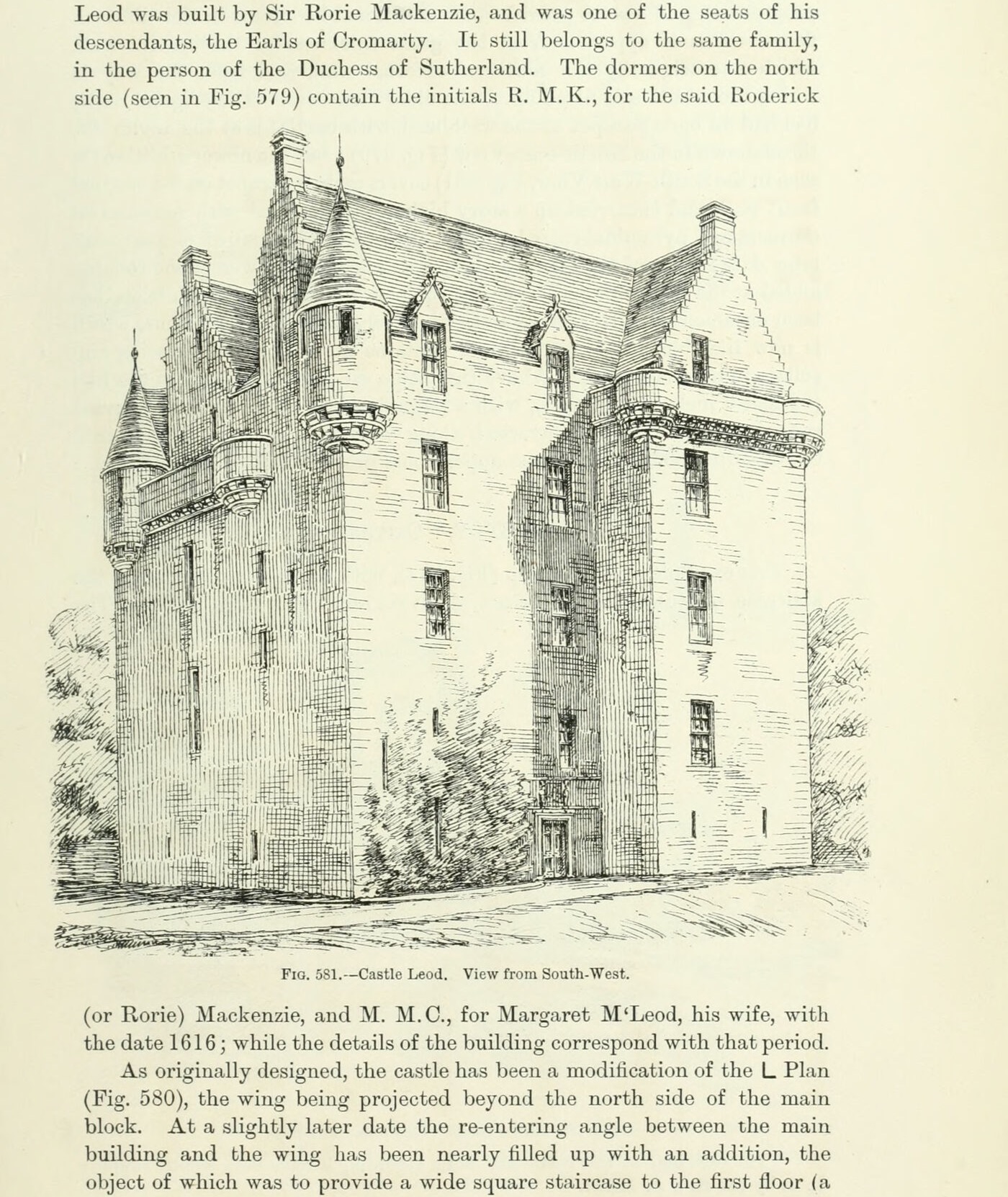
Fig. 581. -- Castle Leod. View from South-West.
1889 · MacGibbon & Ross, vol. 3 (1889)
Public domain