
Scotland · Demolished
Cathcart Castle
Cathcart Castle was a 15th‑century rectangular tower house and small enclosed castle on the White Cart Water in what is now Linn Park, Cathcart, Glasgow. It comprised a five‑storey tower house within a curtain wall with round corner towers and a twin‑towered gatehouse. The castle was abandoned in the 18th century, its visible ruins were demolished in 1980, and the site survives as a Scheduled Monument with foundations remaining.
Its prime
1635
Today
Demolished
As it stood in 1635
What Cathcart Castle looked like in its prime.
In its prime (c.1635) Cathcart Castle appears as a compact rectangular tower house measuring roughly 15.5 by 9 m and rising to five storeys above a vaulted basement, set centrally within a small barmkin about 22 by 15 m. A low stone curtain wall with round corner towers encloses the courtyard, and a twin‑towered gatehouse faces east. The complex stands on the rocky north‑east bank of the White Cart Water, with ancillary outbuildings clustered outside the enclosure.
Its story
The story of Cathcart Castle.
Lords Cathcart and the Semple Succession, 12th Century to 1546
The lands of Cathcart were held by the family of that name from the 12th century. In the mid-15th century the head of the family was raised to the peerage as Lord Cathcart, and the castle is believed to have been built at around that time. It stood on the rocky north-east bank of the White Cart Water: a rectangular tower house of 15.5 by 9 m and five storeys including a vaulted basement, set at the centre of a small barmkin some 22 by 15 m. The curtain wall around it carried round corner towers and a twin-towered gatehouse to the east, and earthworks to the west have been interpreted as an outer bailey or ringwork.
In 1546 the castle passed to the Semple family.
The Langside Tradition, 1568
The story attached to the castle puts Mary, Queen of Scots at Cathcart on the night before the Battle of Langside in 1568, watching the fighting from a nearby hill called the Court Knowe. It is highly unlikely on both counts. The Semples were supporters of Mary's enemies and would have captured her and put an end to her plans before the battle had started. Court Knowe, in any case, sits some 15 m below the height of Langside village where the battle was fought, so she could not have seen what took place; Prospecthill, on the line of her army's approach to Langside, would be a likelier vantage point.
An alternative version has the Queen lodging with her kinsfolk the Stuarts of Castlemilk, whose stronghold at the foot of the Cathkin Braes contained a chamber later known as Queen Mary's Room, its ceiling ornamented with the arms of the Stuart monarchs of Scotland. That too is unlikely: Mary spent the preceding week at Hamilton, where 6,000 troops gathered.
The Semple Armorial and the Move to Cathcart House, 1630s-1740
Archaeological investigation of the site recovered a fragmentary plaster armorial of the 1630s bearing the arms of Bryce Semple and Jean Lauder of Hatton, apparently part of a fireplace overmantle and ceiling in the hall of the tower. In 1740 the Semples built Cathcart House nearby, since demolished in its turn, and moved out of the castle, leaving it to ruin.
Bought for Its Stone, 1814-1980
The newly created 1st Earl Cathcart bought back his ancestral home in 1814, although with the intention of selling off the stone rather than living in it. In 1866 the castle was still standing to five storeys, surrounded by outbuildings. Glasgow City Council purchased the lands around the castle in 1927 and added them to Linn Park, and the site was scheduled on 30 May 1961.
In 1980 the remaining ruins were pronounced dangerous and pulled down by the council. The foundations of the tower house survive to around 1 m high, protected as a Scheduled Monument.
Step inside
10 places to explore in 1635.
The record describes 10 distinct spots at Cathcart Castle, including 3 interiors: hall of the tower (main hall), vaulted basement (cellar), gatehouse passage between the paired towers. Create your own photoreal reconstruction and explore every one, more scenes means more rooms, more angles, and more of the place to stand in.
Build Your Own Castle
Recreate Cathcart Castle with AI to explore it.
The artist rebuilds it as it stood in 1635, a photoreal reconstruction that belongs to you alone. Pay with coins, no subscription needed.
Recreate this castle →Defend this castle →Whose castle
Clans who held Cathcart Castle.
The families that held Cathcart Castle for a decade or more across its history, follow a name to its clan.
Cathcart
Held by the Cathcart family from the 12th century; the 1st Earl Cathcart bought back the ancestral site in 1814.
Semple
The castle passed to the Semple family in 1546.
From the archive
Cathcart Castle on paper: the measured plan and period views.
The survey plan and photographs below are the ground truth this page's reconstructions are checked against, drawn and photographed while the castle was still a working garrison. Every image is public-domain or openly licensed, with its source named.
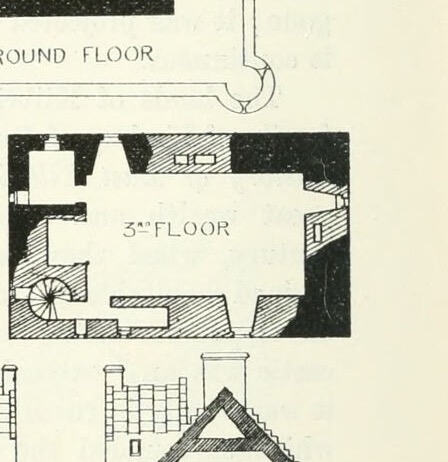
PLAN OF GROUND FLOOR
1889 · MacGibbon & Ross, vol. 3 (1889)
Public domain
1ST FLOOR
1889 · MacGibbon & Ross, vol. 3 (1889)
Public domain
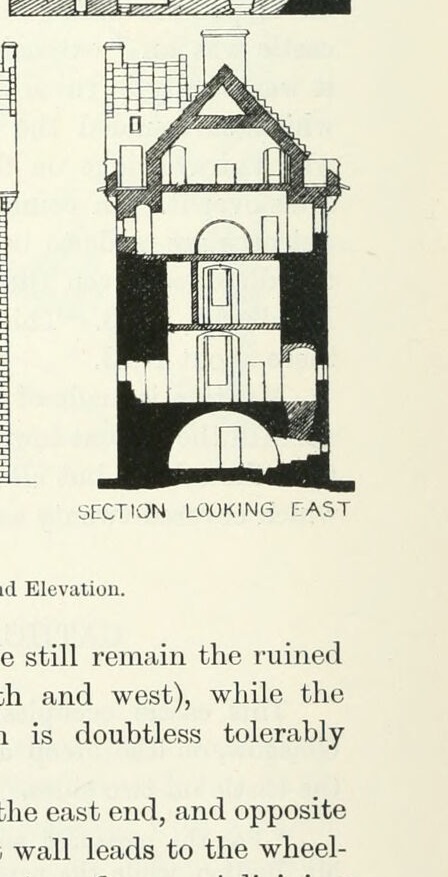
SECTION LOOKING WEST
1889 · MacGibbon & Ross, vol. 3 (1889)
Public domain
Nearby
Landmarks within reach of Cathcart Castle.


Questions about Cathcart Castle
What is the history of Cathcart Castle?
What is inside Cathcart Castle?
Where is Cathcart Castle?
When was Cathcart Castle built?
Which family or clan held Cathcart Castle?
What did Cathcart Castle look like in its prime?
Is Cathcart Castle still standing or is it a ruin?
More castles of Scotland


Explore the city


