Scotland · Still standing
Cawdor Castle
Cawdor Castle is a Scottish castle built around a 15th-century tower house with substantial later additions that together enclose a central courtyard. It remains a private, inhabited seat of the Campbells and is set within designed gardens and estate woodlands near a small river.
First raised
1454
Its prime
1870
Today
Still standing
As it stood in 1870
What Cawdor Castle looked like in its prime.
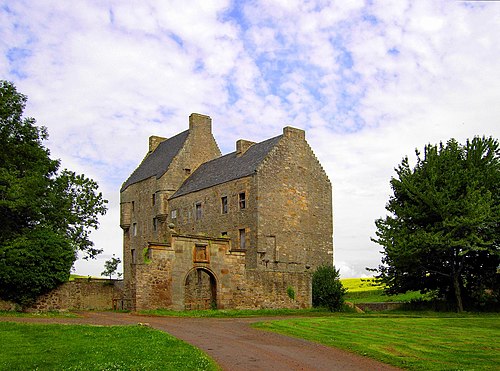
Compact stone castle centered on a 15th-century rectangular tower house with adjoining south and east ranges that form an enclosed courtyard; a small round turret with a conical slate roof rises above steep gabled roofs and tall chimneys. Warm grey-brown masonry, thick walls and small slit windows characterize the older fabric. The house sits amid mature woods and formal gardens beside a slow river or moat, approached by a simple timber footbridge and guarded by a gate with an iron yett.
Its story
The story of Cawdor Castle.
A Holly Tree and a Licence to Fortify, 1454
The earliest documented date at Cawdor is 1454, when a licence to fortify was granted to William Calder, 6th Thane of Cawdor, Calder being the usual spelling of the name at the time. The tower may be older than its paperwork: architectural historians have dated the stonework of the oldest portion to around 1380. The castle was built around a small living holly tree, and tradition holds that a donkey laden with gold lay down to rest beneath it, marking the spot where the tower should rise. The remains of the tree can still be seen in the lowest level of the tower, and modern testing has shown it died around 1372, lending weight to the earlier date. The iron yett at the entrance was carried here from nearby Lochindorb Castle, which William dismantled around 1455 on the orders of James II after its forfeiture by the Earl of Moray.
Muriel Calder Marries a Campbell, 1510
In 1510 Muriel, heiress of the Calders, married Sir John Campbell of Muckairn, and Cawdor has been a Campbell house ever since. Sir John set about extending the castle, and John Campbell, 3rd of Cawdor (c.1576–c.1642), who purchased rich lands on Islay, carried the improvements further; a garden had been added by 1635. After the Restoration, Sir Hugh Campbell of Cawdor added or improved the north and west ranges, employing the masons James and Robert Nicolson of Nairn.
A Storm at Milford Haven, 1680s Onwards
In the 1680s Sir Hugh's son, Sir Alexander Campbell, was stranded by a storm at Milford Haven in Wales, where he met a local heiress, Elizabeth Lort of Stackpole Court. They married, and thereafter the Campbells of Cawdor lived mainly on their Pembrokeshire estates. Cawdor became the home of younger brothers of the family, who managed the estates, built a walled flower garden in 1720 and established extensive woodlands in the later eighteenth century.
John Campbell of Cawdor, a Member of Parliament, married a daughter of the Earl of Carlisle in 1789 and was ennobled as Lord Cawdor in 1796; his son was created Earl Cawdor in 1827. Through the nineteenth century the Earls used Cawdor as a summer residence, commissioning the architects Thomas Mackenzie and Alexander Ross to add the southern and eastern ranges, enclosing a courtyard reached by drawbridge. In the twentieth century John Campbell, 5th Earl Cawdor, moved to the castle permanently, and it remains in Campbell hands as the home of Angelika, Dowager Countess Cawdor, born Countess Lažanský of Bohemia.
The Thane Hector Boece Invented
Cawdor is best known for a connection it cannot literally have. Shakespeare's Macbeth is made "Thane of Cawdor", but the historical Macbeth, who ruled Scotland from 1040 to 1057 after his forces killed King Duncan I in battle near Elgin, was never Thane of Cawdor, that detail was an invention of the fifteenth-century writer Hector Boece. The castle did not exist in the lifetimes of Macbeth or Duncan, and it is never explicitly mentioned in the play. The 5th Earl Cawdor is quoted as saying, "I wish the Bard had never written his damned play!"
Step inside
7 places to explore in 1870.
The record describes 7 distinct spots at Cawdor Castle, including 1 interior: lowest level of the tower with holly tree. Create your own photoreal reconstruction and explore every one, more scenes means more rooms, more angles, and more of the place to stand in.
Build Your Own Castle
Recreate Cawdor Castle with AI to explore it.
The artist rebuilds it as it stood in 1870, a photoreal reconstruction that belongs to you alone. Pay with coins, no subscription needed.
Recreate this castle →Defend this castle →Whose castle
Clans who held Cawdor Castle.
The families that held Cawdor Castle for a decade or more across its history, follow a name to its clan.
Calder
Licence to fortify granted to William Calder, 6th Thane of Cawdor, in 1454; a Calder property until the 16th century.
Passed to the Campbells in the 16th century, held to this day, home of the Dowager Countess Cawdor.
From the archive
Cawdor Castle on paper: the measured plan and period views.
The survey plan and photographs below are the ground truth this page's reconstructions are checked against, drawn and photographed while the castle was still a working garrison. Every image is public-domain or openly licensed, with its source named.
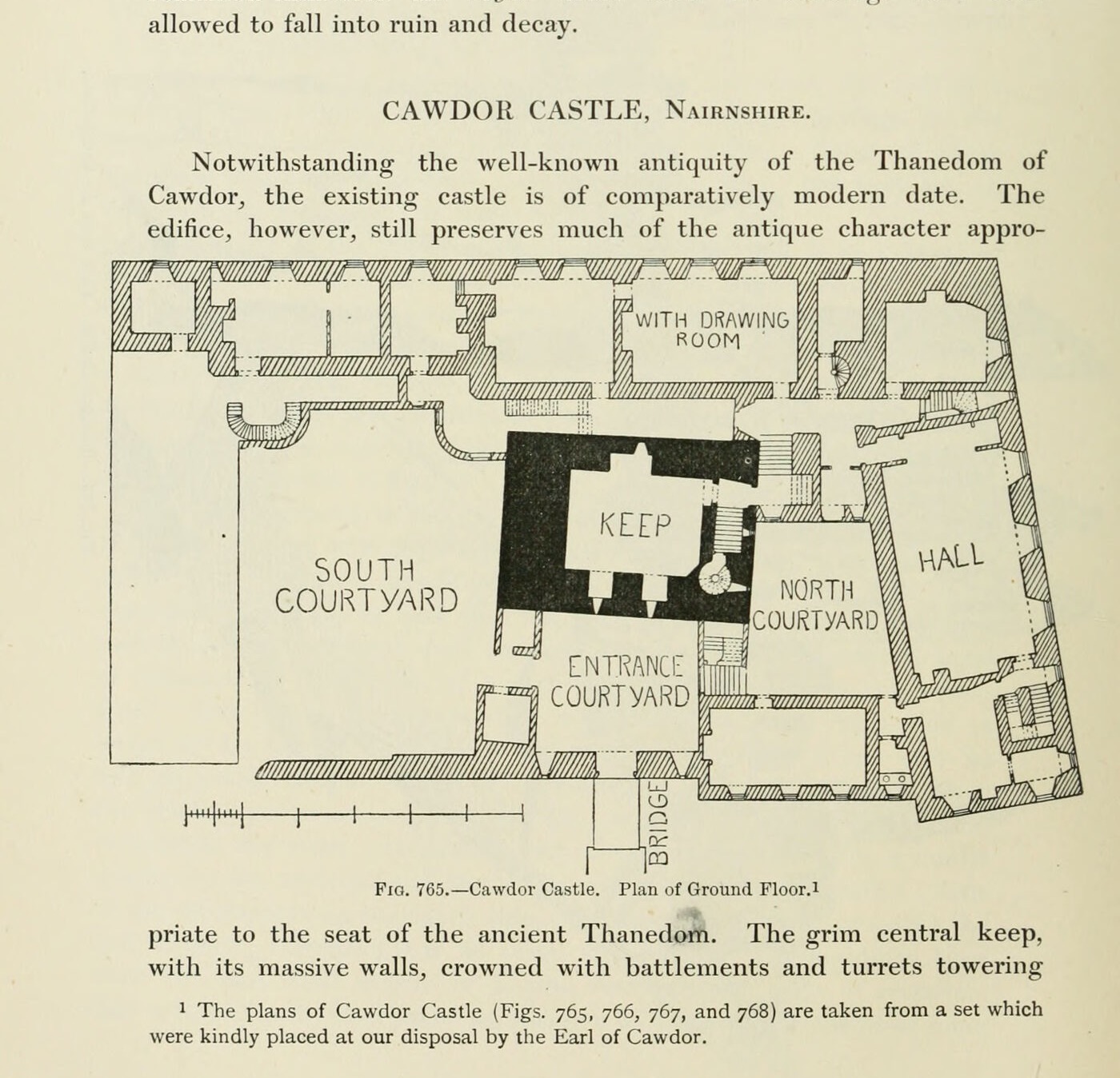
Fig. 765. Cawdor Castle. Plan of Ground Floor.1
1887 · MacGibbon & Ross, vol. 2 (1887)
Public domain
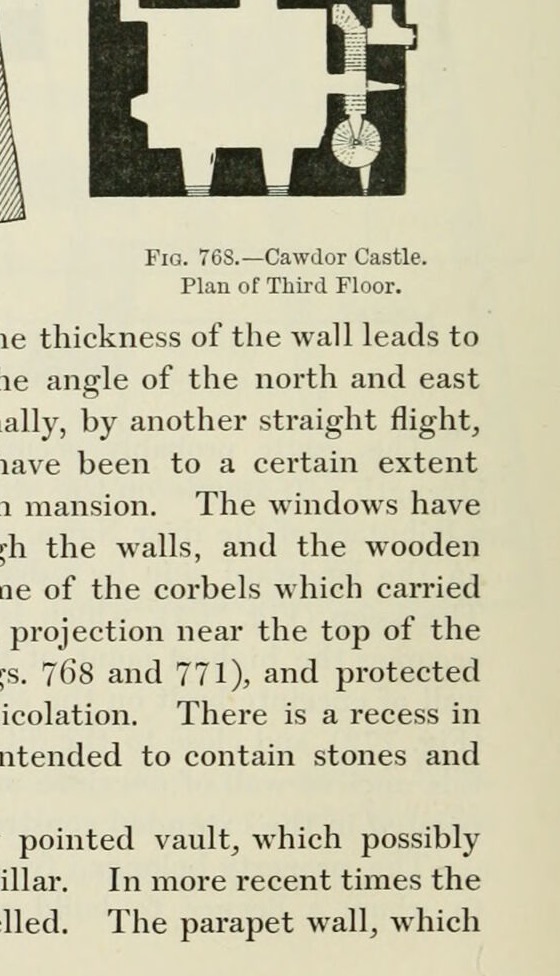
Fig. 767. Cawdor Castle. Plan of Second Floor.
1887 · MacGibbon & Ross, vol. 2 (1887)
Public domain
Fig. 768. Cawdor Castle. Plan of Third Floor.
1887 · MacGibbon & Ross, vol. 2 (1887)
Public domain