
Scotland · Ruin
Crichton Castle
Crichton Castle is a ruined Scottish castle near the village of Crichton in Midlothian, composed of four contiguous buildings around an inner courtyard. Built from the late 14th century and heavily altered in the 15th and 16th centuries, its most notable addition is an Italianate north range with a diamond-patterned courtyard façade attributed to Francis Stewart in the 1580s. The ruins are now cared for by Historic Environment Scotland and open to the public.
Its prime
1587
Today
Ruin
As it stood in 1587
What Crichton Castle looked like in its prime.
A roofless, multi-range stone castle of contiguous blocks around a central courtyard, built of weathered sandstone ashlar showing warm grey-brown tones. The plan forms an L with a substantial east tower and a taller south-west tower; a later north range closes the courtyard and bears an Italianate diamond-rusticated façade. Many walls are without roofs, with tall rectangular window and door openings, crenellated parapets on some towers, and the whole sitting on a grassy mound above rolling farmland.
Its story
The story of Crichton Castle.
The Crichtons, the Black Dinner and the Slighting of 1445
In the late 14th century John de Crichton (d. 1406) built a tower house at the head of the River Tyne in Midlothian as his family residence. His son William (d. c. 1453) rose to be Lord Chancellor of Scotland and was made Lord Crichton in about 1443. In the early 15th century William extended the castle with a second tower to the south, the two forming a strong L-plan with the gate set between them.
In 1440 William had been partly responsible for organising the "Black Dinner", at which the young William Douglas, 6th Earl of Douglas, was murdered; as a result he obtained the Douglas property of Bothwell Castle in Lanarkshire for himself. The reckoning came in 1445, when John of Corstorphine, chief of Clan Forrester and a Douglas adherent, stormed and slighted Crichton in retaliation. William reconstructed and extended the castle afterwards, and built the collegiate church nearby.
Forfeiture and the Hepburn Earls, 1483-1559
The 3rd Lord Crichton backed Alexander Stewart, Duke of Albany, and his lands and titles were forfeit in 1483 when Albany was sentenced for treason. Crichton, along with Bothwell, was briefly granted to Sir John Ramsey, who forfeited it in 1488; that year James IV granted Crichton to Patrick Hepburn, Lord Hailes, later made Earl of Bothwell. Hepburn's son Adam, the second Earl, died at the Battle of Flodden in 1513, and the castle passed to his widow, Lady Agnes Stewart, who married Alexander Home, 3rd Lord Home, the following year. Her son Patrick Hepburn, 3rd Earl of Bothwell, inherited it and intrigued with the English against the Scottish crown, before making his peace with the regent, Mary of Guise.
James Hepburn, 4th Earl of Bothwell, sided with Mary of Guise during the Scottish Reformation, and when he took English money sent to the Lords of the Congregation the regent James Hamilton, Duke of Châtellerault, ordered an assault on Crichton and on Borthwick Castle, the tower house a mile to the south-west. Crichton was besieged and captured on 3 November 1559 by the Duke's son, the Earl of Arran, with the Master of Maxwell. They ransacked the place and carried off Bothwell's charters and evidences.
A Royal Wedding and Bothwell's Forfeiture, 1562-1567
On 4 January 1562 the castle hosted the marriage and wedding festivities of Patrick's daughter Jean (d. before July 1599) and John Stewart, Prior of Coldingham and an illegitimate son of James V. John's half-sister Mary, Queen of Scots, spent a few nights at Crichton while attending the wedding.
Her third husband would come from the same house. The Earl of Bothwell was implicated in February 1567 in the murder of the Queen's husband Henry Stuart, Lord Darnley, and married her that May. In December all his titles and estates, Crichton among them, were forfeited.
Francis Stewart's Italianate North Range, 1568-1598
In 1568 Crichton passed to Francis Stewart, son of John Stewart and Jean Hepburn and so a bastard grandson of James V. Created Earl of Bothwell in 1577, he married Margaret Douglas and travelled in Europe, and in the 1580s designed the very modern Italianate north range for the courtyard. Its diamond rustication was taken from the Palazzo dei Diamanti in Ferrara of about 1582; his initials and Margaret's appear on the walls beside an anchor for his office of Lord High Admiral of Scotland. Inside were further novelties, among them Scotland's first "scale-and-platt" stair, a modern staircase with landings.
James VI was at Crichton on 17 March 1587, planning an embassy to Denmark with Peter Young. Bothwell lost the king's favour, was accused of witchcraft and forfeited his estates in 1592, and was eventually forced to flee to Naples, where he died. His son Francis was reinstated but laboured under his father's debts and sold the castle to the Hepburns of Humbie. James VI stayed at Crichton again on 19 June 1598, his birthday, after a day's hawking.
Turner, Marmion and State Care, 1921-2011
J. M. W. Turner painted the ruin, and it features in Sir Walter Scott's Marmion. It has been a scheduled monument since 1921, and in 1956 its owner, Major Henry Callander of Preston Hall, gave it into state care. Crichton is now cared for by Historic Environment Scotland and open to the public, and it served as a location for the 1995 film Rob Roy and for The Wicker Tree in 2011.
Step inside
12 places to explore in 1587.
The record describes 12 distinct spots at Crichton Castle, including 7 interiors: east tower vaulted hall, east tower vaulted basement, south tower first- and second-floor halls and more. Create your own photoreal reconstruction and explore every one, more scenes means more rooms, more angles, and more of the place to stand in.
Build Your Own Castle
Recreate Crichton Castle with AI to explore it.
The artist rebuilds it as it stood in 1587, a photoreal reconstruction that belongs to you alone. Pay with coins, no subscription needed.
Recreate this castle →Defend this castle →Whose castle
Clans who held Crichton Castle.
The families that held Crichton Castle for a decade or more across its history, follow a name to its clan.
Crichton
Built by John de Crichton in the late 14th century; the family held it until the 3rd Lord Crichton's forfeiture in 1483.
Hepburn
Granted by James IV to Patrick Hepburn, Lord Hailes, later Earl of Bothwell, in 1488.
Francis Stewart, 5th Earl of Bothwell, held the castle in the late 16th century, building its Italianate north range in the 1580s.
From the archive
Crichton Castle on paper: the measured plan and period views.
The survey plan and photographs below are the ground truth this page's reconstructions are checked against, drawn and photographed while the castle was still a working garrison. Every image is public-domain or openly licensed, with its source named.
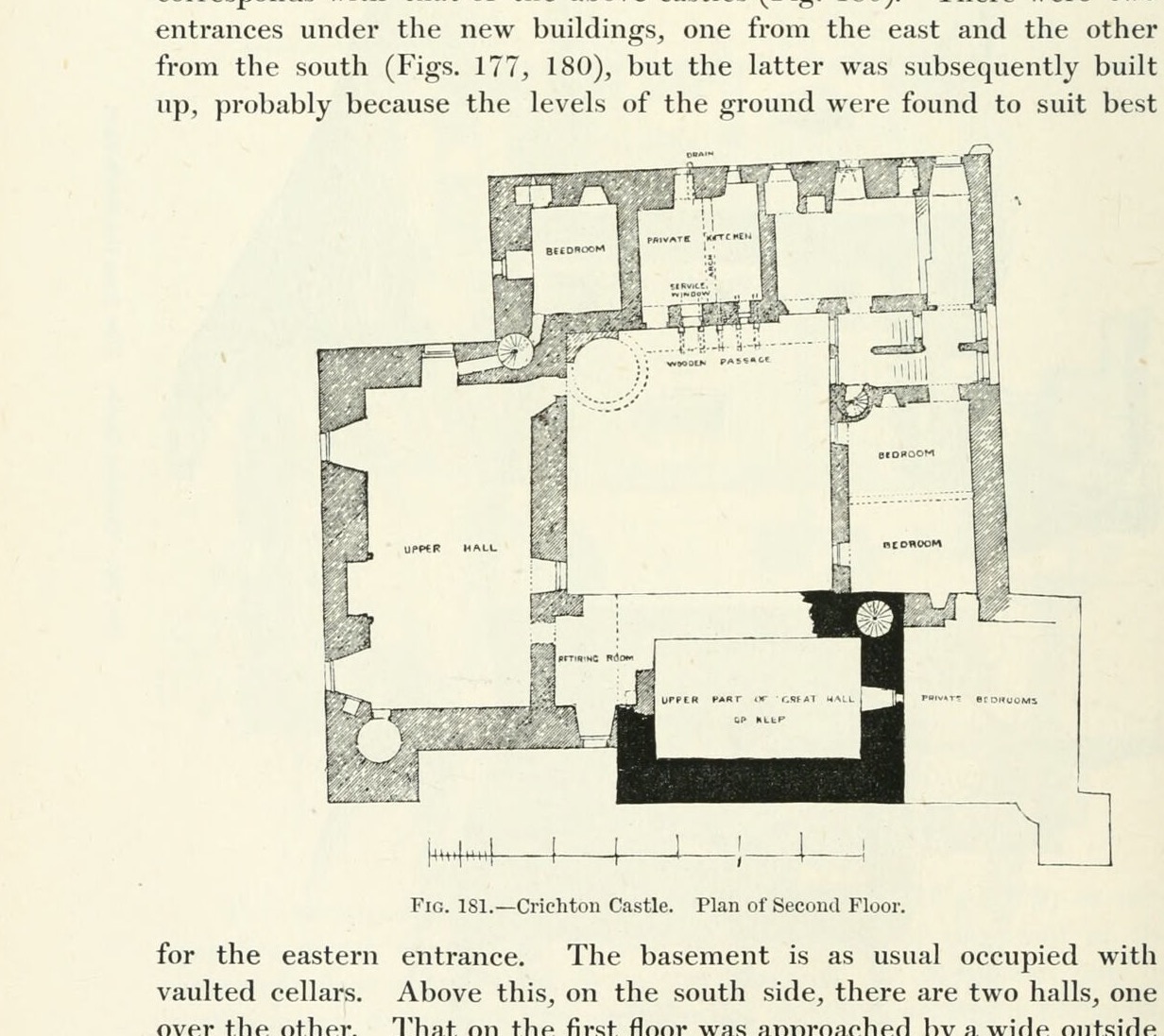
Fig. 181. Crichton Castle. Plan of Second Floor.
1887 · MacGibbon & Ross, Castellated and Domestic Architecture of Scotland, vol. 1 (1887)
Public domain
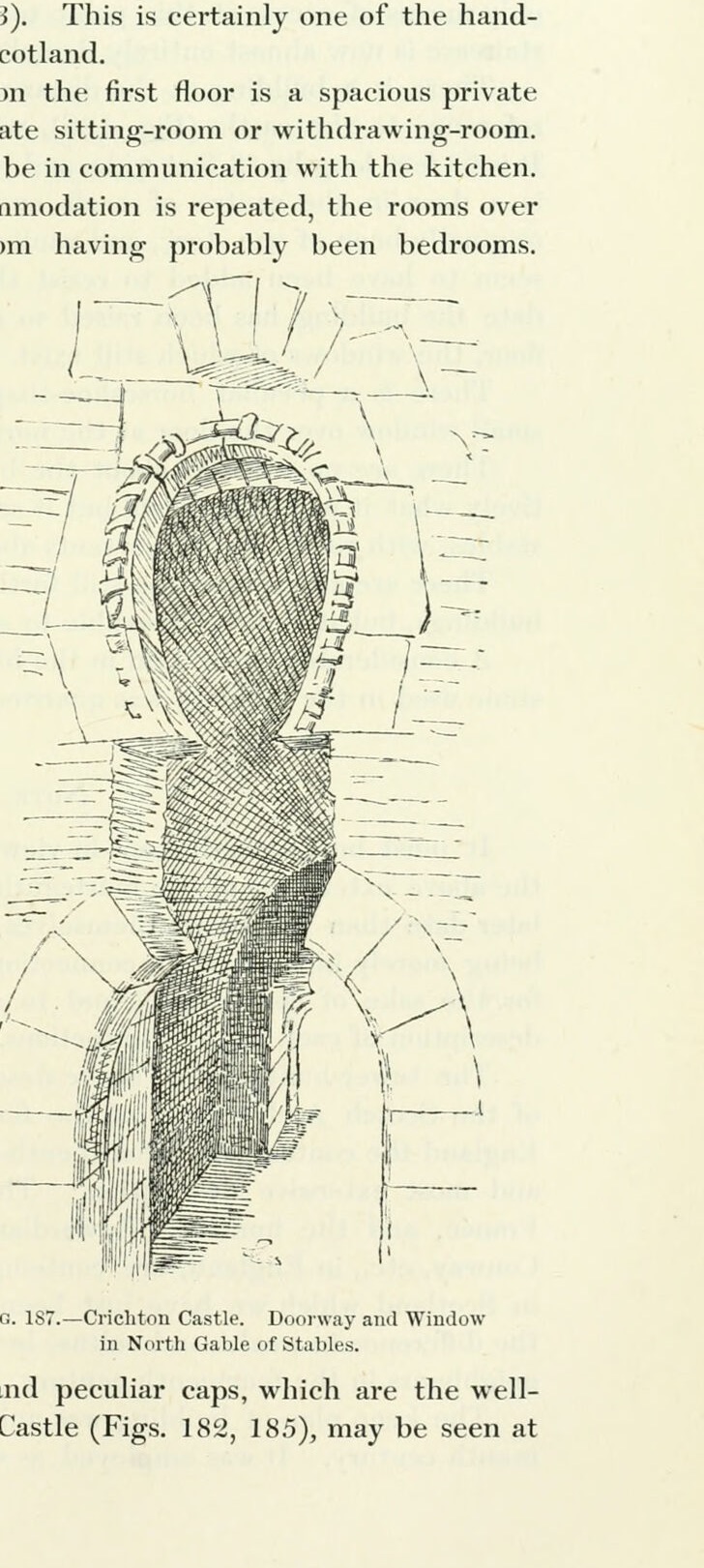
FIG. 187. Crichton Castle. Doorway and Window in North Gable of Stables.
1887 · MacGibbon & Ross, Castellated and Domestic Architecture of Scotland, vol. 1 (1887)
Public domain
Nearby


