
Scotland · Restored
Doune Castle
Doune Castle is a late medieval stronghold near the village of Doune in central Scotland, built in its present form for Robert Stewart, Duke of Albany, in the late 14th century. The castle forms an irregular pentagon of high sandstone curtain walls with major ranges on the north and north-west sides enclosing a central courtyard and approached via earthwork defences; its principal components are the rectangular gatehouse (Lord's tower), the Great Hall range and a separate kitchen tower.
First raised
1400
Its prime
1400
Today
Restored
As it stood in 1400
What Doune Castle looked like in its prime.
A compact irregular-pentagon plan of high coursed sandstone rubble curtain walls with lighter stone dressings, enclosing a grassed courtyard with a central circular well. A large rectangular gatehouse (Lord's tower) with a projecting round north‑east turret presides over a long vaulted cobbled entrance passage. West of the gatehouse stands a separate kitchen tower linked to the Great Hall; external stone staircases climb to the upper halls. The castle sits on a wooded riverside bend with steep slopes to east and west.
Its story
The story of Doune Castle.
Albany's Castle at the Crossroads, 1361–1420
The Romans fortified the confluence of the Ardoch Burn and the River Teith in the first century AD, though nothing of their work shows above ground, and the name Doune comes from the Gaelic dùn, a fort. The earliest identifiable stonework in the castle is thirteenth-century; that building was probably damaged in the Wars of Independence, and what stands today is a rebuilding of the late fourteenth century. The ground is well chosen: close to the geographical centre of Scotland, five miles from Stirling Castle, the crossroads of the kingdom, and defended on three sides by steep slopes and the two waters.
Robert Stewart, son of Robert II and brother of Robert III, was created Earl of Menteith in 1361 and granted the lands on which the castle stands. Building may have begun at any point after that; by 1381 enough stood for a charter to be sealed there. He was appointed Regent in 1388 for his elderly father, held effective power through his infirm brother's reign, was created Duke of Albany in 1398, and took up the Regency again in 1406 when James I was captured by the English. The number of charters issued at Doune from then on suggests it had become a favoured residence.
Because of who was building it, Doune was made to match the current idea of what a royal castle should be, and it belongs to the burst of building between 1375 and 1425 that also produced Dirleton and Tantallon in Lothian and Bothwell in Lanarkshire. The lord's tower over the entrance is a private, secure suite with its own lines of defence, reached only by an enclosed and gated stair from the courtyard, read by W. Douglas Simpson as bastard feudalism made solid, a lord who manned his walls with mercenaries building a tower he could hold against his own garrison, though historians no longer widely accept that reading.
The Executions of May 1425
Albany died in 1420, and Doune, the dukedom and the Regency all passed to his son Murdoch. When the ransom for James I was finally paid and the king came home in 1424, he moved at once to take his kingdom in hand: Murdoch and two of his sons were imprisoned for treason and executed in May 1425. Doune became a royal possession under an appointed Captain, or Keeper, serving the Scottish monarchs as a retreat and hunting lodge and three widowed queens (Mary of Guelders, Margaret of Denmark and Margaret Tudor, consorts of James II, James III and James IV) as a dower house. In March 1500, before his marriage to Margaret Tudor, James IV gave the keeping of Doune and extensive lands in Menteith to his mistress Janet Kennedy, in consideration of the "hartlie luve and invict favoris he has and beris to her".
The keepership then settled into a family. In 1528 Margaret Tudor, by then Regent for the infant James V, married Henry Stewart, 1st Lord Methven, a descendant of Albany, and Methven's brother Sir James Stewart was made Captain of Doune. Sir James's son was created Lord Doune in 1570, and Lord Doune's son married Elizabeth Stuart, 2nd Countess of Moray, around 1580 and became Earl of Moray in his own right, so the castle passed to its own keepers, who held it into the twentieth century. That earl, James Stewart, was murdered by the Earl of Huntly in 1592, the killing recounted in the seventeenth-century ballad "The Bonny Earl of Murray".
Mary's Garrison and the Three-Day Blockade, 1570
Mary, Queen of Scots stayed at Doune on several occasions, taking the suite of rooms above the kitchen. In the brief civil war that followed her forced abdication in 1567 the castle was held by forces loyal to her, but in 1570 the garrison surrendered to the Regent, Matthew Stewart, 4th Earl of Lennox, after a three-day blockade. On 4 October that year George Buchanan and Duncan Nairn, Deputy Sheriff of Stirling, presided at Doune over the torture and interrogation of a messenger, John Moon, who was carrying letters to Mary and to Mary Seton.
James VI came to Doune from time to time, and in 1581 authorised £300 for repairs, the work carried out by the master mason Michael Ewing under Robert Drummond of Carnock, Master of Work to the Crown of Scotland. In 1593 a plot against the king was uncovered and James surprised the conspirators at Doune; they included the Earls of Montrose and Gowrie.
Montrose, Glencairn's Rising and the Jacobite Garrisons
The Royalist James Graham, 1st Marquess of Montrose, occupied Doune in 1645 during the Wars of the Three Kingdoms. In 1654, during Glencairn's rising against Oliver Cromwell's occupation of Scotland, Royalists under Sir Mungo Murray skirmished at the castle with Cromwellian troops under Major Tobias Bridge. Government soldiers garrisoned Doune in the rising of 1689 under Bonnie Dundee, when repairs were ordered, and again in 1715.
In the rising of 1745 the castle was occupied by Bonnie Prince Charlie and his Jacobite Highlanders, and used to hold government troops captured at the Battle of Falkirk. Several prisoners, lodged in the rooms above the kitchen, knotted their bedsheets together and climbed out of the window; the escapers included the author John Home and a minister, John Witherspoon, who later moved to the American colonies and became a signatory of the United States Declaration of Independence.
Roofless by 1800, Rebuilt by the 14th Earl
Doune deteriorated through the eighteenth century, and by 1800 it was a roofless ruin, the condition Walter Scott drew on in Waverley in 1814, where the Jacobites bring Edward Waverley to a "gloomy yet picturesque structure" with "half-ruined turrets". It stayed that way until the 1880s, when George Stuart, 14th Earl of Moray, began repair works: the timber roofs were replaced and the interiors fitted out, among them the panelling in the Lord's Hall. Douglas Stuart, 20th Earl of Moray, gave the castle into state care in 1984, and it is now maintained by Historic Environment Scotland as a scheduled monument.
In 1974 the makers of Monty Python and the Holy Grail lost the National Trust for Scotland's permission to film at its castles, and were left with Lord Moray's consent to shoot at Doune and almost no time to find anything else. They used different parts of the one castle for the film's several fictional strongholds, framing the shots tightly to hold the illusion: the Great Hall became Camelot, the servery and kitchen Castle Anthrax, the Duchess's hall the tower of Swamp Castle.
Step inside
11 places to explore in 1400.
The record describes 11 distinct spots at Doune Castle, including 7 interiors: vaulted entrance passage beneath the lord's tower, lord's hall (first floor of gatehouse), duchess' hall and oratory and more. Create your own photoreal reconstruction and explore every one, more scenes means more rooms, more angles, and more of the place to stand in.
Build Your Own Castle
Recreate Doune Castle with AI to explore it.
The artist rebuilds it as it stood in 1400, a photoreal reconstruction that belongs to you alone. Pay with coins, no subscription needed.
Recreate this castle →Defend this castle →Whose castle
Clans who held Doune Castle.
The families that held Doune Castle for a decade or more across its history, follow a name to its clan.
Built c.1400 by the Regent Albany; held by the Stewarts until forfeiture in 1425.
From the archive
Doune Castle on paper: the measured plan and period views.
The survey plan and photographs below are the ground truth this page's reconstructions are checked against, drawn and photographed while the castle was still a working garrison. Every image is public-domain or openly licensed, with its source named.

Doune Castle from the Teith, Scotland LOC 3449532375
ca. 1890-1900 · Photochrom Prints Collection (via Wikimedia Commons)
Public domain
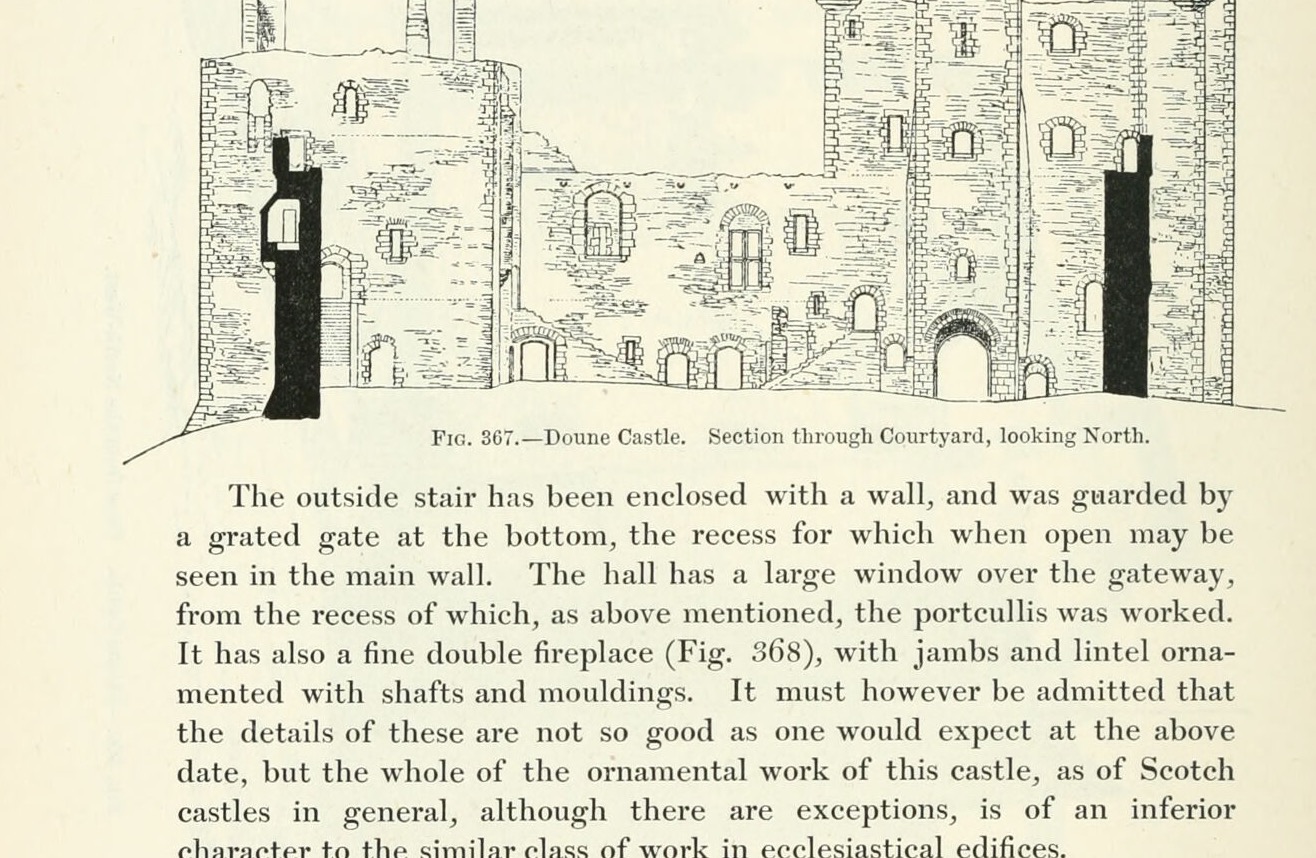
Fig. 367. Doune Castle. Section through Courtyard, looking North.
1887 · MacGibbon & Ross, Castellated and Domestic Architecture of Scotland, vol. 1 (1887)
Public domain
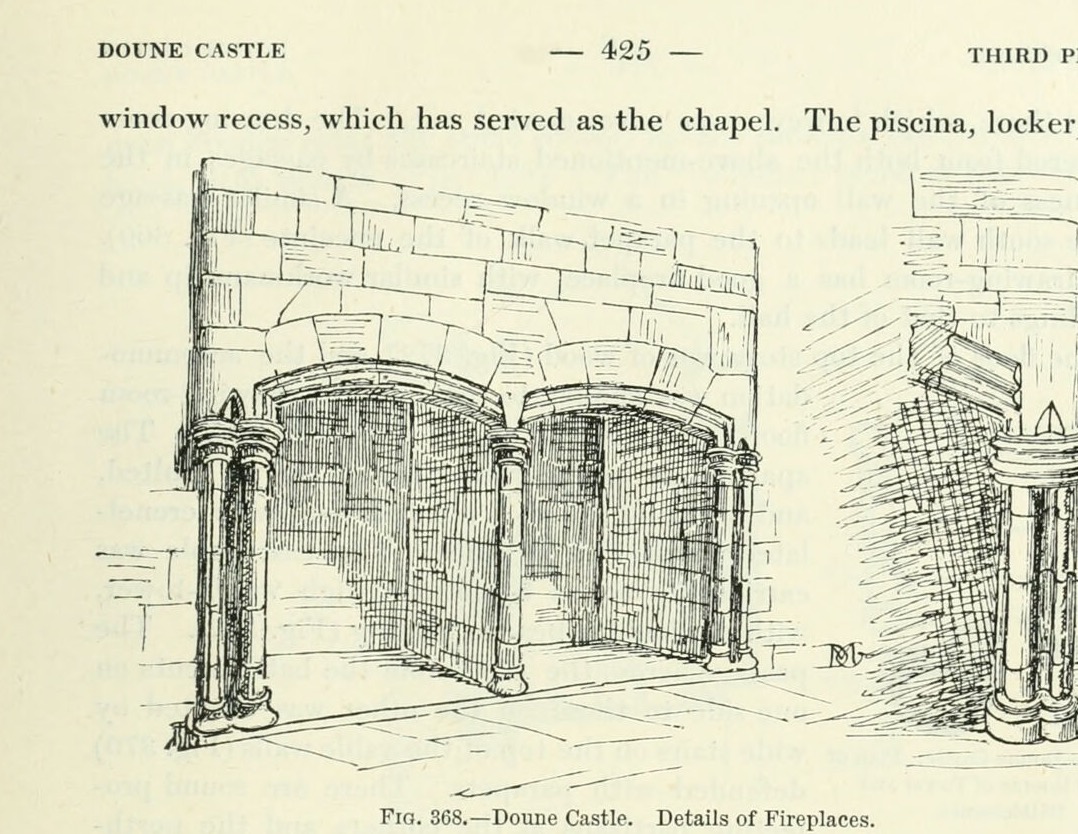
Fig. 368. Doune Castle. Details of Fireplaces.
1887 · MacGibbon & Ross, Castellated and Domestic Architecture of Scotland, vol. 1 (1887)
Public domain
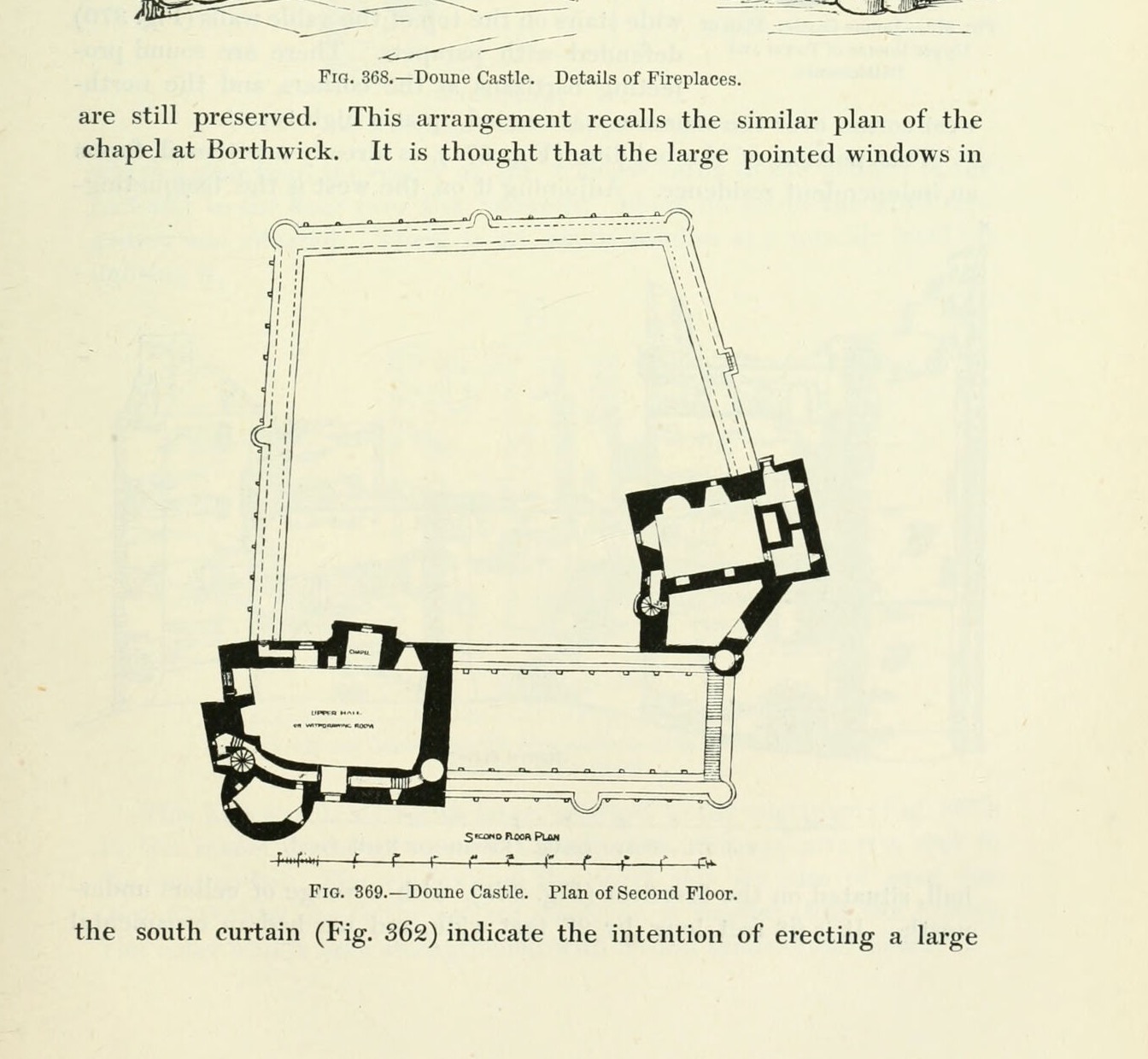
Fig. 369. Doune Castle. Plan of Second Floor.
1887 · MacGibbon & Ross, Castellated and Domestic Architecture of Scotland, vol. 1 (1887)
Public domain
Nearby
Landmarks within reach of Doune Castle.


Questions about Doune Castle
What is the history of Doune Castle?
What is inside Doune Castle?
Why was Doune Castle built, and what was it used for?
Where is Doune Castle?
When was Doune Castle built?
Was Doune Castle ever attacked or besieged?
Which family or clan held Doune Castle?
What did Doune Castle look like in its prime?
Is Doune Castle still standing or is it a ruin?
Who built Doune Castle?
Can you visit Doune Castle?
More castles of Scotland


Explore the city


