Clan Rising
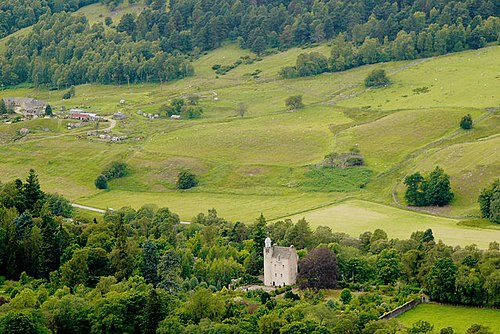
Drum Castle today

Scotland · Restored

Drum Castle

Drum Castle is a historic castle near Drumoak in Aberdeenshire, Scotland, long-held by the chiefs of Clan Irvine from a grant in 1323 until the 20th century. It centres on a largely unaltered 13th-century rectangular tower with later Jacobean and Victorian additions. The property is owned by the National Trust for Scotland and is open to the public, with a chapel, library, gardens and hireable event rooms.

Photograph via Wikimedia Commons

Its prime

1876

Today

Restored

As it stood in 1876

What Drum Castle looked like in its prime.

A massive square medieval tower of pale grey granite with a crenellated parapet dominates the composition, set immediately behind a low stone gatehouse with a steep gabled roof and a wide arched carriage entrance. To the right a long range of connected stone ranges rises in stages, showing stepped gables, tall chimneys and pitched slate roofs; a short round angle turret punctuates the curtain. The complex sits in mown parkland with mature trees and clipped hedges.

Its story

The story of Drum Castle.

The Thirteenth-Century Tower and the King's Grant of 1323

The tower at Drum is believed to be one of the three oldest tower houses in Scotland, and notably unaltered; it has been suggested as the work of the architect Richard Cementarius, who built the Brig o' Balgownie, the first bridge over the Don, at Old Aberdeen. The Elsick Mounth, an ancient trackway across the Grampians, met a ford on the River Dee nearby, and that crossing is thought to have shaped the tower's siting as a point from which to watch traffic on the road.

In 1323 Robert the Bruce granted the castle and its grounds to William de Irwyn, of the Irvings of Bonshaw, who served the king as armour-bearer, secretary and neighbour. The Irvines held Drum from that grant until 1975.

Mary, Queen of Scots, Gilderoy and the Covenanting Sack

In August 1564, travelling near Aberdeen, Mary, Queen of Scots sent a messenger asking the Laird of Drum to provision her, and may have visited the castle herself. The 9th laird added a large wing in 1619.

In June 1636 Sir Alexander Irvine of Drum and his wife Magdalene Scrimgeour were censured for harbouring the outlaw Gilderoy. Drum was drawn into the Covenanting Rebellion, as was neighbouring Muchalls Castle, and was attacked and sacked three times during the conflict.

Alexander Forbes Irvine's Restoration of Courtyard and Chapel

Alexander Forbes Irvine of Drum inherited the estate in 1861 on his father's death. In 1875-76 he had the courtyard restored and an arched entrance and angle tower added, and was also partly responsible for restoring the chapel.

The chapel began as an older church on the site, remodelled in the 1500s and 1600s; its west window was enlarged and a cross added, with a new roof and interior repairs, in 1857.

End of Six and a Half Centuries of Irvine Ownership

The agreement passing Drum to the National Trust for Scotland was made in 1964 by H.Q. Forbes Irvine, the 24th Laird, and took effect in the mid-1970s. The Trust owns the castle today and opens the castle, chapel, library and gardens to the public.

Step inside

10 places to explore in 1876.

The record describes 10 distinct spots at Drum Castle, including 3 interiors: castle chapel (interior), victorian library, great dining hall. Create your own photoreal reconstruction and explore every one, more scenes means more rooms, more angles, and more of the place to stand in.

Driveway approach across the lawnsGatehouse arched entrance13th-century tower, base to battlementsEnclosed courtyardJacobean wing (1619)Castle chapel (interior)Victorian libraryWalled garden and historic rosesEast Lodge (estate entrance)Great dining hall

Build Your Own Castle

Recreate Drum Castle with AI to explore it.

The artist rebuilds it as it stood in 1876, a photoreal reconstruction that belongs to you alone. Pay with coins, no subscription needed.

Recreate this castle →

Castle Siege

Play Castle Siege at Drum Castle.

A strategy game played on Drum Castle’s real ground plan: the same surveyed walls shown in the archive below. Post your finite garrison on the battlements between assaults, then hold out as rams, siege towers, trebuchets and sappers arrive in ever-worse waves.

Sign in free to see the garrison muster. One castle costs 150 Clan Coins and is yours forever.

Sign in to take command →

See every castle’s leaderboard →

Whose castle

Clans who held Drum Castle.

The families that held Drum Castle for a decade or more across its history, follow a name to its clan.

  • Irvine

    Granted to William de Irwyn by Robert the Bruce in 1323; seat of the chiefs of Clan Irvine until 1975.

From the archive

Drum Castle on paper: the measured plan and period views.

The survey plan and photographs below are the ground truth this page's reconstructions are checked against, drawn and photographed while the castle was still a working garrison. Every image is public-domain or openly licensed, with its source named.
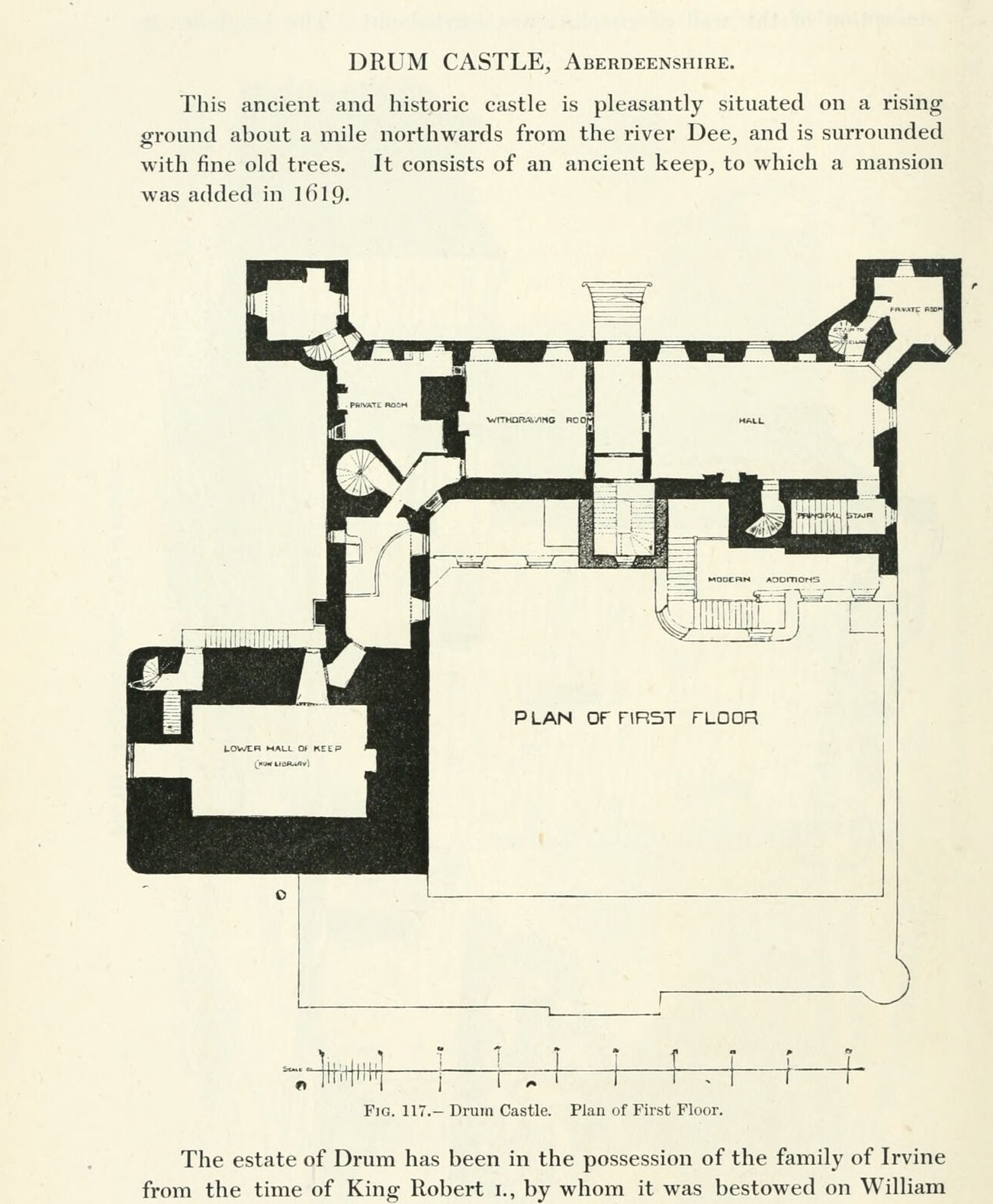
Fig. 117. — Drum Castle. Plan of First Floor., Drum Castle

Fig. 117. — Drum Castle. Plan of First Floor.

1887 · MacGibbon & Ross, Castellated and Domestic Architecture of Scotland, vol. 1 (1887)

Public domain

Nearby

Landmarks within reach of Drum Castle.

Questions about Drum Castle

What is the history of Drum Castle?

Drum Castle’s history begins with its 13th-century tower and Robert the Bruce’s grant of the castle and grounds to William de Irwyn in 1323. It remained the seat of the chiefs of Clan Irvine until 1975. A Jacobean wing was added in 1619, followed by Victorian alterations and restoration. The castle was attacked and sacked three times during the Covenanting Rebellion.

What is inside Drum Castle?

Inside Drum Castle are a castle chapel, a Victorian library and a Great dining hall. The chapel was created from an older church and had restoration work carried out on its interior. The library contains over 4,000 books, while the chapel, dining hall and other estate spaces may be used for functions.

Who owns Drum Castle now?

Drum Castle is owned and operated by the National Trust for Scotland. It has been a listed building, with its heritage designation recorded as a category A listed building. The property passed to the National Trust after centuries of Irvine possession and is now open to the public.

Why was Drum Castle built, and what was it used for?

Drum Castle was raised as a fortified seat and residence for the chiefs of Clan Irvine. Its core is a 13th-century rectangular tower, and the castle continued as the Irvine chiefs’ seat until 1975. Later additions, including the Jacobean wing and Victorian work, expanded and altered the medieval stronghold.

Is Drum Castle still standing, or is it a ruin?

Drum Castle is still standing and has been restored. Its largely unaltered 13th-century rectangular tower survives at the centre, with Jacobean and Victorian additions built out from it. The later work includes the 1619 Jacobean wing and Victorian restoration of parts of the courtyard and chapel.

Where is Drum Castle?

Drum Castle is near Drumoak in Aberdeenshire. It is approximately 6½ miles northeast of Banchory and 3 miles west of Peterculter. The castle stands in the countryside near Aberdeen, with its estate set in parkland and gardens.

When was Drum Castle built?

Drum Castle was built in the 13th century, with its original tower dated to 1280–1300. The castle developed in later phases: a large Jacobean wing was added in 1619, followed by modifications and restoration during the Victorian era. The site’s first-raised year is not recorded.

Was Drum Castle ever attacked or besieged?

Yes, Drum Castle was attacked and sacked three times during the Covenanting Rebellion. The supplied account does not give the dates of those attacks or identify the attackers. It therefore establishes repeated assault, but not whether the castle held during each attack.

Which family or clan held Drum Castle?

The Irvine family held Drum Castle from Robert the Bruce’s grant to William de Irwyn in 1323 until 1975. William de Irwyn was of the Irvings of Bonshaw, and Drum remained the seat of the chiefs of Clan Irvine throughout that period.

What did Drum Castle look like in its prime?

In its prime, Drum Castle was dominated by a massive square medieval tower of pale grey granite with a crenellated parapet. A low stone gatehouse has a steep gabled roof and wide arched entrance, while connected ranges show stepped gables, tall chimneys and pitched slate roofs. The complex includes a round angle turret, courtyard, hedges and parkland.

Can you visit Drum Castle?

Yes, Drum Castle can be visited because it is open to the public. The property is owned and operated by the National Trust for Scotland, and visitors can see the castle, chapel, library and gardens. The wider estate also includes a walled garden and historic roses.
All castles of Scotland · Castles of Europe · the best castles in Europe · explore the finished reconstructions.