
Scotland · Restored
Dunbeath Castle
Dunbeath Castle stands on a narrow rocky promontory on the east coast of Caithness, northern Scotland. The present building is mainly 17th-century in origin with substantial 19th-century Scots Baronial additions and landscaped approach, and remains a private country house with listed status and designed grounds.
Its prime
1881
Today
Restored
As it stood in 1881
What Dunbeath Castle looked like in its prime.
Perched on a narrow rocky peninsula, the castle is centred on a four-storey tower house at the south‑west corner, with later north and east extensions executed in a Scots Baronial idiom. The north front was made symmetrical in 19th‑century works and the whole stands above a dry landward ditch that cuts across the promontory. The building is set at the head of a long, straight, tree‑lined approach and overlooks the eastern seaboard of Caithness.
Its story
The story of Dunbeath Castle.
From Alexander Sutherland to the Sinclairs, 1428–1630s
A castle is first recorded on the rocky peninsula at Dunbeath in 1428, when the lands belonged to the Earl of Caithness, and the first laird named in the record is Alexander Sutherland. The site chose itself: a narrow promontory on the east coast of Caithness, two kilometres south of Dunbeath, sealed off on the landward side by a dry ditch cut across the neck. Dunbeath passed to the Sinclairs through the marriage of Sutherland's daughter Marjory to William Sinclair (1410–1484), the first Sinclair Earl of Caithness.
In 1620 the Sinclairs cleared away the earlier structure and raised a four-storey tower house in its place. Control passed for a time to Lord Forbes of Geanies, then baron of Dunbeath, before John Sinclair reacquired the property around 1624; he is most probably the laird who remodelled the castle extensively and built its upper storeys in the 1630s.
Catherine Fraser Against Montrose, March 1650
In March 1650 Dunbeath was attacked by the Royalist forces of James Graham, 1st Marquess of Montrose, during the Wars of the Three Kingdoms. Sir John Sinclair rode to Edinburgh to carry warning of Montrose's arrival, leaving his wife Catherine Fraser to hold the castle against Sir John Hurry. She surrendered soon afterwards and a Royalist garrison was installed. The occupation was short: Montrose was defeated in April at the Battle of Carbisdale, and the opposing forces under David Leslie recaptured the castle.
David Bryce Makes the North Front Symmetrical, 1853 and 1881
Sir William Sinclair remodelled the castle extensively in the course of the 17th century, and it was remodelled again in 1853 and in 1881, with David Bryce as the architect. The major modification was to make the northern front symmetrical and to lay out an approach down a three-quarter-mile, arrow-straight, tree-lined drive. The oldest fabric survives at the south-west corner; the later additions to north and east were built in a Scots Baronial style to match it, while the interiors were much altered.
The End of 325 Sinclair Years, 1945
Vice-Admiral Sir Edwyn Alexander-Sinclair held Dunbeath from 1894 to 1945. In that year, after 325 years of Sinclair occupation, the castle was sold to Bertram Currie, and it changed hands repeatedly thereafter: to Harry Blythe and Helen (Sinclaire) Blythe in 1967, to Ray Stanton Avery in 1976, and to Stuart Wyndham Murray-Threipland and his wife in 1997.
The estate was put up for sale again in 2023 together with twenty estate houses and cottages; the thirteen-bedroom castle was then a private home, its gardens open to the public by appointment only. It sold in 2024 for £25 million to Dunbeath Estates Limited, whose sole director is Don Macleod, the buyer's identity screened by a legal loophole involving trusts and company filings. Dunbeath has been a Category A listed building since 1971, and its grounds are included in the Inventory of Gardens and Designed Landscapes in Scotland.
Step inside
7 places to explore in 1881.
The record describes 7 distinct spots at Dunbeath Castle, including the full exterior approach. Create your own photoreal reconstruction and explore every one, more scenes means more rooms, more angles, and more of the place to stand in.
Build Your Own Castle
Recreate Dunbeath Castle with AI to explore it.
The artist rebuilds it as it stood in 1881, a photoreal reconstruction that belongs to you alone. Pay with coins, no subscription needed.
Recreate this castle →Defend this castle →Whose castle
Clans who held Dunbeath Castle.
The families that held Dunbeath Castle for a decade or more across its history, follow a name to its clan.
Clan Sinclair property from the 15th century; reacquired c. 1624 and held until sold in 1945, after 325 years of occupation.
From the archive
Dunbeath Castle on paper: the measured plan and period views.
The survey plan and photographs below are the ground truth this page's reconstructions are checked against, drawn and photographed while the castle was still a working garrison. Every image is public-domain or openly licensed, with its source named.
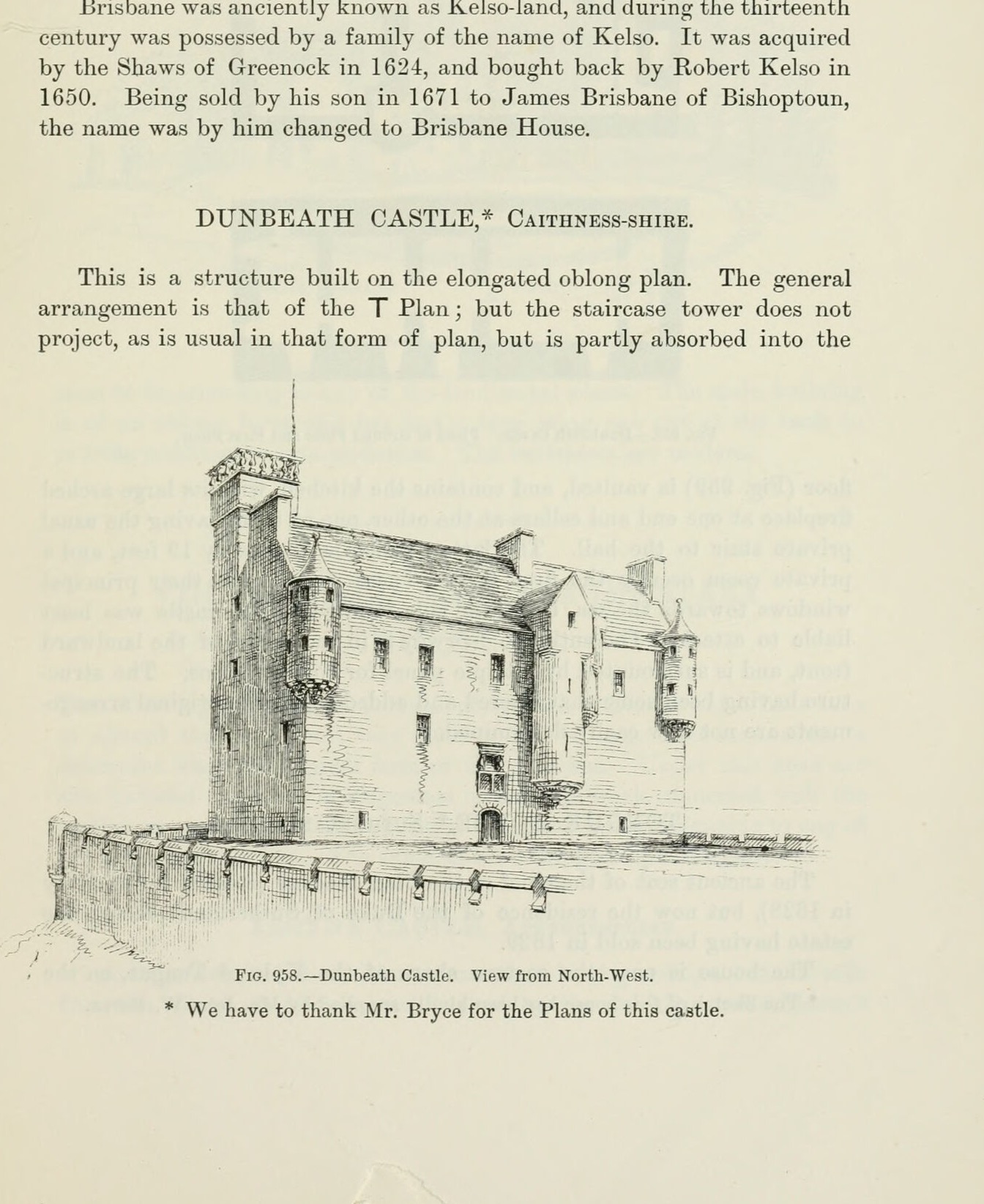
Fig. 958. Dunbeath Castle. View from North-West.
1892 · MacGibbon & Ross, vol. 4 (1892)
Public domain
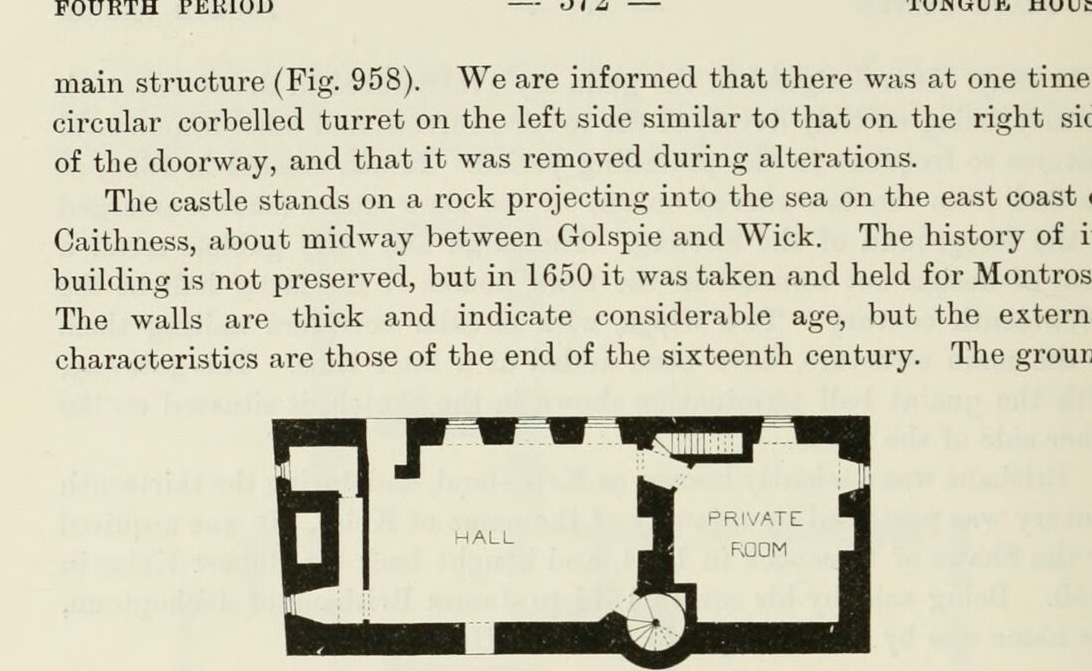
Fig. 959. Dunbeath Castle. Plans of Ground Floor and First Floor.
1892 · MacGibbon & Ross, vol. 4 (1892)
Public domain


