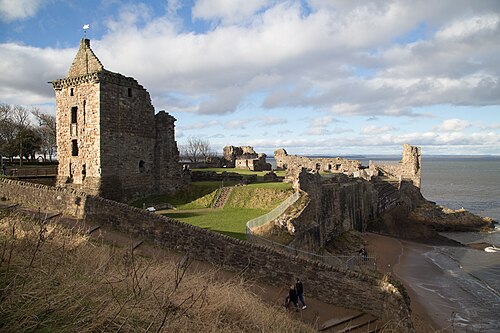
Scotland · Partial ruin
Dunstaffnage Castle
Dunstaffnage Castle is an irregular quadrangular medieval stronghold on a rocky promontory at the entrance to Loch Etive, surrounded on three sides by sea. Built from coursed rubble with sandstone dressings, it has three rounded angle towers and a four-storey gatehouse and was a major MacDougall and later Campbell seat. A ruined 13th-century chapel stands nearby; both chapel and castle are scheduled monuments cared for by Historic Environment Scotland.
First raised
1220
Its prime
1500
Today
Partial ruin
As it stood in 1500
What Dunstaffnage Castle looked like in its prime.
An irregular quadrangular keep about 35 by 30 m set on a conglomerate rock headland, with three rounded angle towers (north donjon largest, west tower almost internal, east tower rebuilt as a gatehouse) and up to 18 m high coursed-rubble curtain walls with sandstone dressings and narrow arrow-slits/gunloops. At its prime the towers were likely capped by conical roofs, a continuous parapet walk ran around the wallhead, and the east range contained a great hall above vaulted cellars. The site is surrounded on three sides by sea.
Its story
The story of Dunstaffnage Castle.
Dun Monaidh and the Stone of Destiny
Before any stone castle rose on the promontory guarding the entrance to Loch Etive, the site may have held a Dál Riatan stronghold known as Dun Monaidh, perhaps as early as the 7th century. John Monipennie recorded in 1612 that the Stone of Destiny was kept here after its arrival from Ireland, before being moved to Scone in 843, and Hector Boece's "Evonium" has traditionally been identified with Dunstaffnage, though Iona and Dunadd are considered likelier homes for the stone, given their known connections with the Dál Riatan and Strathclyde kings. The later name joins Gaelic dun, "fort", to Norse stafa nes, "headland of the staves".
The MacDougall Lords of Lorn
A castle stood here in the time of Somerled, but in the second quarter of the 13th century it became the seat of his grandson Duncan MacDougall, Lord of Lorn, placing Dunstaffnage among Scotland's oldest stone castles, in a local group with Castle Sween and Castle Tioram. Duncan travelled to Rome in 1237 and founded nearby Ardchattan Priory, and also built the chapel that stands 150 metres from the castle, its lancet windows carrying dog-tooth carving of outstanding quality.
His son Ewen inherited in the 1240s and expanded MacDougall influence, styling himself "King of the Isles" though that title belonged to the MacDonalds; it was probably Ewen who added the three round towers and enlarged the hall. After Alexander III repulsed Norse influence in Argyll the MacDougalls backed the Scottish monarchy, and Ewen's son Alexander was made first sheriff of Argyll in 1293.
Bruce at the Gates, 1308
The MacDougalls took the Balliol side in the Wars of Independence, and paid for it. Robert Bruce defeated Clan MacDougall at the Battle of the Pass of Brander in August 1308, and after a brief siege took Dunstaffnage itself. He did not destroy it, as he did other castles: he appointed a constable and provisioned it, thinking to use it to guard the countryside and the seaways. Much of the MacDougall lands, including nearby Mull, went to his friend Angus Og MacDonald, Lord of the Isles.
A Crown Fortress and Its Keepers
Now Crown property, Dunstaffnage passed through a series of keepers. James I seized the castle in 1431, after the Battle of Inverlochy, because his enemies were hiding inside. In 1455 James Douglas, 9th Earl of Douglas, stayed here on his way to treat with John MacDonald, Lord of the Isles, a journey that led to the Treaty of Westminster-Ardtornish. In 1463 the keeper John Stewart of Lorn was stabbed by supporters of his rival Alan MacDougall on the way to his own marriage at Dunstaffnage Chapel; he survived long enough to make his vows. MacDougall took the castle, but James III ousted him and in 1470 granted Dunstaffnage to Colin Campbell, 1st Earl of Argyll.
Campbell Captains, Montrose and the 'Forty-Five
The Earls of Argyll appointed hereditary Captains to keep Dunstaffnage in readiness, rebuilt the east tower as a four-storey gatehouse in the late 15th century, and used the castle as a base for government expeditions against the MacDonald Lords of the Isles through the 15th and 16th centuries. James IV visited twice. The castle held out against Montrose's army in 1644, was burned by royalist troops after the failure of Argyll's Rising against James VII in 1685, and was occupied by government troops during the Jacobite risings of 1715 and 1745. Flora MacDonald, who helped Bonnie Prince Charlie escape from Scotland, was briefly imprisoned here on her way to London.
A new house was built over the old west range in 1725, but the rest of the castle was already decaying, and after an accidental fire gutted the gatehouse in 1810 the Captains moved out to Dunstaffnage House; tenants lived in the 1725 house until 1888. The Duke of Argyll began restoration in 1903, and in 1912 the Court of Session ruled that Angus Campbell, 20th hereditary Captain, kept his right of residence notwithstanding the Duke's ownership. In 1958 the 21st Captain and the Duke handed the castle into state care. The office of Hereditary Captain of Dunstaffnage survives: to retain the title, the incumbent must still spend three nights a year in the castle.
Step inside
9 places to explore in 1500.
The record describes 9 distinct spots at Dunstaffnage Castle, including 6 interiors: north donjon (private apartments), west tower and pit prison, east gatehouse entrance passage and basement and more. Create your own photoreal reconstruction and explore every one, more scenes means more rooms, more angles, and more of the place to stand in.
Build Your Own Castle
Recreate Dunstaffnage Castle with AI to explore it.
The artist rebuilds it as it stood in 1500, a photoreal reconstruction that belongs to you alone. Pay with coins, no subscription needed.
Recreate this castle →Defend this castle →Whose castle
Clans who held Dunstaffnage Castle.
The families that held Dunstaffnage Castle for a decade or more across its history, follow a name to its clan.
Built by the MacDougall Lords of Lorn in the 13th century.
Held by the Campbell Captains of Dunstaffnage from 1470.
From the archive
Dunstaffnage Castle on paper: the measured plan and period views.
The survey plan and photographs below are the ground truth this page's reconstructions are checked against, drawn and photographed while the castle was still a working garrison. Every image is public-domain or openly licensed, with its source named.
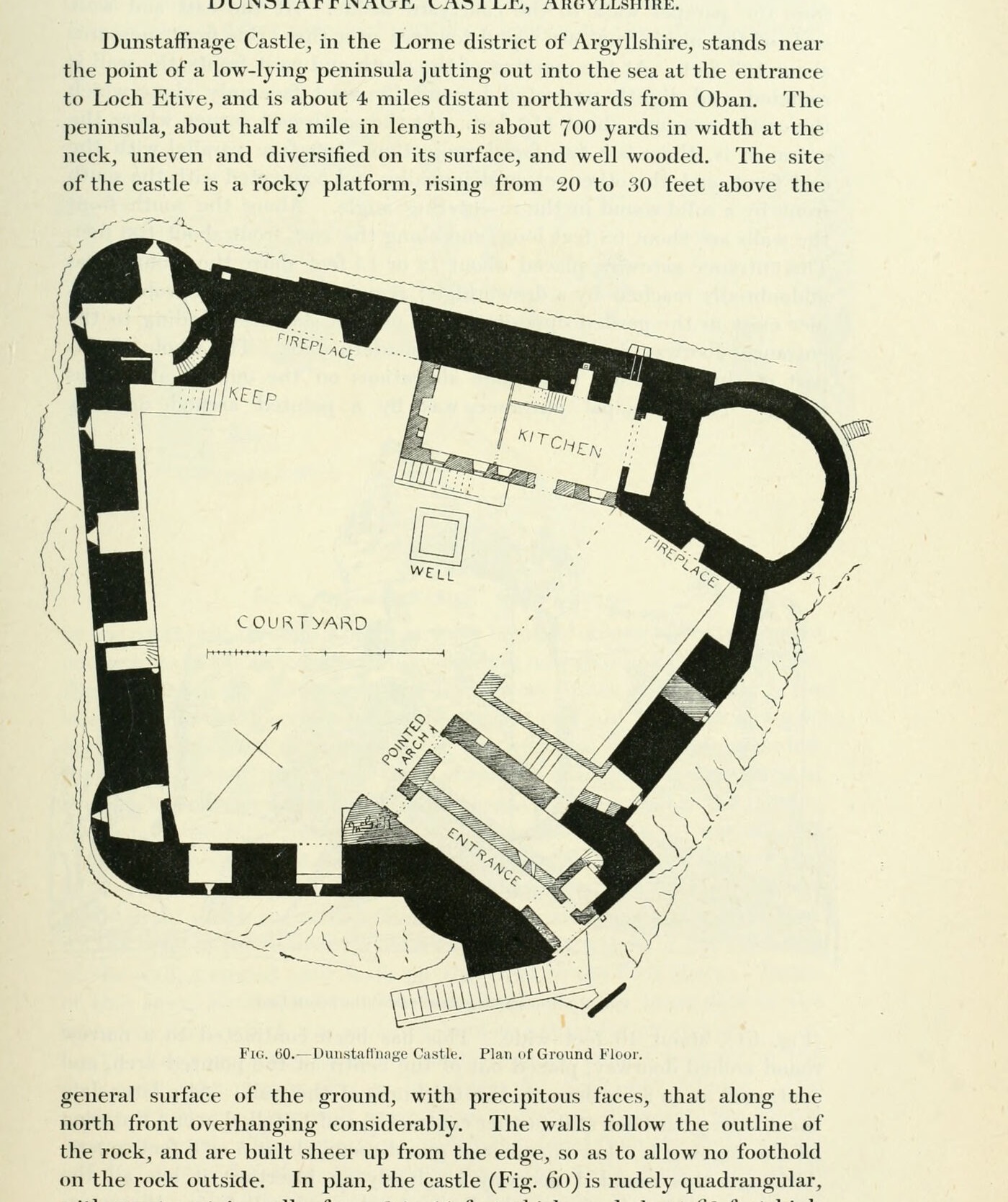
Fig. 60. Dunstaffnage Castle. Plan of Ground Floor.
1887 · MacGibbon & Ross, Castellated and Domestic Architecture of Scotland, vol. 1 (1887)
Public domain
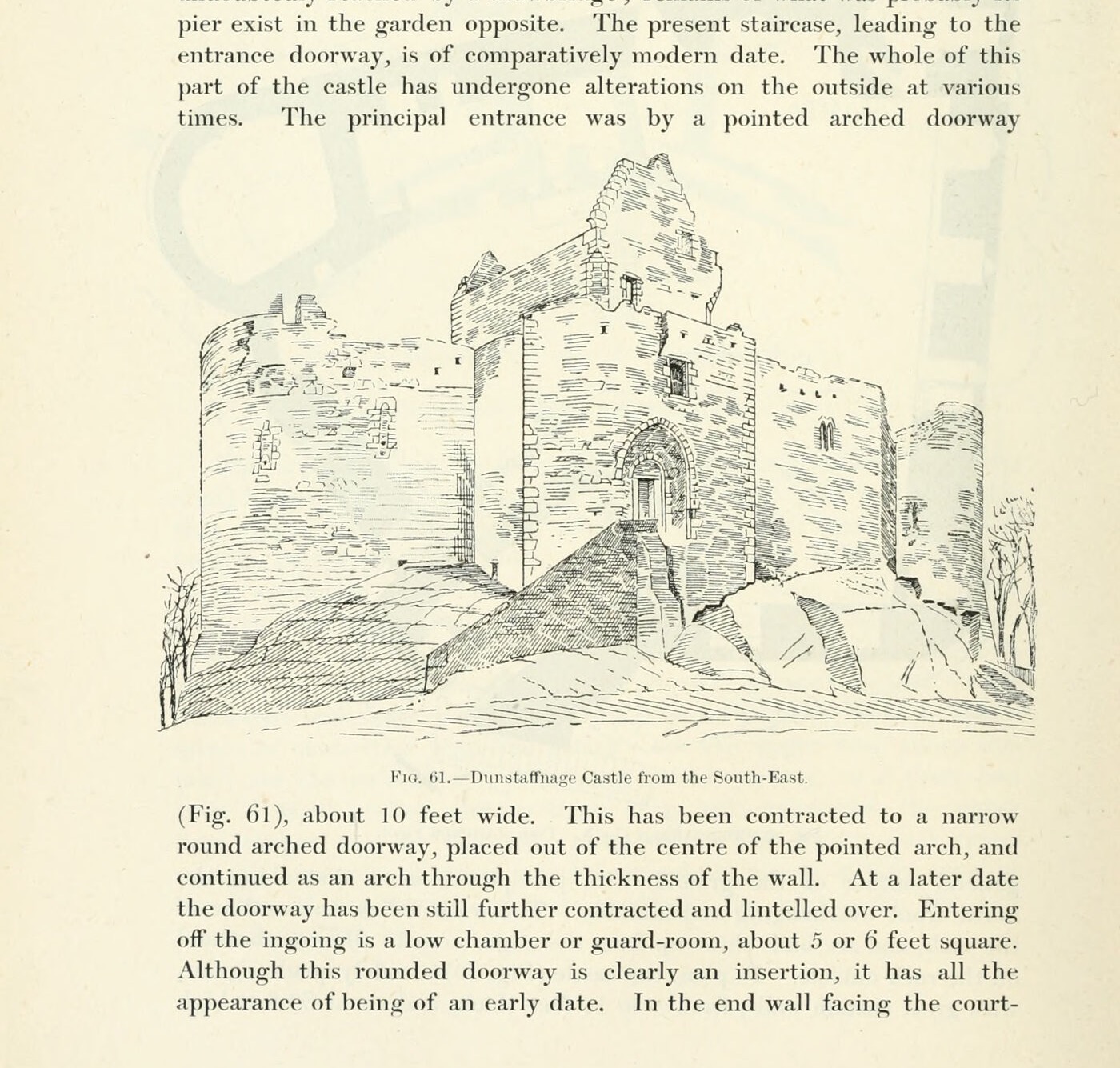
Fig. 61. Dunstaffnage Castle from the South-East.
1887 · MacGibbon & Ross, Castellated and Domestic Architecture of Scotland, vol. 1 (1887)
Public domain