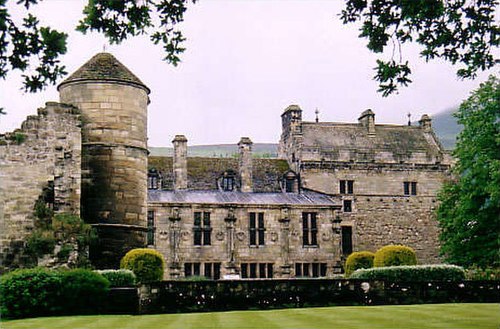
Scotland · Partial ruin
Hermitage Castle
Hermitage Castle is a large medieval stronghouse in the Liddesdale valley of the Scottish Borders, built originally in the 13th century and substantially rebuilt by the Douglas family. It occupies a remote riverside site on the Hermitage Water and fell into disuse after the Union of the Crowns; today it survives as a substantial, partly-ruined stone tower-house complex cared for by Historic Environment Scotland. The site is noted for its austere massing and isolated landscape setting.
First raised
1240
Its prime
1566
Today
Partial ruin
Ranked among Europe’s castles
As it stood in 1566
What Hermitage Castle looked like in its prime.
A compact, monolithic stone stronghold of grey-brown rubble masonry consisting of a tall central block flanked by two massive rectangular towers; narrow vertical slit windows puncture thick walls and a steep stone gable caps one end tower. Main entrances sit low to the ground; rooflines are simple with low parapets. The castle stands on a grassy riverside slope in a remote valley with scattered trees and open moorland beyond, showing a complete, roofed condition at its prime.
Its story
The story of Hermitage Castle.
The Soulis Lords and the Strength of Liddesdale
The name is thought to come from the Old French l'armitage, a guardhouse, and the castle earned it: standing in the remote valley of the Hermitage Water in Liddesdale, it was known as the guardhouse of the bloodiest valley in Britain and as the Strength of Liddesdale. It was supposedly raised by one Nicholas de Soulis around 1240 on the usual Norman motte-and-bailey pattern, and stayed with his family until about 1320, when his descendant William de Soulis forfeited it on suspicion of witchcraft and of attempting the murder of Robert I.
Legend gives Soulis a harder end than the record does. It holds that his tenantry, having borne unbearable depredations, seized him and had him encased in lead sheet and boiled to death at the nearby megalithic circle of Ninestane Rig. In fact he died a prisoner in Dumbarton Castle.
The Knight of Liddesdale, 1338
In 1338 the castle was held by an Englishman, Sir Ralph de Neville, and besieged by Sir William Douglas, the Knight of Liddesdale, known as the Flower of Chivalry. It was here that Douglas imprisoned Sir Alexander Ramsay of Dalhousie, his competitor for royal favour, and starved him to death. After the Battle of Neville's Cross and the capture of Liddesdale by the English, the castle passed for a time into English hands and was given to the care of William Dacre, 2nd Baron Dacre.
Liddesdale's own death was brought about by a near kinsman, William Douglas, 1st Earl of Douglas, and the castle went to him. He enabled the building of most of the present structure, possibly with the help of John Lewin, master mason at Durham Cathedral. It stayed with the Black Douglases until 1455, when James Douglas, 9th Earl of Douglas, having so incensed the king, was forfeited and never returned to Scotland; Hermitage passed with the rest of the family's beneficences to the Red Douglas line.
The Hepburn Keepers and the Ride from Jedburgh
James IV distrusted Archibald Douglas, Earl of Angus (Bell the Cat), and his dealings with Henry VII of England, and ordered him to give up Hermitage to the Crown. On 6 March 1492, on Angus resigning them, Patrick Hepburn, 1st Earl of Bothwell, took a charter of the lands and lordship of Liddesdale with Hermitage in it, Angus receiving the lordship of Bothwell in exchange. In December 1562 Mary, Queen of Scots sent Marchmont Herald to demand the castle's surrender to John Stewart of Traquair, who drew money and cereal from the Thirds of Benefices towards its provisions.
The keepership came in time to James Hepburn, 4th Earl of Bothwell. Having taken John Elliot of Park with other border reivers, Bothwell brought him to Hermitage; Elliot tried to escape, Bothwell shot him with his pistol, and the wounded man managed to injure the earl with a two-handed sword. Only a few weeks after the birth of her son, Mary made a famous marathon journey on horseback from Jedburgh to visit the injured Bothwell here. Bothwell married the queen shortly after the murder of her second husband, Lord Darnley, in whose killing he was implicated; after her forced abdication, which followed the confrontation at Carberry Hill, he fled to Norway facing charges of treason and was forfeited by Act of Parliament.
Forfeiture, the Bold Buccleuch and Ruin
Thomas Kerr of Ferniehirst was made keeper of Liddesdale and Hermitage in 1584. Bothwell's nephew Francis Stewart, given the earldom of Bothwell in a new creation, followed him as keeper; a grandson of James V through an illegitimate line, he was seen by some as a possible replacement for James VI. In 1591 he was arrested, tried, gaoled and forfeited over his supposed part with the North Berwick witches; pardoned in 1593, he was attainted again on 21 July that year, and the castle reverted to the Crown.
The year after, James granted it to Sir Walter Scott of Buccleuch, the bold Buccleuch, a Border reiver, Warden of the western marches and Keeper of Liddesdale, who led the attack on Carlisle Castle to rescue Willie Armstrong of Kinmont. The Union of the Crowns in 1603 made such a place obsolete; it fell into disrepair and by the turn of the eighteenth century it was a ruin. The fifth Duke of Buccleuch carried out some repairs in 1820, and the castle stayed with the Scotts until 1930, when it was handed over to the care of the nation.
Step inside
7 places to explore in 1566.
The record describes 7 distinct spots at Hermitage Castle, including 2 interiors: keep interior / tower chamber (interior), dungeon / prison cell (interior, subterranean). Create your own photoreal reconstruction and explore every one, more scenes means more rooms, more angles, and more of the place to stand in.
Build Your Own Castle
Recreate Hermitage Castle with AI to explore it.
The artist rebuilds it as it stood in 1566, a photoreal reconstruction that belongs to you alone. Pay with coins, no subscription needed.
Recreate this castle →Defend this castle →Whose castle
Clans who held Hermitage Castle.
The families that held Hermitage Castle for a decade or more across its history, follow a name to its clan.
Held by the Douglases, 1371–1492.
Hepburn
Passed to the Hepburn Earls of Bothwell, 1492–1594.
From the archive
Hermitage Castle on paper: the measured plan and period views.
The survey plan and photographs below are the ground truth this page's reconstructions are checked against, drawn and photographed while the castle was still a working garrison. Every image is public-domain or openly licensed, with its source named.
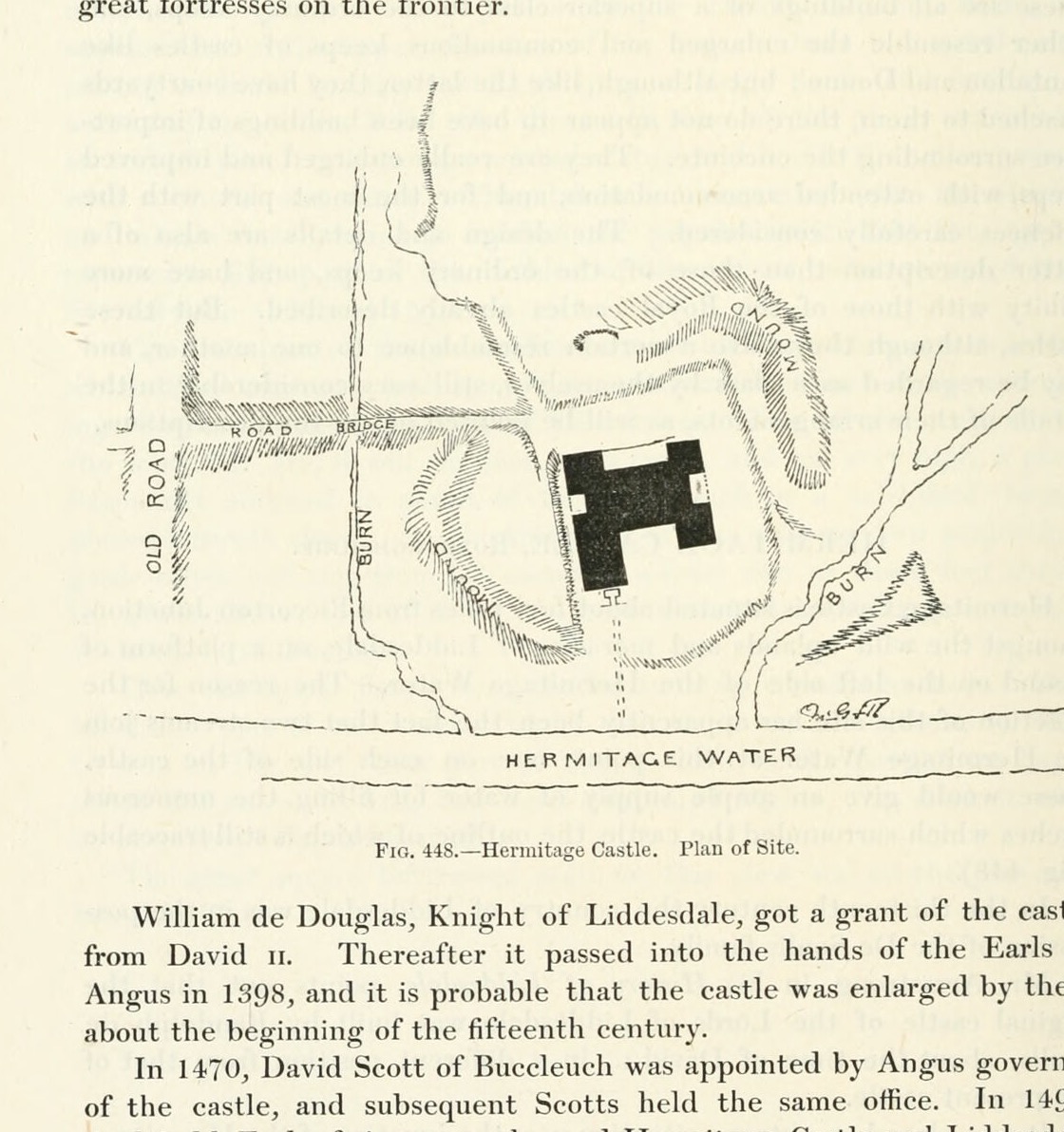
FIG. 448. Hermitage Castle. Plan of Site.
1887 · MacGibbon & Ross, Castellated and Domestic Architecture of Scotland, vol. 1 (1887)
Public domain