Scotland · Ruin
Huntly Castle
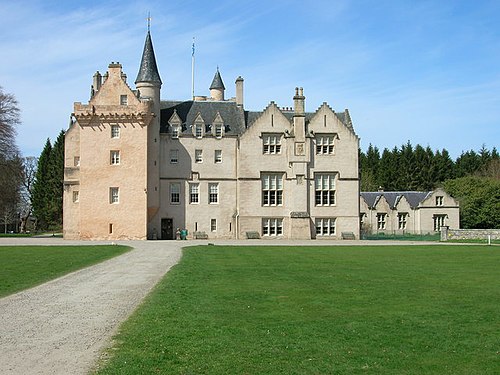
Huntly Castle is a historic castle site north of Huntly in Aberdeenshire, Scotland, long associated with the Gordons and Earls of Huntly. The surviving fabric is a partly ruined L-plan palace with a prominent round tower, an adjoining great hall block and later wings and curtain walls.
Its prime
1600
Today
Ruin
As it stood in 1600
What Huntly Castle looked like in its prime.
A robust L-plan stone palace dominated on its west side by a tall, cylindrical five-storey round tower; the main rectangular block to its east has rows of large, vertically aligned window openings and an ashlar façade band. Walls are built of rough grey-brown rubble with red sandstone dressings and moulded string courses. Tall, slender chimneys rise above a broken roofline. A low outer curtain wall extends to the east, and the whole stands in a wooded riverside park with a grassed forecourt.
Its story
The story of Huntly Castle.
The Peel of Strathbogie and the Gordon Grant
Four castles have stood where the Deveron meets the Bogie. The first, a timber castle on a motte, was raised by Duncan II, Earl of Fife, on the Strathbogie estate between about 1180 and 1190, and became known as the Peel of Strathbogie. Duncan's third son David inherited the estate, and through marriage his line became earls of Atholl around 1204.
Robert the Bruce was a guest of the Strathbogie family after falling ill at Inverurie, but around 1314 David of Strathbogie shifted his support to the English shortly before Bannockburn. Bruce treated it as treachery and granted the castle and estate instead to Sir Adam Gordon of Huntly, who had stayed loyal. In 1506 it was officially renamed Huntly Castle.
James IV Among the Masons, 1496-1504
An earlier castle here was burned to the ground and a grander one built in its place. In 1496 Perkin Warbeck, pretender to the English throne, married Lady Catherine Gordon, daughter of the 2nd Earl of Huntly, at Edinburgh with James IV as witness.
James IV knew the building site well: he came in October 1501 and gave gifts of money to the stonemasons at work on the castle, returned in October 1503 to shoot in a contest at a target called a "prop", and came again the following October, travelling south with four Italian minstrels and an African drummer known as the "More taubronar". The visits fell on his annual pilgrimage to Saint Duthac's shrine at Tain.
The Queen's Men at the Gate, 1550-1562
William Mackintosh was executed at "Castle Strathbogie" on 23 August 1550 as a conspirator against the Earl of Huntly, the queen's lieutenant in the North. Mary of Guise visited in 1555 or 1556; Robert Gordon of Straloch records that she was struck by the food stored in the castle's cellars and larders, though the French diplomat Henri Cleutin thought the earl too powerful.
Mary, Queen of Scots moved on the 4th Earl in October 1562, giving as her cause a royal cannon he withheld from her, and sent her half-brother John Stewart, Commendator of Coldingham, to arrest him. William Kirkcaldy of Grange reached the castle first and surrounded it, but the watchman on the tower saw Coldingham's troops a mile off and warned the earl, who ran without "boot or sword", hopped a low wall at the back and found a horse before he could be caught. Elizabeth Keith, Countess of Huntly, then welcomed the queen's men into a house whose chapel was still set for Catholic worship. The earl died after the Battle of Corrichie on 28 October, and the castle was garrisoned for the queen by Charles Crawfurd and twenty soldiers.
James VI Brings a Hundred Workmen, 1589-1594
George Gordon, 6th Earl of Huntly, was a Catholic, and James VI set out to subdue his power in the north. The king reached Huntly on 26 April 1589 to find the earl fled to the mountains, the countryside stripped and the house emptied. James had brought a hundred workmen to demolish the castle; Huntly sent an offer to spare the house and surrendered.
After the battle of Glenlivet the king came back with workmen and his master of works William Schaw, planning on 29 October 1594 to blow up the "gret old tower" that had been "fourteen years in building". It was spared complete demolition and preserved for the convenience of royal garrisons. Henrietta Stewart, Countess of Huntly, watched the demolition and was refused an audience with the king to plead her case.
Covenanters, Civil War and the Long Decay
Huntly restored and enlarged the castle in April 1597, the facade of the main block carved with the names and titles of the marquess and his wife Henrietta Stewart. A Covenanter army under Major-General Robert Monro occupied the house in 1640, and one of his foot captains hewed from the frontispiece "some emblems and imagery, which looked somewhat popish".
Captured in October 1644, it was briefly held for James Graham, 1st Marquess of Montrose against Argyll. In 1647 Lord Charles Gordon defended it against General David Leslie until its "Irish" garrison was starved into surrender; the men were hanged and their officers beheaded. That December the Marquess of Huntly himself, on his way to execution at Edinburgh, was detained in his own house and his escort shot against its walls. The Civil War ended the Gordons' long occupation.
Viscount Dundee made Huntly his headquarters at the end of April 1689, just as the first Jacobite rising began. By the early eighteenth century it was decaying and feeding stone to house builders in the village; government troops occupied it in 1746, the year the English soldier James Ray saw the ruins and remarked on ceilings still decorated with "history-painting". It remained Gordon property until 1923.
Step inside
9 places to explore in 1600.
The record describes 9 distinct spots at Huntly Castle, including 5 interiors: round tower principal chamber (new warke), great chamber (chamber of dais), private chapel and more. Create your own photoreal reconstruction and explore every one, more scenes means more rooms, more angles, and more of the place to stand in.
Build Your Own Castle
Recreate Huntly Castle with AI to explore it.
The artist rebuilds it as it stood in 1600, a photoreal reconstruction that belongs to you alone. Pay with coins, no subscription needed.
Recreate this castle →Defend this castle →Whose castle
Clans who held Huntly Castle.
The families that held Huntly Castle for a decade or more across its history, follow a name to its clan.
Strathbogie
Built c. 1180–1190 by Duncan II, Earl of Fife; his Strathbogie descendants, earls of Atholl from c. 1204, held the estate until Robert the Bruce granted it away.
Granted by Robert the Bruce to Sir Adam Gordon of Huntly; ancestral home of the chiefs of Clan Gordon, Earls of Huntly.
From the archive
Huntly Castle on paper: the measured plan and period views.
The survey plan and photographs below are the ground truth this page's reconstructions are checked against, drawn and photographed while the castle was still a working garrison. Every image is public-domain or openly licensed, with its source named.
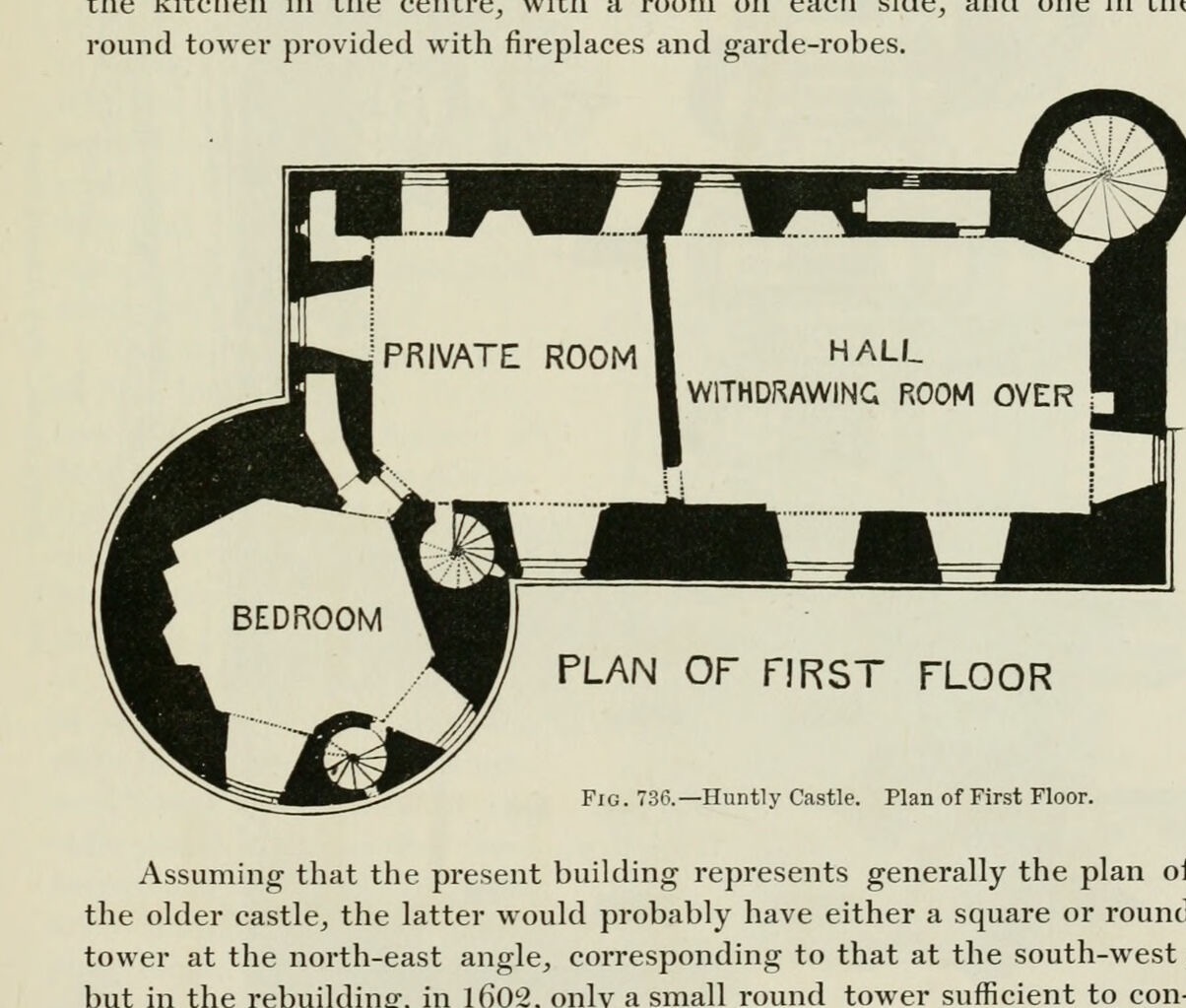
Fig. 736. Huntly Castle. Plan of First Floor.
1887 · MacGibbon & Ross, vol. 2 (1887)
Public domain