
Scotland · Ruin
Kenmure Castle
Kenmure Castle is a fortified house near New Galloway in Kirkcudbrightshire, Galloway, southwest Scotland, long associated with the Gordon family (Viscounts of Kenmure). The site stands on a partly natural defensive mound and incorporates a 17th-century core with 19th- and early-20th-century remodelling. The building is now a roofless ruin and a scheduled monument.
Its prime
1908
Today
Ruin
As it stood in 1908
What Kenmure Castle looked like in its prime.
Set on a low, partly artificial mound, the castle forms roughly an L-plan of stone ranges around a courtyard with the north and east sides closed by a high curtain wall and an arched north gateway. The west range is a long, two-storey stone block with pitched roofs; a taller multi-storey tower-like block rises at the south-east corner. Masonry is coarse ashlar and rubble; roofs in the prime state were intact, enclosing a complete courtyard and ancillary ranges.
Its story
The story of Kenmure Castle.
Lords of Galloway and the Gordons of Lochinvar
The castle sits on a partly natural mound in The Glenkens, a mile south of New Galloway, ground that may have been shaped for defence in the early Middle Ages. The Lords of Galloway, who ruled a semi-independent kingdom in south-west Scotland until the 13th century, may have held a fortress on it, and Kenmure has been suggested as the place where John Balliol, later King of Scots, was born in 1249; his mother Dervorguilla was a daughter of Alan, the last of the independent lords. The site afterwards belonged to the Douglas and Maxwell families.
From 1297 it was Gordon ground. The family had come from Berwickshire, and Kenmure became the seat of the Gordons of Lochinvar, who also built a castle on an island in Lochinvar some six miles to the north.
Royal Guests and the March of 1568
James IV came to Kenmure in March 1508, returning from a pilgrimage to Whithorn. He played tables, a form of backgammon, during the stay, and gave money to the laird's servants. On 13 and 14 August 1563 Sir John Gordon of Lochinvar welcomed Mary, Queen of Scots to the early castle as she travelled from Clary to St Mary's Isle.
Having beaten the queen's supporters at Langside, Mary's opponents marched through the south-west in June 1568, and Kenmure was destroyed or damaged in the course of it. Regent Moray was at Kenmure during the campaign and met the English envoy Henry Middlemore there, while John Gordon of Lochinvar wrote to Mary that he would not accept Moray's terms and join his side. After Gordon's death an inventory of all the furnishings in the castle was drawn up on 3 December 1604.
Made Viscounts by Charles I, 1633
Sir Robert Gordon of Lochinvar was created a baronet in 1626, and his son Sir John Gordon was raised to the peerage as Viscount of Kenmure by Charles I in 1633. The core of the present building is the castle largely erected in the 17th century, possibly incorporating earlier work: ranges along the west and south sides of a courtyard, a high wall closing the north and east, and an entrance gate in the north wall flanked by towers at the two northern corners.
The first Viscount kept the theologian George Gillespie as his domestic chaplain, and Samuel Rutherford attended him on his deathbed. Rutherford's account of it, The last and heavenly Speeches and glorious Departure of John, Viscount Kenmure, was printed in Edinburgh in 1649 by the king's printer Evan Tyler, and reprinted in 1827.
Beheaded for the Fifteen
The 6th Viscount took part in the Jacobite rising of 1715, was beheaded for it and had his estates forfeited; by some accounts his body was returned to his family at Kenmure for burial. By 1790 the castle was described as a ruin. The viscountcy was restored to Captain John Gordon in 1824, and has been dormant since his nephew Adam, the 8th/11th Viscount, died in 1847.
In 1774 Lord Kenmure's gamekeeper John Murray took from Loch Ken, below the castle, the largest pike on record: seventy-two pounds and about seven feet, its head resting on his shoulder while the tail trailed on the ground. The skeleton of the head stayed on display in the billiard room long enough for the ichthyologist Charles Tate Regan to study and measure it. Murray died in 1777 and lies in Kells churchyard beneath a stone carved with a gun, a fishing-rod, a dog and a partridge. Robert Burns and his friend John Syme spent three days at Kenmure in July 1793 as guests of the laird, John Gordon.
Gunpowder, Hotel and Scheduled Ruin
The 19th century remodelled and modernised what remained, and did some of the work with explosives: the courtyard wall and the north-east tower were removed with gunpowder, and the south range rebuilt around 1840. William McCandlish worked on the house in the 1840s and Hugh Maclure in the 1860s; the Sheffield architect Matthew Ellison Hadfield remodelled the west range in 1879, and Christian Elliot added further extensions in 1908. John Ruskin stayed at Kenmure in 1876 with his cousin Joan Agnew and her husband, the painter Arthur Severn.
The estate was sold in 1923, the castle let to and later bought by Brigadier-General Maurice Lilburn MacEwen, late of the 16th The Queen's Lancers, who commanded the Stewartry Home Guard battalion and died at Kenmure in 1943. From about the late 1940s until 1957 it ran as a hotel. Around 1958 the interior fixtures and fittings were stripped out and the roof removed; contrary to common belief, it was not destroyed by fire. Graeme Gordon bought the ruins in 1962, the remains were listed in 1971 and the site scheduled in 1998. A sundial from Kenmure bearing the date 1623 is now in Dumfries Museum.
Step inside
7 places to explore in 1908.
The record describes 7 distinct spots at Kenmure Castle, including 1 interior: billiard room interior. Create your own photoreal reconstruction and explore every one, more scenes means more rooms, more angles, and more of the place to stand in.
Build Your Own Castle
Recreate Kenmure Castle with AI to explore it.
The artist rebuilds it as it stood in 1908, a photoreal reconstruction that belongs to you alone. Pay with coins, no subscription needed.
Recreate this castle →Defend this castle →Whose castle
Clans who held Kenmure Castle.
The families that held Kenmure Castle for a decade or more across its history, follow a name to its clan.
Seat of the Gordons of Lochinvar, later Viscounts of Kenmure, from 1297 until the estate was sold in 1923.
From the archive
Kenmure Castle on paper: the measured plan and period views.
The survey plan and photographs below are the ground truth this page's reconstructions are checked against, drawn and photographed while the castle was still a working garrison. Every image is public-domain or openly licensed, with its source named.
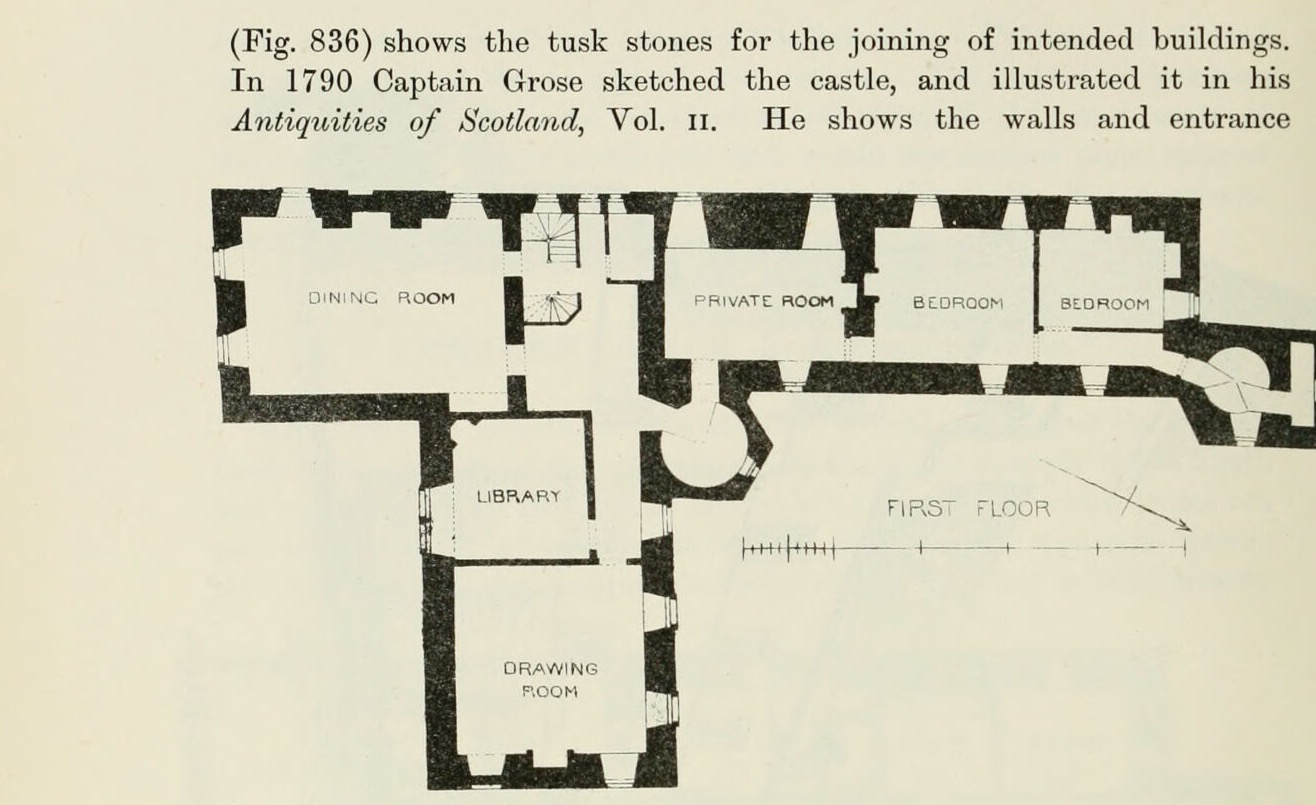
Fig. 837. Kenmure Castle. Plan of First Floor.
1892 · MacGibbon & Ross, vol. 4 (1892)
Public domain
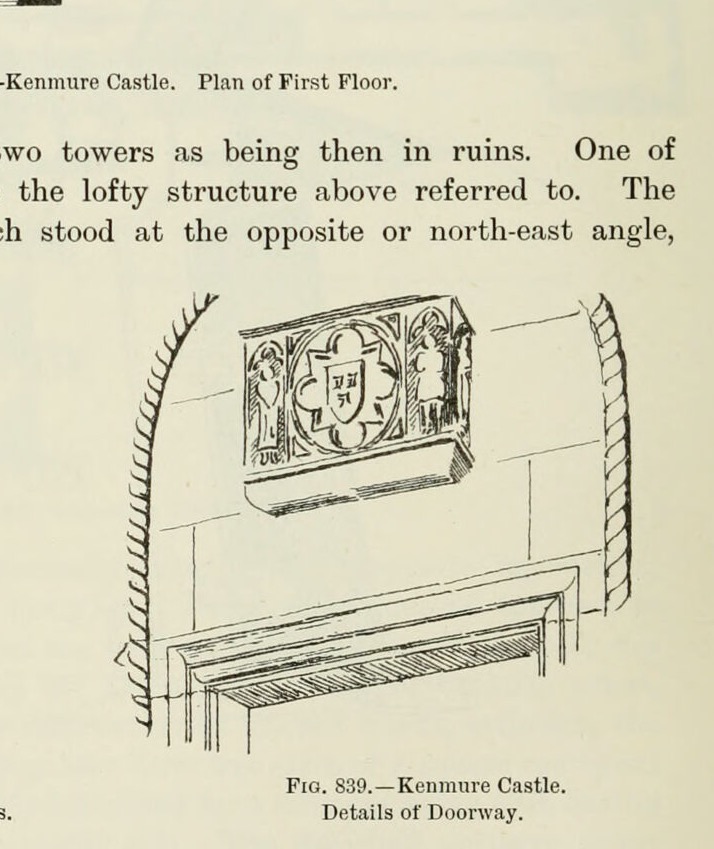
Fig. 838. Kenmure Castle. Window and Cornice Enrichments.
1892 · MacGibbon & Ross, vol. 4 (1892)
Public domain
Fig. 839. Kenmure Castle. Details of Doorway.
1892 · MacGibbon & Ross, vol. 4 (1892)
Public domain


