Scotland · Restored
Methven Castle
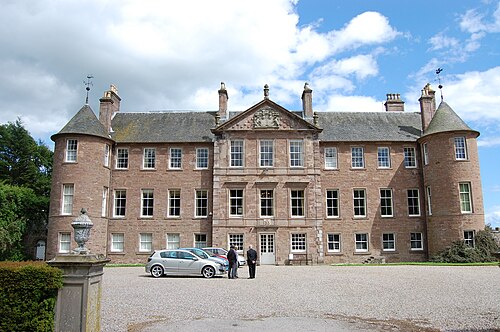
Methven Castle is a 17th-century square, four-storey stone house in Perth and Kinross, Scotland, built in 1664 and incorporating earlier fabric. The building is characterised by narrow circular corner towers with ogee roofs, crow-stepped gables and a harled exterior; it remains a privately owned, category A listed building.
Its prime
1664
Today
Restored
As it stood in 1664
What Methven Castle looked like in its prime.
A compact square, four-storey stone block with a harled pale exterior and regular rectangular windows; each corner is anchored by a narrow, cylindrical tower capped with an ogee (onion-curved) roof. The north front features paired crow-stepped gables linked by a low balustrade above the roofline, with multiple stone chimney stacks rising from steep slate roofs. The building sits low on a short lawn with mature trees behind, the masonry showing ashlar-like texture and small slit windows in the towers.
Its story
The story of Methven Castle.
From Balliol's Cause to Bruce's Confiscation
The lands of Methven were held by the Mowbray family from the twelfth century. The Mowbrays backed John Balliol's claim to the Scottish crown, and when Robert the Bruce triumphed, the estate was confiscated and granted to Walter Stewart, the Bruce's own son-in-law. His descendant, another Walter Stewart, Earl of Atholl, was in turn deprived of Methven after his part in the plot to kill King James I.
Siege of 1444 and a Queen's Residence
The castle was besieged in 1444, and royal visitors followed: King James II came in 1450, and James IV called several times during the 1490s. In 1503 Methven was settled on Margaret Tudor, daughter of Henry VII of England and queen to James IV, as part of her marriage gift. She lived there after her third marriage, to Henry Stewart, 1st Lord Methven, in 1528, and died at the castle on 18 October 1541.
The Duke of Lennox to the Mason John Mylne, 1584–1664
When the third Lord Methven died without an heir in 1584, King James VI gave the estate to his favourite, the Duke of Lennox. It passed in 1664 to Patrick Smythe of Braco, the year the present house was built by the mason-architect John Mylne; the new building may incorporate older fabric, including its central spine wall, and Smythe's own drawing for the house shows similarities to the plan of Pitreavie Castle near Dunfermline. The architect James Smith may also have had a hand in the design.
The Smythes' Woodlands and a Twentieth-Century Restoration
The Smythes held Methven through the eighteenth and nineteenth centuries, adding an east wing and, around 1815, a west extension with a bay window probably designed by James Gillespie Graham, whose scheme to rebuild the whole house was never carried out. David Smythe, Lord Methven, planted much of the woodland and laid out a walled garden in 1796; in 1830 he established a pinetum considered the first in Scotland, and his son William went on to expand the estate further, building glasshouses.
The castle was sold in 1923 and changed hands repeatedly until 1984, when the owner and architect Kenneth Murdoch began extensive restoration, taking down the east wing and re-roofing the surviving seventeenth-century house; the west wing had already been demolished in the 1950s, when much of the pinetum was also felled. It is now owned by David Murdoch and is a category A listed building.
Step inside
5 places to explore in 1664.
The record describes 5 distinct spots at Methven Castle, including 1 interior: surviving main stone stair (interior). Create your own photoreal reconstruction and explore every one, more scenes means more rooms, more angles, and more of the place to stand in.
Build Your Own Castle
Recreate Methven Castle with AI to explore it.
The artist rebuilds it as it stood in 1664, a photoreal reconstruction that belongs to you alone. Pay with coins, no subscription needed.
Recreate this castle →Defend this castle →Whose castle
Clans who held Methven Castle.
The families that held Methven Castle for a decade or more across its history, follow a name to its clan.
Mowbray
The lands of Methven were owned by the Mowbrays from the 12th century.
Seat of Henry Stewart, 1st Lord Methven, from 1528 until the third Lord died without heir in 1584.
Smythe
In Smythe hands throughout the 18th and 19th centuries.
From the archive
Methven Castle on paper: the measured plan and period views.
The survey plan and photographs below are the ground truth this page's reconstructions are checked against, drawn and photographed while the castle was still a working garrison. Every image is public-domain or openly licensed, with its source named.
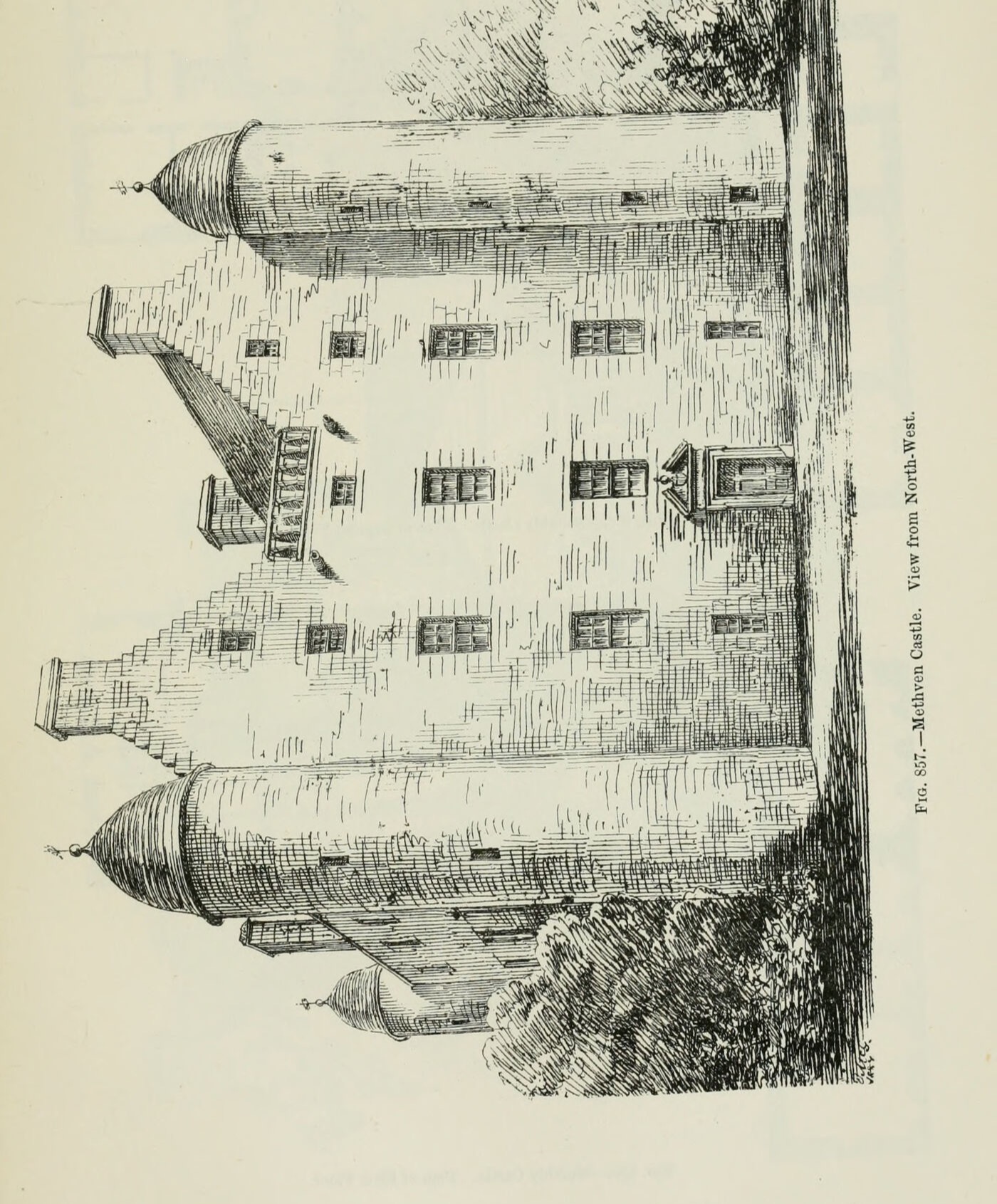
FIG. 857. Methven Castle. View from North-West.
1892 · MacGibbon & Ross, vol. 4 (1892)
Public domain
Nearby