
Scotland · Ruin
Rothesay Castle
Caisteal Bhòid
Rothesay Castle is a medieval circular-plan castle on the Isle of Bute, Scotland, notable for its thick circular curtain wall, four round towers and a 16th-century L-plan forework. Built of coursed ashlar and originally surrounded by a broad moat connected to the sea, it served as a royal residence and was modified in the 16th century with a gatehouse-keep and an internal chapel.
Its prime
1530
Today
Ruin
As it stood in 1530
What Rothesay Castle looked like in its prime.
A roughly circular stone fortress about 42 metres across with a massive coursed-ashlar curtain wall up to about 10 metres high and 2.7 metres thick, strengthened by four round towers with splayed bases and crenellated parapets. A 16th-century L-plan forework projects northwards into a broad water-filled moat and is reached by a drawbridge and arched entrance; the forework’s four-storey tower bears a royal coat of arms above the door. Within the curtain stands a simple rectangular chapel; narrow arrow-slits puncture the towers.
Its story
The story of Rothesay Castle.
Óspakr-Hákon's Axes, 1230s
The castle was built either by Alan fitz Walter, Steward of Scotland, who died in 1204, or by his son Walter, who died in 1246; it was during Alan's tenure that the family added the Isle of Bute to their lordship. The first work was timber, but a stone curtain of coursed ashlar stood by the 1230s: roughly circular, 2.7 metres thick, 7.9 metres high and some 42 metres across, set on a low mound and pierced by only two openings, an arched main gate with a simple timber door, and a small postern in the west wall, later blocked. A broad moat ran round it, connected to a sea that then came closer to the north-east than it does now.
That wall was tested almost at once. In the 1230s a Norwegian-backed fleet under Óspakr-Hákon, King of the Isles, attacked and took Rothesay; Hákonar saga Hákonarsonar records that his men fought three days and broke through part of the eastern wall by hewing the stone with their axes, the earliest recorded account of an assault on a Scottish castle. The Norse took it again in 1263, when Hákon Hákonarson, King of Norway, seized it ahead of the Battle of Largs. Largs itself is called indecisive, but Hákon's campaign failed, the Norse retreated, and Norwegian authority in western Scotland effectively ended with it. Later in the 13th century the curtain was strengthened with four round towers on splayed bases, arrow slits beneath their crenellated parapets, and a portcullis was fitted to the main gate.
Bruce's Capture and the Stewart Kings, 1311–1462
Through the Wars of Scottish Independence Rothesay was held by the English until Robert the Bruce took it in 1311. It passed back into English hands in 1334 before the Scots took it once more.
When the Stewarts came to the Scottish throne in 1371 the castle became a favoured residence of Robert II and Robert III, the latter dying here in 1406. Robert II granted the hereditary keepership to his son John, ancestor of the Earls and Marquesses of Bute, and in 1401 Robert III made his eldest son David Duke of Rothesay, beginning the tradition of honouring the heir to the Scottish throne with that title. In 1462 the castle survived a siege by the forces of John of Islay, Earl of Ross and the last Lord of the Isles.
A Forework for James IV, and the Siege of 1527
Around the turn of the 16th century work began on a gatehouse keep extending north from the curtain wall, to give James IV more modern accommodation, and the curtain itself was raised to as much as ten metres, the works continuing into the reign of James V. The forework is an L-plan structure that jutted into the moat and was reached by a drawbridge, with a vaulted entrance tunnel running into the old courtyard below and four storeys of royal lodgings above, the royal arms set over the door. A small chapel, about 7 metres by 14, was built inside the old castle in the same period, and the north-west tower was converted into a doocot, its nest boxes giving it the name of the Pigeon Tower.
In 1527 the castle withstood a siege by the Master of Ruthven, in the course of which much of the burgh of Rothesay was destroyed. In 1544 it fell to the Earl of Lennox, acting for the English during the campaign known as the Rough Wooing. In October 1582 Esmé Stewart, 1st Duke of Lennox and a favourite of James VI, stayed here after the Ruthven Regime compelled him to leave Scotland, having gone first to Dumbarton.
Cromwell's Garrison and the Burning of 1685
Rothesay was garrisoned for the occupying forces of Oliver Cromwell, whose New Model Army invaded Scotland in the early 1650s, and when the troops left in 1660 they partially dismantled the structure. What survived that was burned in 1685 by supporters of Archibald Campbell, 9th Earl of Argyll, during his rising in support of the Monmouth Rebellion against James VII.
The Butes Dig It Out, 1816–1961
After a long neglect the 2nd Marquess of Bute put 70 men to work excavating the ruins in 1816–17, clearing out great quantities of rubbish, but nothing further was done until 1871, when the walls were stabilised. The 3rd Marquess, a keen restorer of historic buildings, then ran a programme of repair until 1900, guided by surveys and advice from his regular architect William Burges; it cleared and shaped the moat and added red sandstone work to the forework, reinstating the hall roof while significantly altering the character of the building. In 1961 Rothesay Castle was given to the state, and it is a scheduled monument in the care of Historic Environment Scotland.
Step inside
10 places to explore in 1530.
The record describes 10 distinct spots at Rothesay Castle, including 3 interiors: vaulted entrance tunnel under the forework, upper royal lodgings in the forework tower, chapel interior within the curtain. Create your own photoreal reconstruction and explore every one, more scenes means more rooms, more angles, and more of the place to stand in.
Build Your Own Castle
Recreate Rothesay Castle with AI to explore it.
The artist rebuilds it as it stood in 1530, a photoreal reconstruction that belongs to you alone. Pay with coins, no subscription needed.
Recreate this castle →Defend this castle →Whose castle
Clans who held Rothesay Castle.
The families that held Rothesay Castle for a decade or more across its history, follow a name to its clan.
Royal castle of the Stewart kings; the heir's title, Duke of Rothesay, endures.
From the archive
Rothesay Castle on paper: the measured plan and period views.
The survey plan and photographs below are the ground truth this page's reconstructions are checked against, drawn and photographed while the castle was still a working garrison. Every image is public-domain or openly licensed, with its source named.
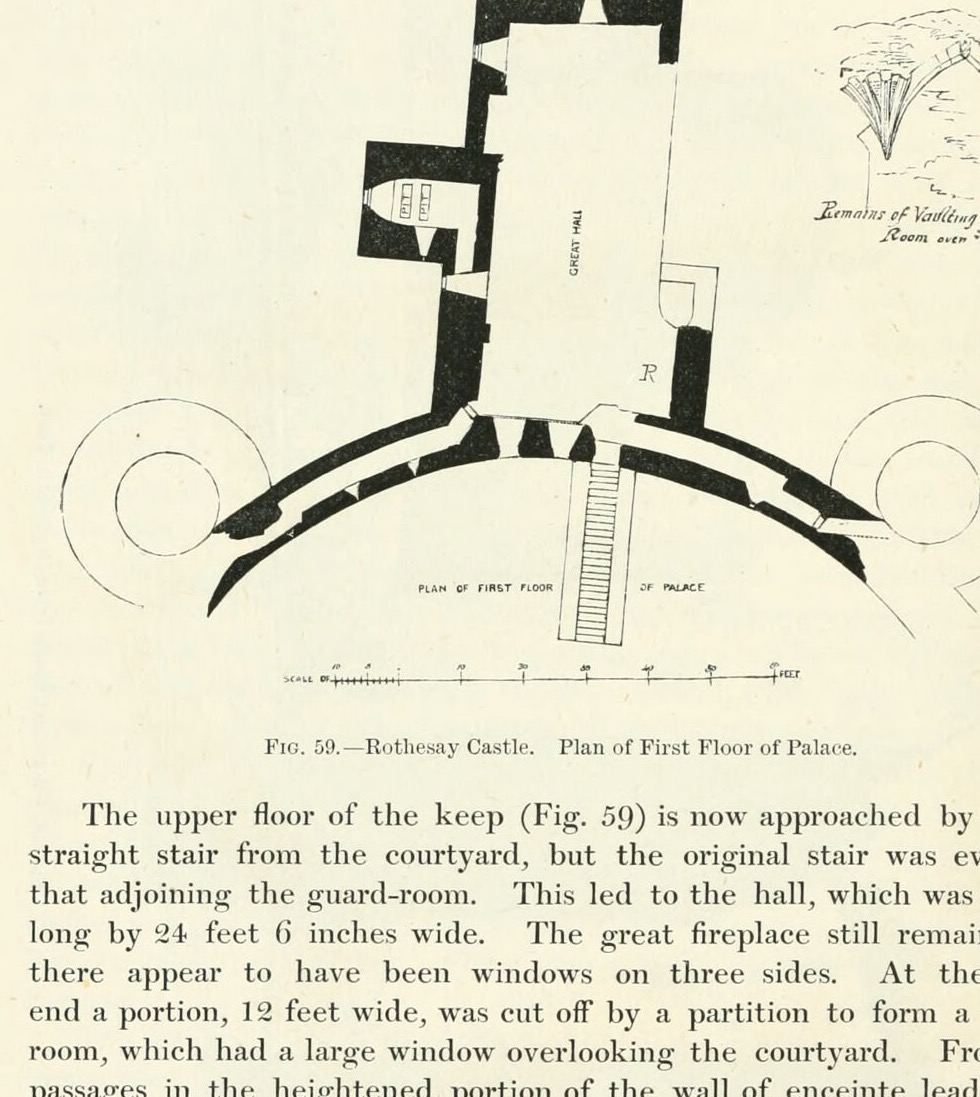
Fig. 59. Rothesay Castle. Plan of First Floor of Palace.
1887 · MacGibbon & Ross, Castellated and Domestic Architecture of Scotland, vol. 1 (1887)
Public domain


