Scotland · Restored
Skelmorlie Castle
Skelmorlie Castle is a Scottish tower house and later-range complex on a promontory of the eastern shore of the Firth of Clyde in Ayrshire. The keep originates in 1502 with substantial alterations and additions in the 17th and 18th centuries; it served as the seat of the Montgomerie family for centuries. The site includes a main tower/keep, attached 17th-century ranges, and a southern courtyard with a former chapel.
Its prime
1762
Today
Restored
As it stood in 1762
What Skelmorlie Castle looked like in its prime.
A rectangular stone tower-keep of red sandstone rubble with an attached low 17th-century range; corbelled cylindrical angle turrets with conical roofs project from the corners. The roofline is steeply pitched with dormer windows and tall rectangular stone chimneys rising above stepped gables. Small slit and square windows punctuate the ashlar and rubble walls. The castle sits on a promontory above the eastern shore of the Firth of Clyde, with a southern courtyard and subsidiary turret-house close to the shore.
Its story
The story of Skelmorlie Castle.
From Cunninghame to Montgomerie, 1390–1636
Skelmorlie stands on the eastern shore of the Firth of Clyde, at the north-western corner of Ayrshire. During the reign of Robert III (1390–1406) the lands were held by the Cunninghames of Kilmaurs; about 1460 the northern portion passed to the Montgomeries as Skelmorlie-Montgomerie, the remainder continuing as Skelmorlie-Cunninghame. On 6 June 1461 Sir Alexander de Montgomerie of Ardrossan, first Lord Montgomerie, granted Skelmorlie to George, his second son by Margaret Boyd, founding the cadet branch of the Montgomeries of Skelmorlie.
The oldest part of the present castle dates from 1502, though another account credits its building to a brother of Hugh, first Earl of Eglinton. An earlier castle may have stood on a motte on a promontory by the Skelmorlie Water. Surveying Cunninghame around 1600, Timothy Pont called it “a fair well built house”. It was added to in 1636, when the corbelling and parapets were taken down and angle turrets put up.
Murder at Montgreenan and Maxwell's Revenge, 1586–1628
In 1586 the sixth laird, Robert Montgomerie, murdered Alexander Cunninghame, commendator of Kilwinning Abbey, at the castle and palace of Montgreenan. The killing followed the murder of the fourth Earl of Eglinton by the Cunninghames. In revenge the elder Sir Robert and his eldest son were both killed by Patrick Maxwell of Newark.
The surviving heir, another Robert, was discovered by Maxwell in Newark Castle and greeted with the taunt: “Come down Robin, out o’ that corner, come down, man, to me, who did you so good a turn as to make you young laird and auld laird o’ Skelmorlie in one day.” The two became friends. This Robert, seventh laird, was knighted by James VI and created a baronet by Charles I in 1628.
Margaret Douglas and the Skelmorlie Aisle
Sir Robert's wife was Margaret, daughter of Sir William Douglas of Drumlanrig. She was killed by a kick from her horse after a fall in public at the Colm Fair, and Sir Robert built the ornate tomb in the Skelmorlie Aisle at Largs as her resting place and memorial. He is said to have turned to charity and self-mortification afterwards, spending many nights praying for his salvation in the vault. He lies there himself in a lead coffin whose Latin inscription translates as “I was dead before myself; I anticipated my proper funeral; alone, of all mortals, following the example of Caesar”. Margaret's presence was said to haunt the castle, and reputedly left after the fire of 1959.
Conventicles, the 1689 Convention and the End of the Line, 1685–1783
The third baronet and ninth laird, Sir Robert, married Antonia, co-heiress of Sir James Scott of Rossie; she was an ardent Covenanter, and he was repeatedly fined for her attendance at conventicles. He died in 1685. His son Sir James, fourth baronet, sat in the Parliament and Convention of 1689 and was among those chosen to administer the offer of the Crown to William and Mary in London. Dissatisfied with his reward of Lord Justice-Clerk, he became a supporter of the deposed James II and joined him at St Germains; a Protestant, he was not fully welcome to the Catholic king, and though promised the earldom of Ayr he died of “vexation” in London in September 1694.
Hugh Montgomerie of Busbie, Lord Provost of Glasgow, bought the estate and took possession in 1731, becoming sixth baronet and eleventh laird. He had been a commissioner for the union with England, sat in Scotland's last parliament and represented Glasgow in the first parliament of the United Kingdom. He died without issue in 1735 and the title became extinct. Skelmorlie passed to the fourth baronet's daughter Lilias, who had married Alexander Montgomerie of Coilsfield and died in 1783; her son Hugh became 12th Earl of Eglinton.
Graham's Restoration, the 1959 Fire and Later Owners, 1852–2009
From 1852 to 1890 the tenant was John Graham (1797–1886), a Glasgow textile and port-wine merchant. With the permission of the Earl of Eglinton he restored the old tower at his own expense in 1856 and added a mansion house joining two older buildings, to designs by William Railton of Kilmarnock.
The 16th Earl of Eglinton moved here from the abandoned family seat at Eglinton Castle in the mid-1920s and died at Skelmorlie in 1945; the 18th Earl later sold it. Fire in 1959 burnt out the upper floors of the keep and of the west wing; the wing was demolished and the keep restored by the Glasgow architects Noad and Wallace. Leased to the Wilson family since 1956, the castle became their property in the mid-1970s, was advertised for sale in 2007 and passed to new private owners in the summer of 2009. Historic Scotland listed it Category B in 1971, along with the 17th-century Turret House, the former chapel and the Victorian mews.
Step inside
8 places to explore in 1762.
The record describes 8 distinct spots at Skelmorlie Castle, including 1 interior: baronial hall (first floor). Create your own photoreal reconstruction and explore every one, more scenes means more rooms, more angles, and more of the place to stand in.
Build Your Own Castle
Recreate Skelmorlie Castle with AI to explore it.
The artist rebuilds it as it stood in 1762, a photoreal reconstruction that belongs to you alone. Pay with coins, no subscription needed.
Recreate this castle →Defend this castle →Whose castle
Clans who held Skelmorlie Castle.
The families that held Skelmorlie Castle for a decade or more across its history, follow a name to its clan.
Cunninghame
The lands of Skelmorlie were held by the Cunninghames of Kilmaurs from the reign of Robert III; the southern portion continued as Skelmorlie-Cunninghame.
Montgomerie
Seat of the Montgomeries of Skelmorlie, the cadet branch founded when Sir Alexander de Montgomerie granted the lands to his son George in 1461.
From the archive
Skelmorlie Castle on paper: the measured plan and period views.
The survey plan and photographs below are the ground truth this page's reconstructions are checked against, drawn and photographed while the castle was still a working garrison. Every image is public-domain or openly licensed, with its source named.
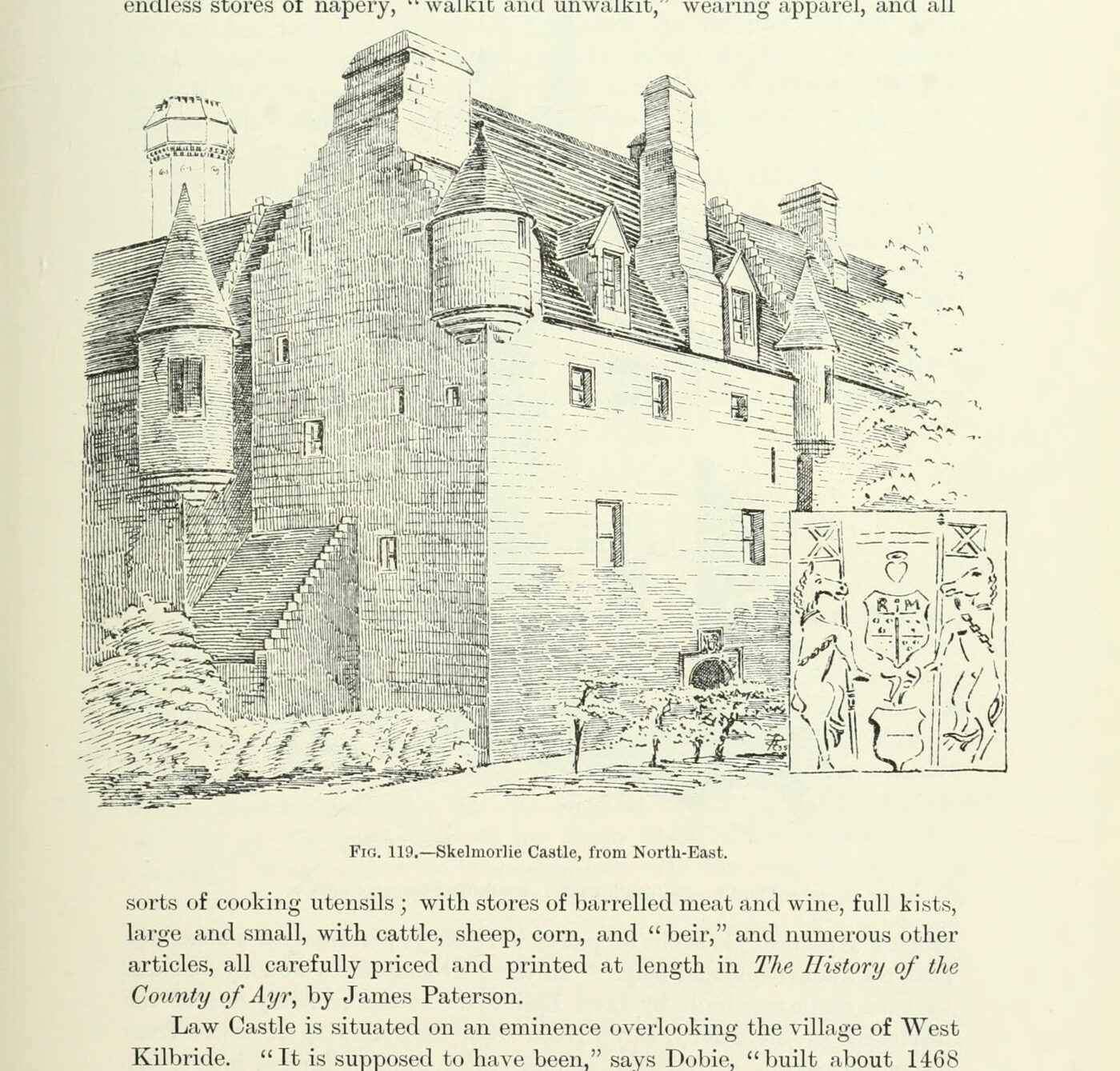
Fig. 119. Skelmorlie Castle, from North-East.
1889 · MacGibbon & Ross, vol. 3 (1889)
Public domain
Nearby