
Scotland · Ruin
Tantallon Castle
Caisteal Tantallon
Tantallon Castle is a mid-14th-century Scottish curtain-wall fortress on a coastal promontory east of North Berwick, securing the headland with a single massive curtain wall and sea cliffs on the other sides. It was the last major medieval curtain-wall castle built in Scotland and comprises a long red-sandstone curtain with three principal towers, a north range containing a hall, and an inner and outer court. The site is a ruin today under the care of Historic Environment Scotland.
First raised
1350
Its prime
1520
Today
Ruin
Ranked among Europe’s castles
As it stood in 1520
What Tantallon Castle looked like in its prime.
A long red-sandstone curtain wall blocks the neck of a grassy coastal promontory, its top pierced by 16th-century crenels and linked by a parapet walk between three main towers: a collapsed-faced circular northwest tower (Douglas Tower), a D-plan east tower, and a tall square central gatehouse. Sea cliffs protect the other three sides. The north range adjoins the curtain forming a rectangular inner courtyard about 70 by 44 metres, with rock-cut defensive ditches and an outer two-storey round tower at the south end.
Its story
The story of Tantallon Castle.
Earl William's Wall Across the Headland
A map dated before 1300 shows a castellated site here named "Dentaloune", possibly a corruption of the Brythonic din talgwn, "high-fronted fortress". William Douglas (c. 1327–1384) returned from France in 1346 to claim his inheritance as chief of the name, and made himself undisputed head of the House of Douglas by murdering his godfather, Sir William Douglas of Liddesdale. How he came by Tantallon is not clear, but he was created Earl of Douglas in 1358 and appears to have raised the present castle around that time; a charter of 1374 has him call it "our castle of Temptaloun".
Everything was staked on one face. Sea cliffs guard the other three sides, so the neck of the promontory was blocked by a red sandstone curtain over 15 metres high, 3.6 metres thick and some 90 metres long, with a tower at each end and a gatehouse between, its passage covered by a drawbridge, three pairs of doors, a portcullis and machicolations. It was the last castle of enceinte built in Scotland; the tower house was already displacing the type.
Red Douglas, Black Douglas, and James IV's Guns, 1491
Tantallon passed to George Douglas, Earl William's illegitimate son by Margaret Stewart, 3rd Countess of Angus, whose seat it had been; Parliament recognised him as Earl of Angus in April 1389, in his mother's right. He was progenitor of the Red Douglases, while Archibald the Grim led the Black. The castle held the crown's enemies too: Isabella, Countess of Lennox, widow of the executed Duke of Albany, was warded there from 1425 to 1433, and Alexander, Lord of the Isles, from 1429 until his reconciliation with James I two years later. The 3rd Earl of Angus was in rebellion from 1443 until his death, raiding the Black Douglas lands of Abercorn and drawing forfeiture in 1446; in 1452 James II granted the castle to his brother the 4th Earl, who three years later led the royal force that broke the Black Douglases at Arkinholm.
Archibald "Bell-the-Cat", the 5th Earl, turned against the crown in 1482 and around 1490 made a treasonable agreement with Henry VII of England against James IV. On 11 October 1491 the King besieged Tantallon with guns sent from Edinburgh and Linlithgow and culverins from Leith. Angus submitted before the walls took serious harm, and by 1493 he was Chancellor of Scotland.
Twenty Days of Bombardment: James V's Siege of 1528
The 6th Earl of Angus, husband of James IV's widow Margaret Tudor, held custody of the boy king from 1525 until the sixteen-year-old James V escaped in 1528 and had him attainted. Angus withdrew to Tantallon, lost it to the King, and got back in to refortify it. James laid siege on 23 October 1528, against a garrison under Angus's servant Simon Penango while Angus himself sat at Billie in the Merse. The siege train, Thrawinmouth and Mow among the guns, came from Dunbar, held by the Duke of Albany's French garrison, against three hostages left in pledge.
Twenty days of bombardment failed to force a surrender: the deep outer ditch kept the guns too far back to do substantive damage to the curtain, though the barbican was destroyed. James lifted the siege, whereupon Angus counterattacked, captured the royal artillery and killed the principal gunner, David Falconer. Never, Angus told the Earl of Northumberland, had "sa mekill pane travell expensis and diligence" been spent on winning a house in Scotland. Only in May 1529, with Angus fled to England and no supplies coming, did Penango surrender.
James held it as a royal fortress until his death in 1542 and rebuilt it for artillery: the gatehouse front raised anew with gun ports at ground level and its entrance corridor narrowed, the East Tower vaulted and pierced with wide-mouthed gun holes, and the passages inside the great landward curtain packed solid with masonry: "maid all massie work, to mak it the more strang".
The Rough Wooing and the Crown's Captains, 1542–1596
Angus recovered the castle on the King's death in 1542 and, still in contact with Henry VIII, lodged the English ambassador Sir Ralph Sadler at Tantallon through the 1542–43 negotiations for a marriage between the infant Mary, Queen of Scots, and Edward, Prince of Wales. Hertford's army passed Tantallon over in 1544 and 1547 during the War of the Rough Wooing, claimed to be on account of the Earl's English sympathies, though Hertford wanted an English garrison in it and negotiated unsuccessfully with one of the keepers, Alexander Jardine. In August 1548 the castle's gunners were rewarded for firing on English ships in the Firth of Forth.
When Angus died there in January 1557 the army of the Queen Regent, Mary of Guise, seized the castle and made Simon Preston of Craigmillar keeper; under a later keeper, George Drummond of Blair, the garrison stood at seven horsemen and 22 soldiers. In September 1596 the captain, Stephen Bruntfield, was killed by James Carmichael, son of the Captain of the Royal Guard; Bruntfield's brother Adam afterwards killed Carmichael in single combat.
Monck's Twelve Days, 1651
The Douglases stayed Catholic after the Reformation, and in the Bishops' War of 1639 the Covenanters took Tantallon while the Marquess of Douglas was in Edinburgh. Cromwell invaded in 1650, and by February 1651 his lines of communication were being cut by 91 Royalists based at the castle under Alexander Seton, whom Charles II made Viscount of Kingston during the siege that answered them: 2,000 to 3,000 troops under General Monck, much of the artillery Cromwell had in Scotland, and the Commonwealth Navy in support. Twelve days of bombardment breached the Douglas Tower, and the defenders surrendered only after quarter had been granted for their bravery. Tantallon was never repaired or inhabited again. The dungeon saw one of its few recorded uses the same year, when the Captain of the Bass Rock took an English provision ship (6,000 pairs of boots, 5,000 saddles and 10 tons of London beer), and its crew were imprisoned here.
In 1699 the 2nd Marquess of Douglas, settling gambling debts, sold the ruin to Sir Hew Dalrymple, who let it decay and be quarried for stone; his descendant handed it to the Office of Works in 1924. The headland served one more war: weeks before D-Day, captured German Würzburg, Freya and Seetakt radars were brought here to train RAF bomber crews, 617 Squadron among them, in dropping foil strips in patterns that raised phantom fleets on German screens, a deception perfected in the waters off Tantallon and flown off the French coast on the night of 5–6 June 1944. The castle is a scheduled monument in the care of Historic Environment Scotland.
Step inside
11 places to explore in 1520.
The record describes 11 distinct spots at Tantallon Castle, including 4 interiors: north range, great hall, douglas tower interior (donjon), east tower interior and more. Create your own photoreal reconstruction and explore every one, more scenes means more rooms, more angles, and more of the place to stand in.
Build Your Own Castle
Recreate Tantallon Castle with AI to explore it.
The artist rebuilds it as it stood in 1520, a photoreal reconstruction that belongs to you alone. Pay with coins, no subscription needed.
Recreate this castle →Defend this castle →Whose castle
Clans who held Tantallon Castle.
The families that held Tantallon Castle for a decade or more across its history, follow a name to its clan.
Fortress of the Red Douglases, Earls of Angus, c.1350–1651.
From the archive
Tantallon Castle on paper: the measured plan and period views.
The survey plan and photographs below are the ground truth this page's reconstructions are checked against, drawn and photographed while the castle was still a working garrison. Every image is public-domain or openly licensed, with its source named.
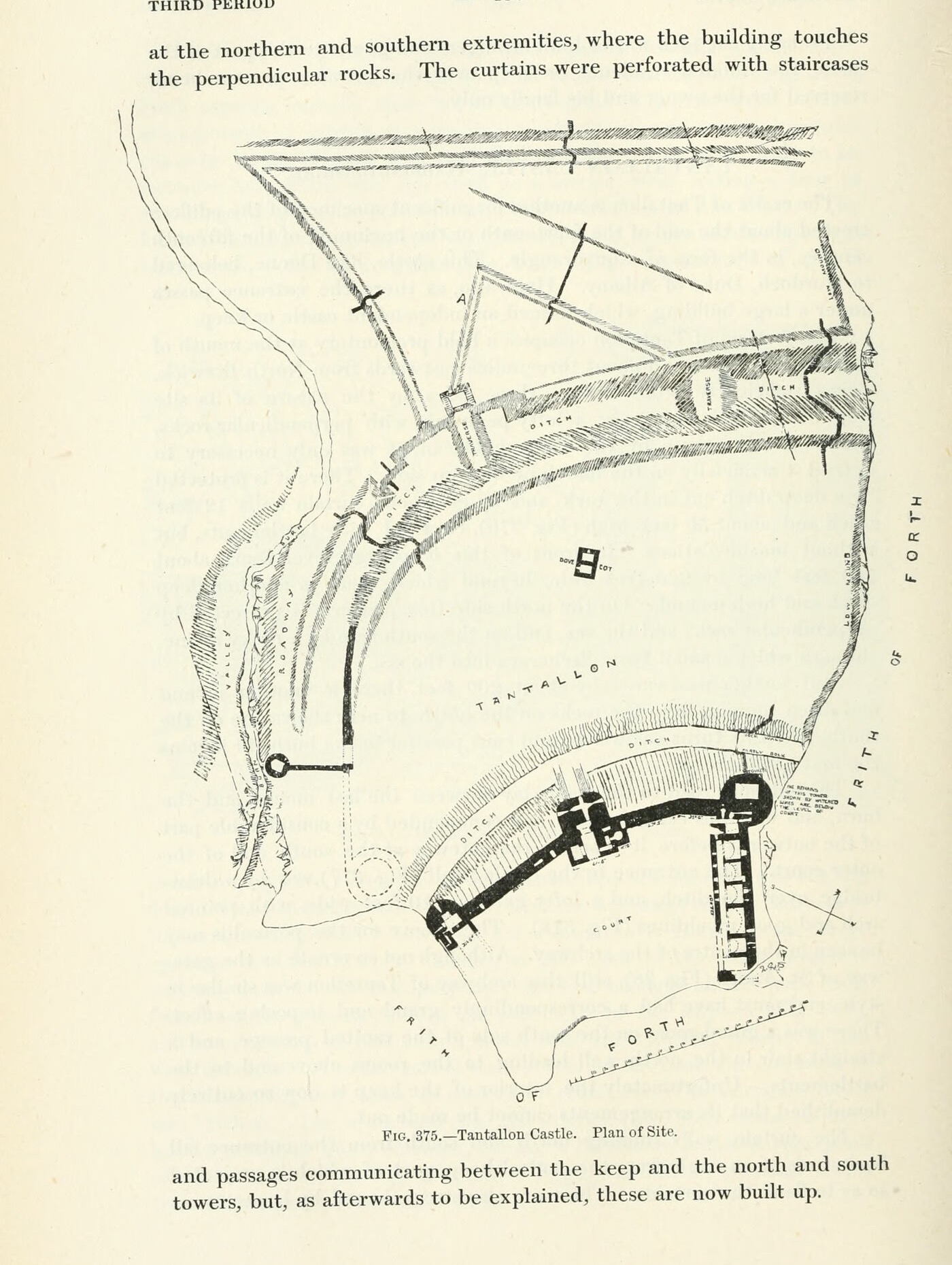
Fig. 375. Tantallon Castle. Plan of Site.
1887 · MacGibbon & Ross, Castellated and Domestic Architecture of Scotland, vol. 1 (1887)
Public domain
Nearby


