Scotland · Ruin
Threave Castle
Threave Castle is a late 14th–15th century stronghold sited on an island in the River Dee, comprising a tall rectangular tower house (keep) and an L-shaped outer defence known as the artillery house. The castle today survives as substantial ruins and is accessible to the public by boat from the riverbank.
First raised
1369
Its prime
1450
Today
Ruin
As it stood in 1450
What Threave Castle looked like in its prime.
A tall, rectangular stone tower house rising several storeys with a crenellated parapet and narrow vertical windows stands on the western edge of a river island, linked to an L-shaped curtain wall with three rounded artillery towers facing the river. The masonry is local grey rubble with visible coursing and scattered dressed stones; the outer wall runs along the riverbank and encloses a small courtyard and subsidiary buildings on the island, with low wooded ground beyond the water.
Its story
The story of Threave Castle.
Archibald the Grim's Island, 1308–1400
Tradition attaches the island to Fergus, the 12th-century Lord of Galloway, though there is no evidence for it. John of Fordun records that in 1308 Edward Bruce defeated a force of Gallwegians on the Dee and afterwards "burnt up the island"; a penny of 1300 found among burned buildings may place that event here, and excavations in the 1970s traced structures that could have belonged to an early stronghold of the Lords of Galloway.
Archibald Douglas, son of "Good Sir James", was created Lord of Galloway in 1369. Known as Archibald the Grim, he had been Warden of the West March since 1361, and in 1372 gained the lands of the Earl of Wigtown, bringing all of Galloway under his control. Threave is assumed to have been built to secure those holdings in the 1370s, one of the first tower houses raised in Scotland, standing alone without outer defences. He took Lochmaben Castle, the last English stronghold in south-west Scotland, in 1384, inherited the earldom of Douglas in 1388, and died at Threave in 1400, the first historical reference to the castle.
Princess Margaret and the Fall of the 8th Earl, 1424–1452
Archibald's son, the 4th Earl, had married Princess Margaret, daughter of Robert III, in 1390; he was killed at the Battle of Verneuil in 1424. Margaret took on the Lordship of Galloway and ruled from Threave for the next 23 years as Countess of Douglas and Duchess of Touraine, outliving her son and her grandsons.
In 1440 the 5th Earl's sons William and David were summoned to Edinburgh Castle and beheaded at the "Black Dinner" on trumped-up charges, over the protests of the ten-year-old James II. William Douglas, 8th Earl, married the Fair Maid of Galloway in 1444 and in 1447 forced the elderly Princess Margaret to give up Threave and retire to Lincluden; in 1449 she ceded Galloway itself. In 1452 the Earl seized Patrick Maclellan of Bombie, Sheriff of Galloway, and imprisoned him at Threave, where he was murdered despite the King's request for his release. On 22 February that year James II stabbed Douglas at Stirling Castle, and the King's retainers finished him.
The Artillery House and the Siege of 1455
Earl William had already begun remaking the island's defences, demolishing the older outbuildings. The centrepiece was the "artillery house", a curtain wall with three towers built to be defended with guns, facing the higher ground east of the river from where attack was most likely; it is considered one of the first purpose-built artillery defences in Britain. His brother James, the 9th Earl, completed the work and added earthworks north of the keep, taking money from Henry VI's government to pay for it.
The 9th Earl's uprising was broken at the Battle of Arkinholm near Langholm on 1 May 1455, after which his strongholds were systematically besieged. Threave was the last to fall. The royal forces arrived in June and the siege ran over two months, with King James lodging at Tongland Abbey. The artillery house held: even a bombard brought up from Linlithgow Palace at a cost of over £59 could not take the castle by force, and the King ended it instead by paying the garrison and granting lands to Douglas supporters.
Royal Fortress and the Maxwell Keepers, 1455–1640
Castle and lordship were annexed by the Crown and a succession of keepers appointed. James II returned in 1460 on his way to the siege of Roxburgh, where an exploding cannon killed him; James IV visited in 1502, the royal accounts recording cloth, wine and falconers.
In 1513 Robert Maxwell, 5th Lord Maxwell, was appointed keeper after his predecessor John Dunbar of Mochrum fell at Flodden, and in 1526 the office was made hereditary to the Maxwells. Captured after the Battle of Solway Moss in 1542, Maxwell was forced to hand Threave to the English invaders; the Earl of Arran retrieved it for Scotland in 1545. In the Bishops' Wars the Maxwells stood with Charles I, garrisoning Threave with up to 100 men and adding further earthworks. The Covenanter army arrived in the summer of 1640 and, after 13 weeks, the garrison surrendered on the King's orders.
Dismantled by the Covenanters, in State Care from 1913
The Covenanters ordered the buildings dismantled and the materials disposed of "to the use of the public"; two of the three artillery towers, damaged in the siege, later collapsed. The keep and artillery house largely remained standing, but Threave was never lived in again. The ruins passed into state care in 1913, and were scheduled as a monument of national significance in 1921. Historic Environment Scotland cares for the castle today and it is open to the public, reached by boat across the Dee from the Threave Estate, a National Trust for Scotland nature reserve.
Step inside
11 places to explore in 1450.
The record describes 11 distinct spots at Threave Castle, including 2 interiors: main chamber of the keep (interior), interior and gun-ports of the artillery house. Create your own photoreal reconstruction and explore every one, more scenes means more rooms, more angles, and more of the place to stand in.
Build Your Own Castle
Recreate Threave Castle with AI to explore it.
The artist rebuilds it as it stood in 1450, a photoreal reconstruction that belongs to you alone. Pay with coins, no subscription needed.
Recreate this castle →Defend this castle →Whose castle
Clans who held Threave Castle.
The families that held Threave Castle for a decade or more across its history, follow a name to its clan.
From the archive
Threave Castle on paper: the measured plan and period views.
The survey plan and photographs below are the ground truth this page's reconstructions are checked against, drawn and photographed while the castle was still a working garrison. Every image is public-domain or openly licensed, with its source named.

Threave Castle, Castle Douglas, Scotland-LCCN2001705953
ca. 1890-1900 · Photochrom Prints Collection (via Wikimedia Commons)
Public domain
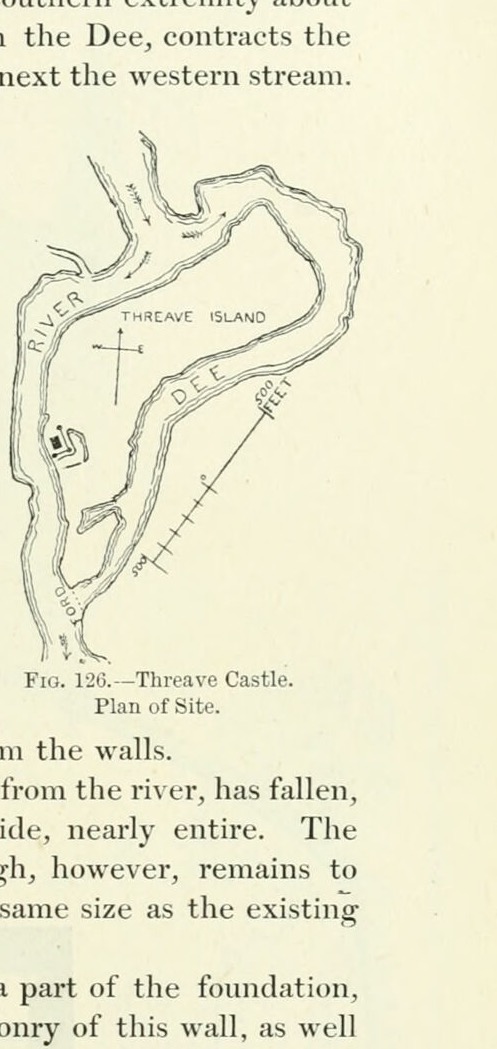
Fig. 126. Threave Castle. Plan of Site.
1887 · MacGibbon & Ross, Castellated and Domestic Architecture of Scotland, vol. 1 (1887)
Public domain
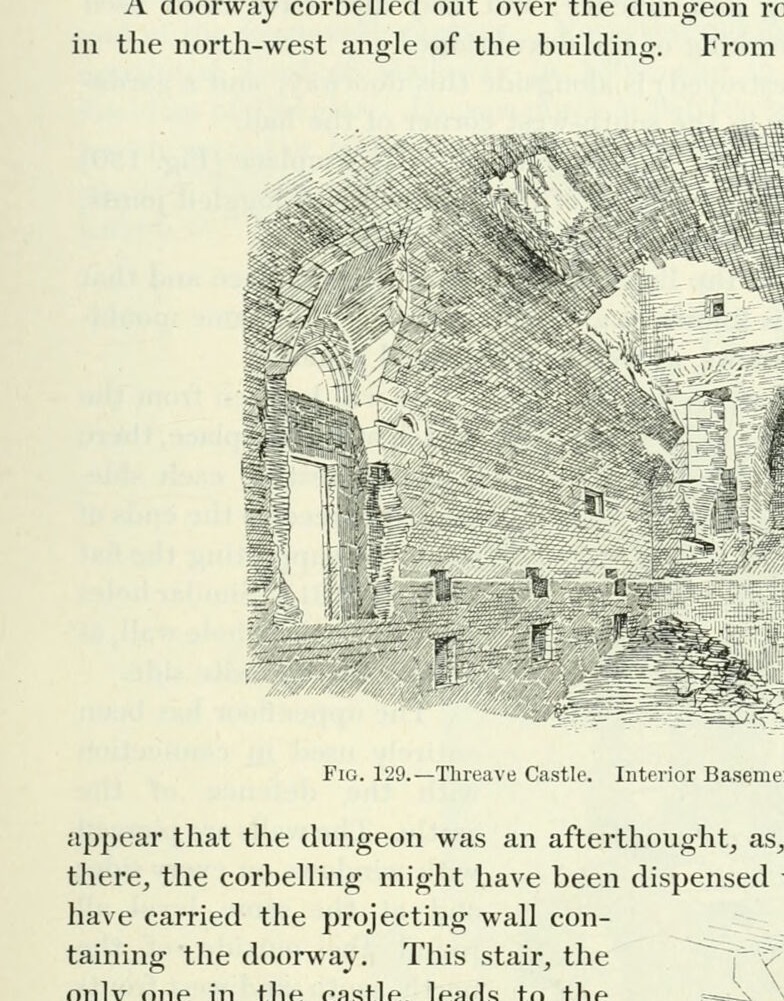
Fig. 129. Threave Castle. Interior Basement Floor.
1887 · MacGibbon & Ross, Castellated and Domestic Architecture of Scotland, vol. 1 (1887)
Public domain
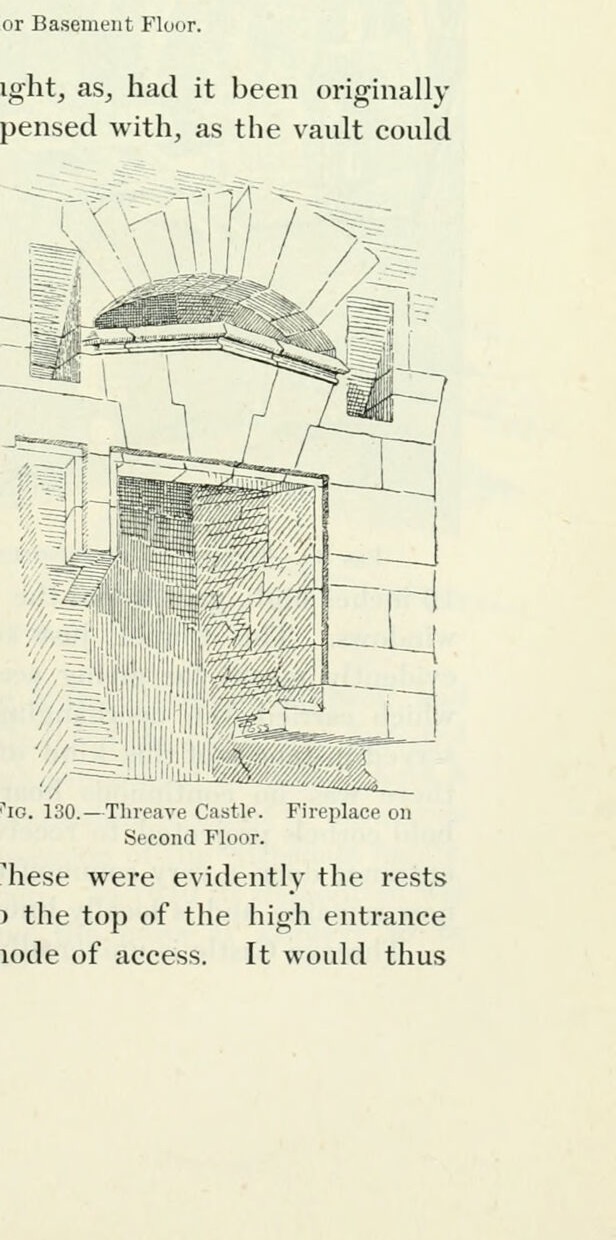
Fig. 130. Threave Castle. Fireplace on Second Floor.
1887 · MacGibbon & Ross, Castellated and Domestic Architecture of Scotland, vol. 1 (1887)
Public domain