Scotland · Demolished
Tullibardine Castle
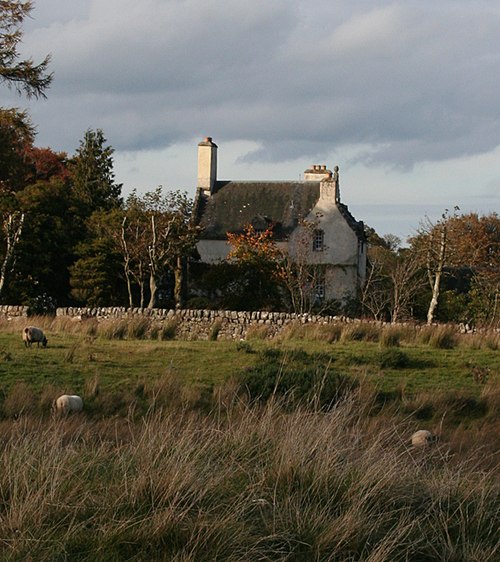
Tullibardine Castle was a medieval stronghold in the village of Tullibardine, Perth and Kinross, Scotland, built in the late 13th to early 14th century and long associated with the Murray family. It hosted royal visitors including Mary, Queen of Scots and James VI. The building was demolished in 1883; the site historically included a notable plantation of hawthorn hedges laid out in the shape of the ship Great Michael about 100 metres to the north.
Its prime
1591
Today
Demolished
As it stood in 1591
What Tullibardine Castle looked like in its prime.
At its prime (late 16th century) Tullibardine presented as a compact medieval masonry residence set within the village of Tullibardine north of Auchterarder. The plan included a conspicuous large circular chamber with a central pillar; ranges of roofed domestic buildings and service rooms clustered around an inner yard; planted grounds lay immediately adjacent, and about 100 metres to the north a ship-shaped plantation of hawthorn hedges marked a garden feature. The fabric was complete and roofed in this period.
Its story
The story of Tullibardine Castle.
The lands of Tullibardine came to the Murrays when Ada de Strathearn, wife of William Murray, was granted the other moiety of Tullibardine from her aunt. The castle itself was built in the late 13th to early 14th century, its first custodian likely David Murray, Baron of Tullibardine.
Mary, Queen of Scots visited William Murray of Tullibardine at the castle on 16 November 1562, and again on 31 December 1566 following the baptism of Prince James, accompanied, it was said, by the Earl of Bothwell. James VI, in turn, often visited John Murray, 1st Earl of Tullibardine, whose court roles included Master of the Household; on one visit the king hurried back on hearing Bothwell had escaped from Edinburgh Castle. The castle was demolished in 1883; a noted plantation of hawthorn hedges about 100 metres to the north was laid out in the shape of the ship Great Michael.
Step inside
4 places to explore in 1591.
The record describes 4 distinct spots at Tullibardine Castle, including 2 interiors: large circular chamber with central pillar (interior), hall used for the 1591 masque and wedding festivities. Create your own photoreal reconstruction and explore every one, more scenes means more rooms, more angles, and more of the place to stand in.
Build Your Own Castle
Recreate Tullibardine Castle with AI to explore it.
The artist rebuilds it as it stood in 1591, a photoreal reconstruction that belongs to you alone. Pay with coins, no subscription needed.
Recreate this castle →Defend this castle →Whose castle
Clans who held Tullibardine Castle.
The families that held Tullibardine Castle for a decade or more across its history, follow a name to its clan.
Held by the Murrays from the castle's building in the late 13th to early 14th century; the line rose to Earls of Tullibardine before the castle's demolition in 1883.