
Slovakia · Restored
Orava Castle
Oravský hrad
Orava Castle is a medieval castle complex built on a high limestone spur above the Orava river in northern Slovakia. Its fabric combines Romanesque, Gothic and Renaissance phases and it developed as a multi-level fortress with Lower, Middle and Upper wards clustered along the rock. Today it functions as a national monument and museum showcasing restored interiors and defensive structures.
First raised
1241
Its prime
1611
Today
Restored
As it stood in 1611
What Orava Castle looked like in its prime.
Perched on a 112-metre limestone spur above the Orava River, the castle presents a stepped succession of wards climbing the rock: a Lower, Middle and an Upper Castle topped by a large rectangular main block. The silhouette includes a four-sided donjon, several cylindrical cannon towers with conical tiled roofs, long stone curtain walls and a sequence of terraces and stairways hugging the cliff. Walls are pale stone; roofs are red-brown tiles; the whole complex appears complete with battlements and rooflines intact.
Its story
The story of Orava Castle.
From Béla IV's Exchange to Matthias Corvinus
The limestone spur above the Orava river had been settled since prehistory, and a wooden fortification stood on it after the Mongol invasion of Hungary in 1241. By the middle of the 13th century a walled castle had replaced it, probably on the same ground. It first appears in writing in 1267, when King Béla IV took it from Miko Balaša in exchange for Žilina, Varín and Sučany and made it royal property. Only its ground floor was stone then; the storeys above were still timber.
Its worth lay in the route it watched (the Hungarian–Polish road, earlier a stretch of the amber road), and in its position near the customs station at Tvrdošín. In 1298 it fell within the lands of Matúš Čák Trenčiansky, and from 1370 it was the seat of Orava county. A tetrahedral multi-storey tower went up in the 14th century, probably on older foundations, as the donjon and last defence.
Peter Komorovský became castellan in 1441, held the castle against the Hussites, and through skilful politics and negotiation made himself župan of Orava, repairing and fortifying it as he went. In the 15th century it passed to Matthias Corvinus, who after 1474 ordered a square and a residential wing built in the Middle Castle.
Ján z Dubovca's Guns Against the Ottoman Threat, 1534–1543
Ján z Dubovca obtained the castle together with the office of župan in 1534, and rebuilt it for artillery because of the threat of Ottoman invasion. He raised a half-round tower in the Upper Castle, followed in 1539 by two large round gun emplacements in the Middle Castle; the middle platform was configured for cannon fire as well. Between 1539 and 1543 he filled the empty ground between the tower and the Upper Castle wall with a five-storey palace, and in 1543 a new gate with ditch and drawbridge was finished in the Lower Castle.
After his death his heirs quarrelled over the inheritance so badly that the castle was even reduced to a store-house.
The Thurzo Century, 1556–1621
From 1556 it was held by the mine owner František Thurzo, who acquired it for 18,338 gold pieces on a long lease meant to run until the royal court repaid what he had laid out. He had a well sunk in the Middle Castle to a depth of 90 metres, and in the building campaign that followed the wooden stairs of the Upper Castle were replaced in stone. The Thurzos rebuilt the derelict Upper Castle and raised the palace that carries their name.
His son Juraj Thurzo secured permanent hereditary ownership in 1606. He drove a tunnel between two of the castle gates, with a large terrace above it, moved the living quarters, and began the chapel using parts of older fabric; the Renaissance tomb made for him at the beginning of the 17th century is among its best-known features. Their rebuilding and refortification gave the whole complex the form it has kept, though it was not finalised until 1611.
Juraj Thurzo had one son, Imrich, and seven daughters, and the male line ended with Imrich's death. In 1626 the daughters met at Lietava castle to found the Oravský komposesorát, a co-ownership of the estate administered by a single elected director.
Gašpar Pika's Peasants and the Surrender of 1709
During the estates unrest of the later 17th century, peasant insurgents under Gašpar Pika seized the castle for a time in 1672. In 1703, in the rising of Francis II Rákóczi, rebels commanded by Alexander Károly took it again. Imperial troops laid siege a few months later and did not have it back until 1709, when the garrison surrendered.
The Fire of 1800 and the Orava Museum
Fire broke out in 1800, probably from a chimney spark that caught the roof, and it destroyed every wooden part of the castle; the place was never lived in again. Some objects in the Lower Castle were recovered because the roof shingles had covered them, but those of the Middle and Upper Castle were not made good until 1861. Ödön Zichy, administrator of the property, then organised a foundation to establish a regional museum of Orava, and its first exhibition opened in the Thurzo Palace in 1868.
Repairs went on around the turn of the 19th and 20th centuries, and between 1906 and 1912 Jozef Pálfi restored the middle section. Many scenes of the 1922 film Nosferatu were shot here, the castle standing in for Count Orlok's Transylvanian home. German troops used it as an artillery observation post in the Second World War; after Soviet gunners put a salvo of Katyusha rockets into the building, the Germans withdrew rather than risk damaging the monument. A thorough restoration ran from 1953 to 1968, after which the castle became the seat of the Orava Museum; it has been listed among Slovakia's cultural heritage monuments since 1961.
Step inside
12 places to explore in 1611.
The record describes 12 distinct spots at Orava Castle, including 3 interiors: castle chapel interior, knights' room, thurzo palace interior. Create your own photoreal reconstruction and explore every one, more scenes means more rooms, more angles, and more of the place to stand in.
Build Your Own Castle
Recreate Orava Castle with AI to explore it.
The artist rebuilds it as it stood in 1611, a photoreal reconstruction that belongs to you alone. Pay with coins, no subscription needed.
Recreate this castle →Defend this castle →Whose castle
Clans who held Orava Castle.
The families that held Orava Castle for a decade or more across its history, follow a name to its clan.
Thurzó
Rebuilt by the Thurzó mining magnates from the mid-16th century.
From the archive
Orava Castle on paper: the measured plan and period views.
The survey plan and photographs below are the ground truth this page's reconstructions are checked against, drawn and photographed while the castle was still a working garrison. Every image is public-domain or openly licensed, with its source named.
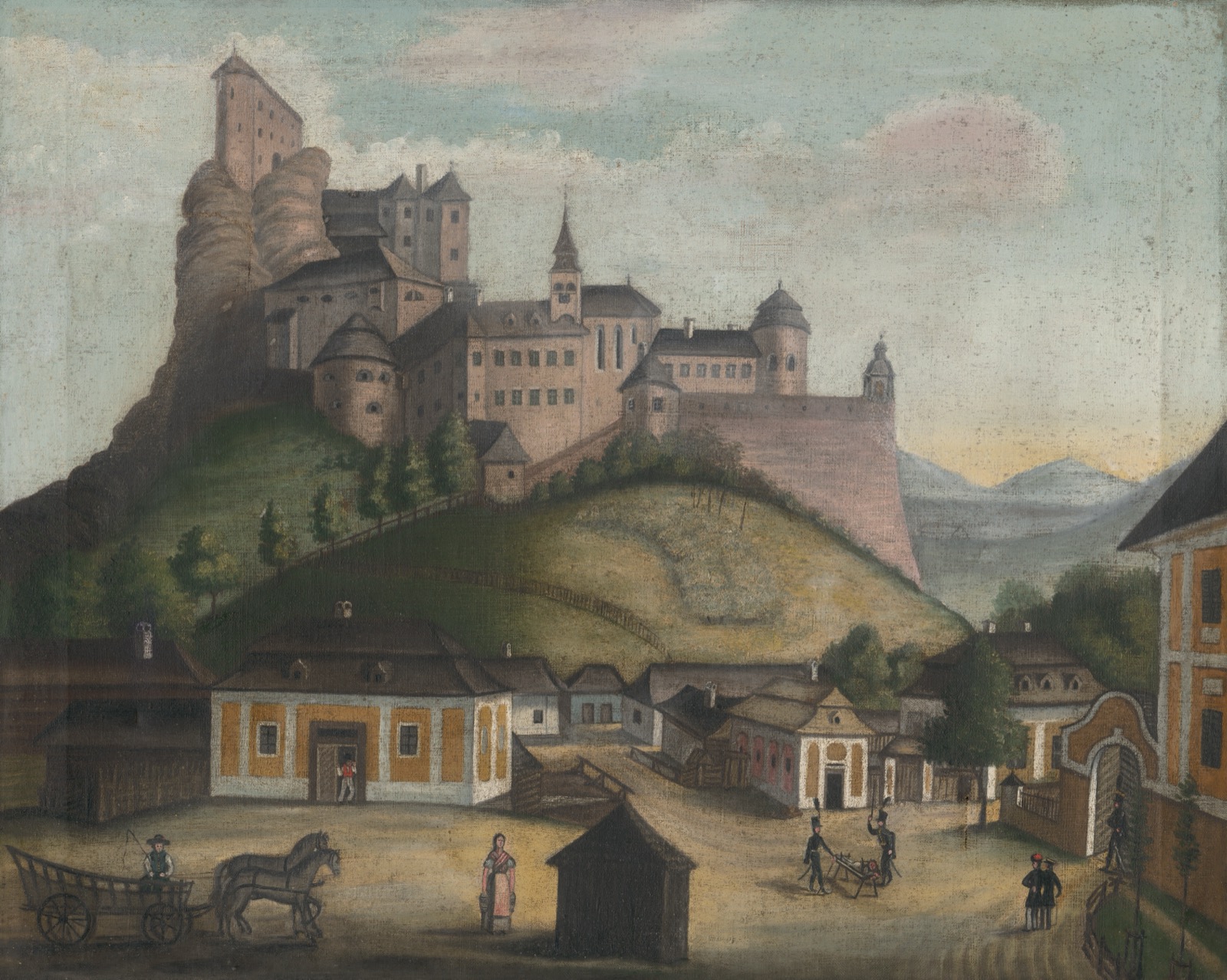
Oravský zámok
· Slovak national gallery (via Europeana)
Public domain
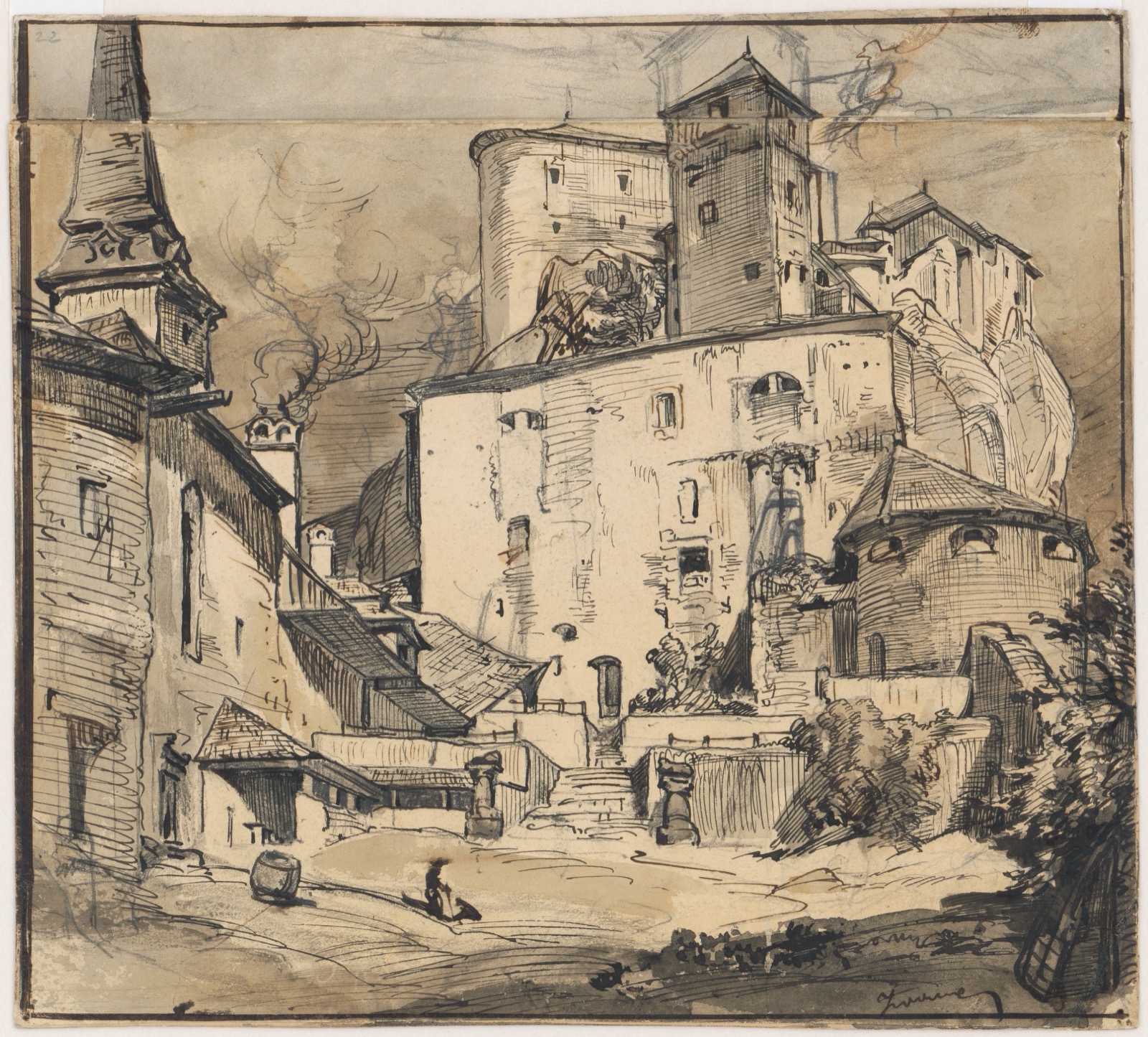
Nádvorie oravského hradu
· Slovak national gallery (via Europeana)
Public domain
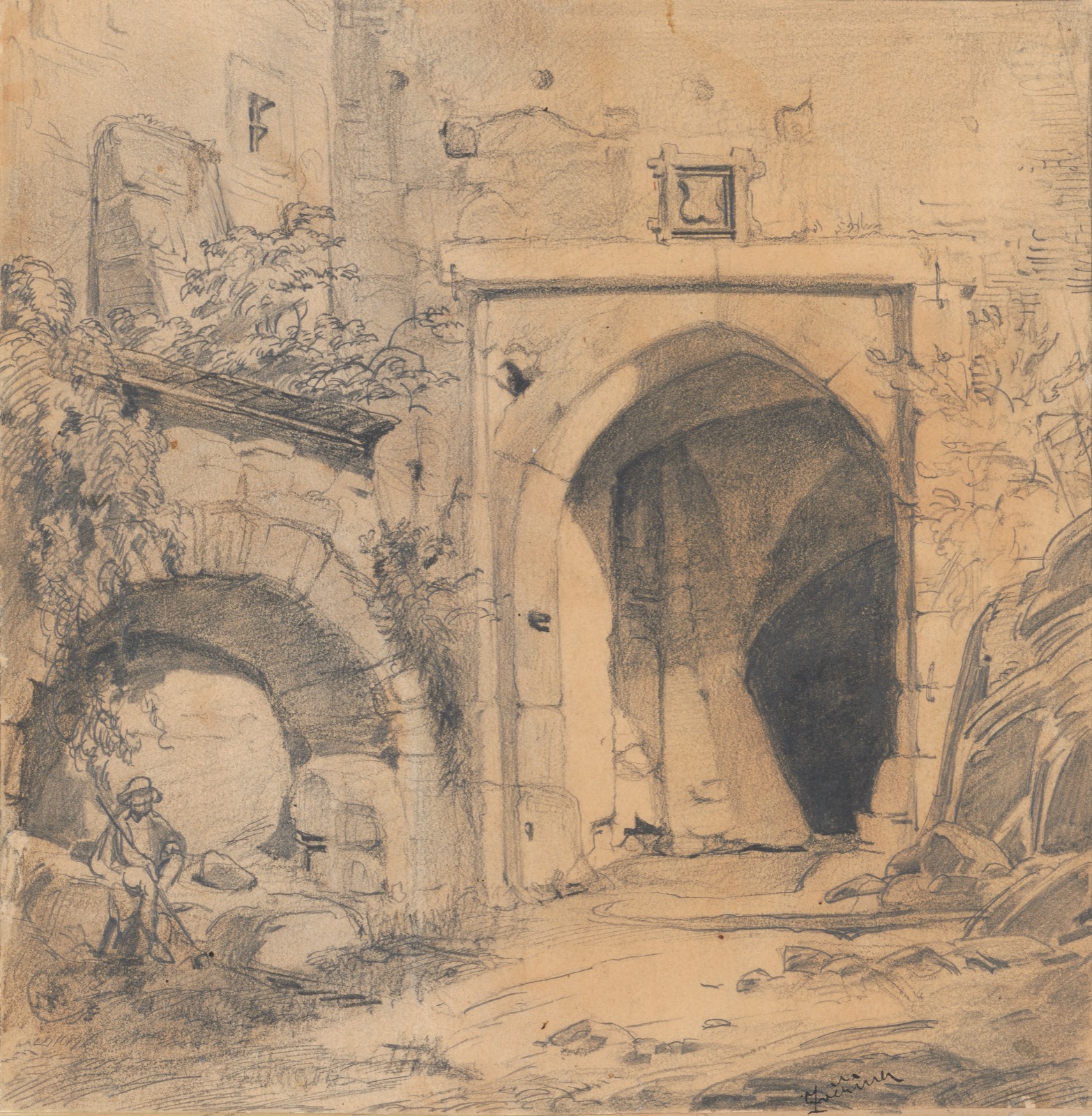
Turzovská brána na oravskom hrade
· Slovak national gallery (via Europeana)
Public domain


