
Slovakia · Restored
Bratislava Castle
Bratislavský hrad
Bratislava Castle is the dominant rectangular hilltop fortress above the Danube in Bratislava, Slovakia, with four corner towers and a large central courtyard. The complex contains gates, bastions and multiple wings that today house museum exhibitions and state rooms.
First raised
1431
Its prime
1780
Today
Restored
As it stood in 1780
What Bratislava Castle looked like in its prime.
A massive white rectangular four-storey stone building with a red-tiled steep roof and four corner towers (the tallest, the Crown Tower, on the southwest corner). Regular rows of rectangular windows puncture the smooth white façades. A broad paved forecourt (the Yard of Honor) and low gate pavilions sit before the central arched entrance. The castle stands on a rocky hill with visible stone retaining walls, overlooking the city and the Danube.
Its story
The story of Bratislava Castle.
The Rock Above the Danube Ford
The castle hill commands an important ford of the Danube. In the last century BC it was the acropolis of an oppidum of the Celtic Boii; under Great Moravia it carried a stone palace and the largest Great Moravian basilica known from the territory of Slovakia.
Under Stephen I of Hungary (1000–1038) the castle was already one of the kingdom's central castles and the seat of Pozsony county, holding the frontier against Bohemian and German attack in 1030, 1042 and 1052. Hungarian tradition holds that when Henry III attacked in 1052, a soldier named Zotmund sank the invading fleet by drilling holes in its ships. It was among the few in the Kingdom of Hungary to withstand the Mongol attacks of 1241 and 1242, and the biggest of the rampart towers raised in answer, probably around 1250, survives as the Crown Tower.
Sigismund's Quadrangle, 1423–1434
The castle stood close to the Czech border, protected only by old wooden ramparts, so in 1423 Sigismund of Luxembourg ordered the Rozgonyi county heads to replace them with a stone bulwark against Hussite attack. He had decided to make it the centre of his new German-Czech-Hungarian empire, and between 1431 and 1434 it was rearranged entire as a regular quadrangle, with 220 to 240 workers on site each day under the master Konrad von Erlingen. The old residential tower came down and a Gothic palace close in form to the present building rose in its place. Sigismund never moved in, and the work stopped at his death in 1437.
Capital of Royal Hungary and the Crown Tower
After the Hungarian defeat at Mohács in 1526, Queen Maria of Habsburg fled Buda for Pressburg with the royal treasure; Ferdinand I destroyed most of it soon after to pay for his part in the civil war in Royal Hungary. With the Turks holding present-day Hungary, Pressburg became from 1536 the capital of what remained, seat of the diet and of coronations, and Ferdinand had the fortress rebuilt as a Renaissance castle between 1552 and 1562 under the imperial architect Pietro Ferrabosco. The year after it was finished it stood ready for the coronation of Maximilian II as king of Hungary.
From 1552 the Holy Crown of Hungary was kept in what became the Crown Tower, watched by two crown guards with fifty Hungarian and fifty Austrian infantry, and stayed until 1784. Gabriel Bethlen's troops held it from 1619 until Habsburg forces retook it in 1621, and the crown stayed away until 1622; Imre Thököly failed to take it in 1682–83. A Baroque reconstruction paid for by Count Paul Pálffy, captain of the castle, added a third floor and two more corner towers, giving the building the four it has now.
Maria Theresa's Residence, 1761–1766
Maria Theresa, queen of Hungary from 1740, had promised the nobles a residence at Pressburg, and between 1761 and 1766 the defensive castle was converted into a modern royal one under Franz Anton Hillebrandt. The stairs were rebuilt to a lower gradient at the queen's request so that she could ride her horse up them. Her son-in-law Albert of Saxe-Teschen, governor of the kingdom, moved in with Marie Christine in 1766, and the Theresianum went up against the eastern wall in 1767–1770, its family gallery later becoming the basis of the Albertina in Vienna.
The Fire of 1811 and the Long Rebuilding
Joseph II abolished the governor's office in 1781, and in 1783 the kingdom's central authorities moved from Pressburg to Buda, the crown jewels going to the Hofburg in Vienna. The castle became a seminary for Catholic priests in 1784 (Anton Bernolák, author of the first codification of standard Slovak to succeed, was educated there), and in 1802 the army moved in, the rococo interiors adapted for some 1,500 soldiers. Napoleon's troops bombarded Pressburg and the castle in 1809, and on 28 May 1811 it burst into flames through the carelessness of the garrison.
The military sold parts of the main buildings as building material, and between the wars there were attempts to demolish the rest. Parts of the site served as barracks until 1946, when the ruin was opened to the public. Research began in 1953 and building works in 1957, returning the main building to its last, Baroque state while restoring surviving Gothic and Renaissance elements. Work was halted in August 1968, when Warsaw Pact troops occupied the castle during the Prague Spring; on 28 October that year the Federation Law, which turned Czechoslovakia into a federation of Czech and Slovak socialist republics, was signed in the castle's Federation Hall. The constitution of independent Slovakia was signed in the Knights Hall on 3 September 1992, and the Slovak National Museum has held exhibitions there since 1968.
Step inside
12 places to explore in 1780.
The record describes 12 distinct spots at Bratislava Castle, including 4 interiors: entrance arcade and forecourt corridor, baroque staircase and museum entrance (second floor), treasure chamber, west wing (second floor) and more. Create your own photoreal reconstruction and explore every one, more scenes means more rooms, more angles, and more of the place to stand in.
Build Your Own Castle
Recreate Bratislava Castle with AI to explore it.
The artist rebuilds it as it stood in 1780, a photoreal reconstruction that belongs to you alone. Pay with coins, no subscription needed.
Recreate this castle →Defend this castle →From the archive
Bratislava Castle on paper: the measured plan and period views.
The survey plan and photographs below are the ground truth this page's reconstructions are checked against, drawn and photographed while the castle was still a working garrison. Every image is public-domain or openly licensed, with its source named.
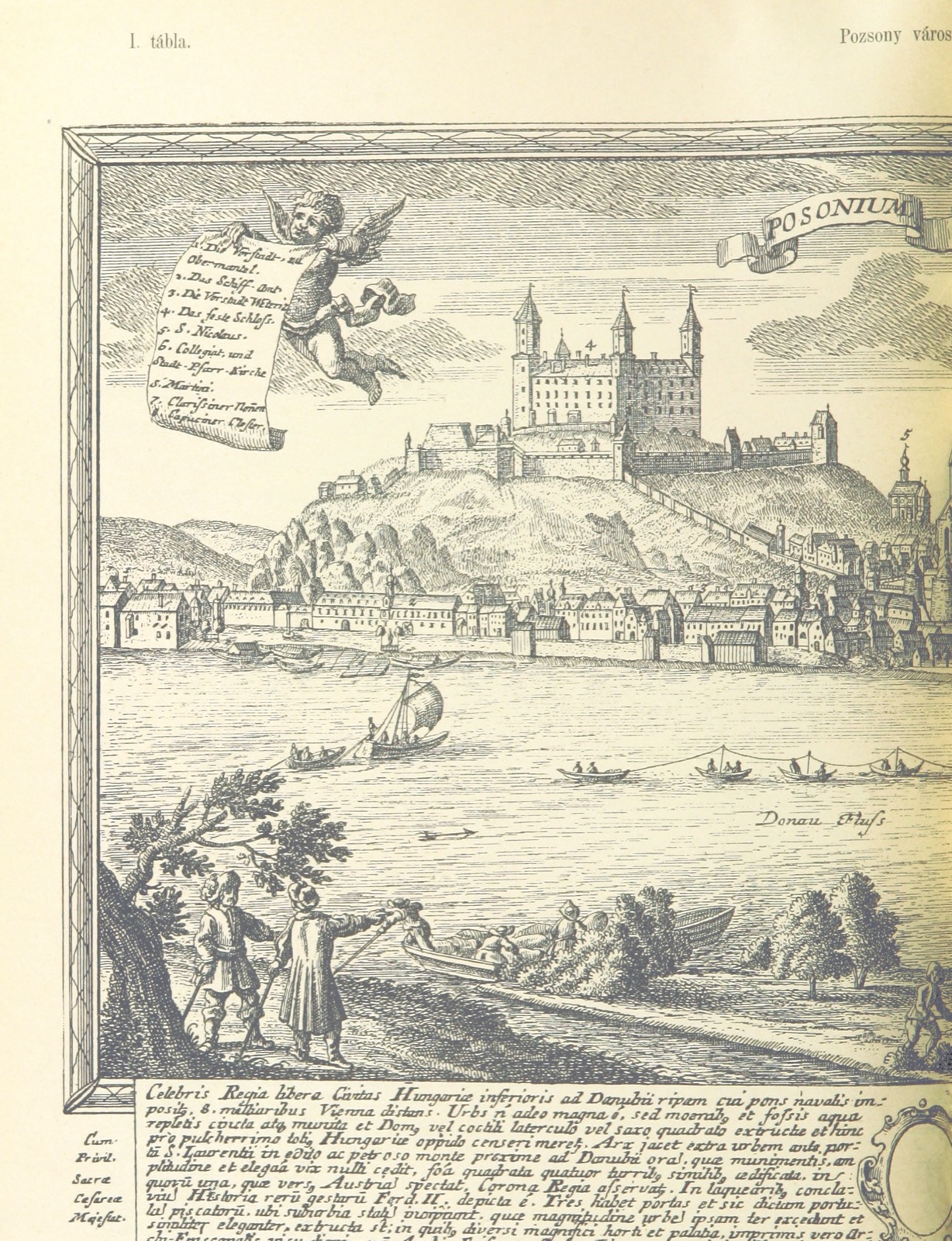
Bratislava Castle from "Pozsony város története".
· The British Library (via Europeana)
Public domain
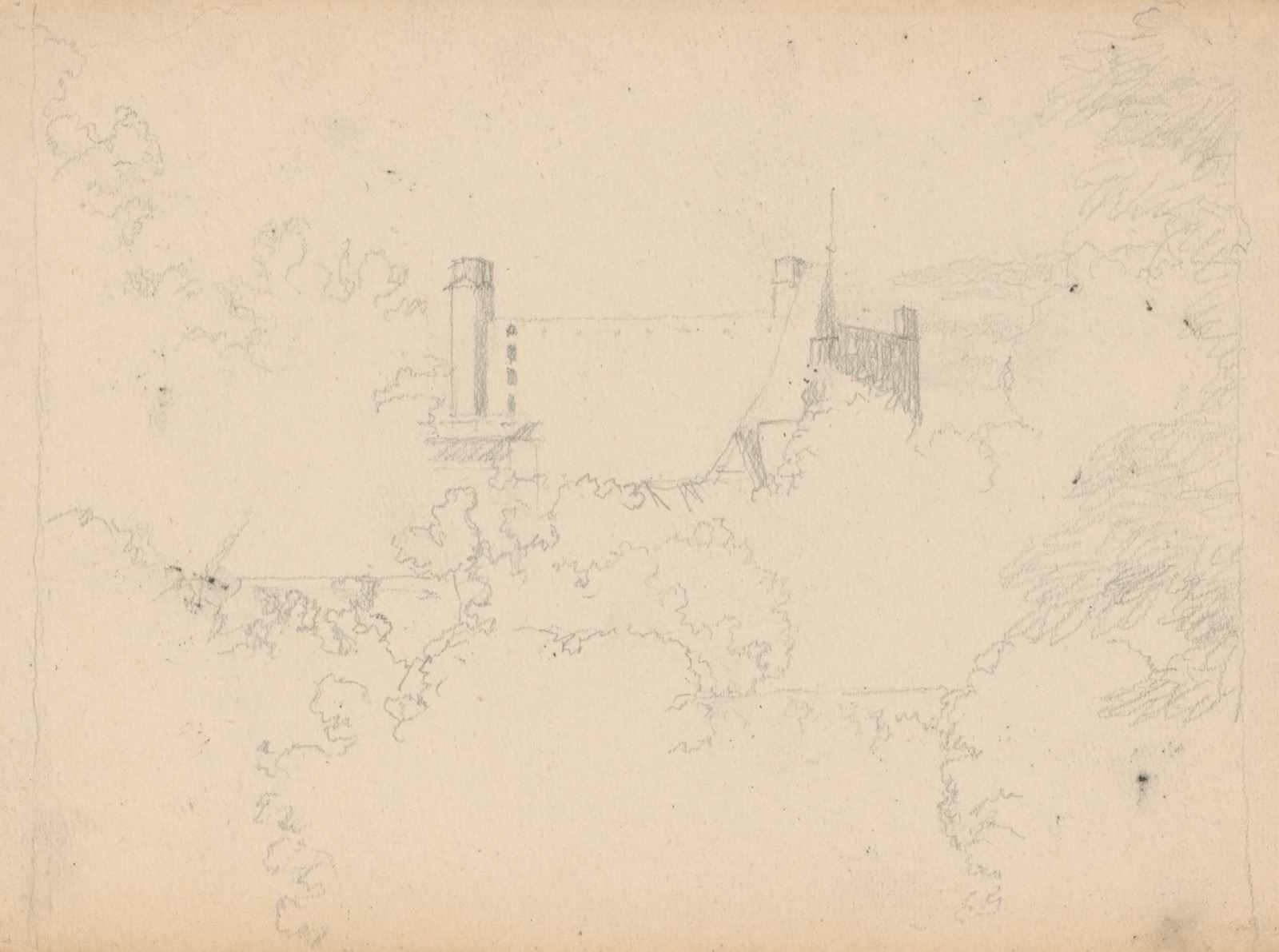
Náčrt bratislavského hradu
· Slovak national gallery (via Europeana)
Public domain
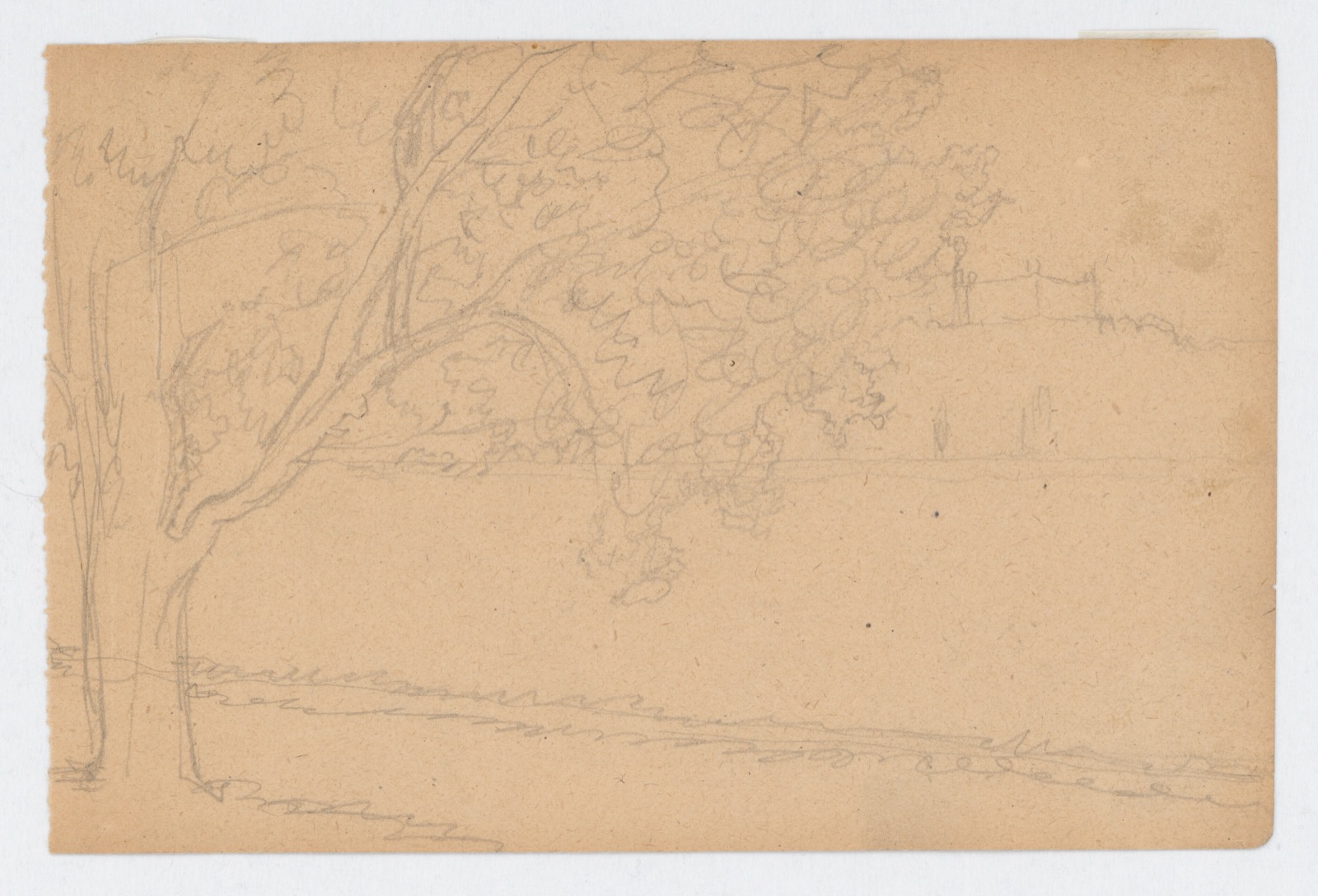
Pohľad na bratislavský hrad z Petržalky
· Slovak national gallery (via Europeana)
Public domain

Questions about Bratislava Castle
What is the history of Bratislava Castle?
What is inside Bratislava Castle?
Why was Bratislava Castle built, and what was it used for?
Where is Bratislava Castle?
When was Bratislava Castle built?
Was Bratislava Castle ever attacked or besieged?
What did Bratislava Castle look like in its prime?
Is Bratislava Castle still standing, or is it a ruin?
More castles of Slovakia


Explore the city
