
Bridge · Italy · Still standing
Bridge of Sighs
Ponte dei Sospiri
The Bridge of Sighs (Ponte dei Sospiri) is an enclosed white‑stone bridge in Venice that links the Doge's Palace to the Prigioni Nuove across the Rio di Palazzo. Built in the early 17th century, it is a short, vaulted passage with small stone-latticed windows and sculptural decoration on its facades.
First raised
1614
Its prime
1603
Today
Still standing
As it stood in 1603
What Bridge of Sighs looked like in its prime.
A compact, fully enclosed bridge of white Istrian limestone spanning the narrow Rio di Palazzo on a single jolted arch. Both facades are symmetrical, topped by a voluted roofline, with two quatrefoil-style openwork windows on each side bearing four eight‑leaf floral patterns. The arch moulding carries a row of eleven carved heads (central one a lion) and reclining figures in the spandrels; the central panel displays the Doge Marino Grimani's coat of arms. Approximately eleven metres wide, it abuts an arcaded palace and a rusticated prison wall.
Its story
The story of Bridge of Sighs.
The Pozzi Outgrown: Rusconi's New Prison, 1567-1597
The gaols inside the Doge's Palace, the pozzi, had become too small. An extension was decided on in 1567 and completed in 1574, and in 1580 the architect Gianantonio Rusconi was commissioned to design a prison building to be raised north-east of the palace, on the far side of the Rio di Palazzo. Rusconi died in the late 1580s before the work was done.
Antonio da Ponte took over the final south wing and designed its south facade, the one that faces the Riva degli Schiavoni and the lagoon and the only worked wall of a building otherwise left entirely bare. Its fortress-like manner was taken from the Mannerist Mint, the Zecca, that Jacopo Sansovino had built about forty years earlier on the other side of the Piazzetta di San Marco. Da Ponte had already been responsible for the reconstruction of the Doge's Palace after the fire of 1574, and in 1587 he won the competition to rebuild the Rialto Bridge. He died in 1597.
Antonio Contin's Double Passage to the Prigioni Nuove, Shortly After 1600
To ensure secure passage from the interrogation rooms and the court to the prison cells, Antonio Contin, son of Bernardino Contin and da Ponte's nephew and pupil, designed an enclosed bridge across the Rio di Palazzo, the canal that separates the Palazzo Ducale from the Prigioni Nuove, and built it in white Istrian limestone. The work was carried out shortly after 1600; the bridge is dated to the years 1600 to 1603 by some accounts and as late as 1614 by others.
The interior was divided into two gangways, separated by a wall so that prisoners already convicted would not meet those still on their way to be presented to the courts. It carried the inmates of the new prisons across to the offices of the Inquisitori di Stato to be judged. The bridge was ordered by Doge Marino Grimani, whose coat of arms is carved between the windows of the enclosed gangway, with an allegorical figure of justice set above it.
The Sighing Prisoners and Byron's Translation
The bridge owes its name to a tradition rather than to its function: in the days of the Serenissima, so the story runs, prisoners crossing it sighed at the prospect of seeing the outside world for the last time, the look from its windows imagined as the last view of the outside world convicts saw before their imprisonment. By one account the notion of the Bridge of Sighs is a Romantic creation of the nineteenth century; against that, the name Ponte dei Sospiri is attested as early as the end of the eighteenth. The English form was bestowed by Lord Byron as a translation from the Italian. Jacques Offenbach took the name for the title of his 1861 opera Le pont des soupirs.
Imitations from Oxford to Pittsburgh, 1888
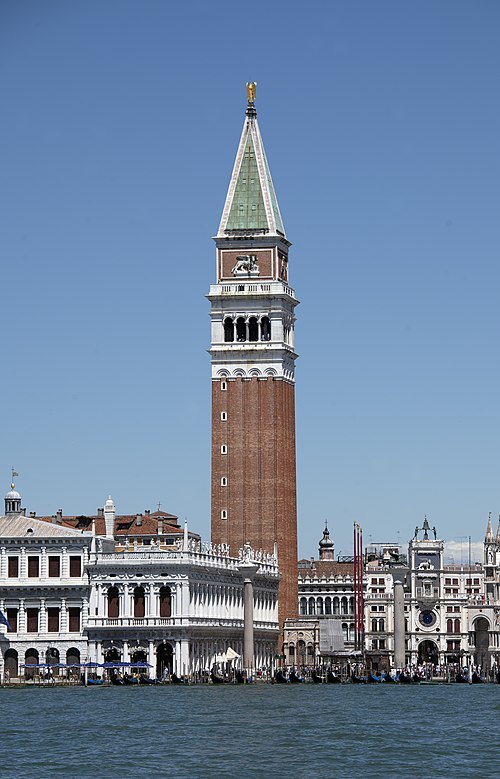
The bridge has been copied in form and function around the world, and the copies have generally taken its nickname with them. The American architect H. H. Richardson took it as his inspiration for part of the Allegheny County Jail complex in Pittsburgh, completed in 1888, where a similar enclosed arched walkway joins the courthouse to the jail and carries the same name. There are bridges called the Bridge of Sighs at St John's College in Cambridge and at Hertford College in Oxford, the second of which in fact recalls the Rialto more closely, and a puente de los Suspiros in the Barranco district of Lima. New York has a modernised quotation of it linking two buildings of the Metropolitan Life Insurance Company Tower complex, itself a skyscraper avowedly modelled on the campanile of San Marco.
Step inside
7 places to explore in 1603.
The record describes 7 distinct spots at Bridge of Sighs, including 1 interior: interior gangway (one side) looking along corridor. Create your own photoreal reconstruction and explore every one, more scenes means more photos, more angles and more of the immersive experience.
Build Your Own Castle
Recreate Bridge of Sighs with AI to explore it.
The artist rebuilds it as it stood in 1603, a photoreal reconstruction that belongs to you alone. Pay with coins, no subscription needed.
Recreate Bridge to Explore →Nearby
Landmarks within reach of Bridge of Sighs.


More landmarks of Italy


Explore the city


