
Austria · Still standing
Burg Clam
Burg Clam is a hilltop castle in Upper Austria with a compact cluster of residential ranges, a tall cylindrical tower and enclosing curtain walls. Written records date back to the 12th century and the site has been continuously occupied and maintained into the present day.
Its prime
1500
Today
Still standing
As it stood in 1500
What Burg Clam looked like in its prime.
A compact, whitewashed stone castle set on a grassy hilltop with a high cylindrical bergfried capped by a steep conical red-tile roof, several multi-storey rectangular residential blocks with red clay tiled roofs and a small onion-domed tower, and continuous stone curtain walls stepping down the slope. Walls show rough ashlar lower courses and smoother plastered upper faces; narrow rectangular windows punctuate the façades; a covered wooden gallery projects from one face, with a valley spreading below.
Its story
The story of Burg Clam.
Burg Clam sits on its hilltop in Upper Austria at 337 metres above sea level. Written records mentioning the castle reach back to the 12th century, and it has been in the possession of the Clam family since the 15th century.
The castle is a compact cluster of residential ranges gathered around a tall cylindrical tower, enclosed by curtain walls, and it has been continuously occupied and maintained into the present day.
Step inside
7 places to explore in 1500.
The record describes 7 distinct spots at Burg Clam, including 1 interior: inner courtyard beside the covered gallery. Create your own photoreal reconstruction and explore every one, more scenes means more rooms, more angles, and more of the place to stand in.
Build Your Own Castle
Recreate Burg Clam with AI to explore it.
The artist rebuilds it as it stood in 1500, a photoreal reconstruction that belongs to you alone. Pay with coins, no subscription needed.
Recreate this castle →Defend this castle →Whose castle
Clans who held Burg Clam.
The families that held Burg Clam for a decade or more across its history, follow a name to its clan.
Clam
In the possession of the Clam family since the 15th century.
From the archive
Burg Clam on paper: the measured plan and period views.
The survey plan and photographs below are the ground truth this page's reconstructions are checked against, drawn and photographed while the castle was still a working garrison. Every image is public-domain or openly licensed, with its source named.
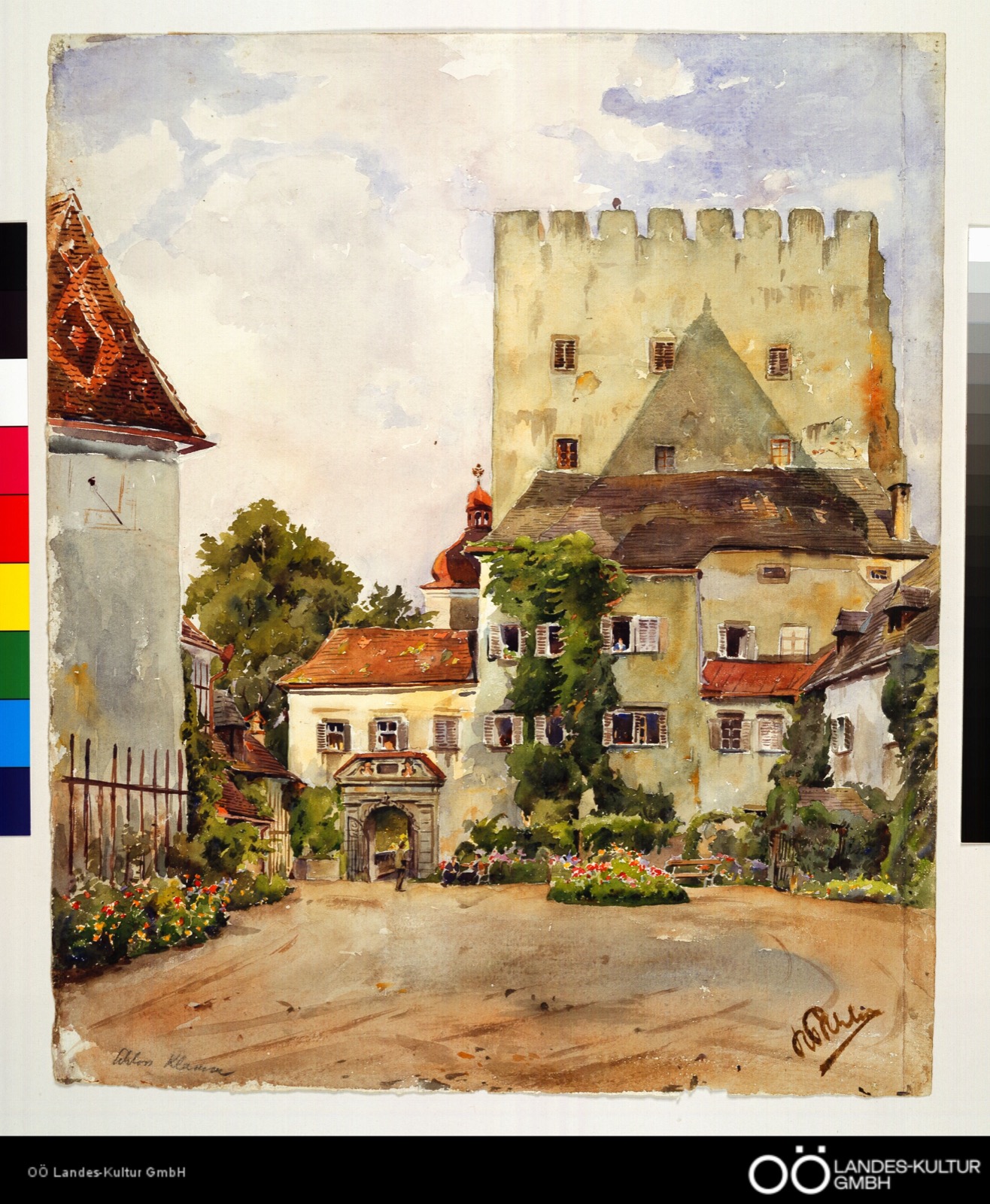
Vor der Burg Clam
· OÖ Landes-Kultur GmbH (via Europeana)
CC BY-SA
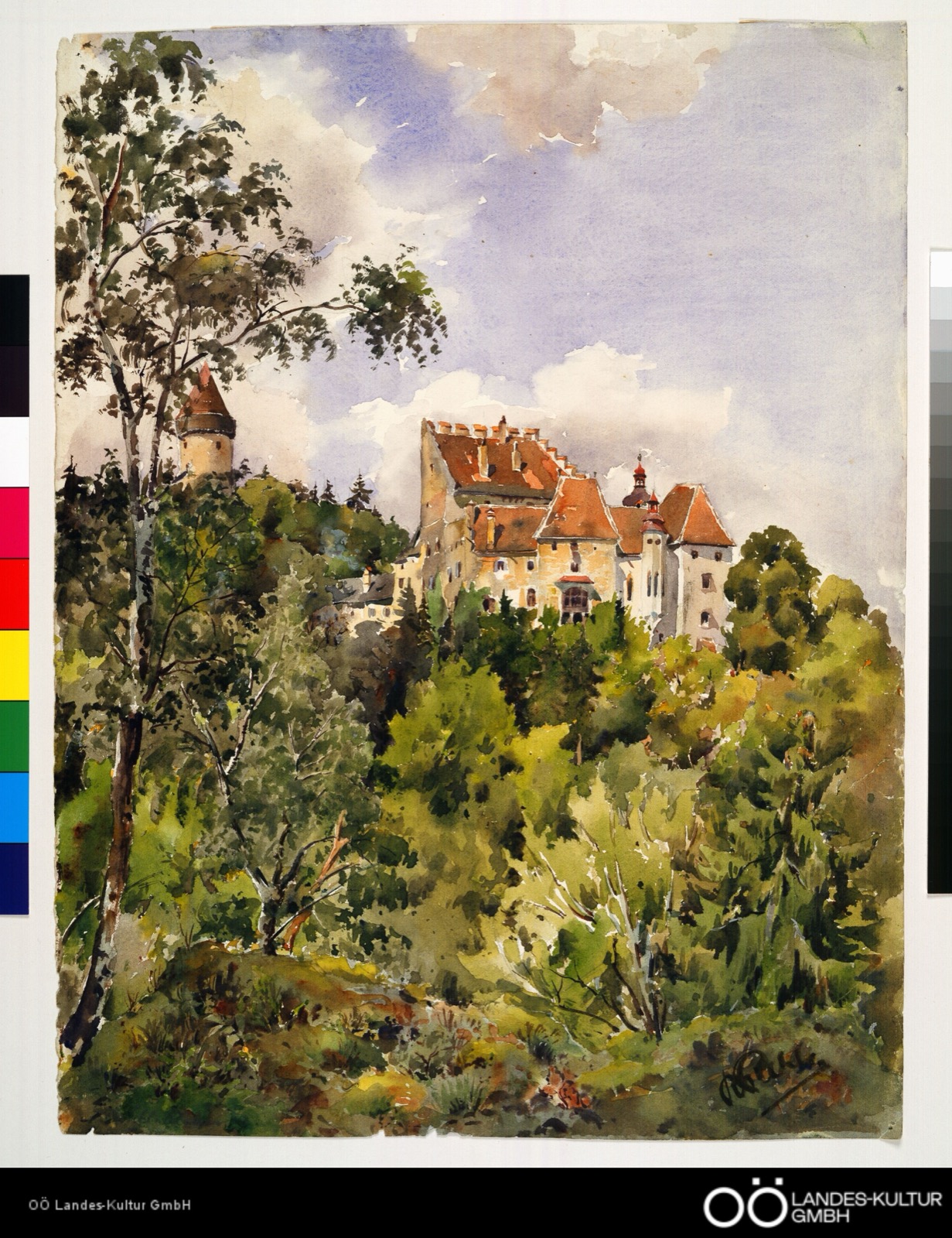
Blick auf Burg Clam
· OÖ Landes-Kultur GmbH (via Europeana)
CC BY-SA
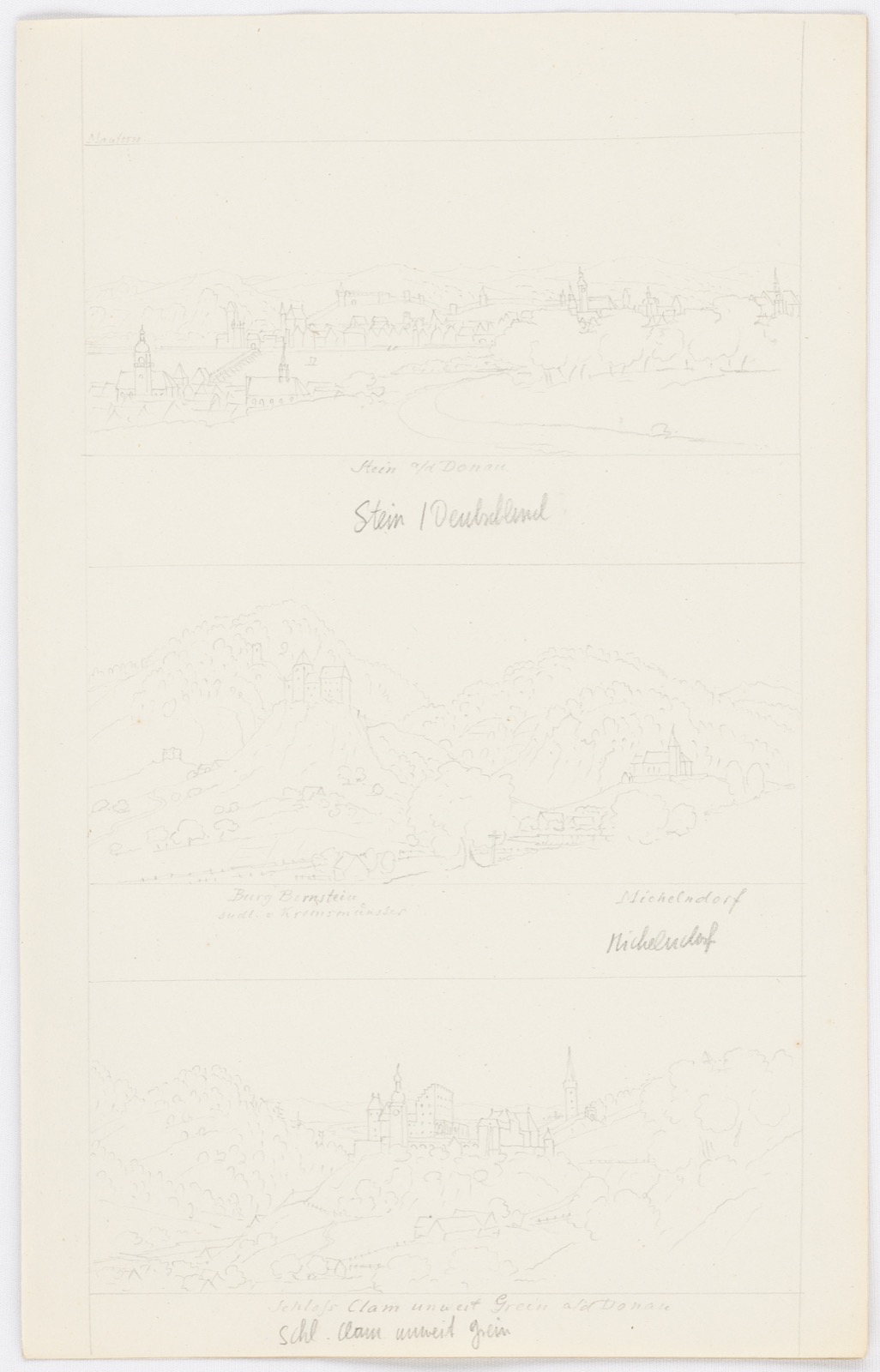
Stadt Stein an der Donau, Burg Bernstein bei Michelndorf, Burg Clam bei Grein: Drei perspektivische Ansichten
· Museum of Architecture at Berlin Institute of Technology (via Europeana)
CC0 (no rights reserved)


