
England · Restored
Prudhoe Castle
Prudhoe Castle is a medieval stone castle in the United Kingdom consisting of a curtain wall, a prominent rounded tower to the left and a taller rectangular keep rising behind. The complex stands on a steep grassy bank with trees at the base and a long retaining wall or ramp along the slope. Surviving masonry shows coursed pale yellow-brown sandstone with narrow slit windows and crenellated parapets.
Its prime
1400
Today
Restored
As it stood in 1400
What Prudhoe Castle looked like in its prime.
A low-lying stone fortress set on a steep grassy bank with trees at the base; a large drum-shaped round tower sits at the left of the composition, pierced by narrow slit windows and a few larger openings. A high rectangular keep rises behind the curtain wall, its top line crenellated. The curtain wall between them is of coursed pale yellow-brown sandstone with arrow loops and a continuous parapet walk. A long stone retaining/ramp wall runs down the slope to the left.
Its story
The story of Prudhoe Castle.
Robert d'Umfraville and the Norman Barony
Excavation has shown that the first castle at Prudhoe was a Norman motte and bailey, raised sometime in the mid 11th century on a ridge above the south bank of the Tyne. After the Norman Conquest the Umfraville family took control of it. Robert d'Umfraville was formally granted the barony of Prudhoe by Henry I, though it is likely the family already held the place in the closing years of the 11th century. The Umfravilles, probably Robert himself, replaced the wooden palisade with a massive rampart of clay and stones, and afterwards raised a stone curtain wall and a gatehouse.
William the Lion at Prudhoe, 1173–1174
In 1173 William the Lion of Scotland invaded the North East to claim the earldom of Northumberland. Odinel II, then head of the Umfraville family, refused to support him, and the Scottish army turned on Prudhoe. The attempt came to nothing: the Scots were not prepared to undertake a lengthy siege. William returned the following year and found that Odinel had strengthened the garrison in the interval; after a siege of just three days the Scottish army withdrew.
Odinel drew the obvious lesson and improved the defences again, adding a stone keep and a great hall. He died in 1182.
From King John's Rebels to Bannockburn
Odinel's son Richard was among the barons who stood against King John, and forfeited his estates to the crown; they stayed forfeited until 1217, the year after John's death. Richard died in 1226. His grandson Gilbert II, who succeeded in 1245, inherited the earldom of Angus through his mother along with vast estates in Scotland, but he continued to spend some of his time at Prudhoe and is believed to have improved it further. He fought in the wars between Henry III and his barons and in Edward I's Scottish expeditions, and died in 1308.
His son Robert d'Umfraville IV was taken prisoner by the Scots at Bannockburn in 1314. He was released soon afterwards, but was deprived of the earldom of Angus and of his Scottish estates. In 1316 the king granted him 700 marks to maintain a garrison at Prudhoe of forty men-at-arms and eighty light horsemen.
The Percys, Shrewsbury and Towton
In 1381 Gilbert III, the last of the line, died without issue, and his widow married Henry Percy, 1st Earl of Northumberland; on her death in 1398 the castle passed to the Percys, who added a new great hall against the curtain wall shortly after taking possession. The earl fought against Henry IV and took part in the Battle of Shrewsbury, for which he was attainted and his estates, Prudhoe among them, forfeited to the Crown in 1405. That same year the castle was granted to a son of Henry IV, the future Duke of Bedford, and remained in his hands until his death in 1435, when it reverted to the Crown.
The Percys recovered the Prudhoe estates in 1440 after a prolonged legal battle, then lost them again in the Wars of the Roses: Henry Percy, 3rd Earl of Northumberland fought on the Lancastrian side and was killed at Towton in 1461. Edward IV granted Prudhoe to his younger brother George, Duke of Clarence, in 1462, and briefly afterwards to Lord Montague, before it was restored to the fourth Earl in 1470.
Pilgrimage of Grace to the Georgian Repair
Alnwick was the principal Percy seat, and Prudhoe was for the most part let out to tenants. Henry Percy, 6th Earl was resident in 1528, and later his brother Sir Thomas Percy; both were heavily involved in the Pilgrimage of Grace in 1536, and both were convicted of treason and executed. With the estates forfeited, the castle was reported in August 1537 to have habitable houses and towers within its walls, though somewhat decayed and in need of repairs costed at £20. Thomas Percy, 7th Earl, was given it back in about 1557 and lost it the same way, convicted over the Rising of the North in 1569; he escaped, was recaptured, and was executed in 1572.
Prudhoe passed thereafter through many and various tenants and was not used as a residence after the 1660s. By 1776 it was reported ruinous. Between 1808 and 1817 Hugh Percy, 2nd Duke of Northumberland carried out substantial repairs to the ancient fabric and replaced the old dwellings within the walls with a Georgian mansion adjoining the keep. In 1966 the castle was given over to the Crown.
Step inside
7 places to explore in 1400.
The record describes 7 distinct spots at Prudhoe Castle, including 1 interior: interior of the round tower chamber. Create your own photoreal reconstruction and explore every one, more scenes means more rooms, more angles, and more of the place to stand in.
Build Your Own Castle
Recreate Prudhoe Castle with AI to explore it.
The artist rebuilds it as it stood in 1400, a photoreal reconstruction that belongs to you alone. Pay with coins, no subscription needed.
Recreate this castle →Defend this castle →Whose castle
Clans who held Prudhoe Castle.
The families that held Prudhoe Castle for a decade or more across its history, follow a name to its clan.
Umfraville
Held by the Umfravilles from the closing years of the 11th century until Gilbert III died without issue in 1381.
Passed to the Percys in 1398; forfeited to the Crown in 1405 after the 1st Earl of Northumberland's attainder.
From the archive
Prudhoe Castle on paper: the measured plan and period views.
The survey plan and photographs below are the ground truth this page's reconstructions are checked against, drawn and photographed while the castle was still a working garrison. Every image is public-domain or openly licensed, with its source named.
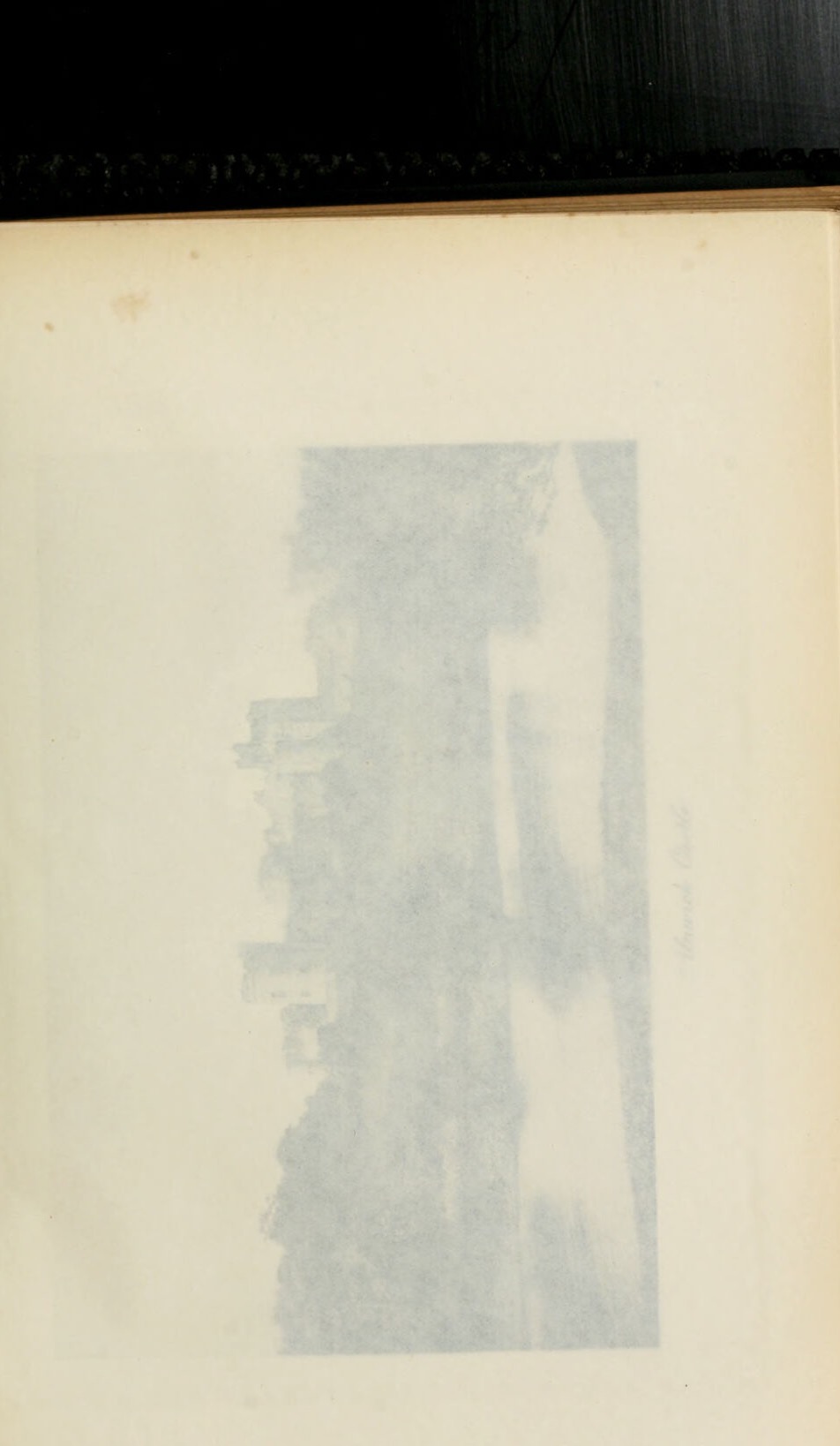
Prudhoe Castle
1897 · J. D. Mackenzie, The Castles of England, vol. 2 (1897)
Public domain
Nearby


